REVIEW · HANOI MOTORBIKE TOURS
Sa Pa: Guided Motorbike Tour to Ethnic Villages with Lunch
Book on GetYourGuide →Operated by Vietnam Nomadtrails · Bookable on GetYourGuide
Motorbikes in Sa Pa mean real up-close mornings. This guided ride through ethnic villages in Dong Bac pairs mountain scenery with hands-on time with Black Hmong and Red Dao families, plus tea-and-talk visits and a proper lunch stop. I like that it feels social and human, not just scenic. One consideration: it’s a full day on the road, so you’ll want to be comfortable riding for long stretches and follow the comfort limits (not for pregnant travelers, and not for people over 220 lbs / 100 kg).
Pick-up is in the Sa Pa center area at 8:30 am, with an English-speaking guide, helmets, and a private-group setup. You’ll return to the same starting point, which makes the day feel simple even if the roads are not. If the weather is foggy, don’t panic: the guides know how to explain what you’re seeing and keep the day moving.
In This Review
- Key highlights you’ll feel quickly
- Price and what you’re actually getting for $65
- 8:30 am start: how the day is structured (and why it works)
- Riding Sa Pa on a guided motorbike: real roads, real pace
- Black Hmong country: traditional houses, tea talks, and welcome drink time
- Red Dao encounters and cultural context you can actually use
- Lunch at Hang Da: the break that also acts like a viewpoint reset
- Muong Hoa Valley terraces: riding deeper and seeing rice fields change
- The return ride: different back roads, same sense of closure
- Who this tour is best for (and who should skip it)
- Packing list that actually matters on this route
- Should you book the Sa Pa guided motorbike ethnic village day?
- FAQ
- What time does the tour pick me up in Sa Pa?
- Where do I meet if I don’t want to be picked up from my hotel?
- How long is the tour?
- What’s included in the price?
- Is VAT included?
- What extra fees should I watch for?
- What languages are available for the guide?
- What should I bring and wear?
- Are there any rules about what I can’t do?
- Is the tour okay for everyone?
- What’s the cancellation policy?
Key highlights you’ll feel quickly
- Meet Black Hmong and Red Dao families, with time inside traditional houses and a welcome drink/tea talk
- Real mountain-road riding with plenty of stops, not just quick photo pulls
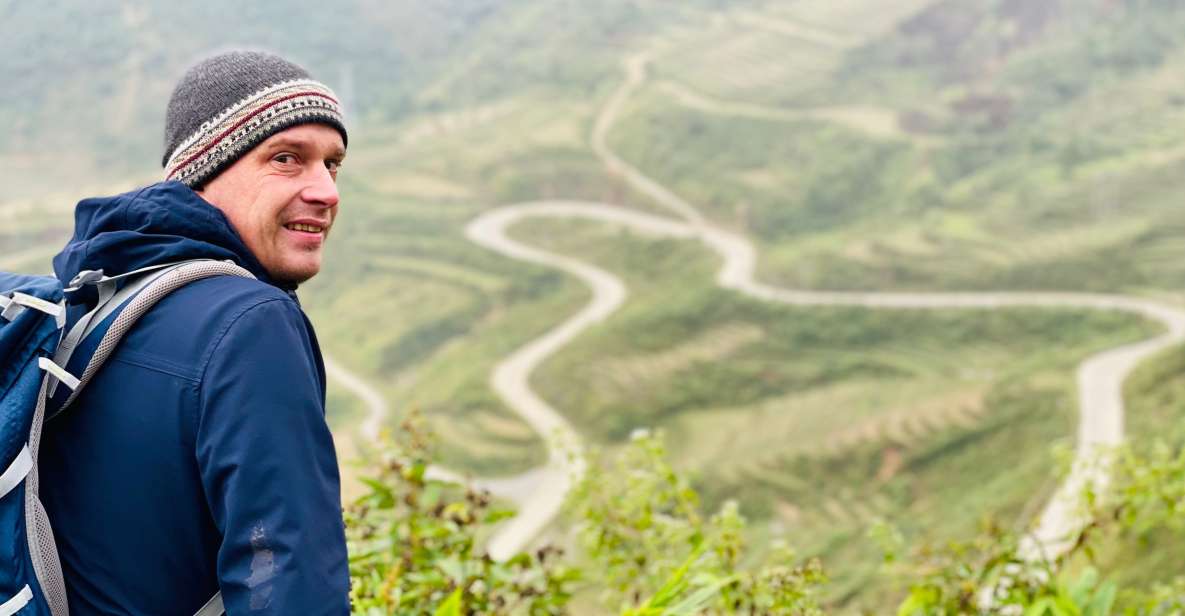
- Muong Hoa Valley rice terraces and views that change as the road climbs and curves
- Dzay community visit in the southeast Sa Pa area during the day
- Hang Da lunch stop with fresh air and panoramic scenery
- Private-group pacing with an English guide (and Vietnamese/French options)
Price and what you’re actually getting for $65
At $65 per person for a full day, this tour is priced like a “workday” experience, not a short sightseeing add-on. The value comes from what’s included: an English-speaking guide, motorcycle + gasoline, helmets, lunch, mineral water (1.5 liters per person), plus entrance tickets to the indicated sites. In practice, that means you’re not constantly stopping to figure out cash, tickets, or transport between scattered points.
The “extra” costs to keep in mind are clearly listed. VAT 10% isn’t included, and soft drinks are also not included. If you’re traveling around Lunar New Year (listed as Jan 26 to Feb 2, 2025), there’s a $20 per person surcharge due at the meeting point. If you specifically want a French-speaking guide, there’s a $12 per person surcharge due at the meeting point.
My take: if you’re already planning to eat lunch in town and pay for a guide/driver anyway, the included lunch + guide time + transport makes this feel reasonable. If you’re the type who likes to buy your own drinks, snacks, and souvenirs, just budget a little extra for personal spending.
You can also read our reviews of more guided tours in Sa Pa
8:30 am start: how the day is structured (and why it works)
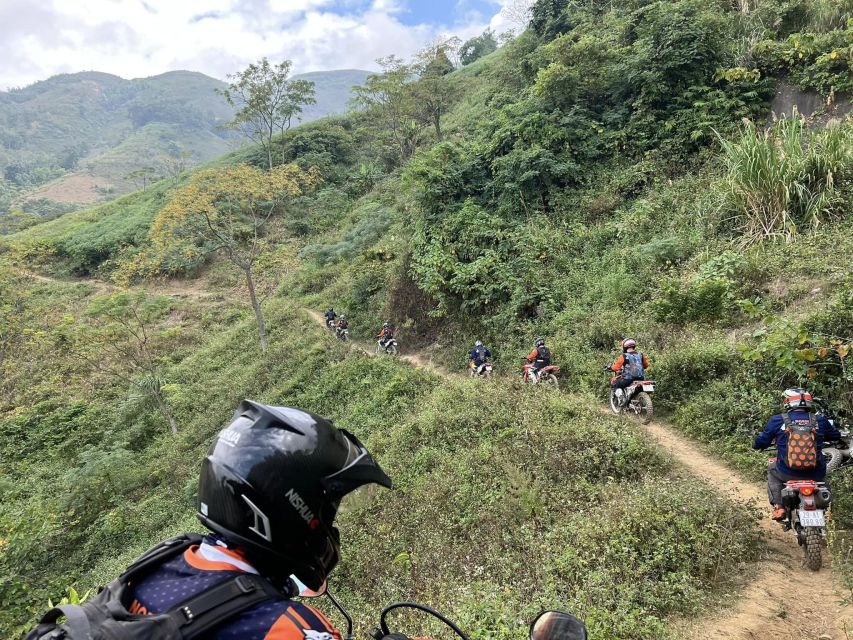
This is built as a one-day loop with pick-up at 8:30 am from your Sa Pa center accommodation area (or meeting point No 013 Tue Tinh street). You’ll get a short intro, then head north out of central Sa Pa. The timing matters. Going earlier helps you avoid the heaviest crowds in town and gives you more usable daylight for roads and views.
You’re also not stuck in one single village. The day splits into two major mood shifts:
- North of Sa Pa for Black Hmong and Red Dao cultural encounters.
- Southeast into Muong Hoa Valley for terraced fields and a Dzay stop, plus lunch along the way.
Then you return back to Sa Pa by different back roads, so the ride doesn’t feel like a simple copy-paste of the same route.
Riding Sa Pa on a guided motorbike: real roads, real pace
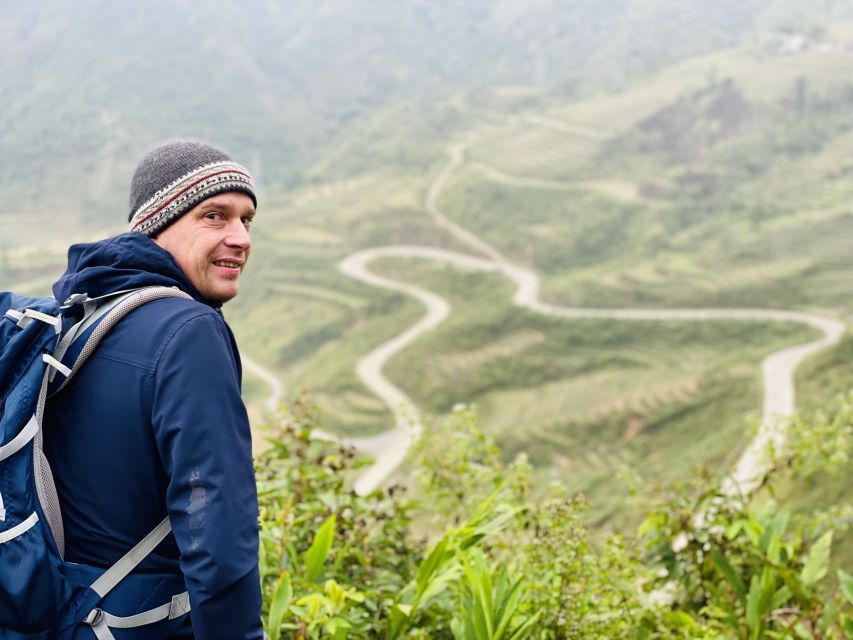
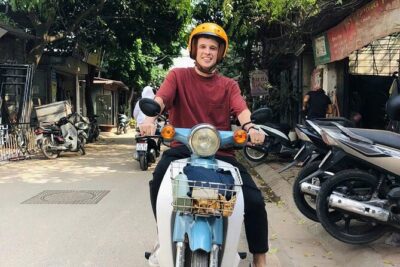
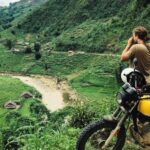
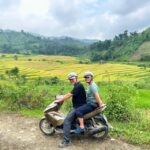
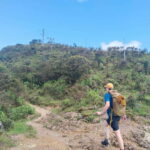
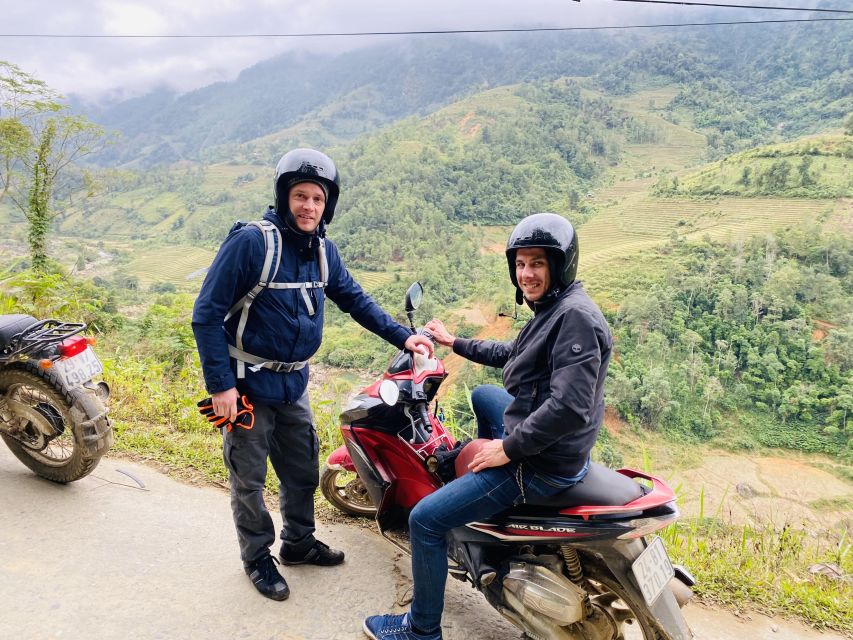
Let’s talk about what “guided motorbike tour” means in your day-to-day experience. You’re on a motorcycle with a helmet included, and the route is designed to connect villages and viewpoints. One useful detail: the route is mostly on quiet paved trails through small villages (around 95% of the tour riding). That’s a big deal for comfort and confidence, especially if you’re not a mountain-road speed person.
You’ll still want to be mentally ready for a full day of riding: turns, altitude changes, and weather shifts. Fog can happen in Sa Pa, and at least one guide (Laan) has handled those conditions well by giving clear explanations even when visibility is limited.
Also note the practical limits for safety and comfort:
- Not suitable for children under 3
- Not suitable for pregnant women
- Not suitable for people over 220 lbs / 100 kg
- Not suitable for people over 70
- You’ll need to follow the “no alcohol in the vehicle” rule
If you’re planning to drive yourself, expect a guidance-focused approach rather than full free-roam. One rider found they picked it up quickly, but the tour context is still riding at your own risk—so your best move is to be honest about your comfort level before you start.
Black Hmong country: traditional houses, tea talks, and welcome drink time
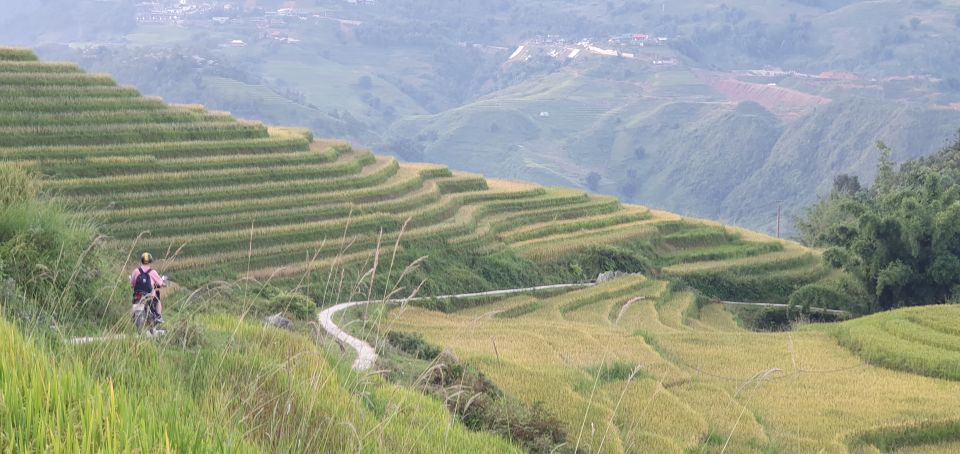
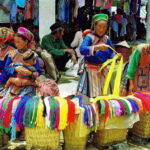
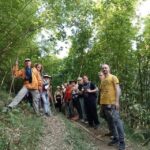
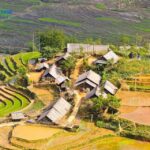
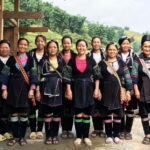
The northward portion is where this tour earns its keep. You head to the northern area of Sa Pa to spend time with the Black Hmong and Red Dao communities. This isn’t only looking from the roadside. You get opportunities to:
- Visit traditional houses
- Taste a welcome drink
- Take photos with locals (with the human, social pace that makes it more than a quick picture)
- Learn about daily life and customs through tea talks
Why this matters: ethnic village visits can easily become a performance for visitors. What makes this part feel more respectful is the structure around conversation—tea, questions, and time in the house spaces where people actually live or host. When a guide can explain the differences between groups in plain language, you leave with a clearer mental map of what you saw instead of a pile of vague impressions.
You’ll also learn the differences between the two largest ethnic groups in Sapa, specifically Black Hmong and Red Dao. Even if you’ve read about them before, I like having that side-by-side explanation in the real place, with someone who can point out what you’re seeing.
Small practical tip: bring gloves (the tour lists them) and expect hands to get chilly when you’re stopped and the mountain air shifts. Sunglasses and sunscreen are also your friend here, even when the sky looks moody.
Red Dao encounters and cultural context you can actually use
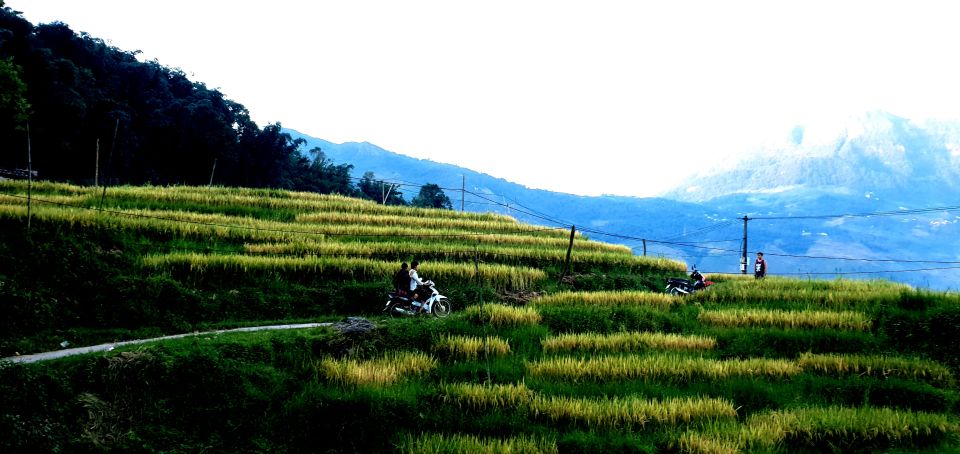
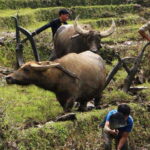
After the Black Hmong portion, the day keeps moving so you can compare and contrast. The tour is designed so you don’t just visit one community and call it done. You get the chance to interact with the Red Dao group too, including traditional house visits and conversation.
This is where your guide earns their keep. Guides like Chang are described as engaging and responsive to questions, which matters because the best part of these stops is the dialogue. You’re not only taking in clothing, architecture, and tools—you’re also learning how people explain their own life and traditions.
How to get the most from this portion:
- Ask simple questions, not quizzes. People respond well to curiosity.
- Keep photo-taking respectful and slow.
- Pay attention to what the guide highlights, because those details are often the “why” behind what you’re seeing.
You can also read our reviews of more tours and experiences in Sa Pa
Lunch at Hang Da: the break that also acts like a viewpoint reset
The day includes a lunch stop in Hang Da. This part is more than feeding you. It’s where you breathe and reset before heading deeper into Muong Hoa Valley.
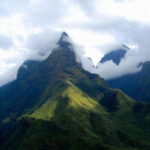
The tour notes that Hang Da has fresh air and spectacular, panoramic scenery. That’s a key pairing: a meal break with an actual visual payoff. In mountain towns, you can end up eating while watching nothing impressive. Here, lunch is timed so you come back to the road already feeling like the day is delivering.
Also, lunch is included, and you have mineral water (1.5 liters per person) included for the day. Soft drinks aren’t included, so if you rely on them, add them to your budget.
Muong Hoa Valley terraces: riding deeper and seeing rice fields change
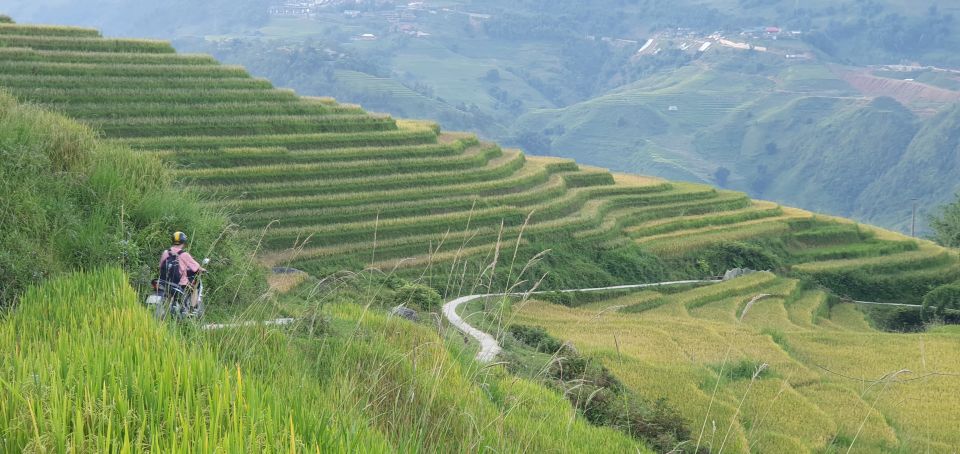
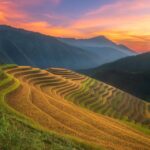
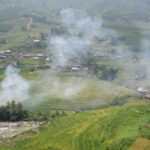
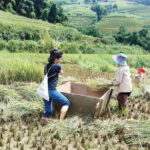
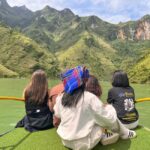
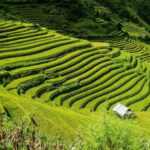
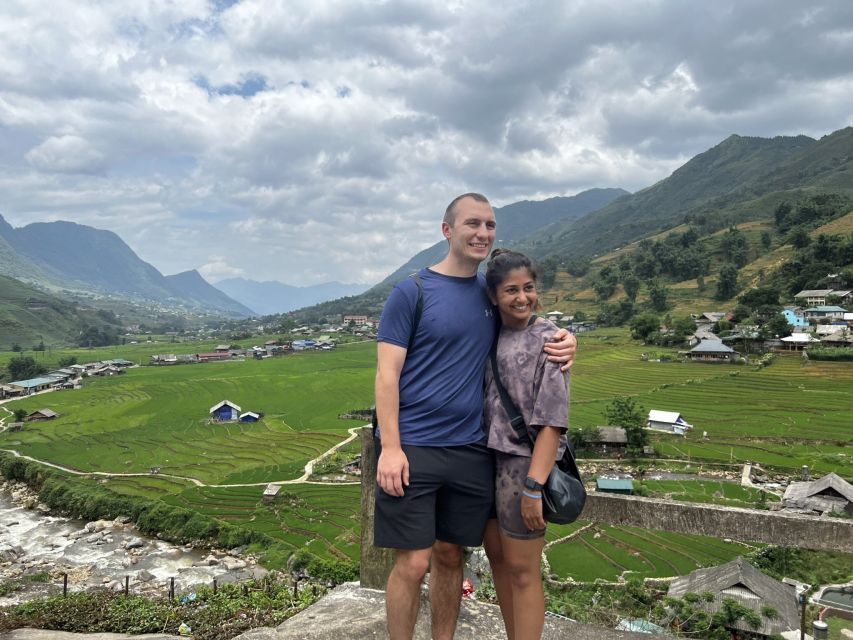
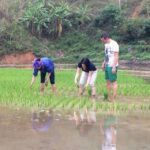
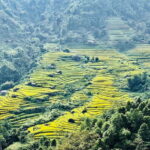
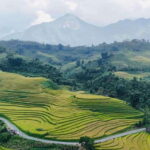
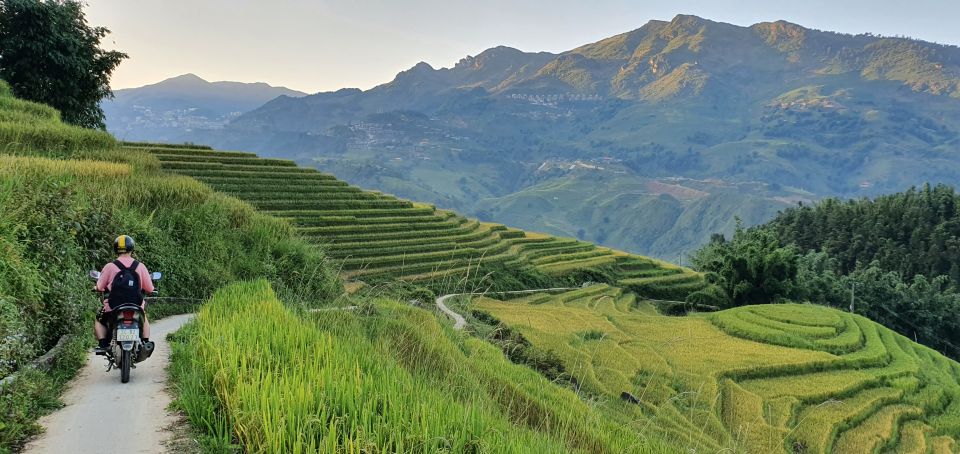
After lunch, you go deeper into Muong Hoa Valley. This is the classic Sa Pa visual zone, and the tour aims to give you more than a single viewpoint. You’ll witness the terraced rice fields and interact with friendly locals along the way.
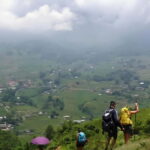
This section tends to feel different from the north village stops. The cultural encounters earlier are about people and traditions. Muong Hoa is more about scale and rhythm—terraces stacked across slopes, villages tucked into the valley, and the way the road reveals new angles as you move.
You’ll also get to witness the Dzay ethnic group in this southeast section. Like the earlier community visits, the goal is exposure paired with guidance, not just walking through a photo spot.
What I like about this setup for your day: it keeps the experience from becoming one long cultural lecture. You get human connection first, then you get the visual payoff in the form of terraces and valley views, and then you return with the feeling that you saw both the “why” and the “where.”
The return ride: different back roads, same sense of closure
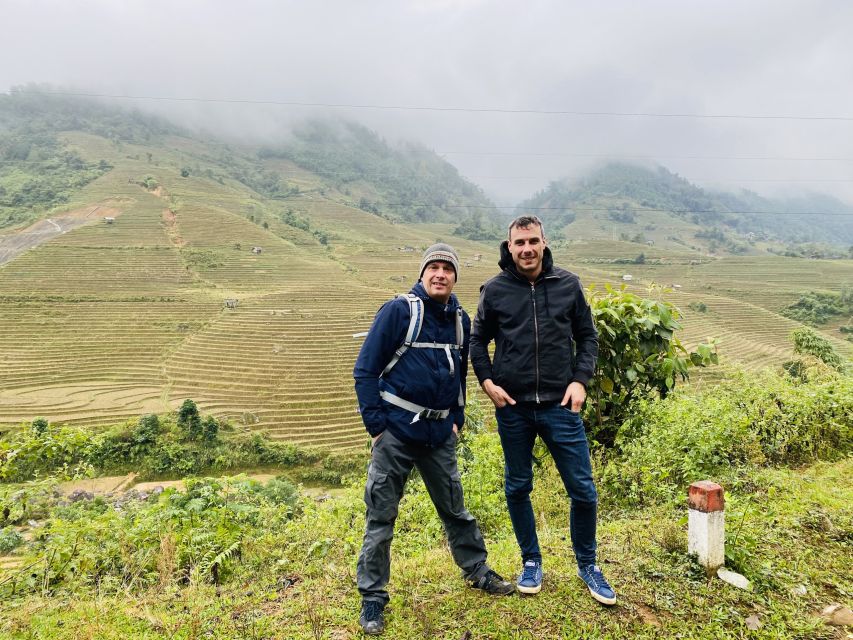
You wrap up with a trip back to Sa Pa using different back roads. That last part matters more than people think. If you simply retrace your first route, the day can feel repetitive at the end, especially when you’re already a bit tired.
Going back by another route usually gives you new views and a fresher sense of motion. It also acts like a soft landing: you’re not thrown into another long cultural stop right before finishing, so your final hour feels like closing the loop.
By the time you’re back at the same meeting point area, you’ve covered a lot of ground—culture, valley scenery, and lunch—without spending your morning and afternoon stuck in traffic in town.
Who this tour is best for (and who should skip it)
This experience is a strong fit if you want:
- Guided cultural encounters with Black Hmong and Red Dao families
- Motorbike riding that connects viewpoints and communities
- A full day that mixes conversation time with terraced mountain scenery
- An English-speaking guide and a setup that keeps the day organized
It’s less ideal if:
- You want a slow walk-and-stay-put style day. This is a moving day on a motorcycle.
- You’re not comfortable with long riding stretches or mountain weather changes.
- You fall into the tour’s listed limits (pregnancy, young kids, older age limit, weight limit).
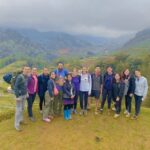
If you’re traveling as a couple, this private-group format can feel especially good. You’re not trying to share your questions or keep up with a large group energy.
Packing list that actually matters on this route
The tour gives a clear “bring” list, and I’d follow it closely. For this kind of day, small comfort items make the difference between tolerable and enjoyable:
- Sunglasses
- Sunscreen
- Gloves
- Daypack
- Waterproof bag
- Warm layer for October through March (the tour specifically advises warm clothes)
Even when the day starts dry, mountain weather can change quickly. Waterproof storage helps keep your phone and camera safe from mist or sudden rain.
And for rules, stick to them:
- No high-heeled shoes
- No explosive substances
- No alcohol in the vehicle
- No nudity
Should you book the Sa Pa guided motorbike ethnic village day?
If your priority is authentic, human contact plus strong scenery, I think this is an easy yes. For $65, you’re getting a full-day format with an English-speaking guide, helmets, motorbike + gasoline, lunch, and water—plus multiple stops tied to real communities rather than only lookouts.
Book it if you’re:
- Comfortable with a full day of riding
- Curious about Black Hmong, Red Dao, and the Dzay presence around Muong Hoa
- Willing to dress for cool mountain air in the Oct–Mar months
Skip it (or at least reconsider) if you:
- Don’t like being on the move for hours
- Are outside the listed comfort limits
- Need a fully sedentary day
FAQ
What time does the tour pick me up in Sa Pa?
The pick-up is at 8:30 am from hotels/hostels/homestays in the Sa Pa center town area.
Where do I meet if I don’t want to be picked up from my hotel?
You can also meet at meeting point No 013 Tue Tinh street, and the tour returns you to the same pick-up point.
How long is the tour?
It’s listed as 1 day.
What’s included in the price?
Included are an English-speaking guide, entrance tickets to the indicated sites, lunch, mineral water (1.5l per person), motorcycle and gasoline, and helmets.
Is VAT included?
No. VAT 10% isn’t included.
What extra fees should I watch for?
There’s a $20 per person Lunar New Year surcharge (Jan 26 to Feb 2, 2025) due at the meeting point, and a $12 per person surcharge for a French-speaking guide if needed.
What languages are available for the guide?
The guide is available in English, Vietnamese, and French.
What should I bring and wear?
Bring sunglasses, sunscreen, gloves, a daypack, and a waterproof bag. For October through March, bring warm clothes.
Are there any rules about what I can’t do?
The tour lists: no high-heeled shoes, no alcohol in the vehicle, and no explosive substances or nudity.
Is the tour okay for everyone?
It’s not suitable for children under 3, pregnant women, people over 220 lbs / 100 kg, or people over 70.
What’s the cancellation policy?
You can cancel up to 24 hours in advance for a full refund.