REVIEW · HANOI MOTORBIKE TOURS
Motorbike Lesson in Hanoi
Book on Viator →Operated by Chicks n Bikes Hanoi · Bookable on Viator
Learning motorbikes in Hanoi can feel scary. This lesson turns that fear into simple skills and city rhythm, starting near West Lake.
You begin in a controlled, quiet practice area to get balance, steering, and braking down, then you move onto real Hanoi roads so you can learn how traffic actually flows. You can also choose a calmer start with 1-to-1 style coaching that focuses on you, not a big group scramble.
What I like most is the way the training mirrors the real problem beginners face: panic at the bike, then confusion in traffic. The course is built around that gap—first control, then confidence—so you’re not just getting a ride around the city. I also love that instructors like Mia and Thao are specifically described as patient and reassuring, including when someone struggles or falls, which makes the whole experience feel supportive rather than stressful.
One thing to consider: this activity needs good weather. If conditions are poor, you’ll be offered a different date or a full refund, but you still want a plan that can flex.
In This Review
- Key highlights before you go
- The core idea: controlled practice, then real Hanoi flow
- Getting the basics right: balance, steering, and braking drills
- West Lake and Tay Ho: why this area works for first-time riders
- Riding instruction on Hanoi streets: learn the traffic rhythm
- Instructors that make it click: Mia and Thao’s coaching style
- Price and value: $37.45 for skills you can use right away
- Logistics that affect your day: pickup, West Lake start, private group, tickets
- Who should book this motorbike lesson (and who should pause)
- What you’ll walk away with: confidence you can feel, not just advice
- Should you book this Hanoi motorbike lesson?
- FAQ
- How long is the motorbike lesson in Hanoi?
- How much does the lesson cost?
- Is pickup included?
- Where does the lesson start?
- Is this a private lesson or a group tour?
- Do I get a mobile ticket?
- Is it only for experienced riders?
- Is safety equipment provided?
- Is good weather required?
- Is the meeting point near public transportation?
Key highlights before you go
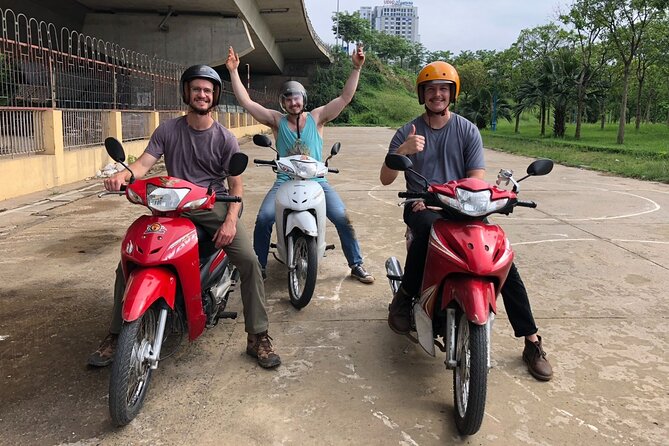
- Quiet practice first: balance, braking, and control before you touch busy intersections
- Real streets, taught step-by-step: learn to read traffic flow instead of fighting it
- West Lake base: Tay Ho is a smart place to build confidence and orientation
- Small, private coaching: only your group participates for a more personal pace
- English support you can rely on: instructors described as speaking great English
- Safety gear included: you don’t have to figure that part out yourself
The core idea: controlled practice, then real Hanoi flow
Hanoi motorbike culture runs on rhythm more than rules. That’s what makes this lesson so useful for beginners: you’re taught how to move with the street, not how to pretend the street follows a textbook. Instead of tossing you into traffic and hoping you adapt, the school builds your comfort in stages.
You’ll start away from pressure. Think quiet practice area, focused drills, and clear feedback. Once you can control the bike, you transition into real roads where your instructor helps you read the flow—how people merge, how gaps appear, and how you keep moving without overthinking every single vehicle.
For you, that translates into something practical. If you plan to rent later, you’re not starting from zero panic. You’re starting from a trained rhythm and a mental model of what to watch.
You can also read our reviews of more tours and experiences in Hanoi



Getting the basics right: balance, steering, and braking drills
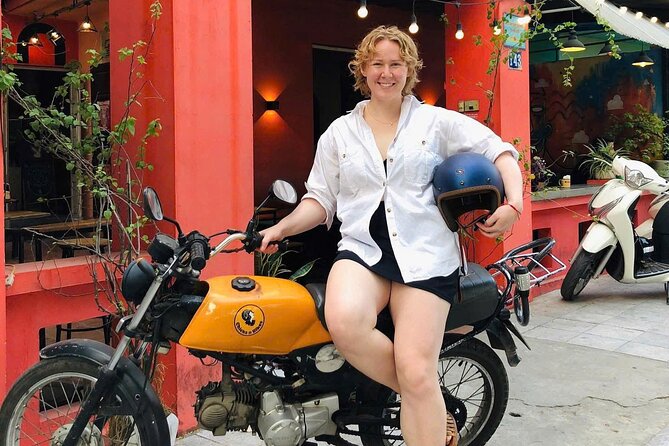
The lesson begins with fundamentals that beginners actually need, not vague “just ride it” advice. Expect time devoted to:
- Balancing and control (so the bike doesn’t feel like it’s working against you)
- Braking technique (so slowing down doesn’t turn into a sudden mess)
- Steering and coordination (so turning feels planned, not accidental)
This order matters. In places like Hanoi, hesitation causes trouble fast. When you can balance and brake smoothly, you buy back calm—then your instructor can work on the bigger skill: moving with traffic.
The course also targets the mental side. Many new riders freeze when they don’t know what a street expects from them. By training you in an organized progression, the lesson helps you stop guessing and start responding.
West Lake and Tay Ho: why this area works for first-time riders

Your ride centers on West Lake, a natural training ground that helps you build street awareness without diving straight into the most intimidating stretches. West Lake (and the wider Tay Ho area around it) gives you a loop-like setting where you can practice decisions repeatedly: start, stop, turn, merge, and adjust.
It’s also a smart way to learn Hanoi’s “everyday” traffic behavior. You get to see how drivers, scooters, and cars share space in real time. The instructor’s job is to help you notice patterns—where gaps form, how people position at slower speeds, and how to avoid stiff, panic movements.
Practical benefit: once you can handle the West Lake area, you’re more prepared for the next steps of your trip—whether that means renting confidently, practicing more in town, or planning a longer road journey.
Riding instruction on Hanoi streets: learn the traffic rhythm
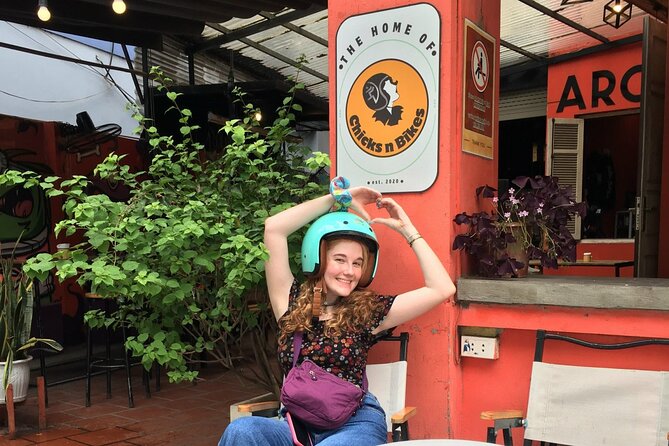
After the practice portion, you’ll be guided onto real roads. This is where the lesson becomes more than bike handling.
Instead of treating Hanoi traffic as something you must defeat with rules, the training focuses on reading flow—like learning the local language of gaps and movement. Your instructor helps you understand what to watch and when to act, so you can make smoother choices rather than reacting late.
A key detail here is pacing. The school’s method is described as starting controlled and then gradually moving to real street riding. That’s the difference between building confidence and just getting adrenaline.
If you’re the kind of person who doesn’t want surprises, this approach is comforting. You learn what to do next before you’re asked to do it while surrounded by traffic.
Instructors that make it click: Mia and Thao’s coaching style
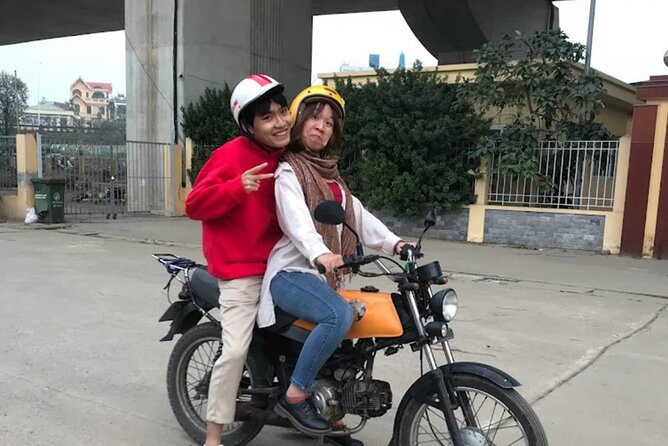
A big reason this lesson earns such strong marks is the teaching tone. The instructors are described as patient, calm, and encouraging, including specific cases where a learner fell and the instructor kept things reassuring and safe.
Two names show up often: Mia and Thao. Mia is repeatedly mentioned for calm, supportive coaching and strong English skills—especially useful if you’re nervous and want instructions you can fully understand without guessing. Thao is described as being able to teach even someone with no experience at all, quickly helping them move from beginner steps to riding confidently in and around central Hanoi.
That matters because beginners don’t just need bike mechanics. You need feedback that reduces fear. When your instructor demonstrates what to do and then gives you the chance to repeat it, you build muscle memory instead of stress memory.






Price and value: $37.45 for skills you can use right away
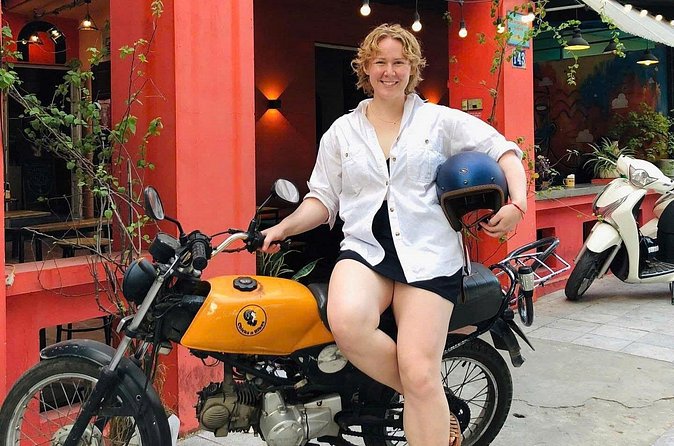
At $37.45 per person for around two hours, you’re paying for more than a ride. You’re buying time with an instructor plus structured practice with real feedback—something you’d struggle to replicate if you just rented a scooter and tried to self-teach.
What makes the value math work:
- Safety equipment is included, so you’re not paying extra to be properly outfitted
- Pickup is offered, which can cut down your time and hassle (especially helpful if you don’t know where to go)
- It’s a private activity, meaning you get coaching targeted to your group, not a fast-paced conveyor belt
If your plan includes renting later, this lesson can shorten the learning curve. Even if you never rent, you still gain practical knowledge about how Hanoi traffic moves and what to watch for.
The only “cost” to think about is mental readiness. This is not an advanced stunt class, but it is real street riding practice. If you can bring a calm mindset, the value feels obvious fast.
Logistics that affect your day: pickup, West Lake start, private group, tickets
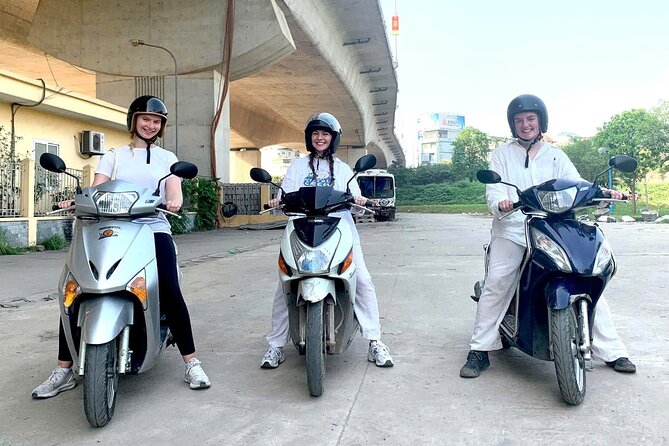
Here’s what you can expect from a practical standpoint.
You’ll meet at 143 P. Nhật Chiêu, Nhật Tân, Tây Hồ, Hà Nội 100000, Vietnam, and the activity ends back at the meeting point. The location is described as near public transportation, which helps if you’re not using the pickup.
Pickup is offered, so if you’d rather roll out of your hotel without figuring out scooters or routes, you can plan around that. You’ll also receive a mobile ticket.
One more detail that matters: it’s a private tour/activity, so only your group rides. That’s usually the best scenario for beginners because you don’t feel like you’re competing with others for attention. It can also make timing easier if you need a little extra explanation.
And yes, again: good weather matters. If weather turns bad, the activity may be rescheduled or refunded.
Who should book this motorbike lesson (and who should pause)
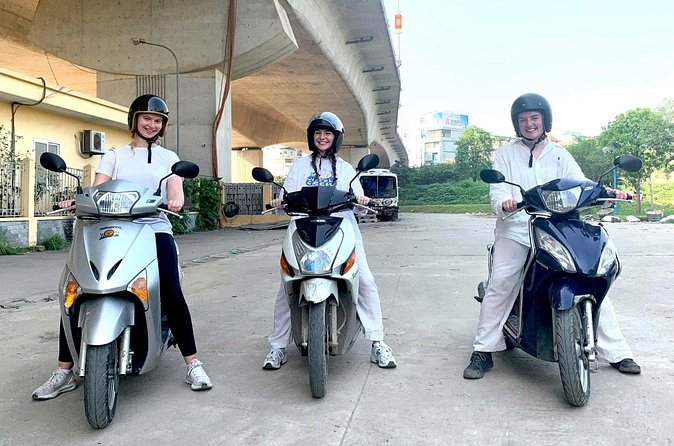
This lesson is a great fit if:
- You’re a complete beginner who wants a safe, structured start
- You feel anxious about Hanoi traffic and want step-by-step support
- You want to ride the way locals do—by reading flow—not by memorizing rules
- You’re planning a bigger route later, like the Ha Giang Loop, and you want early training for basics that matter in uphill and downhill riding
It may be less ideal if you want a long tour experience. This is about skill-building in roughly two hours, so think of it as a fast on-ramp, not a full-day sightseeing tour.
Also, if you arrive with zero interest in practicing drills, you might not get full value. The lesson works because you actually do the fundamentals and repeat them until they feel normal.
What you’ll walk away with: confidence you can feel, not just advice
By the end, you should feel more capable of handling the basics: balance, braking, and steering without freezing. More importantly, you’ll understand what your instructor means when they say you shouldn’t fight traffic—you should move with it.
That creates trip freedom. Once you can manage the bike, you can stop treating Hanoi streets like an obstacle course. Instead, you start seeing routes you can handle, and you can think about exploring beyond the easy options.
For longer road plans, it’s also a confidence builder. The lesson is specifically framed as preparation for adventures like the Ha Giang Loop, including techniques that matter for slopes.
Should you book this Hanoi motorbike lesson?
Yes, if your goal is simple: get past the passenger-seat fear and learn the basics the right way. The combination of quiet practice, real street guidance, and a supportive instructor style makes it a strong beginner choice.
Book it especially if you want coaching in plain English and a calm atmosphere. The repeated mentions of instructors like Mia and Thao for patience and reassurance are a big clue that this isn’t a throw-you-in-the-deep-end operation.
One caution: plan around weather. If Hanoi turns rainy, you may need to reschedule, so don’t stack this day with tight, immovable commitments.
If that fits your schedule, this lesson is an efficient way to gain skills that can change how you move around Vietnam.
FAQ
How long is the motorbike lesson in Hanoi?
It lasts about 2 hours.
How much does the lesson cost?
The price is $37.45 per person.
Is pickup included?
Pickup is offered.
Where does the lesson start?
The start location is 143 P. Nhật Chiêu, Nhật Tân, Tây Hồ, Hà Nội 100000, Vietnam.
Is this a private lesson or a group tour?
It’s a private tour/activity, so only your group participates.
Do I get a mobile ticket?
Yes, you receive a mobile ticket.
Is it only for experienced riders?
No. It’s designed for complete beginners, including first-time riders.
Is safety equipment provided?
Yes. All safety equipment is provided.
Is good weather required?
Yes. The experience requires good weather, and if it’s canceled due to poor weather, you’ll be offered a different date or a full refund.
Is the meeting point near public transportation?
Yes, it’s described as near public transportation.