REVIEW · COOKING CLASSES
Vietnamese Vegetarian Cooking Class in Hanoi
Book on Viator →Operated by Apron Up Cooking Class · Bookable on Viator
A cooking class in Hanoi is your easiest shortcut to understanding how Vietnamese flavor is built. Here you start with market shopping for seasonal herbs and ingredients, then you cook five traditional vegetarian dishes with a private guide and eat what you make. The part I like most is that it feels hands-on but not intimidating, even if you’re a beginner.
The price is $60 for about 3 hours 15 minutes, and it includes food and drinks (including rice wine or Vietnamese rice vodka). One thing to consider: while the focus is vegetarian/vegan, I’d still ask how the class handles any meat in the kitchen, because one unhappy review flagged hygiene concerns when meat was being cooked alongside the group.
In This Review
- Key things to know before you go
- Where you meet in Hanoi (and why it matters)
- Price and value: what $60 actually covers
- Market shopping in Hanoi: building flavor before the stove
- Kitchen time: hands-on cooking with a private guide
- The five vegetarian dishes you’ll make (and why they’re smart choices)
- Eating what you made: breakfast, lunch, or dinner with rice wine
- Pace, group size, and how to get the most out of 3 hours 15 minutes
- Who should book this Hanoi vegetarian class
- Practical tips for a smoother class
- Should you book?
- FAQ
- What time does the Vietnamese vegetarian cooking class start?
- How long is the cooking class in Hanoi?
- Where do I meet the group in Hanoi?
- Is this class private?
- What’s included in the $60 price?
- Is hotel pickup included?
- How far in advance is it usually booked, and what if I cancel?
Key things to know before you go
- Market-first approach: you shop for seasonal ingredients with your guide before cooking
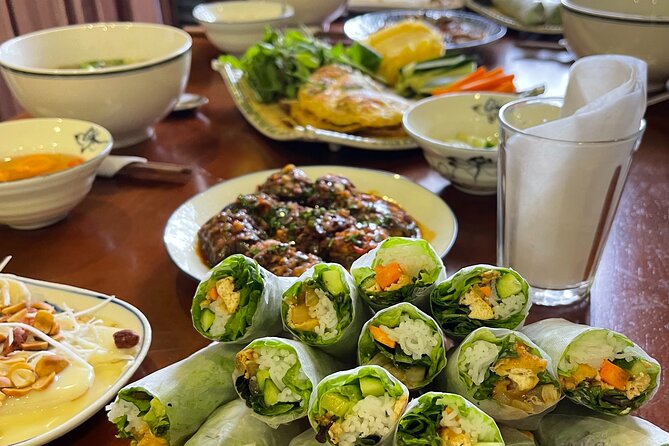
- Five dish payoff: you’ll prepare and eat a full set of vegetarian Vietnamese dishes
- Private guidance: a single guide works with your group, at a pace that won’t overwhelm you
- Food + drinks included: your session includes a shared meal plus rice wine or Vietnamese rice vodka
- You leave with take-home proof: cookbook and certificate included
Where you meet in Hanoi (and why it matters)
This class starts at 8 P. Gia Ngư, Hàng Bạc, Hoàn Kiếm and ends right back at the same meeting point. That’s a big deal in the Old Quarter area: you avoid long commutes and can plan your day around a simple “go here, cook, return” flow.
Also, there’s no hotel pickup and drop-off, so you’ll want to be comfortable navigating local streets or using public transport. The good news: it’s listed as near public transportation, so you’re not forced into taxis.
Sessions run at 9:00 am, 11:30, 4:00 pm, and 6:30 pm. If you want a morning class, pick 9:00 or 11:30. If you’re building a later-day food plan, the 4:00 or 6:30 slots can work well.
You can also read our reviews of more cooking classes in Hanoi
Price and value: what $60 actually covers
At $60 per person, you’re not paying just for a recipe lesson. You’re paying for a full experience: market shopping time, a private guide, cooking instruction, and a meal.
In practical terms, here’s what the class includes:
- Market ingredient shopping with your guide
- Cooking and eating five Vietnamese vegan/vegetarian dishes
- Light refreshments, plus snacks
- Coffee and/or tea
- A meal that matches the session time (breakfast, lunch, or dinner)
- Alcoholic beverages such as rice wine or Vietnamese rice vodka
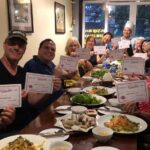
- A cookbook and certificate
So the value comes from the whole package: ingredient selection, instruction, and then you eat the result. Three hours 15 minutes is also a reasonable length. It’s long enough to learn real technique, but short enough that it won’t crush your sightseeing day.
One more detail worth noting: it’s listed as a private tour/activity, meaning only your group participates. That often makes questions easier and helps the guide adjust pace if someone is new to cooking.
Market shopping in Hanoi: building flavor before the stove
Your class begins at the market, where you shop for seasonal ingredients with your guide. This is where the Vietnamese vegetarian approach becomes clearer fast: it’s not just about leaving out meat. It’s about using herbs, aromatics, vegetables, and tofu-style ingredients in ways that still hit the deep savory notes people expect.
Expect to browse for items like fresh herbs and produce you’ll later recognize in your dishes. Your guide also helps connect the “why” to the “what.” For example, when you pick ingredients at the market, it’s easier to understand which ones are meant for broth-like flavor, which ones give crunch, and which ones bring perfume to the finished dish.
Practical tip: if you have any dietary limits beyond vegetarian (no dairy, no eggs, or food allergies), ask early. You’ll get a cleaner answer during market time, when substitutions are still easy.
Kitchen time: hands-on cooking with a private guide
After the market, you head back to the kitchen for the cooking portion. The format is hands-on, and the guide stays close enough to guide you through chopping, mixing, assembling, and cooking. That matters because Vietnamese cooking has a lot of small steps that change the final taste.
The class is designed to work for different skill levels. One review praised how low-pressure it felt to learn, even for a mix of ages and experience. That’s exactly what you want: you don’t need to already know Vietnamese cooking to get results.
Still, there’s one consideration that you should treat seriously if you’re vegetarian. One participant reported hygiene concerns tied to meat being cooked with the group, including issues with shared chopping boards. I can’t confirm how common that is, but it’s enough of a red flag that I’d ask the provider a simple question before you go:
- Will vegetarian dishes be prepared separately from any meat handling?
- Are cutting boards and prep tools separated or properly sanitized?
If you’re comfortable with that, this is the kind of cooking session where you learn techniques, not just shortcuts.
The five vegetarian dishes you’ll make (and why they’re smart choices)
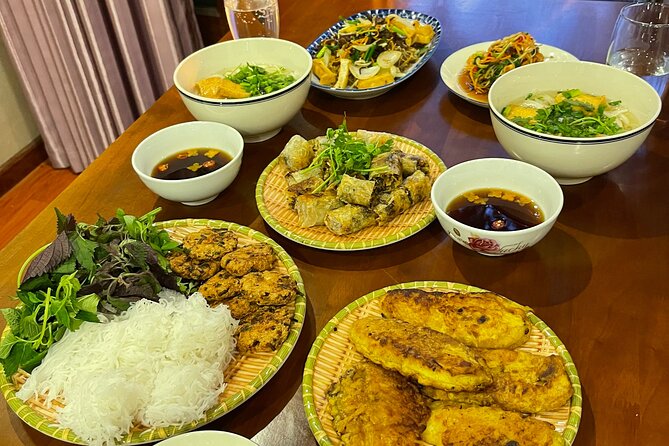
You’ll cook five traditional Vietnamese vegan and vegetarian dishes. The exact list is guided by your class, but you’ll definitely see these common highlights included in the experience:
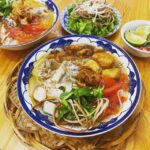
- Vegan Pho
- Vegan Bánh Xèo
- Stuffed aubergine
Those three are strong picks because they cover major Vietnamese flavor styles. Vegan Pho teaches you how to build a comforting broth-like base using vegetarian ingredients. Bánh Xèo shows you how batter and fillings work together, and stuffed aubergine is a good example of how vegetables can be the main event, not an afterthought.
For the remaining two dishes, expect additional vegetarian Vietnamese classics prepared with the ingredients you bought. Even if you’ve never cooked Vietnamese food before, this mix gives you both noodle-soup comfort and stuffed/leafy comfort, so your learning doesn’t feel one-dimensional.
Also, notice the balance: you aren’t just doing one dish for hours. You’ll cycle through multiple steps, which is how you retain technique for home cooking later.
You can also read our reviews of more tours and experiences in Hanoi


Eating what you made: breakfast, lunch, or dinner with rice wine
The best part of any cooking class is always the meal. Here, you eat together what you create—either a breakfast, lunch, or dinner format depending on the session time you choose.
Alcoholic beverages are included, including Vietnamese rice wine and Vietnamese rice vodka. This is part of the social side of the class. If you prefer not to drink, you can still enjoy the food and skip the alcohol, but it’s good to know it’s built into the experience.
One practical upside: because you’re eating what you cooked, the flavors you learned at the stove become real and memorable. You’ll taste whether you nailed balance—sweet, salty, sour, herb brightness—and that’s hard to replicate from a recipe alone.
Pace, group size, and how to get the most out of 3 hours 15 minutes
Because your group is private, you’ll get more direct attention than in big group classes. That usually means:
- fewer waiting gaps while you’re waiting for ingredients or tools
- more chances to ask what an ingredient is doing
- more help correcting technique while it still matters
The time window is about 3 hours 15 minutes, which means the guide needs to keep things moving. The payoff is that you’ll leave with a full meal and a cookbook—no awkward wrap-up where you feel like you paid for watching only.
My advice: arrive a little hungry and ready to take notes mentally. You don’t have to be a confident cook to get value. If you’re new, focus on the sensory details the guide points out—how sauces smell before and after mixing, how batter changes consistency, and how herbs are used at different stages.
If you’re a more experienced cook, you’ll still benefit because the class teaches Vietnamese vegetarian versions of familiar dishes, not just the idea of vegetarian cooking.
Who should book this Hanoi vegetarian class
This is a great fit if you want an authentic cooking day that combines local shopping with real knife-to-stove work. You’ll likely enjoy it if:
- you eat vegetarian/vegan (or you’re curious to learn how Vietnamese vegetarian dishes feel complete)
- you like learning by doing, not just watching
- you want a guided way to shop for herbs and seasonal ingredients
It’s also a good option if you’re traveling with family or a mixed group of skill levels, since the format is low-pressure and supportive based on feedback you can use to set expectations.
If you’re very strict about avoiding any meat handling or you’re sensitive to cross-contact issues, do ask your key hygiene questions before booking. The class is vegetarian-focused, but the kitchen context matters.
Practical tips for a smoother class
A few small things can make the experience better:
- Wear comfortable shoes: Hanoi streets to markets can be uneven, and you’ll likely stand more than you expect.
- Bring a light appetite: you’ll snack, and you’ll eat a full meal, so go easy on a heavy breakfast right before a later class.
- Ask about your dietary needs early: if you have restrictions beyond vegetarian, clarify during market time or before you arrive.
- Be ready for alcohol being included: it’s part of the meal experience. If you’d rather not drink, just plan accordingly.
And because you’re starting and ending at the same point, plan your next activity nearby. You’ll feel less rushed, and you won’t waste time reorganizing your day right after class.
Should you book?
I’d book this if you want hands-on Vietnamese vegetarian cooking with real market context and a meal that matches your work. The best reasons are practical: you shop for ingredients with your guide, you cook multiple dishes instead of one, and you get both a cookbook and a certificate to take home.
The only strong caution is the hygiene concern raised by one participant when meat was cooked alongside the group. If that would bother you, ask questions up front about separation and sanitation. If they can reassure you, this is an excellent, good-value way to learn Hanoi-style vegetarian cooking in a single afternoon or evening.
If you want to learn flavors you can actually recreate—pho-style comfort, bánh xèo texture, and vegetable-forward dishes—this class is a smart use of time in Hanoi.
FAQ
What time does the Vietnamese vegetarian cooking class start?
Daily classes run at 9:00 am, 11:30 am, 4:00 pm, and 6:30 pm. Pick the time you want when booking.
How long is the cooking class in Hanoi?
It lasts about 3 hours 15 minutes.
Where do I meet the group in Hanoi?
You meet at 8 P. Gia Ngư, Hàng Bạc, Hoàn Kiếm, Hà Nội, Vietnam. The activity ends back at the same meeting point.
Is this class private?
Yes. It’s listed as a private tour/activity, so only your group participates.
What’s included in the $60 price?
The class includes light refreshments, snacks, coffee and/or tea, a guide, and a full meal (breakfast, lunch, or dinner depending on the session). Alcoholic beverages are also included, plus a cookbook and certificate.
Is hotel pickup included?
No. Hotel pickup and drop-off aren’t included, so you’ll need to get to the meeting point on your own.
How far in advance is it usually booked, and what if I cancel?
On average, it’s booked about 12 days in advance. You can cancel for a full refund if you cancel at least 24 hours before the experience’s start time.