REVIEW · HANOI
6 – 8 Day Vietnam Itinerary | Magnificent | Best 2026 Northern
Book on Viator →Operated by Authentic Adventures · Bookable on Viator
Northern Vietnam hits hard in the best way. This 8-day route strings together Sapa hill-tribe villages, Ha Giang mountain passes, and the border-area Ban Gioc region, with an all-in plan that saves you from constant arranging. I especially like the small group size (max 10) and the fact that you get a private room plus an actual guide and air-conditioned transport for the long hops.
One thing to think about: mountain driving can mean long seated hours and early starts, so if you get motion sick or want more downtime, you’ll feel the pace.
In This Review
- Key highlights you’ll remember
- Entering Sapa from Lao Cai with shower time and a real arrival rhythm
- What you should expect
- A small practical tip
- Y Linh Ho and Lao Chai: why these Sapa villages feel real
- The best part
- The main catch
- Sapa highlights on day two, plus the choice to market-hop or ride up Fansipan
- Why this flexible afternoon is a smart move
- A realistic consideration
- The limousine ride to Ha Giang: planned breaks and less hassle
- What you can do in this free village time
- Heaven’s Gate, Sung La Valley, and Lung Cam Village: Ha Giang’s road drama, but with context
- Why these stops matter (not just because of photos)
- A caution worth taking seriously
- Dong Van market timing and Ma Pi Leng Pass: the Ha Giang payoff
- How to make Ma Pi Leng Pass more enjoyable
- The upside of this day structure
- Cao Bang: the long drive day that changes the pace
- Why this “in-between” day is valuable
- Ban Gioc at the China border, plus Nguom Ngao Cave
- What makes this day worth paying attention to
- What to pack for cave time
- Ba Be National Park and Ba Be Lake boat time: slow water, deep calm
- How to get the most out of the boat ride
- Price and value: what $690 covers and what that means for you
- The part to consider on the price side
- Small-group touring (max 10) and how it affects your experience
- Pacing, comfort, and what to plan around on this route
- Who should book this North Vietnam loop
- Should you book this tour or not?
- FAQ
- How long is the Northern Vietnam tour?
- What places does this trip cover?
- What’s included in the tour price?
- Are entrance fees included?
- Is a pickup provided?
- How large is the group?
- Does the trip include meals?
- What happens if the weather is bad?
- Is it suitable for most people?
- Are service animals allowed?
Key highlights you’ll remember
- Private room nights after big scenery days, so you’re not sharing space on the toughest transfer days
- All entrance fees included for the listed sightseeing, so your budget stays steadier
- Sapa to Ha Giang by limousine with planned toilet and food stops during the drive
- Ma Pi Leng Pass viewpoint time after market and village exploring in the Ha Giang loop
- Ban Gioc plus Nguom Ngao Cave gives you waterfall drama and limestone shapes in one day
- Ba Be Lake boat time on Vietnam’s largest natural lake, surrounded by national park jungle
Entering Sapa from Lao Cai with shower time and a real arrival rhythm
Your trip starts the day you reach Lao Cai train station. A minibus meets you there and takes you up to Sapa, which is the classic way to start north without wasting a whole day trying to figure out connections. What I like here is the built-in reset: you’re set up with a place to shower and store your luggage before you start the day’s touring.
Then you move into a breakfast and morning programming flow. By the time you’re walking around, you’re not dealing with the usual first-day chaos of hauling bags and trying to find facilities.
You can also read our reviews of more tours and experiences in Hanoi.

What you should expect
Sapa days on this route are a mix of village visits and viewpoint time. On day one, you’ll visit the area around Y Linh Ho and later head toward Lao Chai, with a local lunch stop run by a Hmong family along the way. Even with the tight timing, these stops are the kind where you’re close enough to see everyday life, not just take a few photos and bolt.
A small practical tip
Wear layers. Sapa can feel different by the hour, especially if you’re moving between village paths and open viewpoints.
Y Linh Ho and Lao Chai: why these Sapa villages feel real
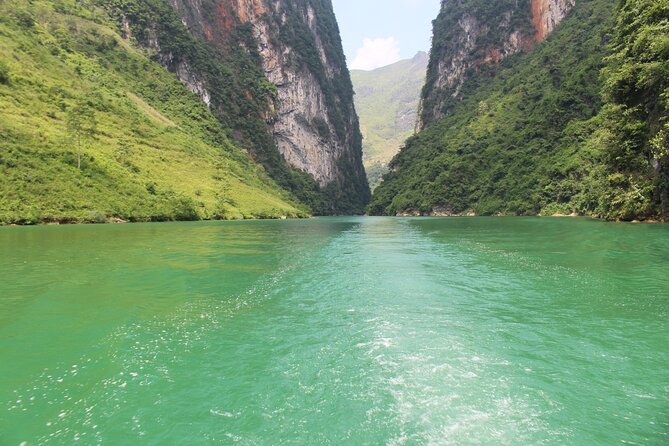
The route gives you time to experience the village geography rather than just naming it. In the Y Linh Ho area, you’re working with smaller-scale hospitality like the traditional restaurant lunch run by a local Hmong family. Then you continue onward to Lao Chai, a Black Hmong village.
What makes this part worthwhile is that it’s not only about costumes. You’re also seeing how daily life fits into the steep terrain—where paths, fields, and homes shape everything around you. You’ll get a better sense of why this region became so famous for community-based visiting.
The best part
You get a grounded Sapa introduction early, and you’re not trapped in a single spot all day. That matters because Sapa is compact, but it can feel repetitive if your route only hits one viewpoint.

The main catch
Village visiting can mean some walking on uneven ground. The good news: the tour keeps a structured pace, so you’re not left improvising transport or timing.
Sapa highlights on day two, plus the choice to market-hop or ride up Fansipan
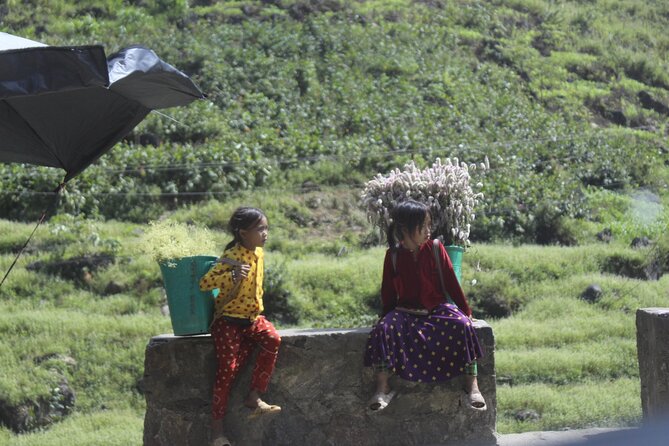
Day two starts with a 9:00 begin time, so you’ll want breakfast done before your guide picks you up. After that, you’ll do multiple highlights around Sapa with scheduled stops.
In the afternoon you get free time, and that choice is one of the best ways to personalize the day. You can do either of these:
- visit the Sapa market
- or take the cable car up toward Fansipan, the highest mountain in Vietnam
Why this flexible afternoon is a smart move
Cable cars and markets cater to totally different moods. If you like people-watching, bargaining-style browsing, and local snacks, the market is your lane. If you want big views with less legwork, Fansipan is your lane. Either way, you’re not stuck doing one thing all day.
A realistic consideration
If you’re sensitive to queues or crowd density, market time can feel more intense. If that’s you, go earlier in the free window and keep your expectations simple.
The limousine ride to Ha Giang: planned breaks and less hassle
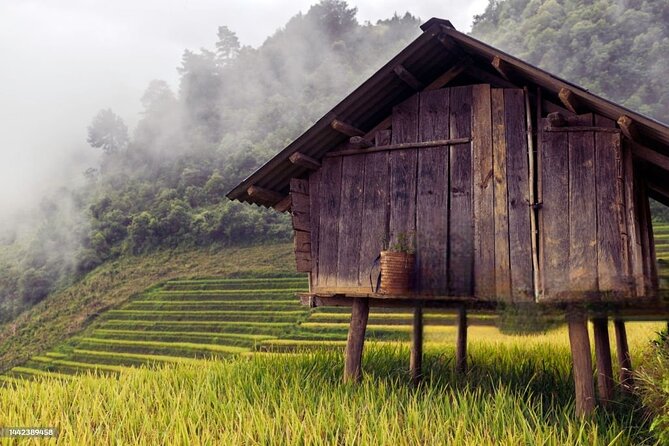
On day three, you move from Sapa to Ha Giang with a limousine bus. It’s about a 6-hour trip, and the plan includes 1 or 2 stops for toilet breaks and food/drinks. I like this because it reduces the usual stress of long-distance travel where you’re guessing what’s available and when.
When you arrive, you don’t start immediately with a full schedule. You’ll have time to explore an authentic minority village around 15:30. One of the most memorable details here is the architecture: many houses are built on stilts, and the surrounding rice fields set the tone for how people live with the terrain.
What you can do in this free village time
There’s enough time for a relaxed walk, and you can also walk up a hill for views if you want that extra perspective. Since the schedule gives you free time, you can match the day to your energy level.
Heaven’s Gate, Sung La Valley, and Lung Cam Village: Ha Giang’s road drama, but with context

Day four is where the trip becomes the reason people plan Northern Vietnam. After breakfast at your homestay, you start a journey through some of the most dramatic mountain country in Southeast Asia.
One early stop is Heaven’s Gate at about 1500m height. Then the route continues through Sung La Valley and another mountain pass. After that, you visit Lung Cam Village, known for very old houses.
Why these stops matter (not just because of photos)
This day helps you understand what you’re seeing when you look out the bus window. Passes like this aren’t only for views—they’re how communities connect and move through the region. When you pair a high viewpoint like Heaven’s Gate with a village stop like Lung Cam, you feel the geography as something lived-in, not staged.
A caution worth taking seriously
Mountain roads can be winding. If you’re prone to motion sickness, pack remedies and take them early. Don’t wait until you feel bad.
Dong Van market timing and Ma Pi Leng Pass: the Ha Giang payoff
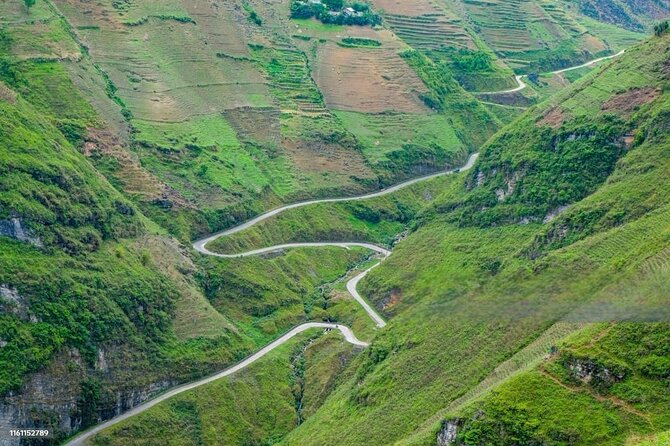
Day five includes two very different experiences, and that balance is what makes it work.
First, there’s Dong Van in the morning. If your day is a Sunday, you get a huge minority market on the square, with traditional clothing from multiple groups. Even if you don’t buy anything, markets are where you feel the social rhythm of a place.
In the afternoon you head to Meo Vac area, then to one of the highlights for most people: Ma Pi Leng Pass. This is often called the king of mountain passes, and the reason is simple—you get high viewpoints above deep valleys. The route also hints at the reality: if you’re not comfortable with heights or you’re already feeling carsick, you might want to pace yourself at the viewpoints.
How to make Ma Pi Leng Pass more enjoyable
- Bring water and something light to snack on.
- Take photos slowly, then step back to breathe.
- If you’re camera-focused, don’t forget to actually look out with your own eyes for a few minutes.
The upside of this day structure
Market time gives you culture. Pass time gives you scale. You’re not choosing between the two.
Cao Bang: the long drive day that changes the pace
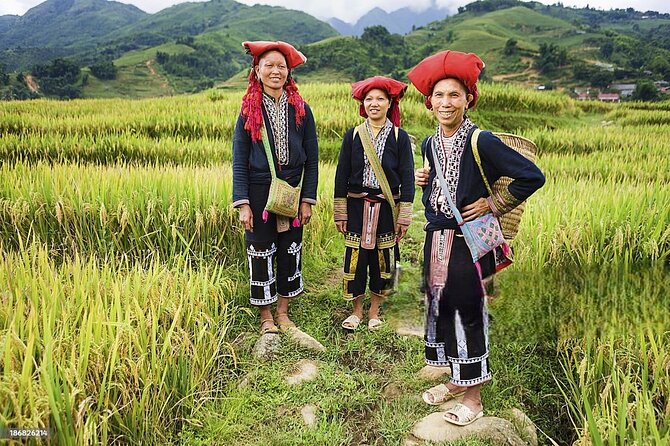
Day six is a longer drive through Cao Bang and more remote northern areas. You’ll see high mountains and villages of ethnic minorities along the way. The key here is that the schedule turns less about constant short stops and more about moving through real countryside.
In the middle of the day, you’ll also reach viewpoints/scenery stops in the Cao Bang area. The goal is to keep you seeing variety without turning every minute into a sprint.
Why this “in-between” day is valuable
After Ha Giang’s intensity, Cao Bang can feel like a breather. It’s still full of driving, but the scenery is different, and it sets you up mentally for the border-area sights on day seven.
Ban Gioc at the China border, plus Nguom Ngao Cave
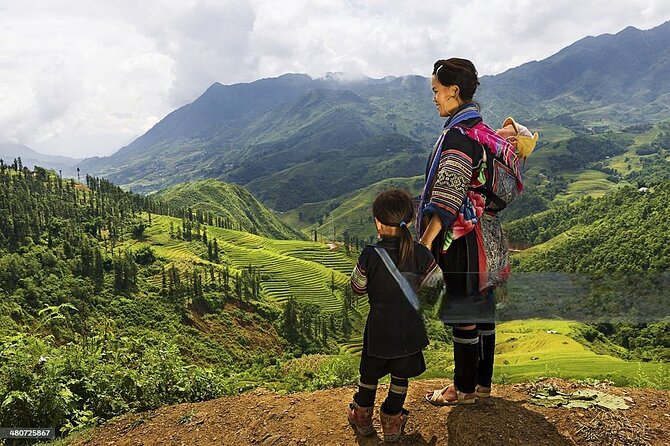
Day seven is the big north-of-north day. After breakfast, you drive all the way north to Ban Gioc Waterfall, right near the China border. The waterfall’s scale is the headline: it’s surrounded by rice fields, forests, and mountains, and it has that open, border-country feeling.
Then you add Nguom Ngao Cave. The route includes a path into a portion of the cave where you can see stalactites and stalagmites. That mix is smart because it gives you both water and limestone drama in one day.
What makes this day worth paying attention to
The waterfall region is scenic, but it can also blur together if you only do one “big attraction.” Adding the cave makes the day feel like two distinct worlds. You get fresh air, then cool stone, then back to driving.
What to pack for cave time
Caves can feel cooler than outside. Bring a light layer you can put on quickly.
Ba Be National Park and Ba Be Lake boat time: slow water, deep calm
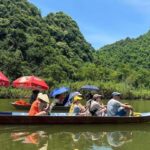
Day eight centers on Ba Be National Park and Ba Be Lake. You spend the morning exploring the lake by boat. Ba Be Lake is the biggest natural lake in Vietnam, and it sits amid national park jungle plus minority villages.
This part of the route is where you exhale. After days of driving, passes, and viewpoints, being on the water changes your rhythm fast. It also helps that your schedule puts this in the morning, so the day doesn’t feel chopped up by transport later.
How to get the most out of the boat ride
If you like photos, use them as a tool, not a mission. Look for how boats move through the lake edge where jungle meets water. And if you’ve got a camera, remember that shaded areas inside park vegetation can make it easy to underexpose—keep your settings simple.
Price and value: what $690 covers and what that means for you
At $690 per person for about 8 days, you’re not just paying for sights—you’re paying for the connective tissue that makes Northern Vietnam work.
Here’s what’s included:
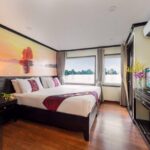
- private room accommodation
- a tour guide
- an air-conditioned vehicle
- all entrance fees for included sightseeing
- meals: 7 breakfasts, 8 lunches, 7 dinners
That matters because in this region, costs stack up fast when you’re trying to self-book. You’d need transport, ticketing, and a guide for language and logistics. With this plan, you’re paying for a structured flow and reducing the number of decisions you need to make each day.
The part to consider on the price side
Tips, alcohol, soft drinks, and personal expenses aren’t included. Also, if you’re someone who wants lots of solo add-ons (extra cable car time, extra paid activities), you’ll still spend some out of pocket.
But the core sightseeing and many meals being covered means the budget feels more predictable.
Small-group touring (max 10) and how it affects your experience
This tour runs with a maximum of 10 people, and that’s a big deal in Northern Vietnam. A small group means:
- the vehicle plan stays manageable
- timing can flex without turning into chaos
- your guide can answer questions without shouting over a big bus
You can see that kind of attention reflected in past trip feedback about customer support and guide help. Names that came up in communications include Mr Son and Ms Hang for arranging and support, and guides like Thiep and Tony were specifically praised for being helpful during the trip. (You won’t control who you get, but it’s a useful sign of what the company tends to staff.)
Pacing, comfort, and what to plan around on this route
Even with all inclusions, the pace is still the pace of northern roads. Expect:
- long transfer blocks between regions
- early starts on multiple days
- a mix of scheduled activities and free time
The comfort wins are real: air-conditioned transport, private rooms, and planned meals. The tradeoff is time on the road—especially in the Ha Giang and Cao Bang sections.
If you want the highlights without the fatigue, build in your own micro-rests: water breaks, short snack stops, and fewer heavy shopping impulses.
Who should book this North Vietnam loop
This is a strong fit if you:
- want a structured route across Sapa, Ha Giang, Ban Gioc, and Ba Be
- like a mix of village life, markets, and natural sights
- prefer fewer logistics decisions during the trip
- appreciate a small group with guide support
It may feel less ideal if you:
- hate long car days
- require very slow mornings and low walking
- get stressed when weather affects outdoor time (this tour needs good weather)
Should you book this tour or not?
I’d book it if you want Northern Vietnam that feels organized, not improvised. The biggest reasons are the private room setup, the fact that entrance fees and most meals are included, and the small-group cap that keeps the day-to-day manageable.
Hold off if you know you struggle with mountain driving and long seated hours. Also, if your travel dates are tight and the weather is unpredictable where you’re going, be ready for the tour’s weather dependence.
If those points don’t bother you, this itinerary is a practical way to see a lot of northern Vietnam while keeping the planning load low.
FAQ
How long is the Northern Vietnam tour?
The tour is listed as 8 days (approx.).
What places does this trip cover?
It focuses on Hanoi as the region, with the main touring areas including Sapa, Ha Giang, Dong Van, Cao Bang, Ban Gioc (Detian Falls), and Ba Be National Park.
What’s included in the tour price?
The listed inclusions are a tour guide, air-conditioned vehicle, private room accommodation, all entrance fees for included sights, and meals: 7 breakfasts, 8 lunches, and 7 dinners.
Are entrance fees included?
Yes. All entrance fees for the included sightseeing destinations are included.
Is a pickup provided?
Pickup is offered, and the tour also notes mobile ticket use.
How large is the group?
The tour states a maximum of 10 travelers.
Does the trip include meals?
Yes. Meals are included for most days: 7 breakfasts, 8 lunches, and 7 dinners.
What happens if the weather is bad?
The experience requires good weather. If it’s canceled due to poor weather, you’ll be offered a different date or a full refund.
Is it suitable for most people?
The listing says most travelers can participate and it is recommended for everybody.
Are service animals allowed?
Yes. Service animals are allowed.