
REVIEW · WORKSHOPS
Hanoi Knife Making Traditional Workshop
Book on Viator →Operated by Hanoi Day Trips · Bookable on Viator
Hot metal and steady hands beat souvenir shopping.
This Hanoi knife-making class takes you out to a traditional forging village where making blades is more than a craft—it’s a local inheritance. You start with a metal blank and follow the full workflow, from design sketch to forging and sharpening, so you leave with a real knife, not a photo.
My favorite part is the hands-on pacing. The family makers are patient, and even in a small group you get time to actually do the steps, not just watch. My other big win was the English guide, Nathan, who kept things clear and relaxed while you worked. One thing to consider: the class expects moderate physical fitness, and it depends on good weather, since you’ll be doing practical work outdoors or in open workshop areas.
In This Review
- Hanoi Knife Making Workshop: Key Things You Should Know
- Why Forging Outside Hanoi Feels Like a Time Machine
- Getting Picked Up and Keeping the Group Small
- The Village Setup: Materials, Tools, and What You’ll Actually Do
- Step One: Designing the Blade Shape on Metal
- Step Two: Cutting Out the Blade and Tang in the Embers
- Step Three: Shaping by Alternating Blows
- Step Four: Sharpening on the Grindstone, Including the Secret Tar Wash
- What the Workshop Teaches Beyond the Knife
- Price and Value: Is $50 a Fair Deal?
- Timing and Physical Considerations (Don’t Skip This)
- Who Should Book This Workshop (and Who Might Not Love It)
- Should You Book the Hanoi Knife Making Workshop?
- FAQ
- FAQ
- How long is the Hanoi knife making workshop?
- Where does the class take place?
- Is pickup included?
- What is the group size?
- What’s included in the price?
- Do I get to take the knife home?
- Is lunch included?
- Do I need tips?
- Does the workshop depend on weather?
- Is there a cancellation option if plans change?
- What if the tour doesn’t meet its minimum traveler requirement?
Hanoi Knife Making Workshop: Key Things You Should Know
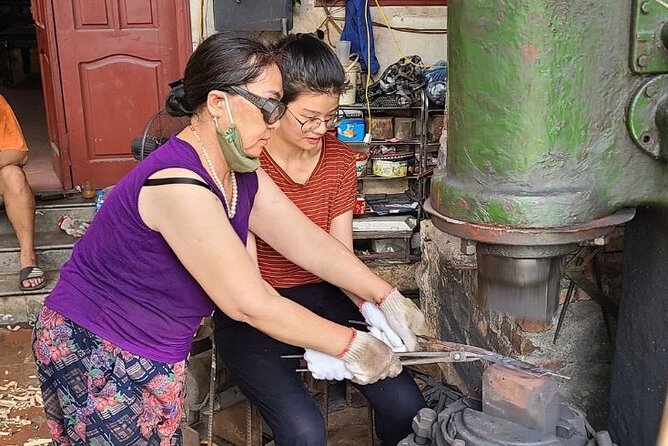
- A centuries-old forging village tradition that evolved from war-era weapons to farming tools
- You follow the real process, from sketching blade shape to forging in embers
- Family-run, small-group instruction (maximum 10 travelers)
- Forging + shaping with a makers’ workflow, including trimming imperfections with a hydraulic cutter
- Sharpening that includes a tar-based chemical wash step, using a secret family recipe
- You make a practical knife and leave with it as your take-home souvenir
Why Forging Outside Hanoi Feels Like a Time Machine
Hanoi has plenty of cultural stops, but this one works differently. It’s not about reading history off a sign. It’s about seeing how skill gets passed down—hammer, anvil, and grinding stone included.
The village’s forging roots go back several hundred years. Long ago, blades from this craft were used as weapons during the Vietnam wars. Today, the same forging knowledge is aimed at agricultural needs, like tools for the fields. That shift is part of what makes the experience feel honest: the craft survived by adapting to everyday life.
And yes, the work is tactile. You’re learning a process where tiny choices matter—like how you shape the blade, or when you move from hot metal to grinding. It turns “watching something traditional” into doing something traditional.
You can also read our reviews of more tours and experiences in Hanoi



Getting Picked Up and Keeping the Group Small
This runs about 3 hours 30 minutes. That’s a sweet spot: long enough for real practice, not so long that you’ll feel trapped in a bus for half the day.
You’ll likely be picked up, since pickup is offered, and you’ll ride in an air-conditioned vehicle. The group size stays small—up to 10 travelers—which matters more than it sounds. Small groups mean fewer people for the makers to manage, and more chances for you to get hands-on time.
There’s an English tour guide, and the workshop is guided through the steps you’ll perform. In at least one case, the guide’s name was Nathan, and people praised him for being patient and engaging. That’s exactly what you want here: clear direction while you’re learning a new set of physical motions.
The Village Setup: Materials, Tools, and What You’ll Actually Do
You’ll be working with iron material provided by the workshop. That’s important for value and convenience. You’re not responsible for buying supplies or figuring out what’s needed to make something like this happen.
From the start, you’ll be guided through a sequence that mirrors how bladesmiths think. The goal is a simple knife, not a fantasy sword. That’s good news for you. It keeps the experience focused and doable within a few hours.
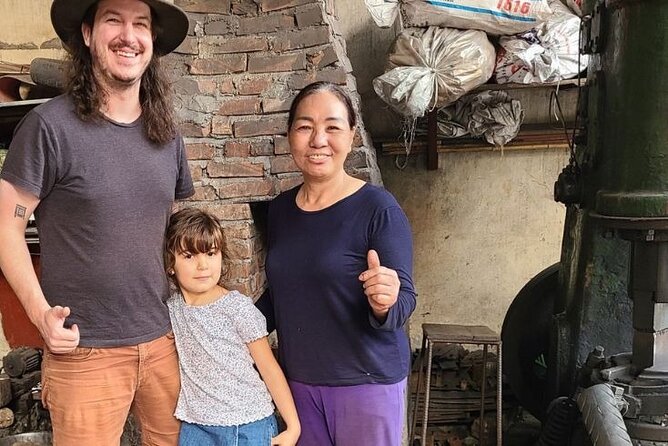
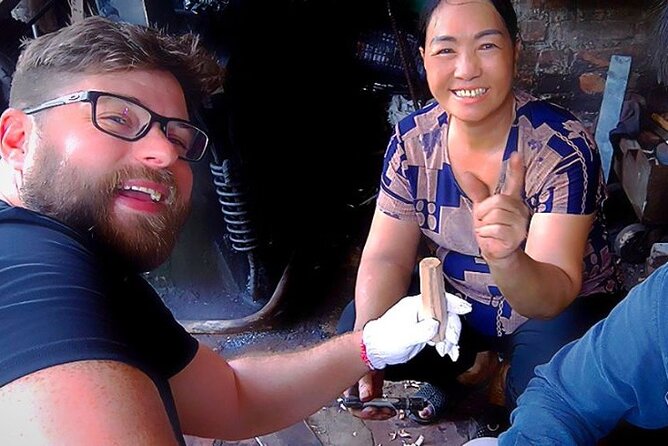
The workshop also leans into the “family craft” feel. People get patient help from the makers and family members. The overall vibe is more workshop than classroom. You’ll learn best if you’re ready to follow instructions closely and accept that your first swings with hammer and tools might be awkward.
Step One: Designing the Blade Shape on Metal
Before anything gets hot, you begin with design. You sketch the shape of the blade on a sheet of metal—choosing metal chosen for durability.
This part is underrated. It slows everything down and helps you understand the knife as an object with function, not just a souvenir. Blade shape affects how it will cut, how it balances, and what kind of edge you’ll end up with after sharpening.
Even if you don’t draw like a pro, you’re not expected to. This is about communicating a basic outline the makers can use as your starting template.
Step Two: Cutting Out the Blade and Tang in the Embers
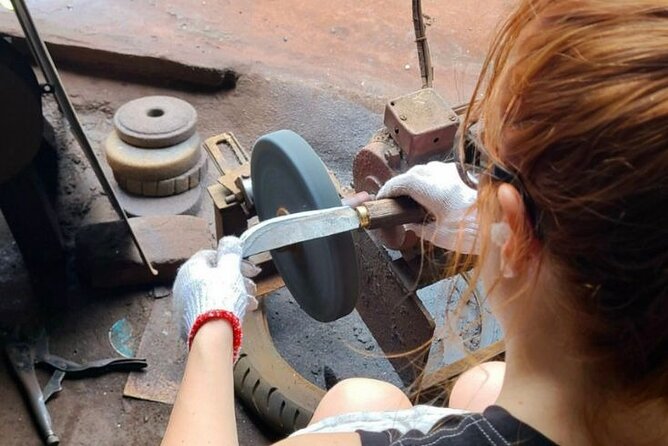
Next comes forging. You’ll cut out the blade portion and the tang—the section that extends into the handle. Then those pieces go into crackling embers.
This is where the class really feels like an actual craft workshop. Heat changes everything about metal. You’re learning the idea that making a blade isn’t one action—it’s a series of controlled steps, timed and repeated.
If you’ve never worked around forge heat, pay attention to how instructions are delivered. You’ll want to stay alert and follow safety-minded direction from the makers. This isn’t the place for multitasking.






Step Three: Shaping by Alternating Blows
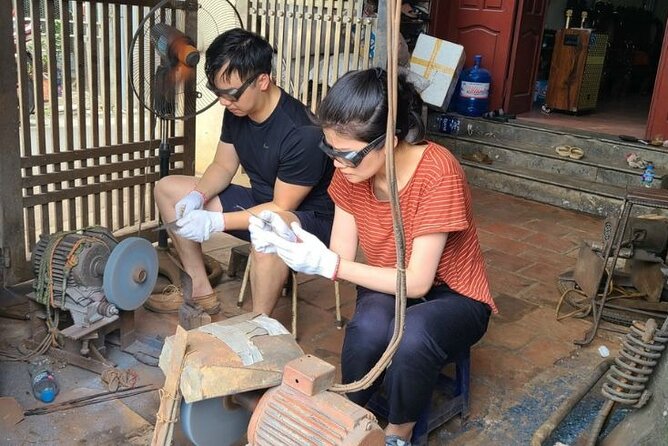
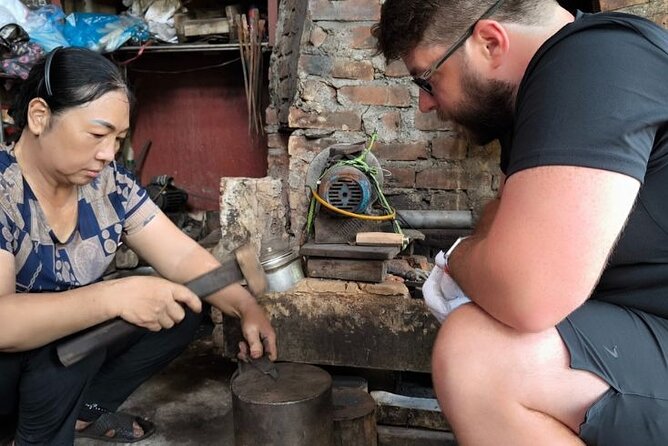
Now you shape. You and the maker alternate blows, using hammer and anvil techniques to bring the blade toward its final form.
This is also where you see the skill of the people teaching you. The makers don’t just show up and fix things. They guide the rhythm—how to hit, how to adjust, and when to stop. That’s why the small-group size matters again. With more people, you’d get less time for the real hammer work.
If you make an imperfect move, there’s a practical fix built into the process. Any imperfections can be trimmed by a hydraulic cutting machine. That detail matters: you’re not being left to “DIY your mistakes.” The process is designed so your blade can still come out properly shaped.
Step Four: Sharpening on the Grindstone, Including the Secret Tar Wash
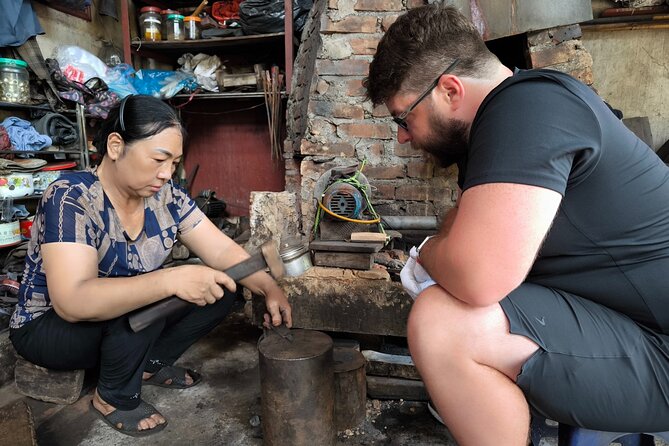
After shaping, you move to sharpening. The blade is sharpened on a grindstone, and the process involves several phases.
One step is especially memorable: soaking the blade in a special tar-based chemical wash, described as a secret family recipe. The idea is that finishing work isn’t just grinding metal—it’s controlling how the surface is treated so the edge and final result hold up.
Even if you can’t see the chemistry, you can feel the “seriousness” of it. This is part of what local experts protect. It’s knowledge that doesn’t show up in generic knife-making demos.
You’ll leave with a blade that’s been taken through the full arc: sketch, forge, shape, and then edge work. That’s why this doesn’t feel like a gimmick class.
What the Workshop Teaches Beyond the Knife
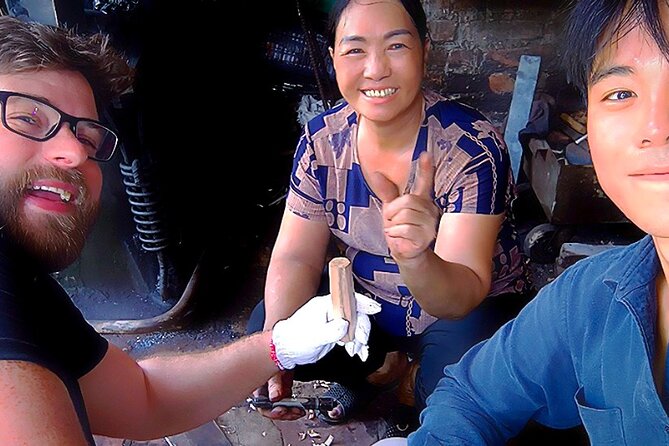
I like experiences that teach you something you can use later. This one does, even if you never forge another blade at home.
You learn how tradition survives: not by freezing the past in place, but by keeping the technique and redirecting the purpose. The village moved from weapons toward agricultural implements. That’s a reminder that craft is tied to real needs.
You also see how expertise is built through repetition. One of the makers’ family stories shared that they start training at around 12 years old, and you can tell the skill is the result of years of practice. That’s not a “fun fact.” It’s the reason the workshop runs with confidence and patience.
And if you’re the type who likes learning how things are made, you’ll probably watch the finishing work with new attention—thinking about edge geometry, surface treatment, and why the makers don’t rush.
Price and Value: Is $50 a Fair Deal?
At $50 per person, the price feels reasonable for what you get—especially if you compare it to “tourist craft shows” that hand you a finished item and call it an experience.
Here’s what you’re buying with that ticket:
- Air-conditioned vehicle transport
- Iron material used for your knife
- English tour guide to explain each step
- A small-group workshop format (max 10)
- The full process, including forging and sharpening phases
What you should budget separately:
- Lunch is not included
- Tips are not included
So if you’re traveling on a tight schedule, plan your day around needing food before or after. For tips, I’d treat it like a working crafts class where instruction and patience matter. This isn’t a quick photo stop.
In short, the value comes from the amount of real work you do and the fact that you leave with a knife you made through the full workflow.
Timing and Physical Considerations (Don’t Skip This)
The class is about 3 hours 30 minutes. Within that time, you’ll be doing manual steps that require coordination and some stamina. The experience notes a moderate physical fitness level.
That doesn’t mean you need to be an athlete. It does mean you should be comfortable standing and moving through short bursts of effort—hammer work, tool handling guidance, and the practical rhythm of forging and finishing.
Also remember: the workshop requires good weather. If weather turns, it may be moved or refunded. Since forging and open-air workshop time can depend on conditions, it’s not something you can treat as guaranteed regardless of the forecast.
Who Should Book This Workshop (and Who Might Not Love It)
You’ll likely enjoy this if you:
- Want a hands-on cultural experience, not just sightseeing
- Like learning practical skills and understanding how objects are made
- Prefer small groups where you get attention and direction
- Want a take-home item with real meaning, like a functional kitchen knife
You might think twice if you:
- Struggle with moderate physical activity or long standing
- Hate being around hot metal and sharp tools (you’ll be guided safely, but it’s still an active workshop environment)
- Are traveling with very tight timing and no flexibility for weather changes
If you’re comfortable following instructions and you’re curious, this is a standout way to spend a half day in Hanoi.
Should You Book the Hanoi Knife Making Workshop?
I’d book it if you want an experience with real craft effort and a finished product you can actually use. The combination of a family-run forging tradition, a small group size, and the fact you follow the full workflow—from sketch to sharpening—makes it a better-than-average value at $50.
Skip it only if you know you won’t handle manual work or if your schedule is so inflexible that weather risk will stress you out. Otherwise, this is the kind of class that makes you look at everyday knives differently when you get home.
FAQ
FAQ
How long is the Hanoi knife making workshop?
It’s about 3 hours 30 minutes.
Where does the class take place?
It’s in Hanoi, Vietnam, with visits to traditional craft villages on the outskirts of Hanoi.
Is pickup included?
Pickup is offered. The tour includes an air-conditioned vehicle.
What is the group size?
The workshop has a maximum of 10 travelers.
What’s included in the price?
The price includes an air-conditioned vehicle, iron material, and an English tour guide.
Do I get to take the knife home?
Yes. The experience is designed so you take home a knife you made during the class.
Is lunch included?
No, lunch is not included.
Do I need tips?
Tips are not included.
Does the workshop depend on weather?
Yes. The experience requires good weather, and if it’s canceled due to poor weather, you’ll be offered a different date or a full refund.
Is there a cancellation option if plans change?
You can cancel for a full refund up to 24 hours before the experience’s start time.
What if the tour doesn’t meet its minimum traveler requirement?
If it’s canceled because the minimum number of travelers isn’t met, you’ll be offered a different date/experience or a full refund.