
REVIEW · WORKSHOPS
Hanoi Knife-Making Class:Join the Legacy in Blacksmith’s Workshop
Book on Viator →Operated by Photheculture · Bookable on Viator
Forget souvenirs; you leave with a blade. This Hanoi class in Đa Sỹ takes about 2.5 hours, and you’ll design, forge, shape, and sharpen a functional knife using traditional tools and a real workshop. I liked how the experience is led by a female artisan who has spent 44 years preserving the craft.
My other big win: the sharpening finale. You don’t just grind and call it done. You’ll work through the steps on the grindstone, including a tar-based wash that’s described as a family secret technique passed down through generations.
One consideration: this is true hands-on work. Expect heat from the forge, hammering, grinding, and careful attention, so if you want a laid-back, watch-only class, this probably won’t feel relaxing.
In This Review
- Key highlights worth your time
- Da Sỹ is the point: craft, not cosplay
- Meet the forge team: women-led, expert-led, practical guidance
- Step-by-step: what you actually do for 2.5 hours
- Designing your blade: small choices, big effect
- Forging basics: cutting, heating, and shaping the metal
- Shaping and smoothing: turn rough edges into clean lines
- Sharpening on the grindstone: the tar-based family secret
- What you bring home: a usable souvenir, not just a story
- Flying home with your knife: plan for airport rules
- Price and value: $45.51 for a craft you can’t fake
- Who this class is best for (and who should skip it)
- Logistics that matter: location, timing, and workshop flow
- Should you book this Hanoi knife-making class?
- FAQ
- FAQ
- How long is the Hanoi knife-making class?
- What’s the price per person?
- What do I make and take home?
- What’s included in the class?
- Is there a limit on group size?
- Where does the class start and end?
- What if my plans change and I need to cancel?
Key highlights worth your time
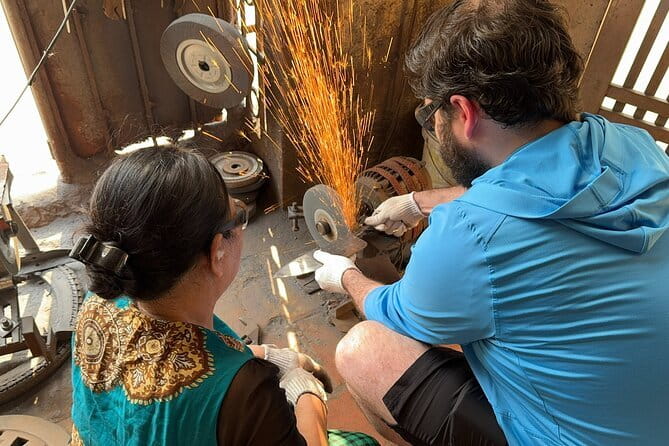
- Da Sỹ knife craft roots: a centuries-old forging village once known for supplying weaponry during Vietnam’s historical wars
- Female-led forge experience: work with an artisan recognized in the trade who has preserved the craft for 44 years
- Full making process: you’ll design, forge (including tang), shape, and sharpen your own knife
- Traditional tools plus refinements: hammering on an anvil, then a hydraulic machine helps smooth rough edges
- Rare sharpening step: a tar-based wash is part of the honing/sharpening sequence
Da Sỹ is the point: craft, not cosplay
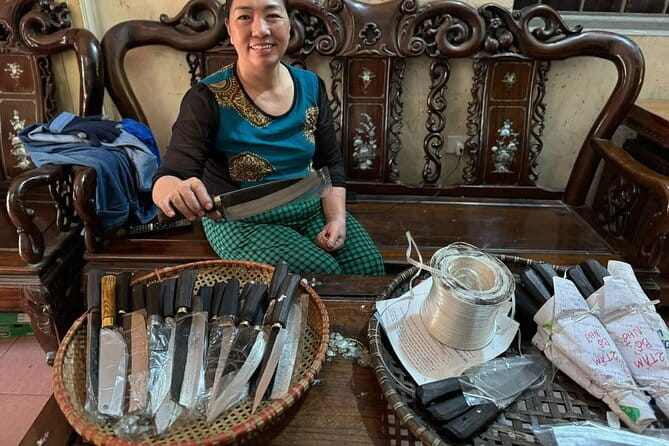
Hanoi already has plenty to do, but this class feels different because it’s tied to a place where the skill is still practiced. Da Sỹ (in Hà Đông) is known for centuries of forging, and the story you hear is that this village once produced weaponry in Vietnam’s historical wars. That background matters, because the workshop isn’t treating knife-making as a theme. It’s treating it like craft.
What you’re really buying here is time with the process. You’re not picking from a pile of pre-made parts. You’re guided through decisions (blade design), then through physical work (cutting, heating, hammering, grinding), and finally through the finishing steps that turn metal into an actually useful tool.
And the setting is intimate. The class caps at 10 travelers, which keeps the workshop from turning into a production line. You’ll have room to ask questions and get hands-on coaching as you work.
You can also read our reviews of more tours and experiences in Hanoi



Meet the forge team: women-led, expert-led, practical guidance
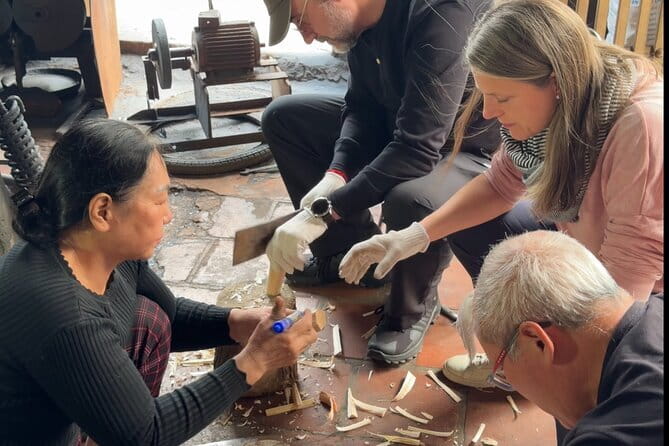
The experience is described as being guided by skilled artisans in a fully equipped workshop, with step-by-step instruction so beginners aren’t left flailing. In practice, the “human factor” shows up fast. One artisan you may work with is Tuyên, described as patient and skilled while helping people make their knives. Guides you might meet and learn from include Mint, Nick, and Tulip.
Why I think this matters: knife-making is one of those crafts where small errors can ruin the end result. A good guide matters when you’re shaping the blade and when you’re learning the sharpening sequence. The class is built to keep you moving forward while you’re still learning the basics.
Step-by-step: what you actually do for 2.5 hours
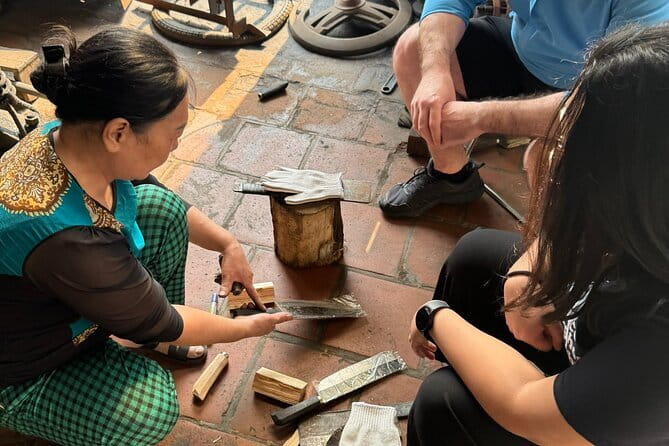
The class runs about 2 hours 30 minutes and follows a logical sequence: design first, then metalwork, then finishing. Here’s what that looks like in plain terms, and what to pay attention to.
Designing your blade: small choices, big effect
You start by sketching your blade on a durable metal blank. The point isn’t artistic perfection. It’s learning how blade shape affects usefulness and how tang size and layout connect to the handle later.
I like this part because it gives you ownership early. You’re making decisions before you ever heat anything up, so you understand what you’re building instead of just following steps.
Practical tip: take a moment to think about what you want the knife to be for—basic kitchen cutting, general prep, or just as a souvenir with real heft. The design you choose is the closest you’ll get to tailoring the knife to your needs.
Forging basics: cutting, heating, and shaping the metal
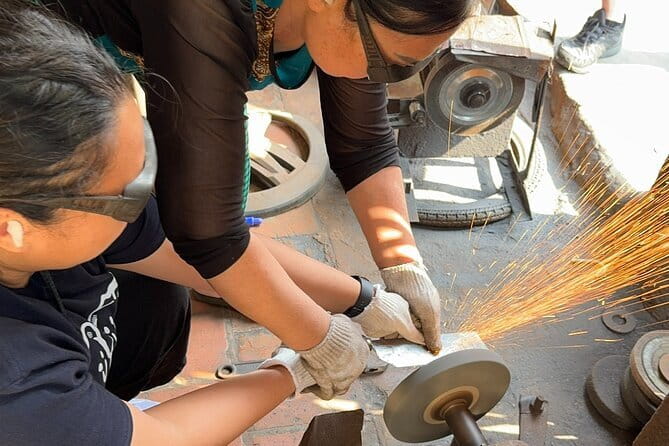
Next comes the workshop work: you cut out the blade shape and the tang (the part that will fit into the handle). You’ll use traditional tools like hammers, cutters, and an anvil, and you’ll heat the metal in the forge to prepare it for shaping.
This is where the class goes from “interesting” to “real.” Metal forgings don’t behave the same way at every temperature. So when your artisan coaches you, it’s not just about form—it’s about timing and control.
Even if you’ve never held a hammer before, the structure helps. You’ll work side-by-side with the artisans and take turns hammering the metal into the desired shape. That shared workflow also makes the workshop feel like a small craft community, not a classroom.






Shaping and smoothing: turn rough edges into clean lines
Once the blade has its basic form, you’ll refine it. The class includes a traditional hammering approach, plus a hydraulic machine that helps refine rough edges for a smoother finish.
This is a practical addition. A hydraulic machine speeds up the shaping work and helps you get cleaner results without needing years of experience. You still do the key making yourself; the tool just helps the class stay efficient and safe.
What to watch for: don’t rush the finishing steps. The more care you put into smoothing now, the less frustrating it is later when you’re sharpening and honing.
Sharpening on the grindstone: the tar-based family secret
The final step is sharpening on a grindstone. The sequence includes multiple steps, including an unusual technique: a tar-based wash. It’s described as a family secret passed down through generations, which is exactly the kind of detail that makes this feel like more than a simple craft demo.
To get value out of this part, slow down mentally. Sharpening is not only about making the blade sharp; it’s about getting the edge geometry right and finishing the blade so it holds up.
Also, you get a knife you can use after the class, not just a decorative prop. That’s a big deal for a souvenir. A handmade blade feels more like a tool you earned.
What you bring home: a usable souvenir, not just a story
Your take-home item is a handmade knife made by your own hands. That matters because the experience ends with something tangible and practical.
Some classes sell a “make a thing” experience where the finished item is basically a decorative version of the craft. Here, the process includes forging, shaping, and sharpening, and that suggests you’ll leave with a knife that’s meant for real use.
Sizing may vary depending on your choices. One guest noted a smaller finished length (about 14 cm), which is helpful if you’re thinking about carry rules and practical use.
Flying home with your knife: plan for airport rules
If you’re heading home by air, do yourself a favor and check the rules for carrying or transporting a blade with your airline and your home country. One guest specifically called out that airport regulations can be an issue, so it’s worth preparing before you show up at security.
If the provider offers shipping or alternatives, ask in advance. The class itself is clearly built around you taking the knife home, so logistics are on you to figure out early.
Price and value: $45.51 for a craft you can’t fake
At $45.51 per person, this isn’t a cheap “sip tea and watch” activity. But it also isn’t a high-cost luxury workshop. What makes the price feel reasonable is what’s included.
You get:
- All tools at the artisan’s house
- Safety equipment
- A guided process through the full knife-making sequence
- A finished, functional handmade knife to take home
For context, many souvenir workshops cost about the same or more but don’t include the heavy labor steps. Here, you’re paying for time, instruction, tools, and a skill that usually takes years to learn fully.
Also, the max group size (10) keeps the instruction personal enough to matter. If you’re paying for hands-on craft coaching, group size is part of the value.
Who this class is best for (and who should skip it)
This works best if you want an experience that’s hands-on and practical. If you like making something with your hands, don’t mind physical work, and enjoy learning how craft people actually do their jobs, you’ll probably love it.
It’s also a good fit if you’re interested in Vietnamese history and resilience in a way that isn’t just reading posters. Da Sỹ’s role in wartime weapon supply helps explain why this craft endured.
Consider skipping if:
- you want a totally relaxed, low-effort class
- you dislike heat, noise, and focused manual tasks
- you only want a quick photo stop and don’t care about the making process
Logistics that matter: location, timing, and workshop flow
The class starts and ends at the same meeting point in Đa Sỹ, Kiến Hưng, Hà Đông, Hanoi, and it runs about 2 hours 30 minutes. It’s near public transportation, and service animals are allowed.
The workshop itself is set up for safety and instruction, since the tools and necessary safety equipment are provided. Most people can participate, so you’re not stuck watching from the sidelines.
What’s smart to do: wear clothes you don’t mind getting a bit warm or dirty. Even when safety gear is provided, forging and sharpening can be messy in real life.
Should you book this Hanoi knife-making class?
Yes, if you want a hands-on craft with a real sense of place. The combination of Da Sỹ’s long forging tradition, a female-led forge with 44 years of dedication, and the step-by-step process (including the rare tar-based sharpening wash) makes this feel like a genuine learning experience rather than a souvenir factory.
If you’re the kind of traveler who likes stories you can touch—metal you helped shape—this is an excellent use of a morning or afternoon in Hanoi.
FAQ
FAQ
How long is the Hanoi knife-making class?
The experience runs about 2 hours 30 minutes.
What’s the price per person?
The price is $45.51 per person.
What do I make and take home?
You design, forge, shape, and sharpen your own handmade knife, which you take home at the end.
What’s included in the class?
All tools are provided at the artisan’s house, along with necessary safety equipment for knife making.
Is there a limit on group size?
Yes. The class has a maximum of 10 travelers.
Where does the class start and end?
It starts at Đa Sỹ, Kiến Hưng, Hà Đông, Hà Nội, Vietnam, and ends back at the same meeting point.
What if my plans change and I need to cancel?
Cancellation is free. You can cancel up to 24 hours in advance for a full refund, but if you cancel less than 24 hours before the start time, the amount paid is not refunded.