Switchbacks with real trekking.
This 6-day Ha Giang Loop and Sapa trek mixes motorbike-style scenery with 5–15km trekking days and village time you can’t rush. You’ll ride through famous northern passes, then slow down on foot through terraced fields and ethnic communities.
I especially like the homestay experience. You sleep in stilt and ground houses, cook and eat with the family, and the Red Dao side includes herbal-medicine bathing. I also like the small-group feel and the practical support during the trip, including the step-by-step guidance that makes the route feel manageable.
The main drawback is that this is not a flat, easy holiday. Expect long travel days, some steep hiking (even if it can be mainly downhill), and a bit of tiredness that comes with moving through remote valleys.
In This Review
- Quick hits before you go
- Why this Ha Giang and Sapa combo actually makes sense
- The route rhythm: sleeper bus, passes, and village time
- Day 1 in Hanoi: meeting the group and riding out on a sleeper bus
- Days 2–3 in Ha Giang: Quan Ba, Dong Van heart, and Ma Pi Leng’s big drama
- Day 4: Du Gia waterfall, Lung Tam weaving, and the Sapa handoff
- Days 5–6 in Sapa: Muong Hoa Valley trekking through Y Linh Ho, Lao Chai, Ta Van, and Giang Ta Chai
- Homestays in Ha Giang: why this part is more than a bed
- Price and value: what $380 buys you (and what to budget outside)
- Who should book this tour?
- Should you book the 6-Days Ha Giang Loop & Sapa Trekking Package?
- FAQ
- How long is the tour?
- What does the $380 price include?
- Where does the tour start in Hanoi?
- Does the tour include pickup?
- Is the group large?
- What are the main activities?
- Do I visit famous Ha Giang places on this route?
- Do I get homestay accommodations?
- Can I drive the motorbike myself?
- Is there free cancellation?
Quick hits before you go
- Small group (up to 12): more personal pacing and less chaos when you’re hopping between viewpoints and villages.
- Real trekking focus: the tour is built around walking days, not just quick photo stops.
- Ha Giang’s showpieces: Quan Ba Heaven Gate, Dinh Vua Meo (Vuong Palace), and the long run over Ma Pi Leng Pass.
- Du Gia and Lung Tam stops: a waterfall break plus a weaving village where craft matters.
- Sapa’s Muong Hoa Valley villages: Y Linh Ho, Lao Chai, Ta Van, and Giang Ta Chai in one trip.
- Motorbike confidence: equipment and instructions are highlighted in feedback, and an international driving licence can let you ride yourself.
Why this Ha Giang and Sapa combo actually makes sense
I like combining Ha Giang and Sapa because the two places “show” different sides of northern Vietnam. Ha Giang hits you with big geology and dramatic roads—limestone mountains, passes, and valleys tied to the famous Happiness Road (QL4C). Sapa shifts the tempo to farming terraces and village life in the Muong Hoa Valley.
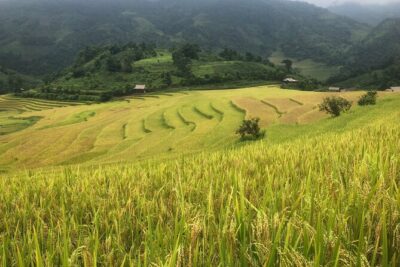
This package is designed around doing more on foot than most multi-stop tours. The stated idea is simple: you’re not just checking in by vehicle. You’ll trek roughly 5–15km per day, moving along village paths, terraced fields, and viewpoints that are hard to reach any other way.
Then there’s the homestay piece, and that’s a big part of the value. Instead of a hotel that locks you out of local rhythm, you sleep in traditional wooden stilt houses or ground houses where you cook, eat, and share the evening with the family. If you want the kind of trip where you learn the routine of a place—not just its postcard angles—this format fits.
The trick is knowing what you’re signing up for: lots of motion. You’ll have sleeper and transfer bus legs, then climbing and descending on trekking days. If you’re the type who only wants one or the other (roads or walking), this mixed plan might feel like two vacations in one.
You can also read our reviews of more hiking tours in Hanoi

The route rhythm: sleeper bus, passes, and village time
The timing is the glue here. You start in Hanoi at an Old Quarter meeting point around 8:30am, then you’ll get on an overnight sleeper bus toward Ha Giang (the schedule notes about 6 hours for that leg). The idea is to reduce “dead time” so you can hit Ha Giang sights on day 2 instead of wasting a full day on transport.
Ha Giang fills days 2 to 4 with stops tied to viewpoints and villages. The tour ends the Ha Giang Loop in the afternoon (around 15–16:00), then you shower, wait, and get picked up for a transfer bus to Sapa. That puts you into Sapa mid or late night, so you’re waking up on day 5 already in the mountains, ready for the Muong Hoa Valley walking.
What I like about this rhythm is that the hardest parts (passes, remote roads) are grouped together. What you should consider is that late arrival is real. If you hate night travel or you’re easily thrown off by schedule changes, this tour will ask for patience.
Small-group size also matters here. With a max of 12 travelers, you’re less likely to get separated into a chaotic “everybody runs in different directions” situation. Your days can still feel busy, but the team structure tends to hold.
Day 1 in Hanoi: meeting the group and riding out on a sleeper bus
Day 1 is about logistics and momentum. You’re asked to meet at the Old Quarter meeting point and be on time for your voucher time, around 8:30am, then head onto the sleeper bus toward Ha Giang. The tour summary lists the ride at about 6 hours.
Practically, this means your first “real” views don’t start immediately. Your first win is the planning itself: by riding overnight, you avoid burning daylight and you’re positioned for the scenic Ha Giang portion right away.
What to expect day-1 wise: you’re mostly traveling and settling in. If you’re sensitive to bus bumps or you need perfect sleep to enjoy hiking later, plan your night accordingly. Bring a way to get comfortable on the bus, and don’t assume you’ll wake up feeling like you just had a hotel-quality recharge.
Days 2–3 in Ha Giang: Quan Ba, Dong Van heart, and Ma Pi Leng’s big drama
Day 2 is where Ha Giang opens up. You begin at Quan Ba Heaven Gate, with a stop at the highest point on Quan Ba Pass. From there, you get panoramas over the Tam Son valley—limestone mountains and terraced fields in one wide view. There’s also a small cafe at the top, which is a nice touch when you want a break without rushing.
Next you go toward the Dong Van Karst Plateau Geopark area, with Thẩm Mã Pass noted along the Happiness Road (QL4C). This is the kind of road stop that works because it’s not just a sign on a map. It’s dramatic winding curves, and the time window here is short, which keeps it from turning into a long detour.
Then comes Dinh Vua Meo (Vuong Palace) in the Sa Phin Valley, the former residence of Vuong Chinh Duc, known as the Hmong King. I like this stop because it grounds the scenery in people and power. It’s also “included time,” meaning you’re not just passing by stone and sky—you’re getting context.
You end Day 2 in Đồng Văn, a highland district in Vietnam’s northernmost region. The itinerary lists Đồng Văn as the heart of the UNESCO-recognized Dong Van Karst area. Even if you don’t spend a full day here, it’s a useful base-feel stop before the biggest pass day.
Day 3 is the pass day: Ma Pi Leng Pass. The itinerary notes it runs about 20 kilometers along the Happiness Road between Đồng Văn and Mèo Vạc. This is one of those places where even a short stop can feel like a reset. The road is a highlight, and it connects you to the scale of the valleys below.
After that you continue to Mèo Vạc (Meo Vac), described as a remote district with limestone peaks and steep valleys. Then you arrive in Du Gia around 16:00, check in to a homestay, shower, relax, and eat dinner with the family.
I think Du Gia is where this tour becomes less of a sightseeing circuit and more of a lived-in experience. The schedule gives you time to recover before Day 4’s stops, and that makes the trekking half of the trip easier to enjoy.
Day 4: Du Gia waterfall, Lung Tam weaving, and the Sapa handoff
Day 4 starts with Du Gia Waterfall, located in Du Gia Commune (Yên Minh District), about 70km from Ha Giang City. The itinerary calls it a multi-tiered waterfall about 6 meters high, pouring into a basin below. It’s a “stretch your legs and look around” stop rather than a marathon hike, and that balance matters when you’ve already been on the move.
Next is Lung Tam Village in Quản Bạ. This stop is famous for weaving—linen and brocade craft—with the village framed by a valley beside the Miên River and surrounded by limestone peaks. What I like here is the focus on hands and materials. You’re not just looking; you’re meeting the reason people stay and work in these areas.
Then you roll into the end of the Ha Giang Loop, reaching Ha Giang city around 15–16:00 and finishing at a hostel. The itinerary says you can shower there and wait for pickup. Then the transfer bus to Sapa runs about 6 hours, arriving mid-night, and you get your Sapa room to sleep.
This handoff day can be tiring. You’re stacking a scenic day plus a long ride, so don’t plan a big extra activity the moment you arrive in Sapa. If you want to enjoy the next morning’s trekking, protect your sleep.




Days 5–6 in Sapa: Muong Hoa Valley trekking through Y Linh Ho, Lao Chai, Ta Van, and Giang Ta Chai
Sapa is where you slow down and let walking do the talking.
Day 5 starts at Y Linh Ho Village, about 5km southwest of Sapa in the Muong Hoa Valley. The itinerary describes it as a tranquil settlement of H’Mông and Dao communities. This kind of opening stop is useful because it helps you get your rhythm before the bigger village clusters.
Next is Lao Chai, about 7km southeast of Sapa, also in Muong Hoa Valley. It’s known for terraced rice fields and ethnic culture, and the tour notes it’s home to around 100 Black H’mồng. I like that the itinerary keeps connecting scenery to agriculture. Terraces aren’t just pretty—they’re work, season, and risk management on a steep hillside.
Then you continue to Ta Van Village, about 3km from Lao Chai, with H’mông, Giay, and Red Dao communities. The tour notes roughly 150–200 households. Ta Van works well in a trekking itinerary because it’s one of the places where you can feel village life continuing beyond the viewpoint minutes.
Day 6 includes Giang Ta Chai Village, about 5km from Ta Van, perched in terraced terrain with bamboo groves mentioned for trekking routes. This is where the trip ends with a final push of walking before you head back toward Sapa and then Hanoi.
From the feedback tied to this type of hike, I’d take the “steep but exciting” angle seriously. Even when a route is described as mainly downhill, it can still be steep in sections. If your knees get cranky easily, go slow on descents. You’ll enjoy the views more when you’re not rushing each step.
The end of the tour is also structured. The Day 6 schedule has you reach Sapa around 14–15:00, with a driver pickup back to Sapa Station Hostel. Then you wait for the bus that departs every hour, and the bus to Hanoi takes about 6 hours.
Homestays in Ha Giang: why this part is more than a bed
I think the homestay format is one of the most practical parts of this entire tour, not just the most romantic.
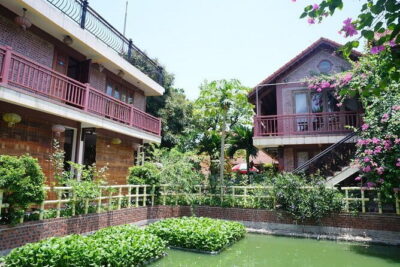
You sleep in traditional houses—stilt and ground houses—where you can cook with the family and eat together. The itinerary also points to Red Dao herbal medicine bathing, plus village stories in the evening. That’s not a small detail. It changes how you experience the valley: you’re not just passing through; you’re taking part in a daily rhythm.
There are a couple of things to keep in mind if you choose this style. First, homestays are built around local comfort, not Western hotel standards. If you want predictable amenities, treat this as a cultural exchange and a basic-adventure stay.
Second, evening time matters. Because Day 4 ends Ha Giang and Day 5 starts the Sapa walking, your homestays are helping you reset. The tour schedule specifically includes shower time and dinner on the Du Gia arrival evening, which is a thoughtful step before any long trekking push.
I’d also come prepared to be respectful. In small communities, even small actions count: simple greetings, asking before taking photos, and being patient when the schedule feels different from yours.
Price and value: what $380 buys you (and what to budget outside)
At $380 per person for about 6 days, the biggest value isn’t the single view—it’s the package structure. You’re paying for transportation (including sleeper bus and transfer buses), entrance fees, and a lot of meals. The itinerary lists 5 breakfasts, 5 lunches, and 3 dinners.
Entrance fees are included in the package, which helps a lot in places like viewpoints, geopark stops, and the Vuong Palace. You also get the benefit of a group limit of 12, plus group discounts and a mobile ticket.
Pickup is offered (the itinerary mentions pickup back to Sapa Station Hostel), which cuts down on hassle. And the schedule is timed so you’re moving between Ha Giang and Sapa without losing full days to travel.
What’s not included is also clear: tips and personal expenses. That’s normal, but I’d still plan for it so you don’t end the trip surprised by add-ons.
One more practical note: the trip is often booked about 11 days in advance on average. If you’re traveling in a popular window, I’d aim to lock it in sooner so you can get your preferred dates.
Who should book this tour?
This package fits you if you want:
- A mixed Ha Giang + Sapa journey instead of choosing just one.
- Trekking that’s part of the plan (5–15km days) rather than a token walk.
- A homestay that puts you in a local routine: cooking, meals, and village conversation.
- Support that’s hands-on. Feedback highlights good motorbike equipment and clear instructions, including the possibility of driving yourself with an international driving licence.
It might not be the right fit if you:
- Want a mostly comfortable, low-movement vacation.
- Hate steep steps and steep descents, even if the hiking is mainly downhill.
- Need very predictable hotel-style sleeping and bathroom comforts.
Should you book the 6-Days Ha Giang Loop & Sapa Trekking Package?
I’d book it if your idea of a great trip includes walking through villages and terraces and sharing a night in a real homestay, while still getting the dramatic Ha Giang pass scenery. The itinerary is set up so the passes are front-loaded, then the walking and village life take over.
If you’re on the fence, ask yourself this: do you want the trip to cost less your energy or cost less your planning? This tour costs some energy, but it saves you decision fatigue. With included meals, entrance fees, and a clear small-group structure, you can focus on the part that matters—those long views from passes, then quiet village paths.
If you’re physically okay with steep sections and you’re ready to embrace a homestay pace, this is a solid value way to connect Ha Giang and Sapa in one go.
FAQ
How long is the tour?
It runs for about 6 days (approximately 6 days).
What does the $380 price include?
The package includes transportation, entrance fees, and meals: 5 breakfasts, 5 lunches, and 3 dinners.
Where does the tour start in Hanoi?
It starts at the Old Quarter meeting point, with a stated start time of 8:30am.
Does the tour include pickup?
Pickup is offered, and the itinerary notes pickup back to Sapa Station Hostel near the end.
Is the group large?
No. The tour has a maximum of 12 travelers.
What are the main activities?
The tour combines the Ha Giang Loop with trekking in Sapa, with a focus on walking days (5–15km per day).
Do I visit famous Ha Giang places on this route?
Yes. The itinerary includes Quan Ba Heaven Gate, Dinh Vua Meo, Dong Van / Dong Van Karst Plateau Geopark area, Ma Pi Leng Pass, and stops around Du Gia and Lung Tam.
Do I get homestay accommodations?
Yes. The tour includes traditional homestays, including stilt houses or ground houses, plus shared meals and cooking.
Can I drive the motorbike myself?
The feedback provided says that if you have an international driving licence, you can also drive yourself, and that motorbike equipment is good with guidance.
Is there free cancellation?
Yes. Free cancellation is available up to 24 hours in advance for a full refund.
If you want, tell me your travel month and fitness level. I can suggest whether the steep-hiking style here sounds like a match for you.