
REVIEW · HANOI
(Private) Hanoi War Sites Tour
Book on Viator →Operated by Hanoi Private Tour Guide · Bookable on Viator
War sites in Hanoi, with real human context.
This private tour strings together Ho Chi Minh landmarks, Hoa Lo Prison, and the B-52 wreck-and-exhibits stop, guided by a local student and kept flexible for your interests. You can also add a hands-on tire-sandal workshop if you want something more than photos and plaques.
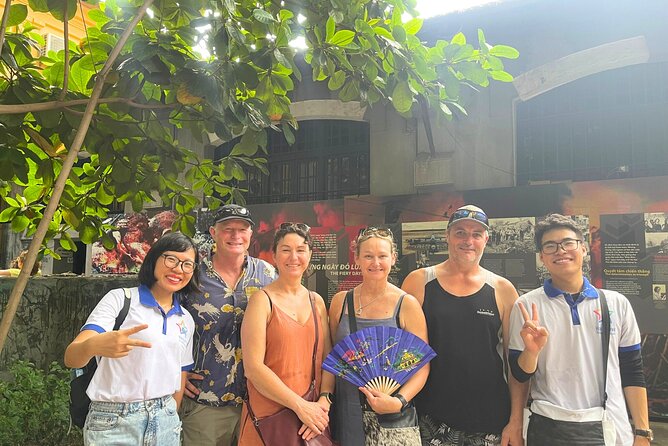
I especially like two things: the one-on-one pacing and the way the tour turns history into conversation, not a slideshow. People highlighted guides such as Anh (who customized the route), Chien (great English and discussion), and Hannah (smooth flow and lots of explanations).
The main consideration is practical: most entries and transport aren’t included, and some sites can be closed on Mondays, so you’ll want to time it smartly and carry a little extra cash.
In This Review
- Key things that make this tour worth your time
- A private war-sites tour that doesn’t feel like a lecture hall
- Pickup, timing, and why the museum calendar matters in Hanoi
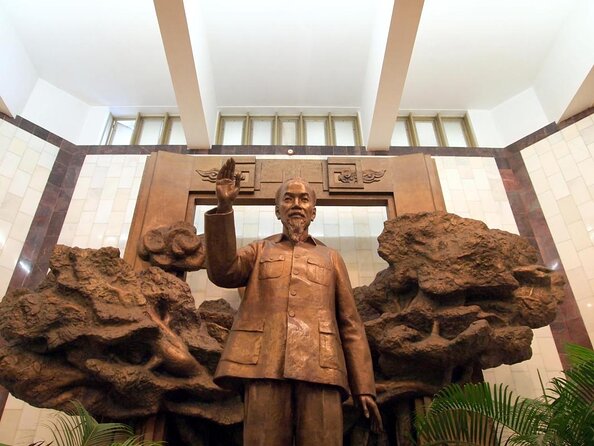
- Ho Chi Minh Museum: start with the life behind the landmarks
- Ba Đình Square: the Mausoleum visit is short, but it changes the mood
- Hoa Lo Prison (Hanoi Hilton): where questions actually matter
- Hữu Tiep Lake and the Downed B-52: the air-war story through wreckage and exhibits
- Optional Vua Dép Lốp tire-sandal workshop: a small hands-on stop with big meaning
- Price and value: the low base fee means you’ll budget smart
- What you’ll actually do with your guide (and how to get better answers)
- Who this Hanoi war-sites tour fits best
- Should you book this Hanoi War Sites Tour?
- FAQ
- How long is the Hanoi War Sites tour?
- Are there morning and afternoon tour options?
- Does the tour include hotel pickup?
- Is transport between stops included?
- Do I have to pay museum admission fees?
- Can I join the tire-sandal workshop?
- What should I wear?
- Are tours private or shared?
- What if some museums are closed?
Key things that make this tour worth your time
- Private, small-group feel: only your group goes, so you can ask questions and stay longer where you care most.
- Student-guide angle: you’re learning alongside the next generation, with support tied to local education.
- Morning or afternoon slots: choose a time window that matches museum hours, not just your schedule.
- Hoa Lo Prison is a standout stop: it’s the one many people remember most, with strong guided context.
- B-52 and Hữu Tiep Lake viewpoint: you’ll see the air-war story told through local exhibits and wreckage.
- Optional tire-sandal workshop: a hands-on piece of wartime practicality, not just a lecture.
A private war-sites tour that doesn’t feel like a lecture hall

Hanoi can feel like a city of layers—old streets, big monuments, and museums that all talk to different versions of the past. This tour is built to help you connect the dots without getting herded through sites on someone else’s timetable. Since it’s private, you get real back-and-forth, and the guide can shift emphasis based on your questions.
One thing I like about the format is that it’s designed for dialogue. Several guides named in the feedback—like Truong (aka Scorpio), Nam, and Nguyen Duc Nguyen—were praised for answering tricky questions and tailoring explanations. That matters at war sites, where details and perspective are everything.
And yes, it covers heavy material. But the guide structure keeps it readable and grounded: what you’re looking at, what it meant at the time, and why it still matters here now.
You can also read our reviews of more private tours in Hanoi
- Doris Cruise 5 star cruise 2 days visiting Halong Bay Lan Ha Bay private balcony
★ 5.0 · 2,338 reviews



Pickup, timing, and why the museum calendar matters in Hanoi

This runs about 3 to 5 hours, with two starting windows: morning 9am–12pm and afternoon 2pm–5pm. Schedules are described as flexible, and your guide can adjust based on what’s open and what you want to spend time on.
Pickup is free only in Hanoi Old Quarter, with free drop-off there too. Transport is not included, so expect to use a taxi or rideshare between stops (and bring a little patience for city traffic).
Here’s the big timing tip: some museums close every Monday. If you’re traveling on a Monday, it’s worth choosing the time window that gives the best odds for the sites you care about most. The tour also signals that you can personalize the route—so if something is closed, you’ll likely get a revised focus rather than a total bust.
Ho Chi Minh Museum: start with the life behind the landmarks
Most people assume the war story starts with planes and prisons. On this tour, you start with the person at the center of a lot of Hanoi’s national narrative.
At Ho Chi Minh Museum, you’ll spend about an hour with an extensive look at his life. The route includes transport from the pickup point (the guidance notes moving by taxi or Grab). Admission for this stop isn’t included, so plan on paying entry separately.
What makes this stop useful is how it frames later places. You don’t just walk into war exhibits; you get context for why certain locations became symbols. If you’re into history that feels like cause-and-effect, this first step helps a lot.
Dress-wise, keep it modest for Vietnam’s official spaces. The tour notes no tank tops and no shorts above the knee, which is smart for this kind of museum setting too.
Ba Đình Square: the Mausoleum visit is short, but it changes the mood
Next is the Ho Chi Minh Mausoleum in Ba Đình Square. This stop is brief—around 30 minutes—and the good news is that admission is listed as free.
Even when you don’t know every detail, the setting does something to your sense of time. It’s formal. Quiet. More ceremonial than museum-like. That difference matters when you’re moving from one heavy site to another later.
Because the stop is short, you’ll get more out of it if you go in with a couple of questions ready—like what the site represents to locals, and how it’s understood in the modern era. With a private student guide, you can ask those and steer the conversation.
Hoa Lo Prison (Hanoi Hilton): where questions actually matter
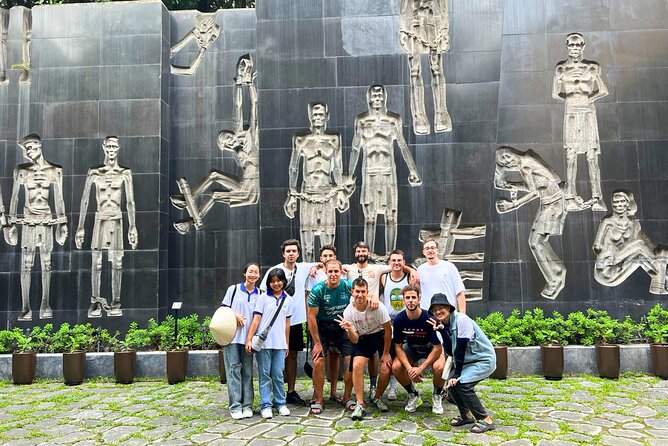
Hoa Lo Prison is the stop that many people describe as their favorite. It’s often nicknamed Hanoi Hilton by American POWs, and the exhibits focus on how the prison was used up to the mid-1950s.
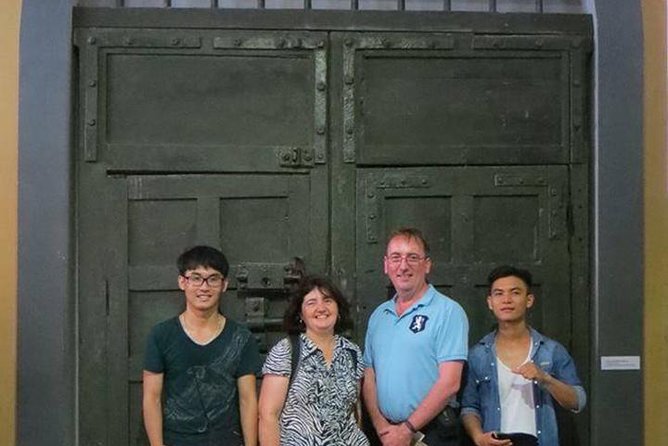
You’ll spend about an hour here, and again, admission isn’t included. The exhibits cover prison history and the lived reality of incarceration. This is also a place where perspective is unavoidable—who is telling the story, what details are emphasized, and what stories are left implicit.
Why this stop is so strong in a private format: you can pause and ask follow-ups. People praised guides like Chien and Lindy for explaining what you’re seeing and how it connects to broader conflict history. If you care about the human side—conditions, timelines, and why certain facts became part of national memory—this is where your guide can make the visit click.






Hữu Tiep Lake and the Downed B-52: the air-war story through wreckage and exhibits
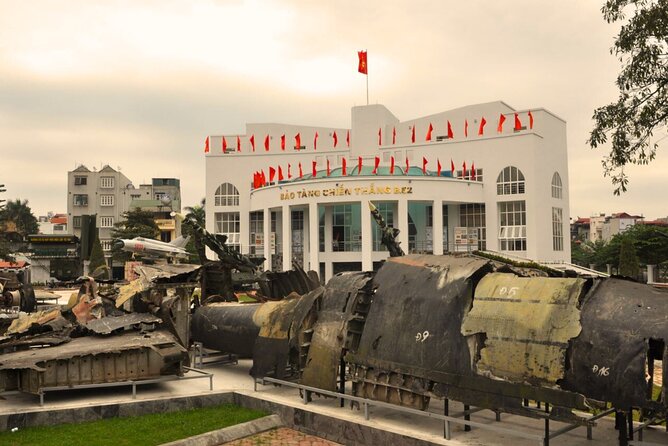
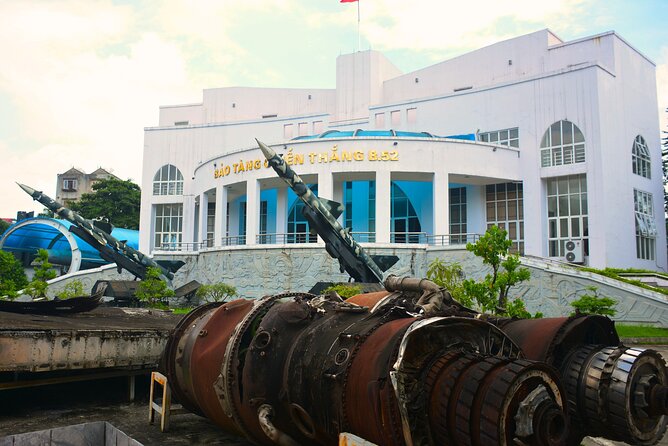
After Hoa Lo, you’ll head toward Hữu Tiep Lake and the B-52 angle—the tour points to the B-52 Victory Museum Hanoi, with exhibits that include weapons, images, documents, and wreckage. You’ll typically spend about one hour for this combined portion.
Admission isn’t included here either, so budget for entry. What you can expect is a war narrative told from Hanoi’s perspective—highlighting local troops’ ingenuity and the role of residents during the conflict.
The practical value of this stop is that it broadens the war picture. Hoa Lo is about capture and incarceration. The B-52 exhibits shift you toward technology, air conflict, and how cities absorb war.
If you’re into photography, this is one of your better stops for visual evidence—because wreckage and artifacts don’t require translation the way some captions do.
Optional Vua Dép Lốp tire-sandal workshop: a small hands-on stop with big meaning
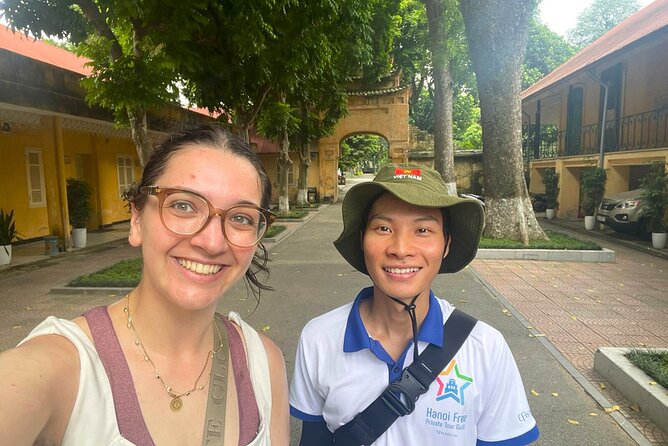
There’s an optional stop tied to a famous wartime workaround: tire sandals. The tour frames them as iconic for Ho Chi Minh during the war, and it offers a chance to learn about them and make a pair yourself.
This is listed as about 30 minutes, and admission isn’t included. If you like learning that involves your hands, this is the one part of the tour that turns history into something tactile.
It also helps balance the heavier stops. After prisons and war exhibits, making something simple from worn materials feels like a reminder of practical survival—how people adapted when resources were limited.
One small heads-up: this is an optional add-on. If you’d rather spend extra minutes at Hoa Lo or if you have limited time, you can skip it and keep the focus on the sites.
Price and value: the low base fee means you’ll budget smart
The tour price is listed as $5.13 per group (up to 10). On paper, that’s strikingly low. Here’s why it can still be a good deal: the cost is tied to a private student-guided experience, plus email confirmation and support for local education.
But the tour doesn’t include everything. Museum admissions are marked as not included for multiple stops, and transport is also not included. The Ho Chi Minh Mausoleum is specifically listed as free, but the other sites require separate entry payments.
So the real value question is how you plan your extra costs. If you’re a small group, the base fee is almost negligible; you’re mostly paying for your guide time and the structure. If you’re traveling solo, it’s still likely good value because the guide is private and you can personalize the focus.
One budgeting note from feedback: some people suggest setting aside extra for the guide’s meals/entry while touring. Since that isn’t listed as a standard inclusion, I’d treat it as a “might happen” item and ask when you confirm—so there are no awkward surprises.
What you’ll actually do with your guide (and how to get better answers)
A private student guide can be a superpower—if you use it like one. The tour is built for flexibility, and guides are described as responsive to your interests.
If you want the visit to go from facts to understanding, ask questions like:
- How do locals today interpret what happened at each site?
- What’s the part most visitors miss when they only read captions?
- What’s the timeline connection between the landmarks and the war exhibits?
Feedback includes examples of guides doing this well—people mentioned solid English with guides such as Anh, Hannah, Nam, and Nguyen Duc Nguyen. Even when English skill varies, having a private setting means you can slow down and clarify.
Also, take advantage of the chance to personalize. If you’re more interested in the American War angle, you’ll likely spend extra time at the B-52 side. If you’re focused on imprisonment and captivity history, you can put more weight on Hoa Lo.
Who this Hanoi war-sites tour fits best
This is a strong match if you want a first serious window into Vietnam War history in Hanoi without fighting crowds. It’s also a good fit for travelers who like conversations with locals, and for anyone who appreciates that this is tied to supporting students and local education.
It’s especially worth it if you:
- want morning or afternoon options to match museum hours
- value private pacing over a big group bus experience
- care about understanding perspective, not just memorizing dates
Skip it—or adjust expectations—if you need everything to be identical every day. Some museums close on Monday, and access can change. In that case, a private guide can help reshape the plan, but you should be ready for minor adjustments.
Should you book this Hanoi War Sites Tour?
If you want a private tour that connects major Hanoi war-story sites with local guidance, this is an easy yes—especially for first-timers who don’t want to piece together places on their own. The price is low, the format supports conversation, and the Hoa Lo and B-52 stops tend to leave the biggest impression.
Book it if you’re comfortable adding separate entry fees and using taxis/rideshares between stops. Don’t book it if you’re strict about avoiding any uncertainty around closures—Monday museum closures are a real factor, and sites can sometimes be affected by the calendar.
If you do book, message ahead with what you care about most (Hoa Lo vs. B-52 vs. the optional tire-sandal workshop) and wear clothes that fit Vietnam’s modesty rules. That one prep step makes the whole experience smoother.
FAQ
How long is the Hanoi War Sites tour?
It’s listed as about 3 to 5 hours.
Are there morning and afternoon tour options?
Yes. Morning is recommended around 9am–12pm, and afternoon around 2pm–5pm.
Does the tour include hotel pickup?
Pickup is included for hotels in the Hanoi Old Quarter, and there’s free drop-off there too.
Is transport between stops included?
No. Transport is not included, so you’ll likely use taxi or rideshare between sites.
Do I have to pay museum admission fees?
Admission tickets are not included for several stops. The Ho Chi Minh Mausoleum is listed as free, but other museum entry fees may be required.
Can I join the tire-sandal workshop?
Yes, the tire-sandal workshop at Vua Dép Lốp Phạm Quang Xuân is optional and lasts about 30 minutes. Admission is not included.
What should I wear?
The tour notes no tank tops and no shorts above the knee.
Are tours private or shared?
This is a private tour/activity. Only your group participates.
What if some museums are closed?
Some museums close every Monday. The tour recommends starting times that align with typical opening windows, and your guide schedule is described as flexible.
You Might Also Enjoy



More Private Tours in Hanoi
- Doris Cruise 5 star cruise 2 days visiting Halong Bay Lan Ha Bay private balcony
★ 5.0 · 2,338 reviews



More Tours in Hanoi
- Ninh Binh Full-Day Tour from Hanoi to Hoa Lu, Tam Coc & Mua Cave Via Boat & Bike
★ 5.0 · 4,384 reviews