
REVIEW · WORKSHOPS
Hanoi: Tire Sandal Workshop with Crafting Experience
Book on GetYourGuide →Operated by EFIS VIET NAM EDUCATION CONSULTING AND TRAINING COMPANY LIMITED · Bookable on GetYourGuide
A single pair of sandals can tell a whole story. In Hanoi, this tire sandal workshop lets you craft your own footwear while a guide shares how these sandals became a symbol during Vietnam’s war years. It’s practical, hands-on, and you leave with more than a souvenir.
What I like most is that you’re not just watching. You work step-by-step with local artisans, and you also get English guidance plus complimentary photos so you can actually remember what you did. The only real downside is the fee isn’t all-in; materials and the option to keep the sandals cost extra, so you’ll want to budget before you arrive.
In This Review
- Key things I’d plan around
- Tire Sandal King’s Workshop: where the story starts on Ngoc Ha Street
- Price and value: the $5 base fee is only part of the story
- What’s included, and why it matters once you’re there
- The 4-hour flow: crafting inside the Ho Chi Minh Museum complex
- The story you hear while your hands are making the sandals
- Making tire sandals step by step: tools, pressure, and strong hands
- Extra help from a family connection (and why it feels real)
- Optional Ho Chi Minh Museum entry: when you want more context
- Clothing and comfort: the rules that can trip you up
- Who should book this tire sandal workshop?
- Tips to get the best experience on your day
- Should you book it?
- FAQ
- How long is the tire sandal workshop in Hanoi?
- Where is the workshop located?
- Is the guide available in English?
- What is included in the $5 price?
- What extra costs should I expect?
- Do I automatically get the sandals to take home?
- What are the dress rules?
- Is the workshop wheelchair accessible?
- Can I cancel or pay later?
Key things I’d plan around
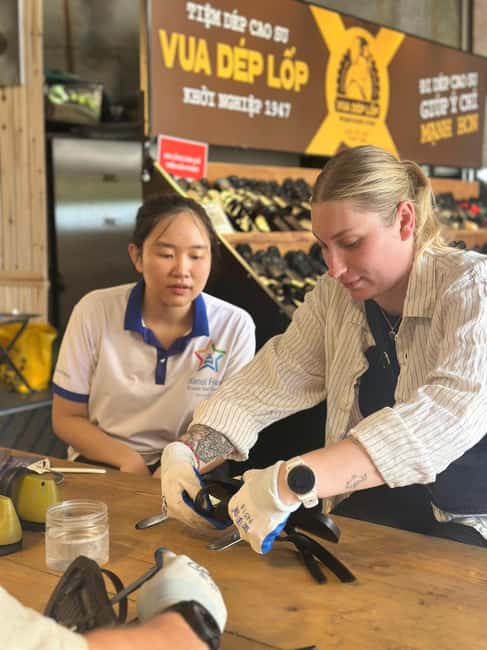
- A craft-led 4-hour session where you make your own tire sandals using traditional techniques
- English-speaking guidance throughout, plus photos taken by the host
- War-time context while you work, including the sandals’ connection to Ho Chi Minh
- Hands-on help with the harder parts, including tool use and physical effort
- You may add the Ho Chi Minh Museum visit, if you want the story expanded
- Dress code matters: no shorts or short skirts
Tire Sandal King’s Workshop: where the story starts on Ngoc Ha Street
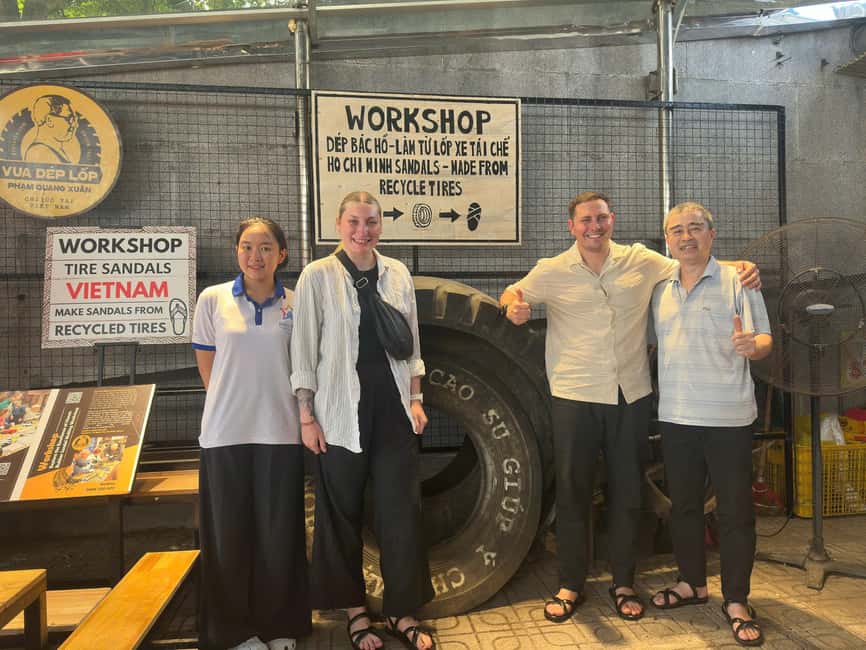
This workshop is at 19 Ngoc Ha Street in Hanoi, and it feels like the kind of place where locals actually go. The focus isn’t a lecture hall—it’s making, learning, and listening while your hands are busy.
The experience is built around Vietnam’s iconic tire sandals, the ones associated with President Ho Chi Minh during the war. That connection matters because it turns a simple object into something people associate with endurance and resourcefulness. In other words, you don’t just make sandals; you learn why they mattered.
You can also read our reviews of more tours and experiences in Hanoi



Price and value: the $5 base fee is only part of the story
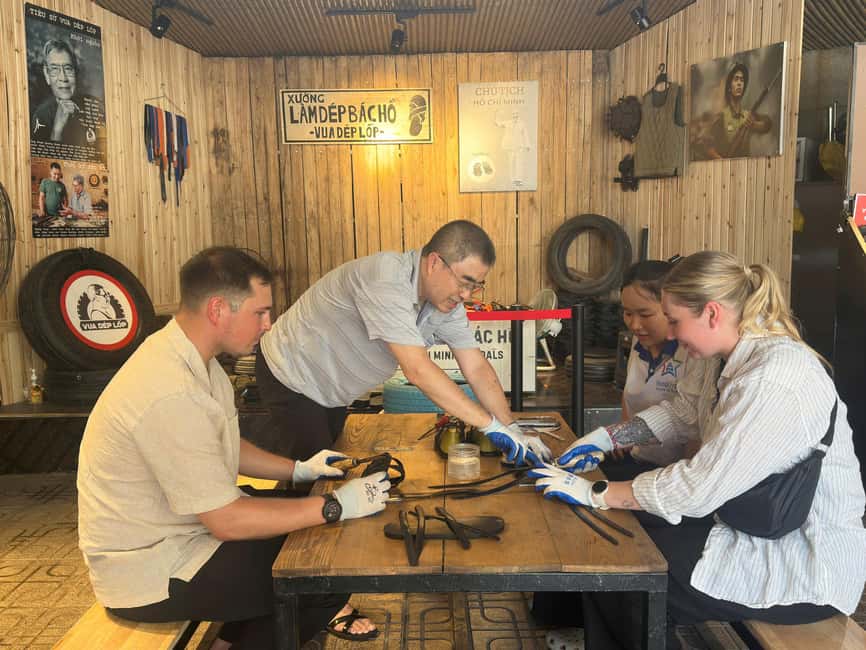
The experience price is listed at $5 per person, and that covers the guided workshop experience. But there are add-ons you should expect.
Here’s what you should plan for:
- 300,000 VND (~$12) for materials, paid directly to the workshop
- 200,000 VND (~$8) if you want to keep a pair of handmade sandals you make (optional)
- Ho Chi Minh Museum entry is optional: 40,000 VND/person (~$1.60)
- Meals and drinks are not included
In other words, the true cost of making and keeping a pair is more like $25-ish in total after materials and the optional take-home sandals. Still, that can be good value because you’re paying for time with artisans, a guided crafting process, and history explanations tied directly to what you’re doing.
One more practical note: one recent review mentioned a higher price for the pair (around 600,000 VND). That means it’s smart to ask on the day exactly what you’re paying for the finished sandals and how the pricing works. Don’t assume the take-home cost will match one number exactly.
What’s included, and why it matters once you’re there
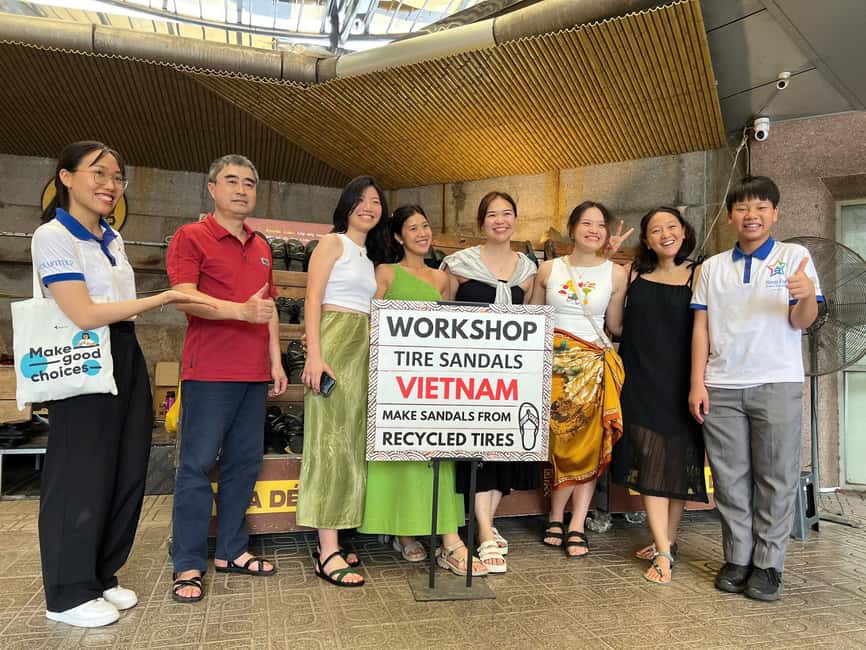
This is one of those tours where the included parts are the main event.
You get:
- Step-by-step help from local artisans and your local tour guide
- An English-speaking guide during the experience
- Complimentary photos taken by the host
The reason those details matter: tire sandal making isn’t complicated in concept, but it does require proper technique and some strength. Having an English guide and artisans focused on your process can save you from doing it the hard way or missing steps.
The 4-hour flow: crafting inside the Ho Chi Minh Museum complex
The session is about 4 hours, with flexible timing depending on availability. What you’re doing during that time is a mix of hands-on work and story time, not one long stretch of sitting.
A key detail from a recent experience: the sandal making happens under cover in the Ho Chi Minh Museum complex, which is a big deal in Hanoi. If the weather turns rainy—or worse—you’re still able to craft comfortably.
In a smaller setup, the session may even run like a mini workshop just for your group. One recent review described a session for two people, which tends to make the guidance more personal and the pace easier to manage.
The story you hear while your hands are making the sandals
This workshop is built around history, but it’s told through the sandals themselves. You learn about the history of Vietnam’s iconic tire sandals and why they show up in the story of daily life during the war.
You’ll also hear captivating stories about how the sandals were used and why they became meaningful. Since the guide is present throughout your crafting time, the history isn’t floating in the air—it connects to what you’re shaping with your hands.
That’s where the experience feels different from most “cultural crafts.” The goal isn’t just a product. It’s understanding the role these sandals played when resources were limited and people needed practical solutions.






Making tire sandals step by step: tools, pressure, and strong hands
You’ll craft your own pair of tire sandals using traditional techniques. The exact steps can vary a bit by workshop setup, but here’s what you can expect in the practical sense.
A very helpful detail: in one recent experience, the workshop had holes already prepared in the soles. That means you’re mostly learning the technique and getting the pattern right, rather than starting from zero. Still, the work requires effort.
You’ll learn how to use a tool, and you’ll get guidance when you need to apply more strength than you expect. One review highlighted that the process isn’t hard, but it does take muscle.
Another detail you should look forward to: you often get a choice of colors. That matters because you’ll end up with a pair that feels more personal than a generic souvenir.
Extra help from a family connection (and why it feels real)
One of the most memorable parts from the recent accounts is the presence of help from a descendant of Ho Chi Minh during the session. That kind of connection changes the tone. It turns the story from something you hear into something people carry forward.
Even without that connection, the artisans’ role is central. The workshop isn’t just “try this and good luck.” You’re taught, checked, and corrected if needed, so you’re more likely to end with sandals you’re genuinely proud to take home.
Optional Ho Chi Minh Museum entry: when you want more context
If you add the museum, you’ll pay 40,000 VND (~$1.60) for entry. One review noted that the guide accompanied them and explained how the story of the sandals connects to family life and history across generations.
This option is worth considering if:
- You want the museum context after the workshop story
- You like your experiences with a clear historical thread
- You’d rather spend your time understanding the bigger picture than maximizing craft time
If you’re short on energy or you prefer purely hands-on activities, you can skip the museum and keep the day focused.
Clothing and comfort: the rules that can trip you up
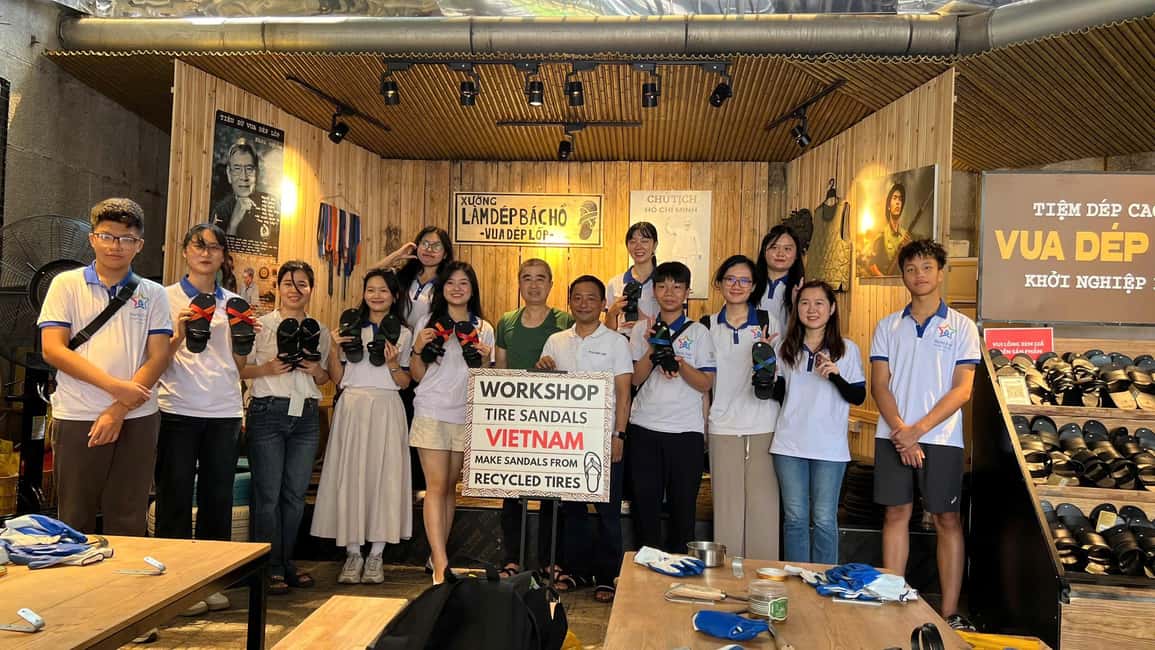
There’s a clear dress rule: no shorts or short skirts. That’s not just theater—workshops like this often involve kneeling, moving around at tables, and leaning in close while using tools.
So I’d wear:
- Long pants or a long skirt
- Comfortable shoes you can stand in
- A shirt that’s breathable in Hanoi humidity
Also, plan for the fact you’ll be using tools and doing physical work. You don’t need to wear heavy clothes, but you should avoid anything you mind getting slightly marked.
Who should book this tire sandal workshop?
This works best for you if you want a travel day with a clear purpose: create something, learn why it mattered, and take a real object home.
You’ll probably love it if you:
- Enjoy hands-on activities more than passive sightseeing
- Want a history lesson tied to everyday solutions
- Like small-group experiences where guidance feels practical
- Want a souvenir with a story you can actually explain
You might skip it if you:
- Are expecting a long, uninterrupted art class where you master every step with lots of extra time
- Don’t want to pay any extra costs beyond the $5 base price
- Want a purely museum-style historical tour
Tips to get the best experience on your day
A few small choices can make a big difference here.
- Budget for the extras: materials and take-home sandals are separate from the base fee.
- Ask what you’re paying for upfront, especially if you’re set on keeping the finished pair. One account reported a different take-home price than the posted optional amount, so confirmation is smart.
- Go prepared for effort: tool use and sandal assembly may require strength.
- If you’re adding the museum, plan a bit of time for a fuller narrative after crafting.
Should you book it?
I’d book this workshop if you want an experience that connects Vietnam’s war-era resilience to something you can hold in your hands. The value feels strongest when you’re okay with the add-on costs for materials and a take-home pair, and when you’re interested in the story as much as the craft.
If you’re the type who likes learning through doing, this one will land well. You’ll leave Hanoi with sandals that are more personal than a shelf souvenir—and you’ll understand why those sandals became part of Vietnam’s lived history.
FAQ
How long is the tire sandal workshop in Hanoi?
The experience lasts about 4 hours.
Where is the workshop located?
It’s located at 19 Ngoc Ha Street in Hanoi.
Is the guide available in English?
Yes. There is an English-speaking guide throughout the experience.
What is included in the $5 price?
The included parts are step-by-step guidance from local artisans and your guide, an English guide, and complimentary photos taken by the host.
What extra costs should I expect?
Materials cost 300,000 VND (about $12) paid directly to the workshop. If you want to take home the pair you make, there’s an optional cost of 200,000 VND (about $8) paid directly to the workshop. You can also add Ho Chi Minh Museum entry for 40,000 VND per person (about $1.60).
Do I automatically get the sandals to take home?
No. Taking home the pair is optional and requires an extra payment.
What are the dress rules?
Shorts and short skirts are not allowed.
Is the workshop wheelchair accessible?
Yes, it is listed as wheelchair accessible.
Can I cancel or pay later?
You can reserve now and pay later, and you can cancel up to 24 hours in advance for a full refund.