REVIEW · CITY TOURS
Hanoi Old Quarter City Tour With Professional Guide
Book on GetYourGuide →Operated by Vietnam Package Tours · Bookable on GetYourGuide
Hanoi’s Old Quarter is a sensory hit. This guided tour gives you an easy way to see the historic streets and major landmarks without getting stuck in a rigid schedule. I like that it stays flexible around your interests and pace. One thing to keep in mind: entrance tickets aren’t included, so your final cost will depend on which sites you actually enter.
The day is built around walking plus optional driving, with an English-speaking guide who helps you connect the dots between markets, temples, and big political landmarks. I also like the Bat Trang pottery stop, because it adds a hands-on craft feel beyond just sightseeing photos. The potential drawback for some people is simple: it’s a moderate-walking plan, and it isn’t a fit if you have back issues or need wheelchair access.
In This Review
- Key things to know before you go
- Hanoi Old Quarter + landmarks: why this tour works
- Your flexible route: how your guide picks the day
- Old Quarter streets and markets: where Hanoi starts to make sense
- Hoan Kiem Lake and Ngoc Son Temple: the calm pocket near the chaos
- Ho Chi Minh Mausoleum Complex and Ba Dinh landmarks: big moments, big rules
- One Pillar Pagoda, Tran Quoc Pagoda, Quan Thanh Temple: religion with different vibes
- Temple of Literature and Thang Long Imperial Citadel: schooling and empire
- St. Joseph’s Cathedral, Hanoi Opera House, Long Bien Bridge: the city’s other face
- Hoa Lo Prison and Vietnamese Women’s Museum: serious stops, plan your energy
- Bat Trang Pottery Village: where your souvenirs feel more real
- Price and logistics: is $28 a good deal for this day?
- Who this tour suits best (and who should skip it)
- Should you book this Hanoi Old Quarter City Tour?
- FAQ
- How long is the Hanoi Old Quarter City Tour?
- How much does the tour cost?
- Is the tour conducted in English?
- Where does pickup and drop-off happen?
- Are entrance tickets included in the price?
- What transportation options are available?
- Are there restrictions during the tour?
- Is the tour suitable for wheelchair users?
- When do museums close?
Key things to know before you go
- Professional English-speaking guide: Helps you move through Hanoi’s sights with less confusion.
- Fully flexible itinerary: You choose what matters most and how long to linger.
- Old Quarter start with pickup/drop-off: Convenient meeting point inside the Old Quarter area.
- Museums close after 16:00: Plan key museum stops earlier in the day.
- Tickets not included: Budget extra for entrances you decide to pay.
- Bat Trang Pottery Village included: A craft-focused add-on, not just urban landmarks.
Hanoi Old Quarter + landmarks: why this tour works
If you’re trying to get oriented fast, Hanoi can feel like a lot. The roads, the scooters, the street vendors, the constant motion. A guided plan helps you cut through the noise. You’re not trying to “win” at sightseeing. You’re choosing what to see and then using the rest of the time to actually enjoy it.
This tour is built for that mindset. You get picked up and dropped off in the Old Quarter area, and you can choose whether to do more walking or use a car. If you walk, Grab cars are available for quick hops between places, but those rides are excluded—so you can keep control of your comfort and schedule.
The tour also carries a practical promise: an experienced English-speaking guide, plus a flexible route that adapts to your pace. That matters because Hanoi’s “must-sees” can be time-hungry, and museums and temple complexes don’t all move at the same speed. Some days you’ll want quick photo stops. Other days you’ll want to slow down and watch daily life around a market or temple entrance.
You can also read our reviews of more guided tours in Hanoi


Your flexible route: how your guide picks the day
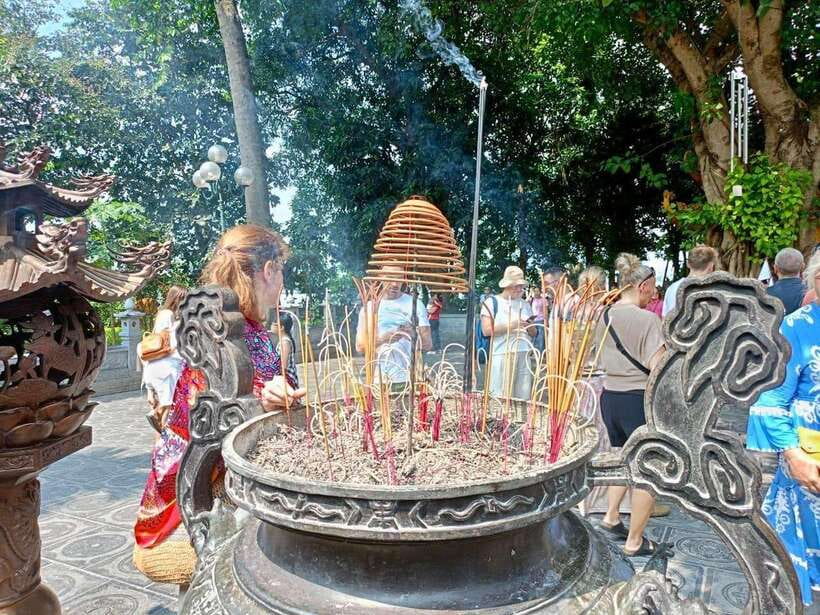
The tour is designed around flexible 4 to 8 hours, so the exact mix of stops can shift. That flexibility is the heart of the value here. You’re not locked into a clock where you sprint from one place to the next, hoping you grabbed the best angle.
In your guide’s hands, the day can include a wide spread of Hanoi’s key areas, such as:
- Old Quarter streets and market areas (Dong Xuan Market is on the list)
- Hoan Kiem area, including Hoan Kiem Lake & Ngoc Son Temple
- Ba Dinh political landmarks, including the Ho Chi Minh Mausoleum Complex
- Imperial sites like the Thang Long Imperial Citadel
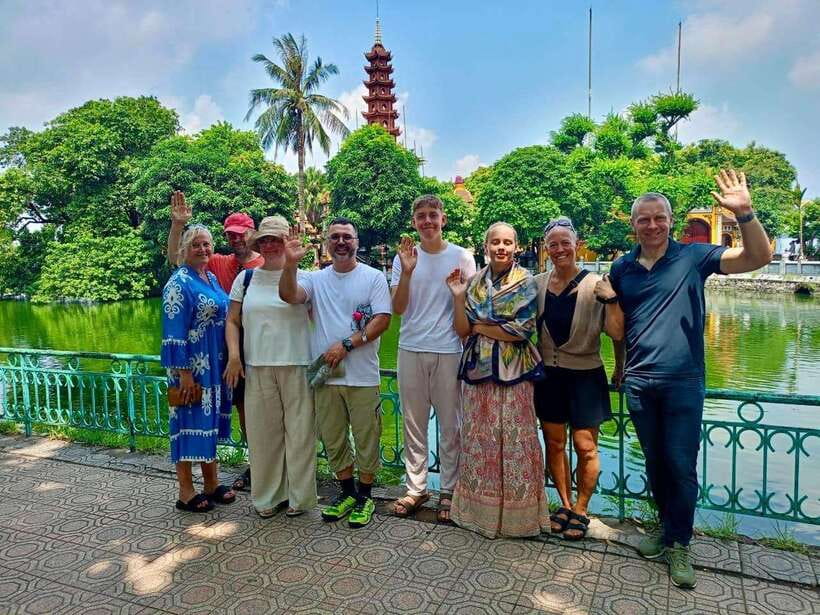
- Several religious landmarks such as One Pillar Pagoda and Tran Quoc Pagoda
- French-colonial style landmarks like St. Joseph’s Cathedral and Hanoi Opera House
- Iconic city-photo stops like Long Bien Bridge and Train Street
- Museum-style stops like Hoa Lo Prison and the Vietnamese Women’s Museum
- A craft day component at Bat Trang Pottery Village
The tour’s flexibility is what helps you avoid the “I paid for everything but skipped half the entrances” problem. Since entrance fees aren’t included, you can decide on the spot what you really want to enter rather than feeling pressured to do it all.
Old Quarter streets and markets: where Hanoi starts to make sense

The best first step in Hanoi is usually getting your bearings. With this tour, you’ll spend time in the Old Quarter area, where narrow lanes, trade history, and everyday commerce overlap.
Here, you’re likely to encounter historic streets and market energy, which is exactly where a guide earns their keep. It’s not just about seeing a street name. It’s about understanding why the streets were historically linked to certain trades, and how that legacy still shows up in what’s sold today.
Two market-related stops that can fit naturally into this zone are:
- Dong Xuan Market: Great for that “real Hanoi” shopping atmosphere.
- Train Street: A famous, very specific sight—worth treating as a planned stop, not something to chase by wandering.
A small heads-up: markets and train-related spots can mean crowds and close quarters. If you’re sensitive to busy spaces, tell your guide early. They can adjust your time there so you don’t feel trapped.
Hoan Kiem Lake and Ngoc Son Temple: the calm pocket near the chaos

Near the center, Hoan Kiem Lake offers a break from the scooter flow. This is one of Hanoi’s classic “pause here” locations. Even if you don’t plan to go deep into every religious detail, being here helps you understand how the city balances daily life with spiritual spaces.
Ngoc Son Temple is part of this area on the tour list, so you’ll likely have time for it if you choose to. The practical value of visiting with a guide is simple: you’ll know what’s worth your time, what can be a quick stop, and how long the walk and viewing will realistically take.
Drawback to consider: this area is popular, so your best experience comes from arriving when you’re not stressed and you’re ready to slow down. If you try to “race” from here to the next major site, it’s easy to miss what makes the lake area special.
Ho Chi Minh Mausoleum Complex and Ba Dinh landmarks: big moments, big rules

For many visitors, the Ba Dinh area is the most politically significant part of Hanoi. This tour includes the Ho Chi Minh Mausoleum Complex, and it can also add nearby stops from the same cluster, including:
- Presidential Palace
- Flag Tower of Hanoi
- Vietnam National Assembly Building
This is where the tour’s timing matters. Some sites may involve strict visiting patterns and lines, and the more you can plan calmly, the smoother the experience.
Another thing to know: museums close after 16:00. Even if you’re not doing a museum-style stop in this zone, your guide will likely weigh what’s realistic for your remaining daylight. If you’re starting later in the afternoon, you might need to trim the plan.
You can also read our reviews of more city tours in Hanoi






One Pillar Pagoda, Tran Quoc Pagoda, Quan Thanh Temple: religion with different vibes

Hanoi’s temple stops feel different depending on where you are. This tour can include multiple religious landmarks, such as:
- One Pillar Pagoda
- Tran Quoc Pagoda
- Quan Thanh Temple
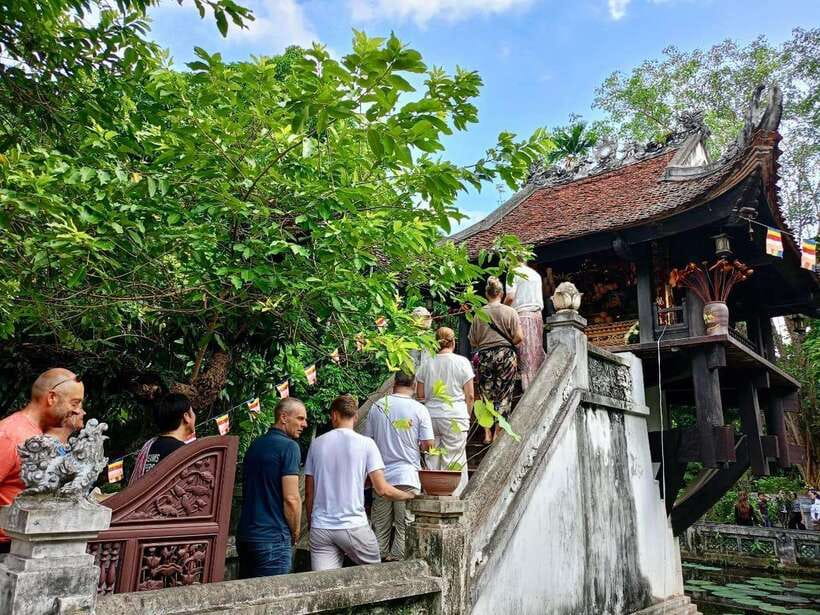
One Pillar Pagoda tends to be a quick, photo-friendly stop. Tran Quoc Pagoda typically feels more open and scenic because it’s tied to a lakeside setting (it’s on the tour’s list alongside West Lake). Quan Thanh Temple adds a more local-feeling spiritual space, where you can watch how people go about their visits.
The biggest “gotcha” is that religious sites usually have practical restrictions—dress expectations and a respectful pace. You’ll enjoy them more if you plan for slow walking and a few minutes of quiet viewing.
If you hate standing in lines, mention it early. A flexible guide can often adjust the order to reduce your waiting.
Temple of Literature and Thang Long Imperial Citadel: schooling and empire
Two stops on the list hit the theme of learning and state power:
- Temple of Literature
- Thang Long Imperial Citadel
Temple of Literature is a classic Hanoi “intellectual” landmark. It’s the kind of place where you’ll feel rewarded if you have someone to help you understand what each area represents, rather than just snapping photos and moving on.
Thang Long Imperial Citadel ties into Hanoi’s older imperial layers. It’s also the sort of site where context makes a visible difference. Even if you’re not a deep-dive academic, you’ll get more from it when your guide explains what you’re looking at and where the key areas are.
Practical consideration: these sites can take longer than expected. If you have a limited time window (or you start late), you may want to decide upfront whether you prefer one of these places for a longer visit, or two with shorter stops.
St. Joseph’s Cathedral, Hanoi Opera House, Long Bien Bridge: the city’s other face
Hanoi isn’t only temples and markets. This tour includes landmark stops that reflect older French-era architecture and iconic river views:
- St. Joseph’s Cathedral
- Hanoi Opera House
- Long Bien Bridge
Cathedral and opera-style sites are great for understanding Hanoi’s layers. Even if you don’t pay for inside visits, the exterior context and placement within the city helps you read the urban layout.
Long Bien Bridge is the sort of stop that’s worth planning as a “photo plus walk-around” moment. Pair it with nearby areas if your route allows, so you’re not spending too much time traveling back and forth.
Hoa Lo Prison and Vietnamese Women’s Museum: serious stops, plan your energy

If you add museum-style stops, two names on the tour list are:
- Hoa Lo Prison
- Vietnamese Women’s Museum
These can be emotionally heavier than the rest of the day. They also fit a more structured visit style, so you’ll want to keep your pace steady and your expectations realistic.
And here’s the key scheduling point: after 16:00 all museums are closed. That means if you care about these, you should aim for an earlier start. Otherwise, you might end up seeing only exterior areas or skipping inside time entirely.
If you’re traveling with mixed interests—one person wants museums, another wants more street time—this is where a flexible guide can save the day. You can prioritize your must-sees and leave the less essential items as optional.
Bat Trang Pottery Village: where your souvenirs feel more real
The tour also includes Bat Trang Pottery Village, a classic craft detour. This is a nice break from pure city sightseeing because it’s a hands-on style experience (at least in terms of how you engage with the craft tradition).
Even if you’re only buying a small item, the value is in seeing the work and understanding what makes it different from mass-produced souvenirs. It also gives your day a “memory anchor” beyond temples and photos.
Budget tip: you’ll still likely spend money on purchases here, but it’s usually a more deliberate type of spending than random impulse buys. If you want a thoughtful gift or keepsake, this is where that can happen.
Price and logistics: is $28 a good deal for this day?
At $28 per person, the price can feel like a bargain for a guided, flexible route—especially in a city where navigating street networks and deciding what’s worth your time can cost you energy.
But here’s the honest tradeoff: entrance fees are excluded. That means the total you pay depends on how many of these landmarks you choose to enter. If you end up doing mostly “look from the outside” stops, you’ll probably feel the price is fair. If you decide to go inside multiple ticketed sites, you’ll want to budget for those separately.
Another practical detail that affects value: walking versus car. If you stay mostly on foot, you get more time for streets and market browsing. If you use more driving, you’ll save energy and cover more ground, but you may spend extra if you top up with Grab rides (when walking is your choice and you need quick connections).
I also think the “4 to 8 hours” range is part of the value equation. A flexible plan can help you avoid the worst kind of sightseeing: paying for a fixed schedule that doesn’t match your travel style.
Who this tour suits best (and who should skip it)
This is a good fit if you:
- Want professional guidance but still want control over timing
- Like mixing Old Quarter street life with major landmark areas
- Prefer an English-speaking guide for context and route sense
- Travel with a “we’ll see what we feel like” mindset
You might want to skip it if you:
- Need long seated breaks (moderate walking is part of the plan)
- Rely on wheelchair access (not available)
- Have back problems that make walking uncomfortable
- Think you’d enjoy Hanoi more by going fully independent and pacing yourself
Should you book this Hanoi Old Quarter City Tour?
If your goal is to get oriented and hit the big sights without feeling rushed, I’d book it. The combination of Old Quarter pickup/drop-off, an English-speaking guide, and a flexible schedule makes it a low-stress way to plan a first or second day in Hanoi.
If your top priority is minimizing costs and maximizing time on your own terms, weigh the excluded ticket fees and the fact that the day includes a moderate amount of walking. In other words: great structure, but you’ll still need to choose what’s worth paying to enter.
FAQ
How long is the Hanoi Old Quarter City Tour?
The duration is 4 to 8 hours, depending on your selected starting time and how you pace the visit.
How much does the tour cost?
The price is $28 per person.
Is the tour conducted in English?
Yes. The live tour guide speaks English.
Where does pickup and drop-off happen?
Pickup and drop-off are at Ha Noi Old Quarter.
Are entrance tickets included in the price?
No. All ticket entrance fees are excluded.
What transportation options are available?
You can choose walking or a car. If you choose to walk, Grab cars are available for easy travel between attractions, but those are excluded.
Are there restrictions during the tour?
Smoking is not allowed. Also, consuming food and drinks is not allowed in the vehicle.
Is the tour suitable for wheelchair users?
No. Wheelchair access is not available.
When do museums close?
After 16:00, all museums are closed.
You Might Also Enjoy




More Guided Tours in Hanoi



More Tours in Hanoi
- Ninh Binh Full-Day Tour from Hanoi to Hoa Lu, Tam Coc & Mua Cave Via Boat & Bike
★ 5.0 · 4,384 reviews