REVIEW · CITY TOURS
Hanoi Jeep City Highlight, Backstreet, Train Street, Countryside
Book on Viator →Operated by Authentic Vietnam Tours · Bookable on Viator
A jeep ride in Hanoi feels like getting a map by moving. This tour covers the big sights and the out-of-town feel, all in about four hours. I especially liked the open-air format for real street views and the way the route threads together Old Quarter, French Quarter, West Lake, and the Train Street area in one smooth circuit. One thing to consider: you’re outside most of the time, so air pollution and weather can affect comfort and photo results.
You also get a nice mix of “look” and “learn.” You’ll pass major landmarks around Ba Dinh Square, then swing out toward the Red River area for farm scenery and a local family visit, and finish with a stop to walk through Duong Tau / Train Street. The potential drawback is simple: this is a tight schedule, so if your main goal is nonstop train-track time, plan to work with timing and crowd flow rather than expecting a long window.
In This Review
- Key things I’d plan around
- Hanoi in motion: how the open-air jeep tour really feels
- Old Quarter to West Lake: the easy route to see Hanoi’s contrasts
- Ba Dinh Square and the big landmark pass: history without a museum marathon
- Red River island, banana farms, and that local family stop
- Backroads countryside driving: the views you don’t get on foot
- Van Nien Pagoda and B52 Lake: quieter stops with heavier context
- Train Street (Duong Tau) walk: how to do it without stressing
- What’s included: the value behind the simple list
- Price and logistics: why $55 feels fair for what you get
- Who this Hanoi jeep tour suits best (and who should pick something else)
- Should you book the Hanoi Jeep City Highlight route?
- FAQ
- How long is the Hanoi jeep city tour?
- Do you get picked up and dropped off from your hotel?
- Is there an English-speaking guide?
- What entrance fees are covered?
- Is lunch provided?
- Do I need to buy a mobile ticket?
- Is the jeep open-air, and what happens if it rains?
- How big is the group?
- Is Train Street included, and do I see the train?
Key things I’d plan around
- Open-air jeep views: great for street scenes, not great for blocking haze or sun
- Train Street timing: you walk inside and you may catch a train, but it’s not guaranteed
- Short stops, big coverage: you’ll see a lot, but you won’t linger forever at each place
- Countryside contrast: banana farms and backroads outside the city feel like another world
- Group flow matters: being on time helps the whole ride keep moving
- Lunch and water included: your day stays simple and budget-friendly
Hanoi in motion: how the open-air jeep tour really feels
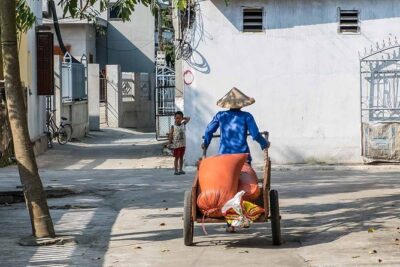
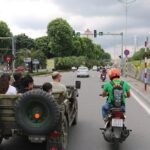
The best way I can describe this kind of Hanoi jeep tour is: you get your bearings fast, and you get them visually. Your pickup starts you from your hotel, then the jeeps roll through the Old Quarter with that tight-street energy—shop fronts, side streets, and constant motion. The open-air design is the whole point. You’re not looking at a place through glass. You’re watching it happen.
From there, you’ll continue through the French Quarter style roads and on toward West Lake. This is where the city’s mood changes. The streets can feel wider and calmer, and the lake area gives you a breather before the more formal landmark zone around Ba Dinh.
Two practical notes. First, because you’re in an open vehicle, think about sun, wind, and exhaust. One review mentioned air pollution as something to be prepared for, so I’d bring sunglasses and consider a light mask if you’re sensitive. Second, keep your phone ready but don’t count on perfect conditions; haze can flatten distant photos.
You can also read our reviews of more city tours in Hanoi
Old Quarter to West Lake: the easy route to see Hanoi’s contrasts
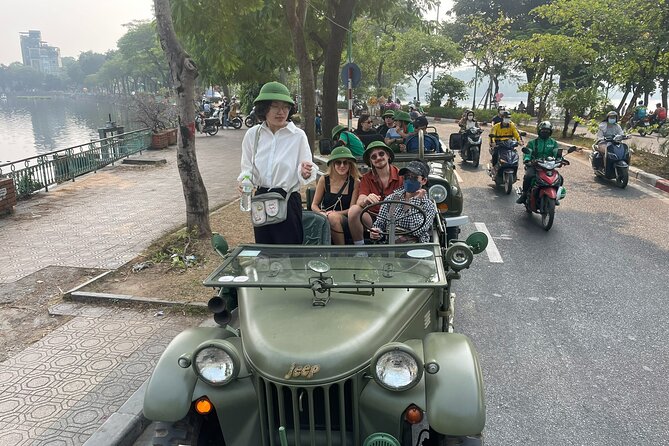
This portion works because it’s built for orientation. You’ll drive through the traditional street grid of the Old Quarter, then shift gears toward the more recognizable, landmark-friendly areas near the lake. Even if you only have a short stay, you’ll start to understand how Hanoi is layered: markets and narrow lanes up close, then grander roads and open space.
West Lake is your first stop area on the route. You’ll spend time there while the day still feels fresh. It’s a good moment to slow down a bit, get photos, and reset before the more structured landmark visits. The tour’s structure also helps: you’re not just sightseeing on foot. You’re seeing how the city connects, block to block.
What I like about this sequence is that it’s not random. The tour keeps moving but doesn’t feel like a nonstop blur. You get a “city view” feeling early, which makes the later stops—especially Train Street and the countryside—hit harder.
Ba Dinh Square and the big landmark pass: history without a museum marathon
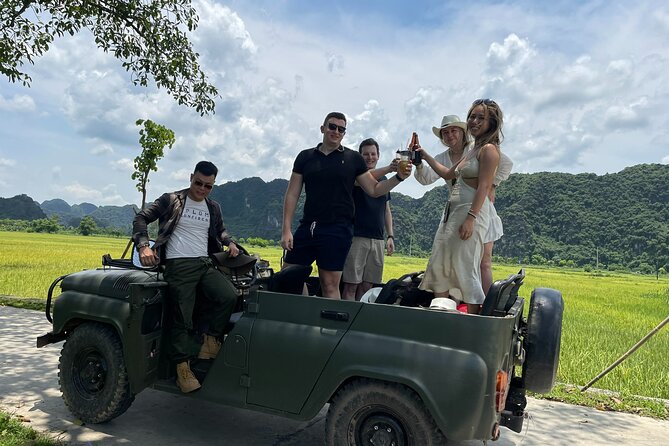
After West Lake, the route heads toward Ba Dinh Square. This is the zone where you’ll see the grand government architecture and major national symbolism. The jeep passes Ho Chi Minh Mausoleum, and you’ll learn and see the history of the area.
Then the drive continues through Phan Dinh Phung Street, one of Hanoi’s most famous roads. Even if you don’t go deep on foot, passing these streets gives you a real sense of scale and layout—how people actually live and move in the city, not just where tourist attractions sit.
A quick caution: landmark areas can involve rules, crowds, and sometimes tighter movement than you expect. The tour includes admissions for the planned stops, but it still helps to go with a calm pace and follow your guide’s timing. In other words, don’t treat this like a solo photo mission. You’ll get more out of it if you stay with the group.
Red River island, banana farms, and that local family stop

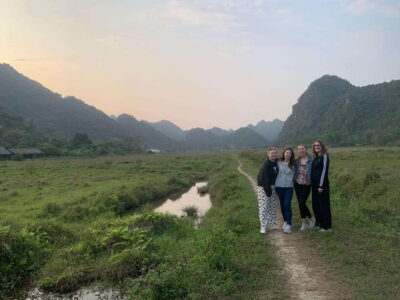
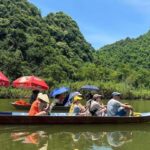
This is where the tour turns from city sightseeing into real contrast. Once the jeep leaves Hanoi proper, you head toward the Red River island area and the countryside near the city. The tour includes a visit to banana farms and time with a local family.
That combination matters. The farms give you the landscape view—green rows, rural work rhythms, and a different pace of daily life. Then the family visit adds the human layer. Instead of just watching scenery, you’re seeing how a household fits into the landscape and local economy.
If you care about authenticity, this is one of the best parts of the day because it’s not staged around big-ticket monuments. You’re stepping into an everyday world, and your questions (through your English-speaking guide) can make the differences between city and countryside feel concrete.
Two things to pack for this segment: comfortable shoes and something to handle dust or wind. Also, remember you’re outdoors for stretches, so sun protection is smart.
Backroads countryside driving: the views you don’t get on foot
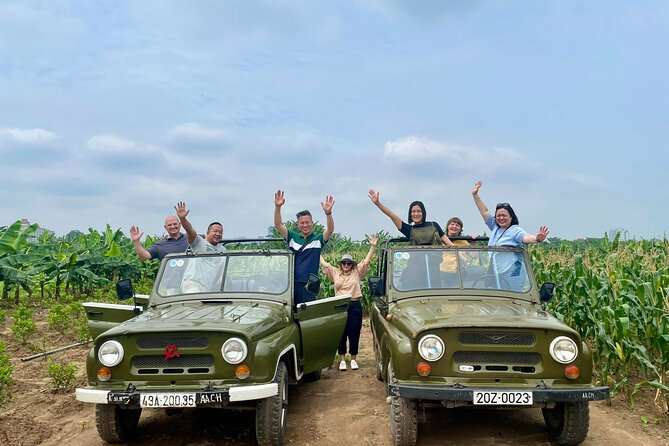
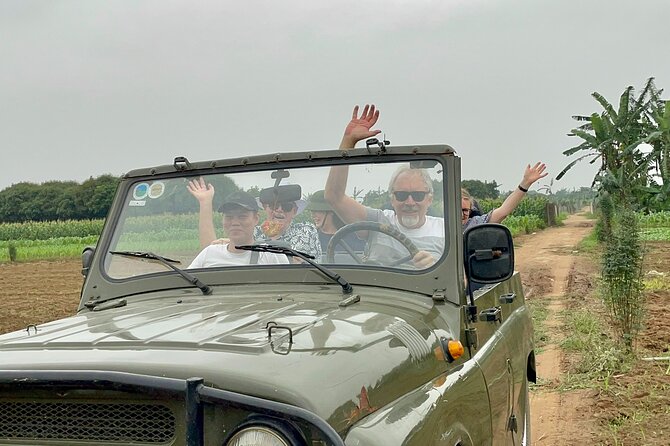
The tour’s driving segments through backroads are not just transit. They’re part of the experience. You’ll see farm roads and countryside scenes from the jeep, which often means more angles and broader glimpses than you’d get by walking between official stops.
This is also where the open-air setup pays off again. You’ll likely spot everyday details—small fields, village structures, and road life—at a speed that makes it feel like a moving photo walk. It’s not a slow, scenic tour, but it’s scenic enough to feel like you escaped the city for a bit.
If you get car sick, tell your guide in advance and sit where you feel most stable. The route includes a rainy-weather backup feature—there’s a loop to cover the jeep when it rains—but you still shouldn’t count on perfect comfort if conditions turn.


Van Nien Pagoda and B52 Lake: quieter stops with heavier context
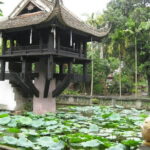
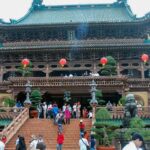
After the farm and backroad sections, the tour continues to Van Nien Pagoda. Pagodas tend to be good “pause points” on active itineraries. Even a short visit gives you a chance to step out of the moving flow, look around, and let the spiritual architecture and setting reset your brain.
From there, the route also includes B52 Lake. This is one of those places that can feel like a hard contrast to casual street life. The tour includes seeing it as part of the overall route, which helps you connect what you see in the city to the broader historical and geographic context around Hanoi.
For both of these stops, the best approach is simple: listen when your guide points out what matters, and take your photos when you can without rushing the experience. These are not “five-minute picture only” places if you want them to mean something.
Train Street (Duong Tau) walk: how to do it without stressing
The highlight stop for many people is Duong Tau, commonly known as Train Street. The tour includes a stop where you can walk inside the train track area and see how people live with trains passing nearby. If you’re lucky, you’ll meet a train during your visit.
Here’s the practical truth: train timing can’t be controlled. Your best “strategy” is to arrive with patience. When your group enters the area, slow down and pick a safe spot. Focus on composition and light rather than constantly moving.
Also, this is one of those places where you’ll get more out of the visit if you pay attention to behavior and safety. Keep to your guide’s instructions and don’t block movement. If you’re the kind of traveler who wants nonstop train-track time, this tour will still feel short. One review said they wanted more time for train track photos, which matches what I’d expect with a full circuit itinerary.
If your goal is mostly photography, consider arriving ready to shoot quickly and adjust fast. And if the train doesn’t come while you’re inside, you can still learn a lot from watching how daily life and infrastructure overlap.
What’s included: the value behind the simple list
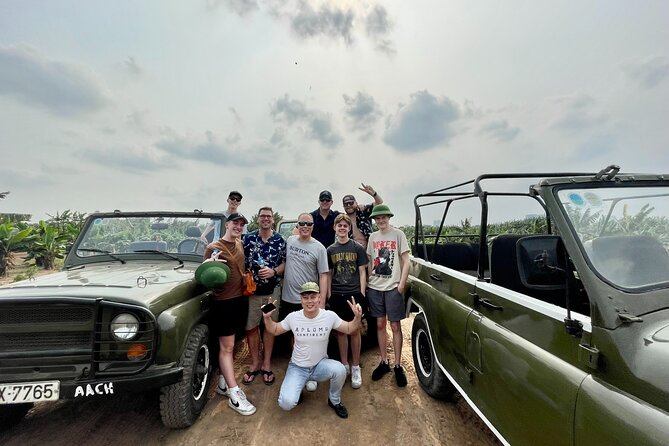
This tour is priced so that you’re not constantly paying for add-ons. The inclusions are the kind that reduce friction: pickup and drop-off from your hotel, an English-speaking guide, all entrance fees, lunch at a local restaurant, and water during the tour.
It also runs with an experienced jeep driver and includes fuel. If it rains, there’s that loop to cover the jeep, which is a useful detail because open-air tours are only enjoyable if they can handle a sudden weather shift.
For you, the practical benefit is time and decision fatigue. You don’t need to negotiate tickets or hunt down lunch spots in the middle of a busy day. You can focus on the sights and let the route do the organizing.
One more small but real perk: the tour is capped at a maximum of 15 travelers. Smaller groups tend to move more smoothly through tight areas, especially around Train Street and pagoda visits.
Price and logistics: why $55 feels fair for what you get
At $55 per person for about four hours, this can be a strong value when you compare it to piecing together city transfers, multiple paid entries, and a guided route.
Here’s what you’re really paying for:
- An open-air jeep that covers multiple districts and viewpoints quickly
- Guide time that helps you interpret what you’re seeing
- Entrance fees bundled so the day doesn’t get chopped up by payments
- Lunch and water so you don’t lose time searching
- Hotel pickup and drop-off so you don’t fight with taxis mid-itinerary
The only “logistics” consideration is that the tour runs as a group. One review mentioned a delay when someone was late by about 10 minutes, and the group waited. That’s normal in group travel, but it’s also your hint: be ready right on time. If you’re staying in the Old Quarter and you tend to wander, set an alarm and plan extra buffer.
If you’re sensitive to haze, plan for comfort too. The open-air jeep is fun, but it can feel harsher if the air is thick.
Who this Hanoi jeep tour suits best (and who should pick something else)
This tour is a great fit if you:
- Want a short, high-coverage introduction to Hanoi
- Like street views and district changes more than museum-only days
- Want to see both city landmarks and countryside farming scenery
- Are curious about Train Street and how everyday life works around it
- Value a guided explanation and bundled logistics
It may be less ideal if you:
- Want a long, slow Train Street visit focused only on photography
- Dislike open-air rides, especially in polluted or hot weather
- Prefer deep time at one site over quick, connected stops
If you’re on your first day in Hanoi, this tour is a smart way to get your bearings. If you’re on a short trip, it can work as your “big picture” day before you choose more focused neighborhoods.
Should you book the Hanoi Jeep City Highlight route?
If you want a practical, fast way to see Hanoi plus countryside in one day, I’d book it. The balance here is strong: city landmarks and district drives early, then countryside contrast, then Train Street at the end. The included lunch, entrance fees, and pickup make it feel like a complete outing instead of a list of scattered stops.
My only reason to hesitate is expectation management. The schedule is tight, and Train Street depends on timing. If Train Street is your single obsession, you might want extra time elsewhere too. But as an all-in-one Hanoi orientation with a real rural detour, this is a solid use of a half-day.
FAQ
How long is the Hanoi jeep city tour?
It runs for about 4 hours.
Do you get picked up and dropped off from your hotel?
Yes. Pickup and drop-off from your hotel are included.
Is there an English-speaking guide?
Yes, an English-speaking guide is included.
What entrance fees are covered?
All entrance fees are included.
Is lunch provided?
Yes, lunch at a local restaurant is included.
Do I need to buy a mobile ticket?
You’ll receive a mobile ticket.
Is the jeep open-air, and what happens if it rains?
It’s an open-air jeep. There is a loop to cover the jeep if it rains, and the tour requires good weather.
How big is the group?
The maximum group size is 15 travelers.
Is Train Street included, and do I see the train?
Train Street (Duong Tau) is included, and you can walk inside. Seeing a train is possible, but it depends on the timing during your visit.