REVIEW · COOKING CLASSES
Hanoi Farm Tour and Cooking Class with Local Family
Book on GetYourGuide →Operated by Farm tour and Home cooking in Hanoi · Bookable on GetYourGuide
Farm air and a family kitchen set this apart. You’ll start with a walk through a market with roots in the Le King Dynasty, then move straight into vegetable fields and fruit gardens, learning what locals actually grow and eat. I like that the focus stays practical—what you see matters, and you’ll cook with fresh ingredients you’ve just been looking at.
The biggest win for me is the hands-on cooking in a local home, not a staged classroom. You also get plenty of time for conversation with your local host and the family, which is where the culture details come from. One thing to consider: the market can be intense and sensory, and the tour isn’t suitable for pregnant women.
In This Review
- Key highlights you’ll care about
- Why Dong Bac feels more real than most Hanoi day trips
- Getting there from central Hanoi: the 35–40 minute factor
- The market walk in a 1428-style trading world
- Vegetable farms right next door: what you’ll actually see growing
- Cooking class in a family home: how the meal becomes the lesson
- Price and value: why $43 can make sense here
- Who should book this Hanoi farm-to-kitchen experience
- Tips to get more out of the market and cooking
- Should you book the Hanoi Farm Tour and Cooking Class?
- FAQ
- How long is the Hanoi Farm Tour and Cooking Class?
- Where does the tour start and end?
- How far is the village from Hanoi’s Old Quarter?
- What’s included in the price?
- Is hotel transfer included?
- What do you do at the market?
- What can you see growing on the farm?
- Do you get to choose what dishes you cook?
- Is the tour suitable for pregnant women?
- Can I cancel for a full refund?
Key highlights you’ll care about
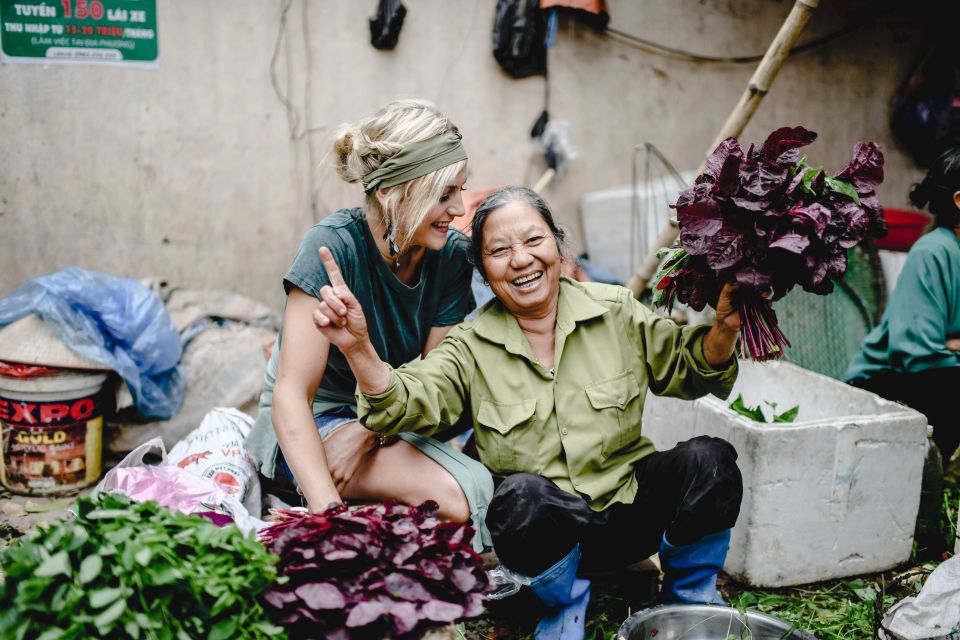
- A market with deep roots: markets here trace back to 1428, with daily-life sights like betel and charcoal braziers
- Farm walk where food is actually grown: bitter melon, cabbage, tomatoes, soybeans, plus oranges, pomelos, papayas, and more
- A home kitchen cooking class: you’ll cook traditional dishes alongside a local family
- Fresh meal and drinks included: you don’t just watch—you eat what you helped make
- Private English-speaking host: tailored questions, no fighting for attention
Why Dong Bac feels more real than most Hanoi day trips
This is a short trip out of the city that still gives you the full arc: market → fields → home meal. It’s not about checking boxes. It’s about understanding how everyday food starts long before it hits a Hanoi plate.
You’re also in a private group, with a local English-speaking host. That matters. In a private format, you can ask follow-up questions about farming routines, cooking methods, and daily life without feeling rushed or lost in a crowd. One common theme from people who’ve done this is that the market and farm portions feel explained and organized, which helps when the sights are unfamiliar and fast-moving.
Your time is limited (4 hours total), so you’ll want to keep your expectations grounded. This isn’t a countryside vacation. It’s a concentrated taste of village rhythms, delivered efficiently.
You can also read our reviews of more cooking classes in Hanoi
Getting there from central Hanoi: the 35–40 minute factor
The village area is about 18 km from Hanoi’s Old Quarter, and the drive usually takes 35/40 minutes by car. That’s a realistic, manageable transfer—short enough that you’ll still feel like you escaped the city, but long enough that you should plan around travel.
Hotel pickup is not included, so you’ll need your own ride to the meeting point. The start location is Đình Phương Viên, Đê Song Phương, Hoài Đức, Hà Nội, and the tour ends back at that same point. If you’re staying in the Old Quarter, a taxi is usually the simplest way to get there. The tour info specifically recommends booking a taxi because it’s described as the cheapest and most comfortable option.
Also keep in mind: starting times depend on availability. So if you’re scheduling this on a busy day, check your options early.
The market walk in a 1428-style trading world
The market is a major reason to do this tour, and not just for photos. You’ll see how people buy and trade items that feel very close to daily village life—produce, animals, baskets, and the tools that keep the economy moving.
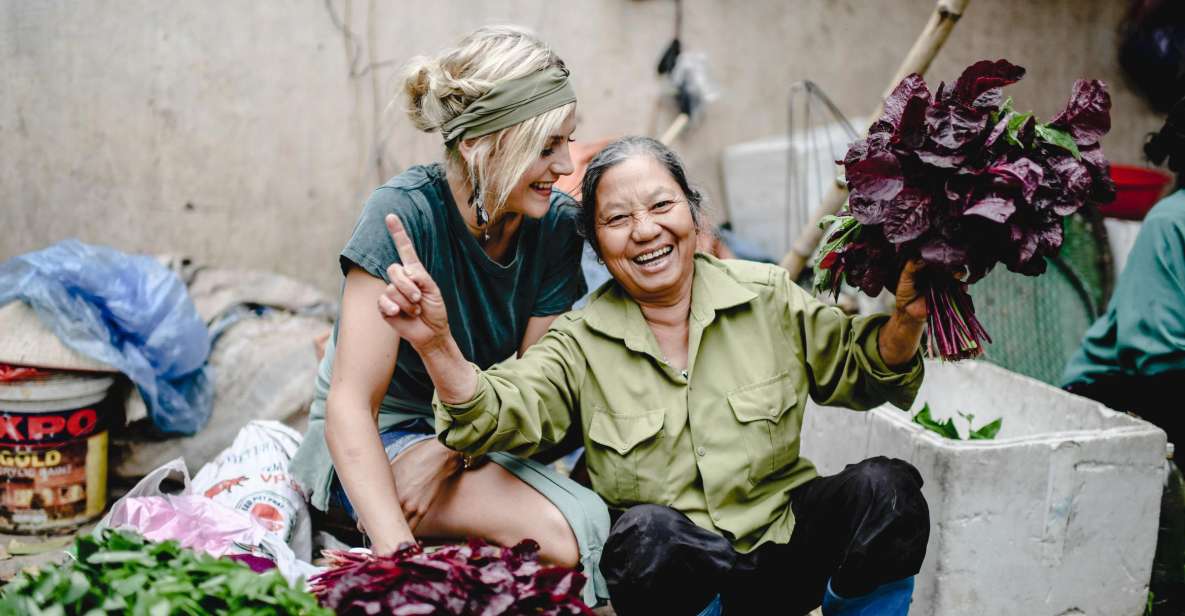
This market is described as over 1000 years old and operating since the Le King Dynasty (1428). On market days (which happen two or three times per week), the vibe shifts. People from surrounding villages come to trade items like dogs, cats, pigs, chickens, ducks, and bamboo baskets. You may also see old women chewing betel and areca nut, and you can spot blacksmiths working with bright braziers.
If your visit isn’t on a market day, you won’t be stuck with nothing to do. You’ll visit another local market with typical produce like fish, vegetables, fruits, and meat, with time to chat with locals.
A practical consideration: this is a market. Expect movement, close quarters, and strong smells or sounds at times. If you’re sensitive to those kinds of environments, go in with the mindset that you’re watching real life, not a curated exhibit.
Vegetable farms right next door: what you’ll actually see growing
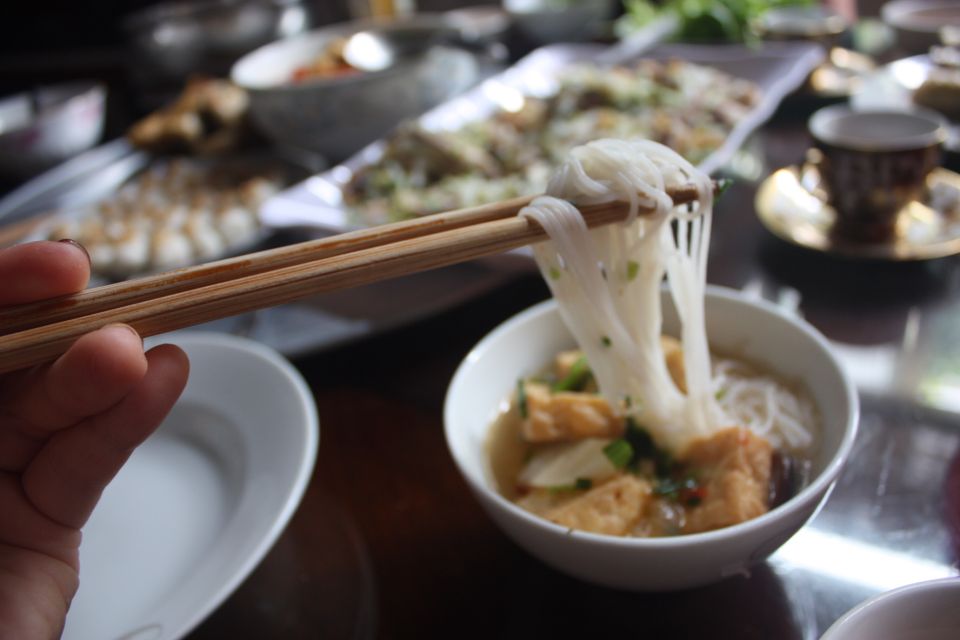
After the market, you head to farms located right nearby. This part is where the tour connects sights to your meal.
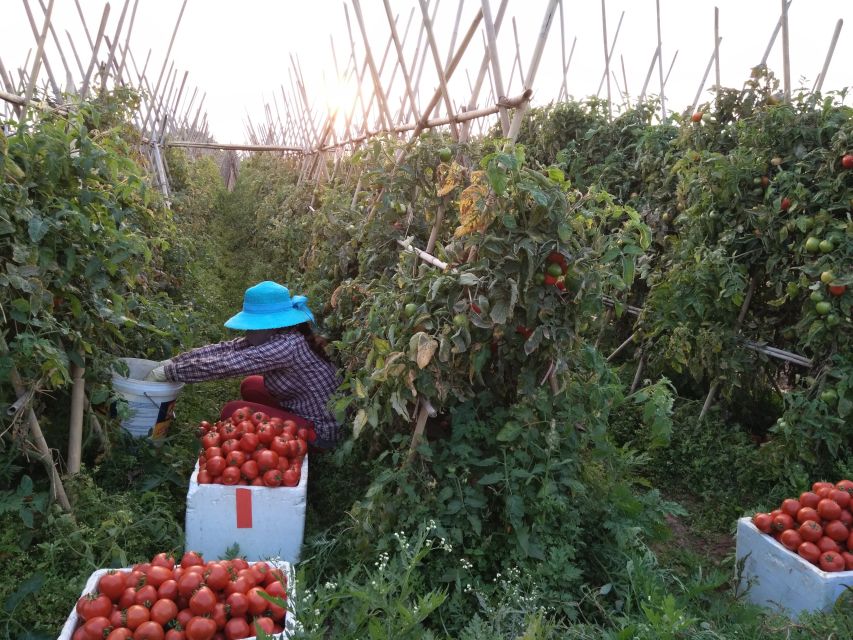
You’ll walk through fields growing crops like:
- bitter melon
- corn
- cauliflower and cabbage
- tomatoes
- green peas
- soybean
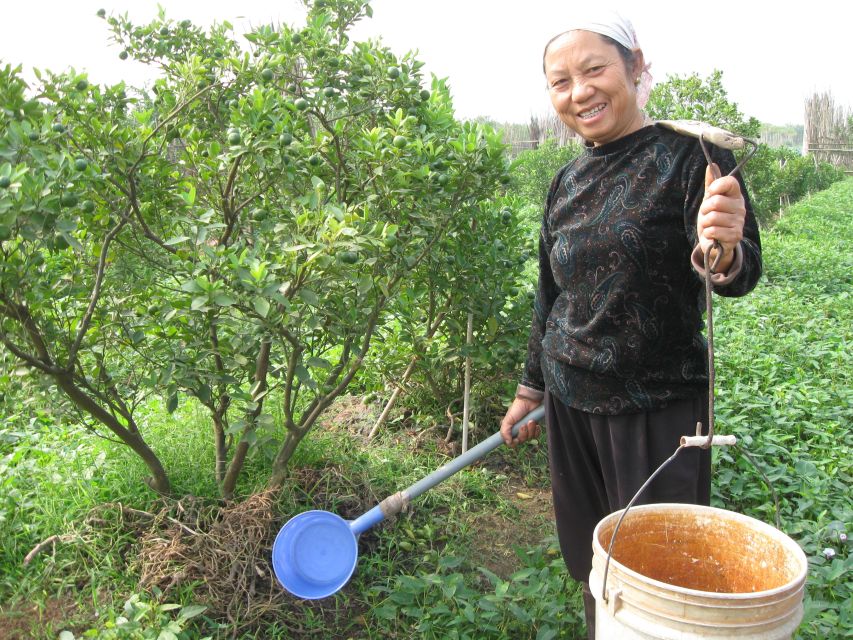
Then you’ll shift to fruit gardens with oranges, pomelos, papayas, guavas, and bananas.
What I like about this layout is that it feels coherent. The tour doesn’t just point at food. It shows the ingredients in their natural setting. That makes the cooking class more meaningful because you can mentally connect what’s growing in the fields to what ends up on your plate.
You’ll also have a chance to talk with a working farmer and ask about cultivation techniques and lifestyle. The best questions to ask are simple ones: how they handle growing seasons, how they choose crops, and how daily farm routines shape what’s available to sell.
Cooking class in a family home: how the meal becomes the lesson
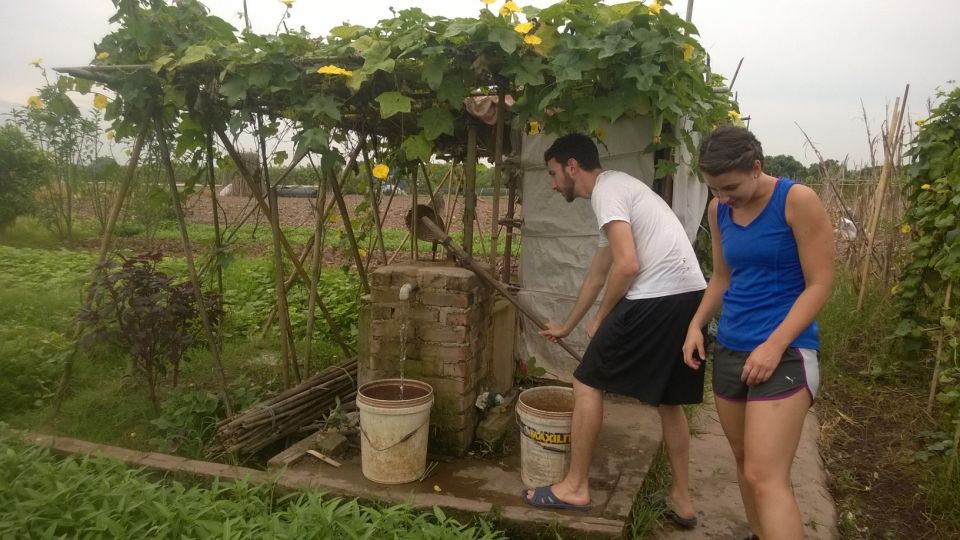
This is the part most people remember, because you’re not just learning recipes—you’re learning a way of eating.
After the farm, you travel to a local home for the cooking class. You’ll use fresh vegetables and fruit, plus you’ll be offered tea and traditional cake while you get oriented. Then you’ll cook traditional Vietnamese dishes in the home kitchen with the local family.
Your experience includes a menu choice: after booking, you’ll be sent a detailed menu so you can select what you want to cook. That’s useful because it helps you tailor the session to your preferences instead of being forced into one rigid set of dishes.
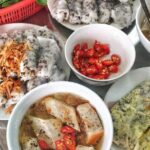
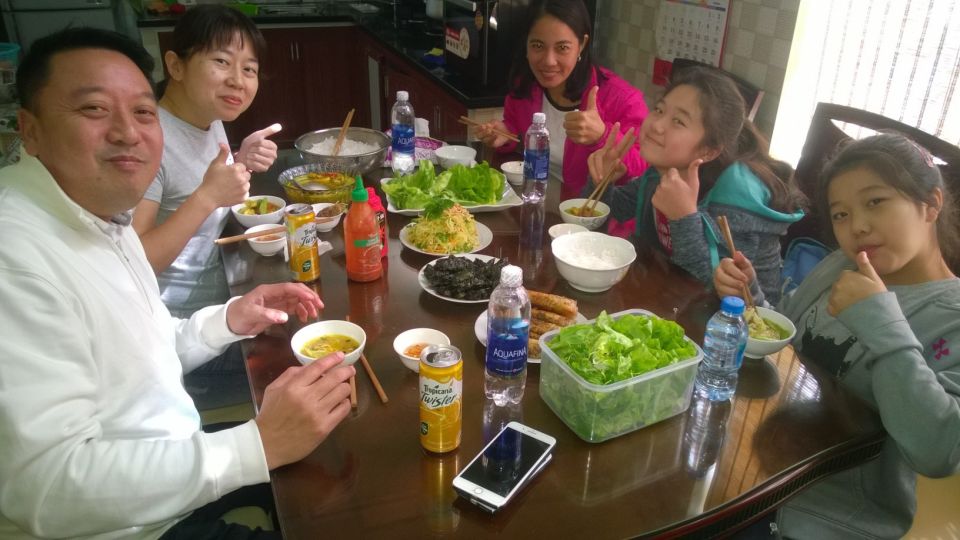
And when it comes time to eat, you’ll enjoy the meal you made. In the experience’s standout moments, people often say the home-cooked food hits harder than restaurant versions, mostly because it’s fresh and simple. You’ll be eating something that’s directly tied to the farm produce you walked through earlier.
Conversation is part of the value here, too. You’ll share and compare culture with the Vietnamese family, which turns the cooking into a real exchange rather than a performance.
You can also read our reviews of more tours and experiences in Hanoi

Price and value: why $43 can make sense here
At $43 per person for 4 hours, this isn’t a bargain in the ultra-budget sense. But it also isn’t just a sightseeing stamp.
What you’re getting for the price is pretty substantial:
- a private English-speaking local host
- a market visit plus farm walk
- a cooking class
- a meal and drinks included
And since transfers from your hotel are not included, your cost picture depends a bit on where you’re staying. Still, even with taxi time added, the included meal and hands-on cooking tend to make the overall value feel fair—especially if you care about food and you’d otherwise pay for a separate cooking class plus a meal.
If you’re the type who hates “tour-food” and prefers learning how the dishes are built, this price usually feels like a trade-off: you pay a bit more than basic transport + street food, but you gain a real process and a real family table.
Who should book this Hanoi farm-to-kitchen experience
This tour is a strong fit if you:
- want a market + farming + cooking day, not just one of the three
- love Vietnamese food and want the recipes and techniques explained in context
- enjoy talking with locals and learning daily-life details
- prefer a private group so you can ask questions and move at a comfortable pace
It may be less ideal if you:
- dislike animal markets or you’re very sensitive to intense sights and smells
- are short on time for travel out of the city
- are looking for something specifically designed for pregnant travelers (this one is listed as not suitable)
One more note that matters: you’ll be away from central Hanoi for a chunk of the afternoon/evening block. If you plan other things right after, build in some buffer so you’re not rushing.
Tips to get more out of the market and cooking
A few small moves can make the day feel smoother:
- Wear comfortable shoes for the market and farm walking. You’ll cover ground and you’ll want stable footing.
- Bring a curious attitude and ask basic questions. “What’s your favorite crop?” and “How do you decide what to grow?” usually earn better answers than trying to memorize vocabulary.
- Treat the cooking menu like a chance to personalize. Choose dishes you genuinely want to eat rather than what you think you should try.
- Go hungry. The meal is included, and it’s the payoff for all the walking.
Also, consider that hosts for this experience may include people with names like Sandy, Mandy, and Manh (you might meet one of them depending on the booking). Whoever you’re paired with, the session is structured around a friendly home rhythm and practical explanations.
Should you book the Hanoi Farm Tour and Cooking Class?
Yes—if your priority is food with real context, this is one of the better ways to spend a half-day around Hanoi. The market part gives you the ingredient origin story, the farm walk connects you to what’s growing, and the home cooking is where the experience becomes personal.
Skip it only if market environments feel too uncomfortable for you, or if you need hotel pickup and maximum convenience above all else. Otherwise, for the price and the mix of market + farm + family kitchen, it’s a strong value that goes beyond a typical sightseeing day.
FAQ
How long is the Hanoi Farm Tour and Cooking Class?
It lasts 4 hours. Starting times depend on availability.
Where does the tour start and end?
It starts at Đình Phương Viên, Đê Song Phương, Hoài Đức, Hà Nội, and ends back at the same meeting point.
How far is the village from Hanoi’s Old Quarter?
It’s about 18 km from Hanoi Old Quarter, taking roughly 35/40 minutes by car.
What’s included in the price?
You get a private English-speaking local host, a market and farm visit, the cooking class, a meal, and drinks.
Is hotel transfer included?
No. Transfer from your hotel is not included.
What do you do at the market?
If it’s market day, you’ll see traditional stalls and trade items, including produce and animals. If it’s not market day, you’ll visit another local market with local produce like fish, vegetables, fruits, and meat.
What can you see growing on the farm?
You’ll walk through vegetable fields growing crops like bitter melon, corn, cauliflower, cabbage, tomatoes, green peas, and soybean. You’ll also see fruit gardens with oranges, pomelos, papayas, guavas, and bananas.
Do you get to choose what dishes you cook?
Yes. You’ll be sent a detailed menu after booking so you can choose from the available options.
Is the tour suitable for pregnant women?
No. It is listed as not suitable for pregnant women.
Can I cancel for a full refund?
Yes. You can cancel up to 24 hours in advance for a full refund.
You Might Also Enjoy




More Cooking Classes in Hanoi

More Tours in Hanoi
- Ninh Binh Full-Day Tour from Hanoi to Hoa Lu, Tam Coc & Mua Cave Via Boat & Bike
★ 5.0 · 4,384 reviews