Pedaling through Hanoi traffic changes how you see it. This bike tour mixes big-city chaos with calmer island views, guided by people who know how to keep you moving. You’ll also get a close-up look at daily life, not just postcard stops.
I really like two things about this experience: the ride itself—especially when guides like Tee or Minh steer you through Hanoi’s constant motorbike flow—and the food stops. Lunch or dinner can include Bun Cha, Banh Mi, Pho Cuon, and Pho, which makes the whole day feel practical, not just scenic.
One drawback to plan for: you need to be comfortable cycling in busy streets. The tour is described as safe, but it’s still Hanoi traffic, rain or shine, and it’s not designed for timid riders.
In This Review
- Key things that make this Hanoi bike tour worth your time
- Hanoi by bike: the 10 km ride that adds up fast
- Starting in the Old Quarter: streets you can feel in your legs
- Hồ Hữu Tiệp and the photo-stop moment that actually tells a story
- Train Street: watching a train pass where life continues inches away
- Long Bien Bridge: a historic ride with modern-day river views
- Banana Island on West Lake: the quiet contrast that makes the ride feel real
- Lake B52: a conversation-friendly pause by wartime memory
- Ho Chi Minh Mausoleum area: one of Vietnam’s most recognized symbols
- Lunch or dinner: Bun Cha, Pho Cuon, and Banh Mi the way locals order
- The family home visit: daily life you can’t get from a viewpoint
- Safety and gear: how to handle Hanoi’s street logic on two wheels
- Price and value: why $34 can make sense here
- Timing: morning rides, train moments, and how long you’ll feel “on”
- Who should book this and who should skip it
- Should you book this Hanoi bike tour?
- FAQ
- How long is the Hanoi bike tour?
- How far will I cycle?
- Is a bicycle and helmet provided?
- What food is included?
- Does the tour run in the rain?
- Where do they pick up and drop off?
- What language is the guide?
- Are entrance fees included?
- Is this tour suitable for everyone?
Key things that make this Hanoi bike tour worth your time

- Real traffic guidance: You ride with an English-speaking guide who manages the street flow so you can focus on the ride.
- Banana Island contrast: From West Lake quiet to city streets, the day has a built-in mood swing.
- Train Street timing: You’ll have time to watch the train pass through an extremely tight urban setup.
- Family-life insight: A visit to a family home gives you a human scale to what you’re seeing.
- Food that locals actually eat: You’re not just tasting; you’re learning what to order and how people dine.
- Small group options: You can do it privately or in a small group, which helps the pacing feel less rushed.
Hanoi by bike: the 10 km ride that adds up fast
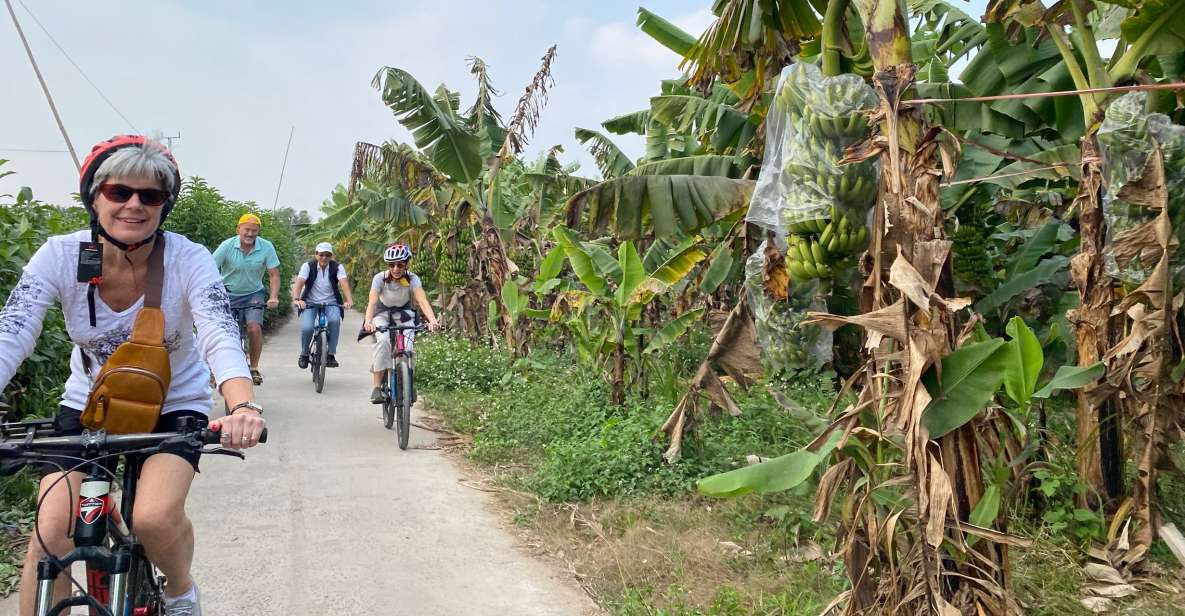
This is one of those Hanoi activities where the “how far” sounds short, then the “what you experience” feels long. You cover about 10 km (around 6 miles), and that’s manageable for most active people. The catch is that the difficulty isn’t only about distance—it’s about timing, balance, and confidence around traffic.
The bikes come with helmets, and you’ll keep water with you. You’ll also get a raincoat if the weather turns, because the tour runs rain or shine. That matters in Hanoi: you can plan for sightseeing, but you can’t plan the sky. When you’re already dressed for a bike ride, the weather stops being a deal-breaker.
For me, the biggest value is that bicycling lets you cover ground without losing the street-level details. Walking gets you close to storefronts, but it’s slow. A taxi gets you distance, but you miss the constant movement around you. A bike gives you both: proximity and pace.
You can also read our reviews of more cycling tours in Hanoi
- Ninh Binh Full-Day Tour from Hanoi to Hoa Lu, Tam Coc & Mua Cave Via Boat & Bike
★ 5.0 · 4,384 reviews



Starting in the Old Quarter: streets you can feel in your legs
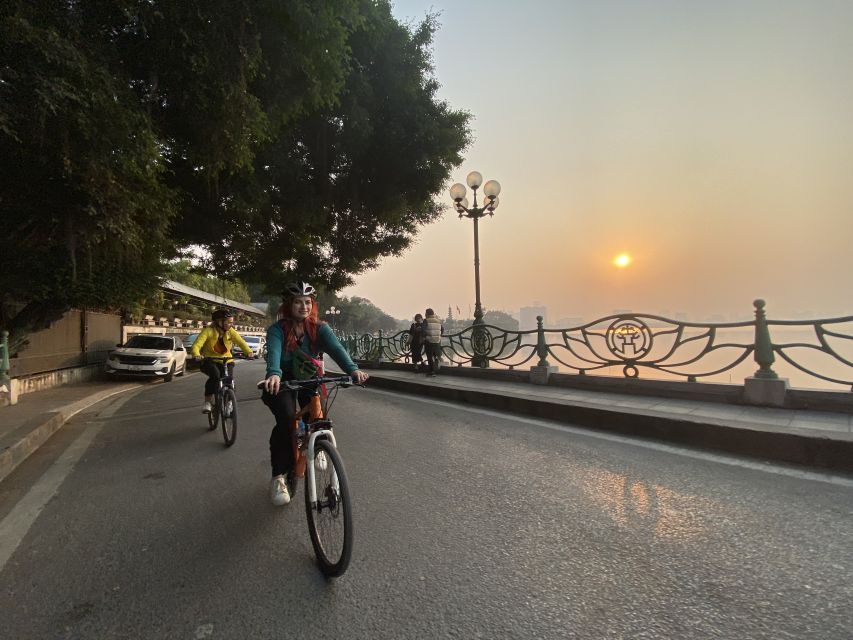
Most tours like to say Old Quarter is a must-see. This one treats it like a place you learn to move through. You’ll start with a look around the area for about 30 minutes, enough to orient you before the route turns more interesting.
Old Quarter is known for narrow lanes and old temples, plus the kind of shopping that happens in tight spaces. Riding here is different from strolling. You’ll notice how people flow around you—how motorbikes weave, how pedestrians step into gaps, and how the street behaves when the light changes.
There’s a practical reason the Old Quarter start works: you need a few minutes to understand the rhythm before you go deeper into traffic. By the time the route continues, you’re not thinking about how to “do the city.” You’re doing it, with your guide handling the hardest parts.
Hồ Hữu Tiệp and the photo-stop moment that actually tells a story
After the Old Quarter introduction, you’ll hit a stop around Hồ Hữu Tiệp for photos and a short guided visit. This is where the tour shifts from sightseeing to explanation. Even a simple stop becomes more memorable when you understand what you’re looking at—why people gather there, what the site means, and how the city’s history shows up in daily life.
Photo stops are often “one minute, smile, done.” This one is guided, which makes it better than a quick snapshot. It also helps you get a sense of pacing: you’re not trapped on a strict schedule, but you also aren’t stuck waiting.
Train Street: watching a train pass where life continues inches away
One of the most striking parts of Hanoi is Train Street, and the tour builds in a real chance to experience it. You’ll stop and have time to watch the train go by while the street stays active on both sides. It’s hard to describe until you’re there: the buildings, the tracks, the shops, the narrowness—everything looks too close.
The payoff isn’t only the photo. It’s the perspective. In many cities, infrastructure gets treated like something distant, separate from daily life. Here, the infrastructure is part of the neighborhood texture. Your guide can explain how that became part of the city, and why people live with it rather than around it.
You should also know this: train timing can make or break the moment. The tour’s plan is designed around catching it, and guides tend to adjust if needed so you still get the experience.
Long Bien Bridge: a historic ride with modern-day river views

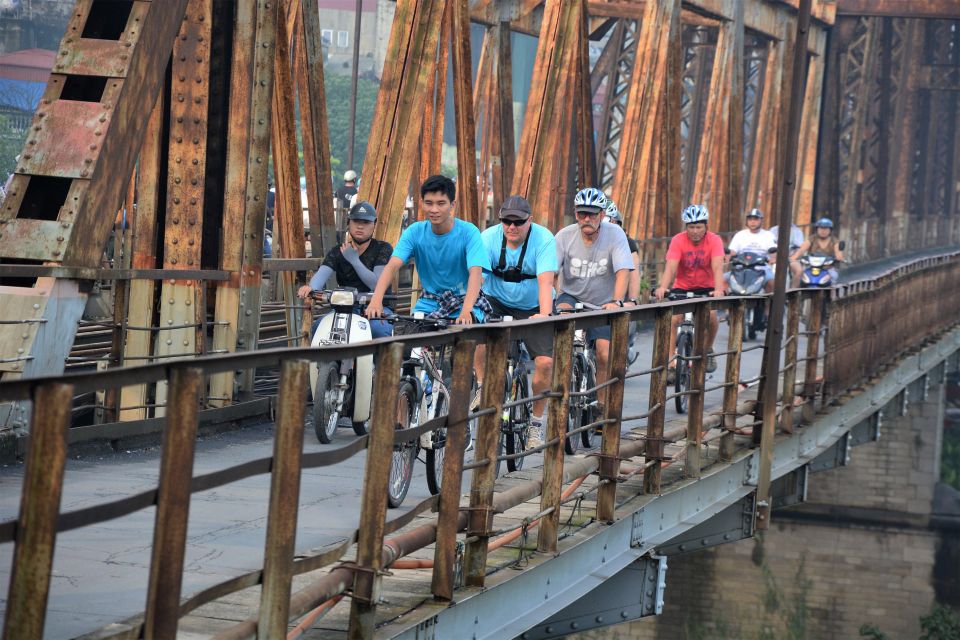
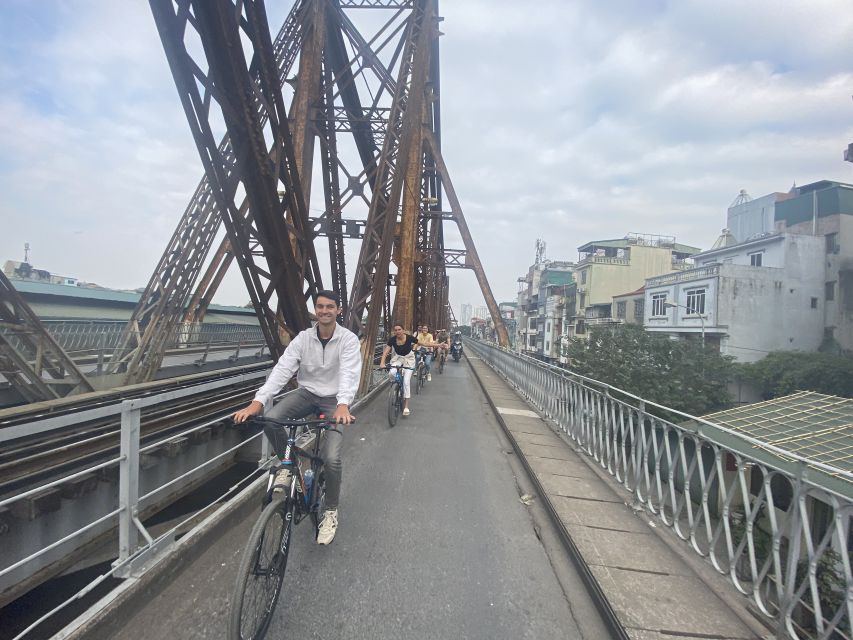
From the inner-city streets, the route heads toward Long Bien Bridge, built by the French in 1903. You’ll get the kind of view people love to photograph: the Red River stretching out, plus the sense of scale that’s hard to grasp from street level.
Riding across a bridge changes your tempo. The noise shifts, your sightlines open, and you get a break from the constant close-quarters movement. It’s a good reset before you jump back into tighter neighborhoods.
And it’s a neat historical connection too. One bridge can carry layers—colonial-era planning, wartime memory, and the everyday life that continues around it.






Banana Island on West Lake: the quiet contrast that makes the ride feel real

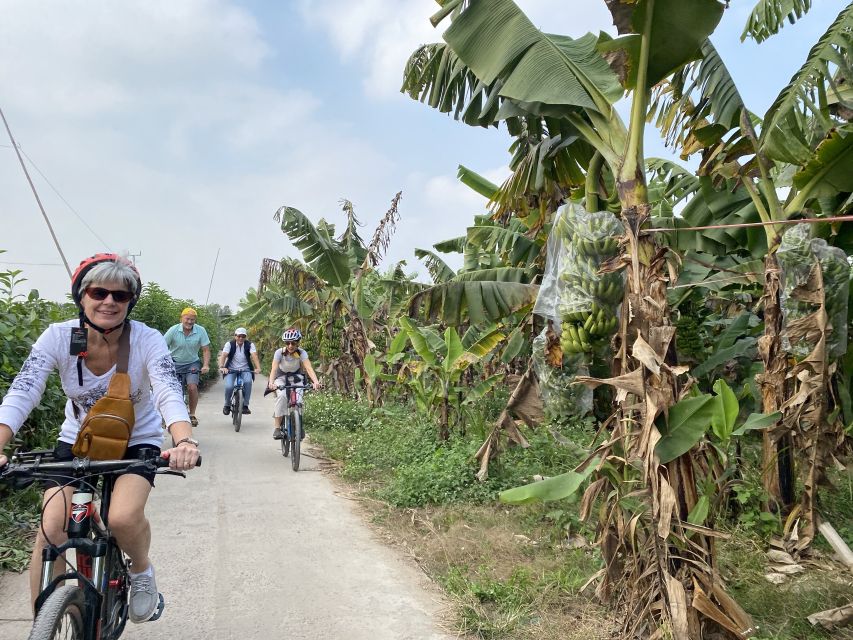
Then comes the moment you’ll probably remember most: Banana Island, reached from West Lake by a short boat ride. You swap the city’s nonstop motion for something greener and calmer, even if you’re only there for part of the day.
What makes Banana Island special in the context of this bike tour is the contrast. Hanoi can feel overwhelming if your sightseeing is only about major landmarks. Banana Island gives you room to breathe, plus real scenery that doesn’t look like a postcard.
The island side of the ride also helps you understand what you’re eating and learning later. When you leave a quieter place and return to busy streets, the city’s rhythms make more sense. You see that Hanoi isn’t just the Old Quarter. It’s also neighborhoods with farming, daily routines, and seasonal beauty.
Lake B52: a conversation-friendly pause by wartime memory
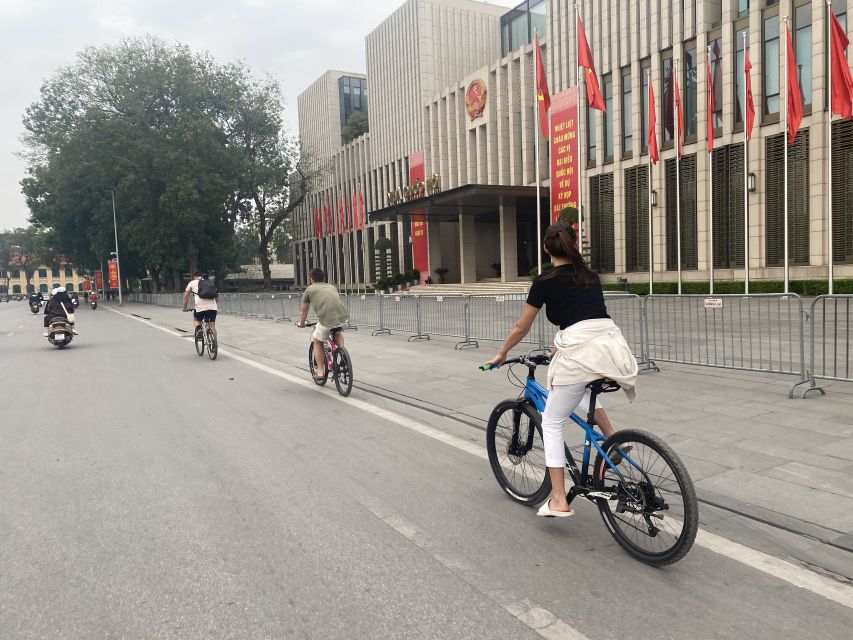
The tour also includes a stop at Lake B52, named after an American B-52 bomber that crashed there during the Vietnam War. This isn’t just a name on a sign. The experience becomes a chance to talk about memory in a place where people still fish, chat, and relax.
This kind of stop matters because it shifts the tour from “see the sights” to “understand the context.” You’ll hear how past events still shape how people think and talk today.
It’s also a low-effort break. You’re on the bike all morning or early afternoon, and then Lake B52 gives you a calmer moment—time to sit, look, and absorb.
Ho Chi Minh Mausoleum area: one of Vietnam’s most recognized symbols
You may also pass or visit the area around the Ho Chi Minh Mausoleum. It’s a major stop in Vietnam’s political and cultural landscape, and it’s built from marble and granite. People view his embalmed body inside the mausoleum, so it’s both a symbol and a national ritual space.
Even if you don’t linger long, it’s a useful checkpoint in a bike tour like this. You don’t spend the whole day trapped in official spaces, but you still get the sense of what Vietnam marks as sacred and historic.
Lunch or dinner: Bun Cha, Pho Cuon, and Banh Mi the way locals order

The meal is a big part of why this tour feels good value. You’re not just getting a random restaurant stop; you’re eating foods that match the day’s theme: street culture, neighborhood cooking, and classic Vietnamese flavors.
Depending on the timing, lunch or dinner can include dishes like:
- Bun Cha (grilled pork with noodles and herbs)
- Banh Mi (Vietnamese sandwich)
- Pho Cuon (rolled noodle soup)
- Pho (classic noodle soup)
Your guide usually helps with ordering and explains dining style. That matters because Vietnamese food is often built around texture and herbs—if you order without guidance, it’s easy to miss the point.
I also like that you typically get a meal at a place you might not find on your own, especially if you’re trying to fit this into a limited time window. Bike tours are a shortcut to local food access.
The family home visit: daily life you can’t get from a viewpoint
One highlight that really changes the tone is the chance to visit a family home to learn about everyday life. This is the “human scale” part of the day.
Instead of learning only about famous sites, you also learn how people live—how routines work, what matters in daily conversations, and how the city functions beyond monuments. It’s often brief, but it gives you something souvenirs can’t: context.
A home visit also helps you slow down. You’re not only speeding through streets for photos. You’re meeting a lived environment. That’s where the tour feels authentic rather than just efficient.
Safety and gear: how to handle Hanoi’s street logic on two wheels
Let’s be honest. Hanoi traffic can feel like organized chaos. The good news is that you aren’t supposed to muscle your way through it alone. Guides are used to positioning bikes, scanning for gaps, and moving as a group.
Still, the tour’s own guidance is clear: you should be a regular cyclist. That means you can brake smoothly, stay balanced at slow speeds, and ride confidently when things get tight. If you’re only comfortable on quiet paths, this may feel stressful rather than fun.
Practical tips that help:
- Do a quick bike check before leaving the pickup spot (seat height, brakes, tires). Some riders note bikes can vary.
- Wear closed-toe shoes and clothes that can handle a bit of spray.
- If you want footage, a camera mounted to your helmet can capture the Hanoi flow in a fun way (and you’ll see what you were seeing).
Helmets and cold water are provided, and your guide keeps you safe by leading. That said, Hanoi streets still demand basic cycling confidence.
Price and value: why $34 can make sense here
At $34 per person, this tour can be good value because several costs are wrapped in:
- bike and helmet
- English-speaking guide
- pickup/drop-off within the Old Quarter area
- entrance fees (where applicable)
- lunch or dinner
- cold water
- raincoat if needed
When you compare that to paying for bikes, a guide, transport between scattered sights, and a meal separately, the math improves fast. You’re also paying for something harder to buy: the route knowledge and street navigation that saves you from figuring out Hanoi traffic on your own.
The only “watch-outs” on value are what’s not included: beverages are separate, and you may need to handle pickup if you’re staying outside the Old Quarter. Also, there’s a $10 surcharge on major holidays like New Year and Tet, plus other listed national holidays.
Timing: morning rides, train moments, and how long you’ll feel “on”
The duration is 3 to 8 hours, which is a wide window, and it matches the reality of Hanoi: traffic and timing matter, especially for Train Street. Some departures can start early—one guide-style approach is an early start to see how Hanoi wakes up in different areas.
So plan your day with breathing room. Don’t schedule anything super tight right after your tour. You’ll come back hungry, energized, and probably a little tired in your legs.
Also, remember that the tour doesn’t just include “where you go.” It includes the pauses that make those places click: photos, guided explanation, food ordering, and the downtime by lakes and viewpoints.
Who should book this and who should skip it
You’ll likely love this tour if:
- you can ride a bike confidently in traffic-adjacent situations
- you want a guided way to see both iconic places and calmer spots like Banana Island
- you like food that comes with local context
- you’re curious about how Vietnamese history shows up in daily life (not only monuments)
You should think twice if:
- you’re not comfortable with busy streets
- you’re traveling with anyone who can’t do active cycling (the tour isn’t suitable for children under 8, pregnant women, or people with mobility impairments)
- you want a purely relaxing sightseeing day with zero adrenaline
In other words: this is not just a “sit and look” tour. It’s movement, decision-making, and a guide who knows how to keep the ride under control.
Should you book this Hanoi bike tour?
If you want Hanoi in a way that matches how the city actually works, this tour is a strong yes. The combination—Old Quarter street life, Train Street’s close-quarters moment, the contrast trip to Banana Island, and a guided meal that goes beyond tourist orders—feels like a complete day with a point of view.
Book it if you’re an active rider and you don’t mind that Hanoi traffic is part of the experience. Skip it if you’re looking for a quiet, low-stress city tour. You’ll spend your money best when you show up ready to ride and curious to learn from the people showing you the way.
FAQ
How long is the Hanoi bike tour?
It runs about 3 to 8 hours, depending on the start time and the day’s pacing.
How far will I cycle?
You’ll cover approximately 10 km (about 6 miles).
Is a bicycle and helmet provided?
Yes. The tour includes a bicycle and a helmet.
What food is included?
Lunch or dinner is included, with local dishes such as Bun Cha, Banh Mi, Pho Cuon, and Pho.
Does the tour run in the rain?
Yes. The tour takes place rain or shine, and a raincoat is provided if needed.
Where do they pick up and drop off?
Pickup and drop-off are included within the Old Quarter of Hanoi. Pickup from hotels outside the Old Quarter is not included.
What language is the guide?
The guide is English speaking.
Are entrance fees included?
Yes, all entrance fees are included.
Is this tour suitable for everyone?
No. It’s not suitable for children under 8, pregnant women, or people with mobility impairments. It’s also described as requiring comfort cycling in Hanoi traffic.
You Might Also Enjoy


More Cycling Tours in Hanoi
- Ninh Binh Full-Day Tour from Hanoi to Hoa Lu, Tam Coc & Mua Cave Via Boat & Bike
★ 5.0 · 4,384 reviews


More Tours in Hanoi
- Ninh Binh Full-Day Tour from Hanoi to Hoa Lu, Tam Coc & Mua Cave Via Boat & Bike
★ 5.0 · 4,384 reviews