REVIEW · WORKSHOPS
Experience Traditional Vietnamese Calligraphy Class in Ha Noi
Book on Viator →Operated by Happy Tour · Bookable on Viator
One sentence can change your trip. In Hanoi, a short calligraphy class gives you a real skill—ink, brush, and meaning included—and a finished piece to bring home. The pace is calm, the group stays small, and the learning feels hands-on from the first stroke. San先生, the instructor featured in one of the experiences’ standout notes, teaches with kindness and clear step-by-step guidance.
I like two things most. First, you get more than decoration: you learn that line choices carry meaning, not just pretty shapes. Second, you finish with something you made from scratch, not a pre-made souvenir. I also found the class style practical and friendly—questions are welcome and the instructor stays patient when your wrist is still figuring things out.
One thing to consider: the class is about 2 hours, so you’ll leave with solid fundamentals and a finished artwork, but you won’t become a calligrapher overnight. Expect progress, not perfection.
In This Review
- Key things I’d look for in this Hanoi calligraphy class
- Hanoi calligraphy starts with the idea behind the strokes
- Where the class happens: the calm of 371 P. Kim Mã
- Learning flow: history first, then tools, then real practice
- The stroke lesson: why line styles mean something
- Choosing your design: simple patterns or making your own
- Writing as a calm practice, not just a craft
- Take-home artwork: a souvenir you actually made
- Price and value: is $36 for 2 hours worth it?
- Booking timing: plan ahead for a specific slot
- Who this Hanoi calligraphy class suits best
- Should you book this traditional Vietnamese calligraphy class in Hanoi?
- FAQ
- How long is the Vietnamese calligraphy class in Hanoi?
- How much does it cost?
- Where do I meet for the class?
- Is it a large group?
- Do I need anything special for the workshop?
- What if I need to cancel?
Key things I’d look for in this Hanoi calligraphy class
- Small group size (max 6): more time with the instructor and less waiting for feedback.
- Meaning behind strokes: different line styles communicate different ideas, not just letter forms.
- Hands-on brush control: you’ll practice the brush technique yourself, not just watch.
- Tool introduction included: you’ll get a quick rundown of what you’re using and why.
- Pick a simple design or sketch your own: you can follow a model or create something personal.
- Take-home artwork: your final piece is part of the point, not an afterthought.
Hanoi calligraphy starts with the idea behind the strokes
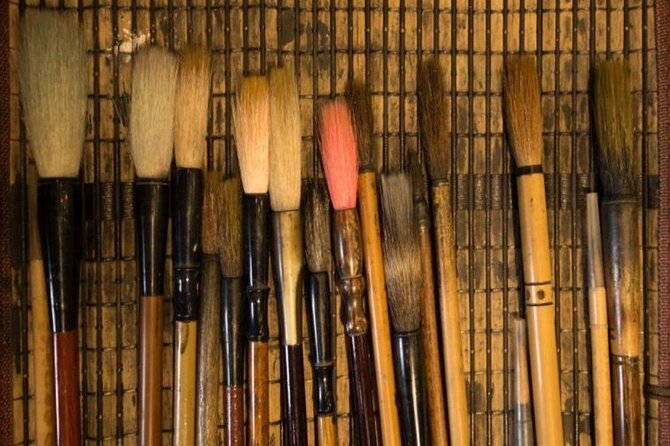
Vietnamese calligraphy didn’t appear out of nowhere. It traces roots to Vietnamese history where Chinese calligraphers introduced the practice centuries ago, and it later evolved into modern styles. The key lesson you take from the classroom is that these styles are meant to communicate—to the reader as much as to the eye.
That matters because it changes how you look at what you’re making. Instead of copying symbols like a craft, you learn to treat each stroke like a decision. You’ll also hear how different modern styles aim to express something specific through writing. It’s a useful shift in perspective, especially if you’re used to seeing calligraphy as purely decorative.
You can also read our reviews of more tours and experiences in Hanoi



Where the class happens: the calm of 371 P. Kim Mã
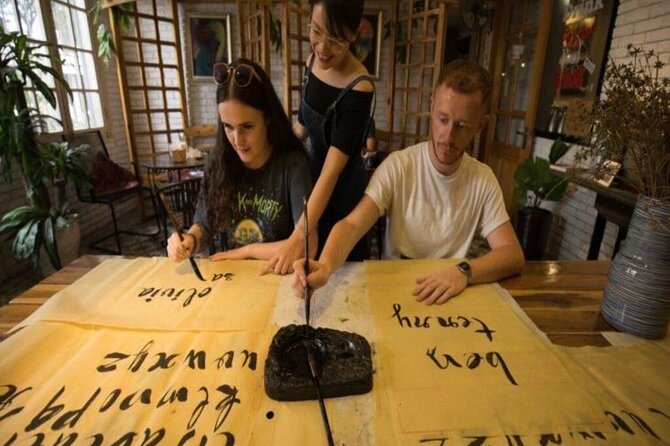
You meet at 371 P. Kim Mã, Ngọc Khánh, Ba Đình, Hà Nội 100000, and the activity ends back at the meeting point. That makes it easier to fold into your Hanoi day without complicated routing. The venue is described as scenic and serene, which you’ll feel once the class starts and the focus narrows to paper, ink, and your brush hand.
Because the group is limited to up to 6 people, the room doesn’t feel rushed. You’re not pushed through a factory-style craft session. Instead, the pacing tends to match what people need to get comfortable, especially with the brush technique.
Learning flow: history first, then tools, then real practice
A good calligraphy class has a clear progression. This one follows that logic.
First, you get an overview of Vietnamese calligraphy—its origins and how it changed into different modern styles. Then you move into technique. You’ll be introduced to the tools, and you learn what each piece of your setup does for you as you write.
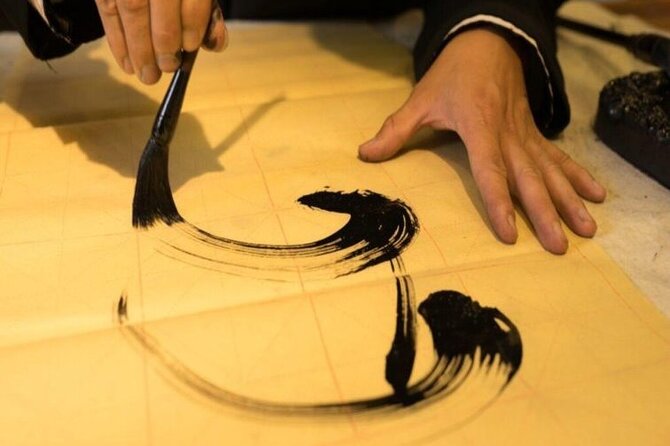
After that, the brush work begins in earnest. You learn how to use the brush from the instructor, which is the part where your hand will suddenly feel like it’s speaking a new language. One review specifically points out the difference from Japanese calligraphy: the brush tip movement and even the feel of the stroke can be different, including a noticeable wobble as the brush works.
That’s not a problem. It’s the lesson. The way the ink line forms depends on how you move, and the instructor helps you adjust your hand so the stroke looks right and feels controlled.
The stroke lesson: why line styles mean something
This is the standout teaching goal. You don’t just practice shapes—you learn that even the act of drawing a line has different ways, and those ways carry meaning.
In other words, Vietnamese calligraphy asks you to treat each stroke like communication. Some strokes feel more relaxed, some require sharper control, and some are written to suggest a particular mood or intent. When you notice those differences, your piece starts to make sense as writing rather than a decorative pattern.
And yes, that also makes the class more satisfying. You’re not chasing an “acceptable” result. You’re learning why a result looks the way it does. That’s exactly the kind of skill that sticks after you’ve left the classroom.
Choosing your design: simple patterns or making your own
You’ll have options for what you create. You can choose from simple designs, or you can sketch your own. That flexibility is great for travelers who want structure but don’t want to feel trapped in copying.
If you pick a simple design, you’ll spend more time getting brush control and understanding the stroke rules. If you sketch your own, you’ll still get guided instruction, but your final artwork becomes more personal. Either way, the class is built so you’re not stuck guessing what to do next.
The instructor shows you how to write the design, and you follow along. You’ll then work toward producing a finished piece you can take home. Since the class is short, this structure keeps you moving while still letting you learn.





Writing as a calm practice, not just a craft
One of the details you’ll notice is how the activity connects to calm focus. The class is described as linking artistic writing with meditation, and you’ll feel that effect in the way the session is run.
When you write calligraphy, you can’t rush. The brush needs time. Your wrist needs steadiness. The ink needs attention. That naturally pulls you out of the faster parts of travel and into a slower rhythm. It’s not just relaxation for the sake of it—it’s part of why calligraphy works as a skill.
And because the group is small, you’re not fighting noise or crowds. The pace supports concentration, which is a big deal if you want an experience that doesn’t feel like another checklist item.
Take-home artwork: a souvenir you actually made
At the end of the workshop, you’ll take home a piece you created from scratch. That’s the practical payoff. Many “cultural craft” experiences leave you with something pretty but generic. Here, the point is your own handwriting choices—guided, yes, but still yours.
The finished piece is also your memory anchor. Next time you see it, you’ll remember the stroke lesson: the way different line styles mean different things, and how the brush movement creates the ink line you’re seeing. That’s a more personal souvenir than a typical take-home photo.
Price and value: is $36 for 2 hours worth it?
At $36 per person for about 2 hours, this is priced like a focused, guided workshop rather than a casual activity. Here’s why that cost can make sense.
You’re paying for:
- A live instructor (a calligrapher who teaches technique, not just decoration)
- Small-group learning (max 6), which typically means more feedback and attention
- Tools guidance plus brush technique instruction
- A take-home artwork produced during the class
If you’re the kind of traveler who likes doing something hands-on—even for a short session—this is a strong value. You leave with a skill you can explain, and a piece of work you can frame or keep as a real memento.
If you only want a quick photo moment, then you might find this too “work-like.” But if you enjoy learning and making, the price-to-output ratio is fair.
Booking timing: plan ahead for a specific slot
The experience is commonly booked about 10 days in advance on average. Since the group is limited to 6 travelers, it’s smart to reserve before you lock in the rest of your Hanoi schedule. A short workshop is the easiest thing to accidentally squeeze out when your days fill up.
You’ll also get a mobile ticket, which is convenient. You just need your phone ready at the meeting point.
Who this Hanoi calligraphy class suits best
This class is a great fit if you:
- Want a hands-on cultural activity in Hanoi that doesn’t require prior experience
- Like learning the meaning behind what you’re doing, not just making a pretty item
- Enjoy slow, focused activities that feel slightly meditative
- Want a take-home souvenir with real effort behind it
It’s also a good option if you’ve tried arts and crafts before and you want a version that teaches technique, tools, and control.
Who might skip it? If you hate anything that requires careful attention to small movements, or if you only have time for a fast sight-seeing stop, you may prefer something more passive.
Should you book this traditional Vietnamese calligraphy class in Hanoi?
Yes—if you want a small, guided learning experience that produces something real. This is the kind of class that gives you more than a photo: you learn stroke meaning, you practice brush technique, and you take home your own work.
Book it especially if:
- You’re curious about the link between writing and culture
- You want a calmer break from hectic sightseeing
- You’d rather bring back a skill and a piece of art you made than another generic souvenir
If you’re still deciding, ask yourself one question: do you want to spend two hours working with your hands in a serene room, leaving with a finished artwork and a new way to look at Vietnamese calligraphy? If that sounds good, this class is a solid choice.
FAQ
How long is the Vietnamese calligraphy class in Hanoi?
It lasts about 2 hours (approx.).
How much does it cost?
The price is $36.00 per person.
Where do I meet for the class?
You start at 371 P. Kim Mã, Ngọc Khánh, Ba Đình, Hà Nội 100000, Vietnam, and the class ends back at the meeting point.
Is it a large group?
No. The group size is capped at a maximum of 6 travelers.
Do I need anything special for the workshop?
The tour provides the class structure with tool introduction and brush instruction. You’ll participate by choosing or sketching a design and writing with the brush during the session.
What if I need to cancel?
You can cancel for a full refund if you cancel up to 24 hours in advance of the experience start time. If you cancel less than 24 hours before, the amount paid is not refunded.