REVIEW · COOKING CLASSES
Authentic Cooking Class in Hanoi with a Vietnamese Grandmother
Book on Viator →Operated by Traveling Spoon · Bookable on Viator
Cook where Hanoi families actually eat. In this Old Quarter cooking class, you spend time with Hang and her family, start at a local market, then cook and share a meal in a real home kitchen rather than a studio setup.
I especially love the market portion: you get a guided walk with Hang, gather ingredients in a practical way (she hands you a basket), and see the kinds of fruit and herbs people actually buy day to day. I also like that the food isn’t just a show-and-tell; you learn techniques for classics you’re more likely to taste than recognize from restaurant menus, including Hanoi-style options.
One consideration: it’s hands-on, but you won’t have a full separate cooking station for each person. It’s designed more like cooking with a family than running your own pro-level workstation.
In This Review
- Key highlights at a glance
- A real Old Quarter home kitchen, not a cooking studio
- The 1-hour market walk with Hang: herbs, fruit, and real bargaining
- Back to the home: a fresh herb-filled salad first
- Cooking choice: spring rolls or chả cá lã vọng (and why both matter)
- Crispy spring rolls
- Chả cá lã vọng: turmeric-marinated fish with dill and herbs
- Homemade tropical teas with ginger, lemongrass, or lychee
- What you learn: family technique, not restaurant shortcuts
- Price and value: $94 feels fair when you factor in home access
- Who should book this cooking class in Hanoi
- When Hang’s street turns into a music stop
- Should you book it or skip it?
- FAQ
- FAQ
- How long is the cooking class and meal?
- Is this class private?
- What will I cook and eat?
- Are vegetarian options available?
- Do you stop at a market before cooking?
- Where is the meeting point?
Key highlights at a glance
- Market walk with Hang for herbs, fruit, and everyday produce, with bargain-by-bargain energy
- Family recipes in a real home with Hang, her mother, and a grandmother connected to the household
- Hanoi classics on your plate including herb-forward salad and a choice of spring rolls or chả cá lã vọng
- Turmeric-marinated fish, sizzling style with dill, herbs, and rice noodles served hot
- Homemade tropical teas flavored with ginger, lemongrass, or lychee
- Small group size (max 10) that keeps the class personal and conversation-friendly
A real Old Quarter home kitchen, not a cooking studio
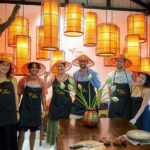
This experience is built around the idea that cooking in Hanoi isn’t separated from daily life. You meet Hang in the Old Quarter area and then step into her home, where the focus is on family recipes passed down through generations. That matters, because it changes the tone from workshop to visit.
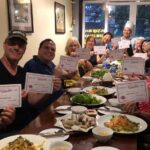
The class lasts about 3 hours total (roughly 2.5–3). It’s long enough for a proper market stop, cooking time, and then eating together, but it stays short enough that you’re not stuck all afternoon. You’re also in a small group, with a maximum of 10 people, which helps you actually talk, not just stand around waiting for your turn.
Just know the setup: it’s not a large studio with one station per person. You’ll do some hands-on prep, but the cooking is shared and guided. If you’re hoping to manage your own burner from start to finish, you might feel like you have less control than you expected. If you’re happy learning process and tasting as you go, it’s exactly the right format.
You can also read our reviews of more cooking classes in Hanoi
The 1-hour market walk with Hang: herbs, fruit, and real bargaining
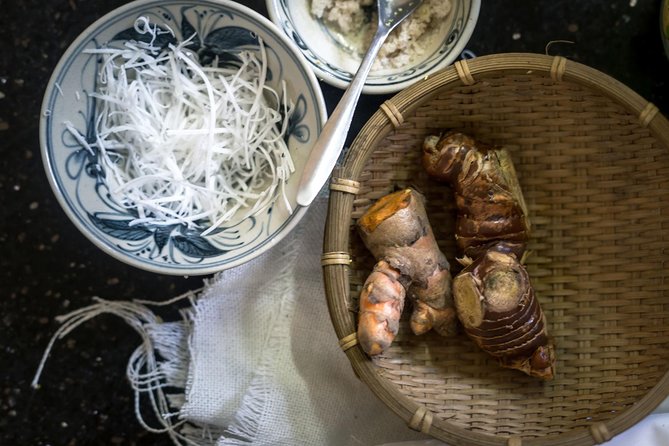
The day starts with a guided market walk that lasts about an hour. You’ll move through a local Hanoi market with Hang, sampling fruit, herbs, and other regional produce along the way. This part feels practical, because you see what ingredients look like before they become a finished dish.
One small detail I think is a big deal for this kind of experience: Hang gives you a basket to carry and helps fill it with fresh ingredients. That makes the market feel active, not passive. You’re handling real produce and learning how it shows up in Vietnamese cooking.
There’s also genuine street-level theater here. You’ll watch locals bargain with vendors, which is a reminder that markets here run on conversation as much as transactions. If you like learning how people actually buy food, you’ll enjoy this section a lot.
Tip for your visit: wear comfortable shoes and keep your hands free. You’ll be holding the basket, and market lanes can be tight. Also, if you have strong food allergies, mention them when booking so the host can plan safely.
Back to the home: a fresh herb-filled salad first
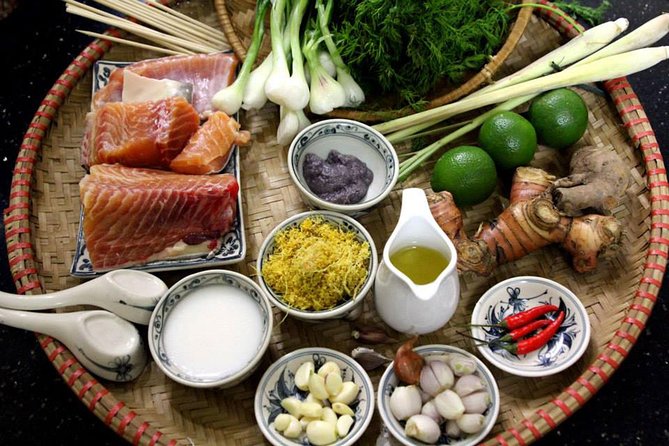
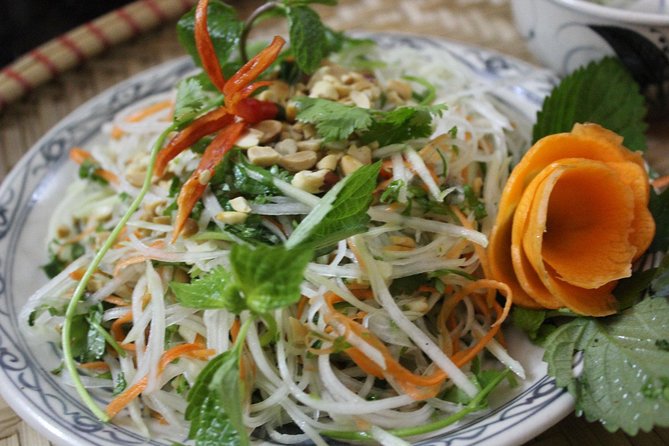
Once you’re back at Hang’s home, the meal begins in a very Hanoi way: a fresh, herb-filled salad. It’s the kind of opening dish that sets your taste buds up for the heavier flavors to come. The herbs are doing real work here—bright, fragrant, and a useful contrast to fried or grilled elements later.
This is also where you start understanding the household rhythm. You’re not just cooking on cue. You’re in a place where family meals are the point, and the recipes come with context—what the family likes, what they remember from earlier generations, and how they balance flavors.
You’ll likely get a chance to see (and do) some prep for the dishes that follow, rather than only watching. That’s one of the reasons this format tends to earn strong reactions: it’s participation, not performance.
Cooking choice: spring rolls or chả cá lã vọng (and why both matter)
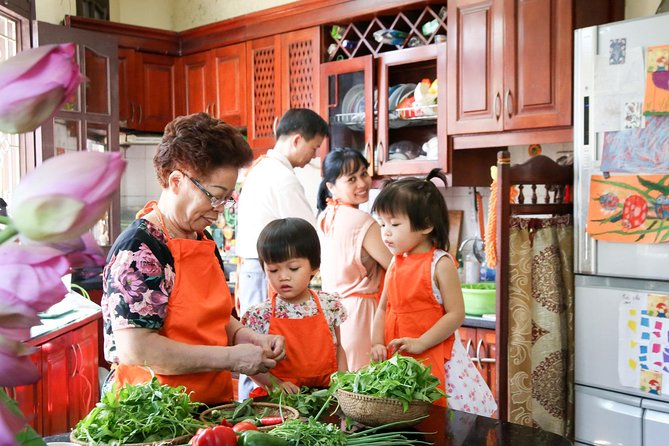
After the salad, you choose between two iconic Hanoi directions:
Crispy spring rolls
If you go the spring roll route, you’ll learn how the flavor builds through ingredients and technique. Spring rolls in Vietnam aren’t just about crunch. They’re about texture, freshness, and the way herbs and dipping flavors pull the whole plate together. You’ll get guidance on how to handle the components so the roll holds up when cooked and stays tasty when eaten right away.
This is a great option if you want a dish that’s easier to recreate at home later, especially once you understand how the filling is assembled.
You can also read our reviews of more tours and experiences in Hanoi

Chả cá lã vọng: turmeric-marinated fish with dill and herbs
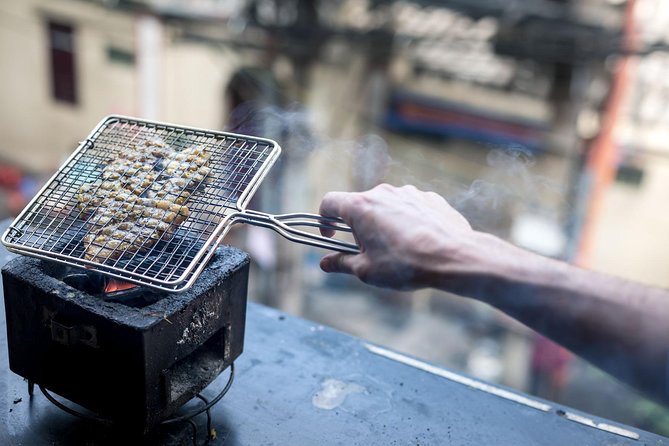
If you choose chả cá lã vọng, you’re in for Hanoi’s famous turmeric-marinated fish experience. The fish is grilled and served sizzling with dill, herbs, and rice noodles. Even the description tells you the flavor direction: warm spice, fresh herbs, and a noodle base that turns the meal into something more satisfying than a snack.
This dish is bold, and it’s also a strong reason to book this class instead of doing only restaurant tours. You get the chance to learn the approach behind the flavors—how to combine ingredients and how to build that signature balance of fragrance and savory heat.
Food reality check: this is not a mild, timid meal. If you dislike herbs or are sensitive to spice, tell Hang in advance so the class can steer you toward options that fit your preferences.
Homemade tropical teas with ginger, lemongrass, or lychee
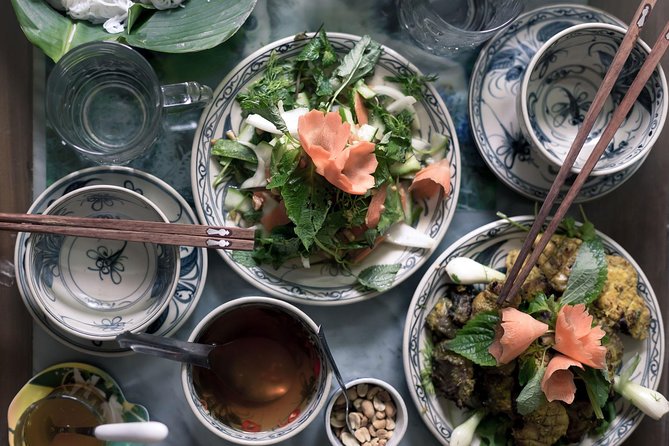
One of the nicest parts of the class is the drink. You’ll sip homemade tropical teas infused with ginger, lemongrass, or lychee. That isn’t just a sweet finish. It’s a palate cleanser that matches well with herbs, grilled fish, and the richer parts of the meal.
From a practical standpoint, these teas also help make the cooking process feel relaxed. You’re not just waiting for the next step. You’re enjoying the moment while you learn.
If you’re the kind of person who loves finding drink flavors you can copy at home, this is worth paying attention to. Even without a formal tea lesson, you’ll have a clear idea of what went into the cup.
What you learn: family technique, not restaurant shortcuts
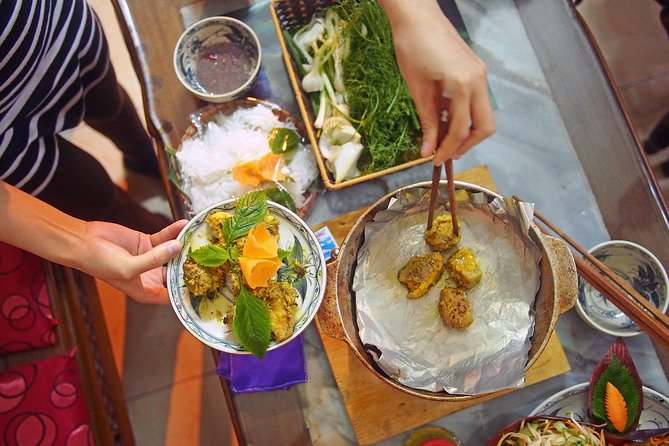
You’ll pick up time-honored techniques and the family stories that go with them. That might sound like a nice extra, but it’s actually the difference between following a recipe once and understanding why it works.
A small but important detail: the demonstration comes with recipes, so you can recreate the meal at home more easily. That’s a big value point for me, because a lot of cooking experiences give you memories but not enough usable guidance to repeat the dish later. Here, you’re set up to try again with less guesswork.
Also, because the class happens in a real home, you’re more likely to notice small practical choices—how ingredients are handled, how the kitchen moves, and how family members coordinate. It’s a way of learning that feels less like collecting facts and more like borrowing habits.
And yes, the food really matters. This experience tends to land well because it ends with a meal that feels satisfying, not just “what you cooked.” The spring rolls or chả cá lã vọng, paired with the herb-rich salad and teas, make the whole thing feel like a complete visit.
Price and value: $94 feels fair when you factor in home access
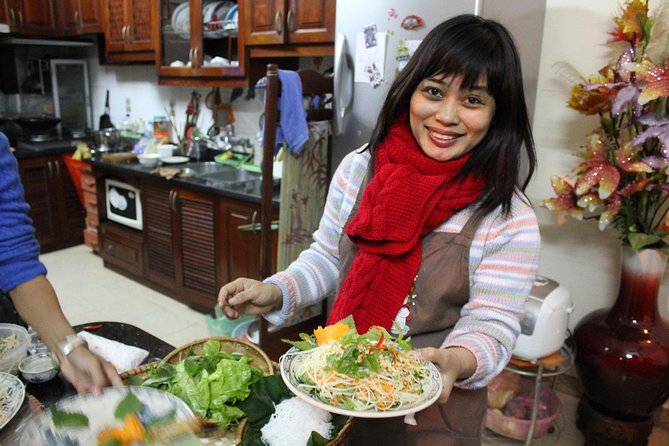
At $94 per person, this isn’t the cheapest thing on a Hanoi list. But it’s also not just paying for a recipe card and a short demo. You’re paying for access to a real home, guided market time with Hang, small-group interaction, and a meal that includes both learning and eating.
The fact that it’s booked about 50 days in advance tells you it’s popular, which usually means demand is coming from people who want more than a standard food stop. If you’re going during a peak week, booking earlier gives you better chances at the exact time you want.
So how do you judge whether it’s worth it for you? I’d measure it against what you’d spend for a comparable private food experience plus market guidance plus an actual home-meal setting. If you want more than a restaurant dinner and you like ingredient-focused travel, this price starts to make sense fast.
Who should book this cooking class in Hanoi
This is a great fit if you want:
- A market-to-home experience that shows you how ingredients are chosen, not just how dishes are plated
- A small-group setting where you can ask questions and hear family stories
- A hands-on meal experience with recipes you can actually try later
It’s also a good choice for food lovers who care about vegetarian options. Vegetarian options are available, but you should advise any dietary requests or allergies at booking so the host can plan.
What I’d reconsider is if you need a fully independent cooking station and lots of personal bench time. This is a home kitchen with shared space, not a lab.
When Hang’s street turns into a music stop
There’s an interesting local twist that can add atmosphere. After 7:00 pm every Friday, Saturday, and Sunday, the street where Hong’s home is located becomes a walking street. There are often musical performances that run from 8:00 to 10:00 pm, and you can see them from the home window and balcony.
That means timing can affect your vibe. If your class happens on one of those evenings, the setting can feel a little more festive around you. If it’s another day, you’ll get a calmer neighborhood feel focused mostly on family cooking.
Should you book it or skip it?
I think you should book this class if you want Hanoi in a way that’s hard to replicate on your own: market ingredients, family cooking techniques, and a real home meal with Hang and her family. The recipe part is also a strong deciding factor, because it increases the odds you’ll cook something Hanoi-style again after you get home.
Skip it only if you’re mainly looking for a fast food highlight or you expect a cooking studio setup with a separate station for every person. If that’s your style, you’ll likely prefer a more equipment-heavy cooking workshop.
FAQ
FAQ
How long is the cooking class and meal?
The experience is about 3 hours (approximately 2.5–3 hours), including the market time and your cooking and meal in the home.
Is this class private?
It’s described as a private cooking experience in a local Hanoi home, and the group size has a maximum of 10 travelers.
What will I cook and eat?
You’ll start with a fresh herb-filled salad, then choose between crispy spring rolls or chả cá lã vọng (turmeric-marinated fish grilled and served sizzling with dill, herbs, and rice noodles). You’ll also enjoy homemade tropical teas.
Are vegetarian options available?
Yes. Vegetarian options are available, and you should advise dietary requests or allergies at the time of booking.
Do you stop at a market before cooking?
Yes. You get a 1-hour guided walking tour through a local Hanoi market with Hang, with fruit and herb sampling.
Where is the meeting point?
The meeting point is à làmen, 9A P. Lương Ngọc Quyến, Hàng Buồm, Hoàn Kiếm, Hà Nội 10000, Vietnam, and the activity ends back at the same meeting point.