
REVIEW · HANOI
Secret Handicraft Villages of Hanoi ( Incense and hat Villages )
Book on Viator →Operated by SECRET HANDICRAFT VILLAGES OF HANOI · Bookable on Viator
A day of real craft, not souvenir math. I love the change of pace into the Hanoi countryside for hands-on work, and I love the small group size, capped at 12. Visits focus on incense in Quảng Phú Cầu and conical hats in Chuong.
You’ll also meet an artist at the lacquer village and learn how the traditional process builds up layers of resin and pigment. It’s long enough to feel like you saw how the craft actually works, not just the end result.
One caution: the route length can be confusing when you book, so double-check whether you’re on the full 7 to 8 hours version before you plan the rest of your day.
In This Review
- Key Highlights You’ll Actually Feel on This Tour
- Why This Hanoi Craft Day Feels Different From the Old Quarter
- Price and Logistics: Pickup, Mobile Ticket, and a 12-Person Limit
- Quảng Phú Cầu Incense Village: Why Hanoi Smells Like Tradition
- Chuong Village Conical Hats: The Break, the Tea (or Beer), and the Hands-On Part
- Ha Thai Village Lacquer Painting: Layering Resin and Pigment Like an Artist
- What the 7 to 8 Hours Actually Feels Like
- What to Expect From the Hands-On Parts (Without Overpromising)
- Who Should Book This Craft Villages Tour in Hanoi
- Should You Book Secret Handicraft Villages of Hanoi?
- FAQ
- FAQ
- How much does the Secret Handicraft Villages of Hanoi tour cost?
- How long is the tour?
- Is hotel pickup included?
- Do I need to print anything or can I use a mobile ticket?
- What is the group size limit?
- Which village stops are included?
- Are admission tickets included?
- Is there hands-on activity during the tour?
- What is the cancellation policy?
- When will I receive confirmation after booking?
Key Highlights You’ll Actually Feel on This Tour
- Small group cap of 12 means you get time for questions and you’re not herded around
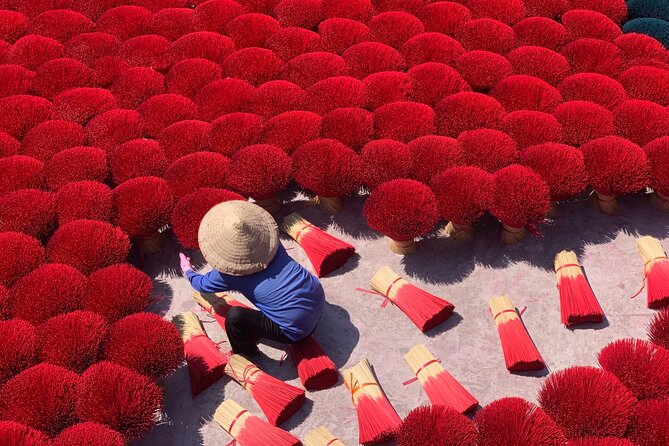
- Quảng Phú Cầu incense village explains why incense is burned in temples and local homes
- Chuong conical hats include a meal break plus tea or a beer before hands-on time
- Ha Thai lacquer painting has an included admission and a real artist teaching the layered method
- Hotel pickup + mobile ticket make the start feel smooth
Why This Hanoi Craft Day Feels Different From the Old Quarter
The Old Quarter is fun, sure. But it can also feel like you’re shopping for your own trip. This tour flips the angle. Instead of staying in the busiest streets, you head out to small villages around Hanoi where a single craft is a daily routine, not a performance.
I like that the focus stays practical and human. You’re watching how people make incense, conical hats, and lacquer painting as part of their local economy. And because it’s a small group, the day has a calmer rhythm. You’re not just standing where a crowd stands. You can ask what something is made of, what it’s used for, and why it matters in everyday life.
If you’re the type of traveler who enjoys watching a process work step by step, this tour hits the mark. Even if you don’t plan to buy anything, you still get the most valuable souvenir: a clearer sense of how these crafts fit into Vietnamese culture.
You can also read our reviews of more tours and experiences in Hanoi.



Price and Logistics: Pickup, Mobile Ticket, and a 12-Person Limit
This tour costs $35 per person, and it runs about 7 to 8 hours. That length is important. It’s not a quick photo stop that disappears in an hour. You get enough time across three villages to see each craft with breathing room.
Logistics are also designed to reduce friction. Pickup is offered, and you’ll use a mobile ticket. That combination helps when you’re in Hanoi for only a short time, because you’re less dependent on figuring out transport on your own.
The group size cap is 12 travelers. In practice, that usually means a better pace for interaction and fewer bottlenecks when you’re moving between village areas or listening to explanations. It also makes the day feel less touristy.
Finally, note how the admission is handled. Lacquer painting at Ha Thai has admission included, while the incense and conical hat stops are listed as ticket-free. At $35, that mix makes the tour feel fairly priced for what you’re getting: guided time in multiple craft locations plus included entry at the painting stop.
Quảng Phú Cầu Incense Village: Why Hanoi Smells Like Tradition

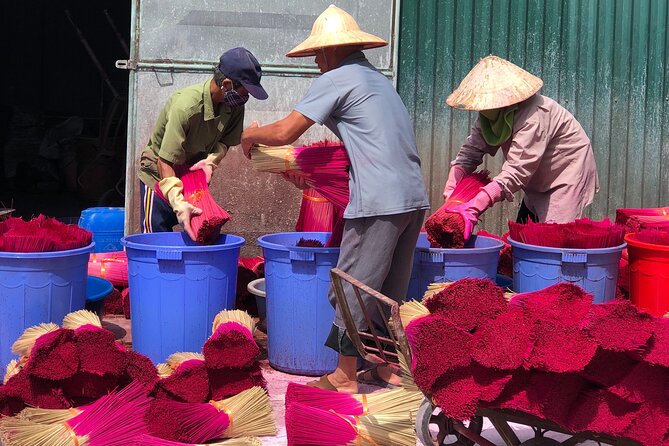
You start at Quảng Phú Cầu, a village known for incense. The tour leans into something useful: incense sticks are lit in temples and local houses across Vietnam. That’s the starting point for the explanation, and it gives the visit context before you even see the craft world up close.
The visit runs about 2 hours, and admission is free. That’s a nice setup because it lets the experience focus on learning and observation. Instead of paying extra just to enter, you spend that time understanding the role of incense in daily life and religious practice.
What I like about this stop is the angle. It’s not only about the product. It’s about the meaning behind it. Incense is everywhere in Vietnam, but people don’t always explain why it’s part of rituals and home practices. Getting that background makes the whole trip click, including the rest of the day’s villages.
A small practical note: incense areas can be fragrant. If you’re sensitive to strong smells, consider bringing a light mask or plan your comfort level accordingly.
Chuong Village Conical Hats: The Break, the Tea (or Beer), and the Hands-On Part
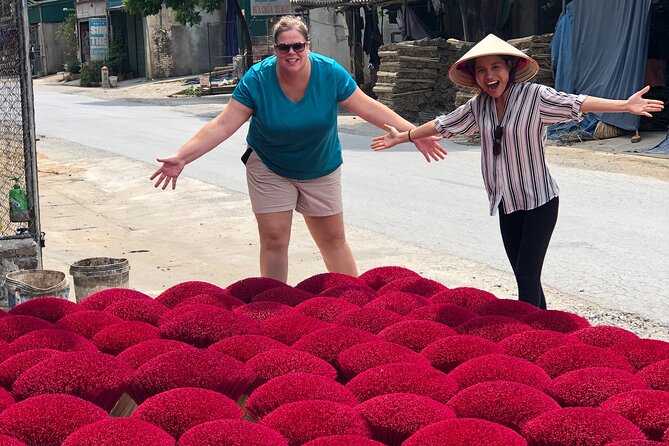
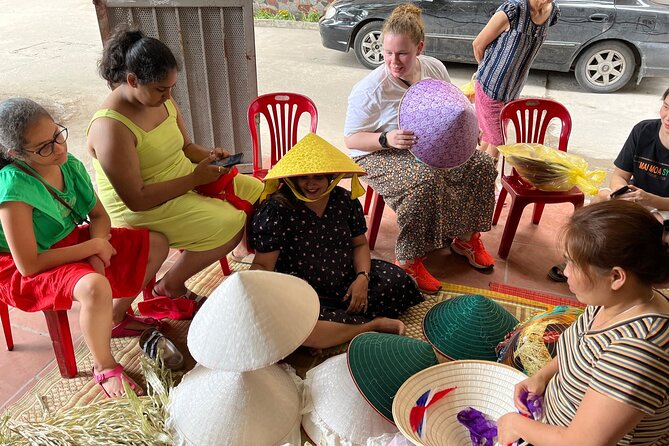
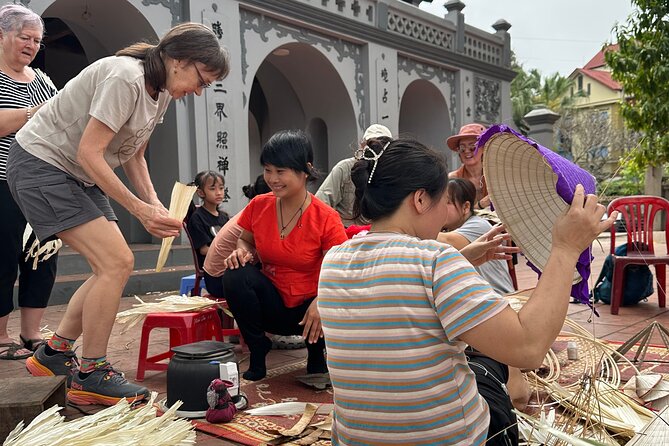
Next comes Chuong Village, famous for traditional cone-shaped leaf hats. This stop lasts about 3 hours, and admission is listed as free.
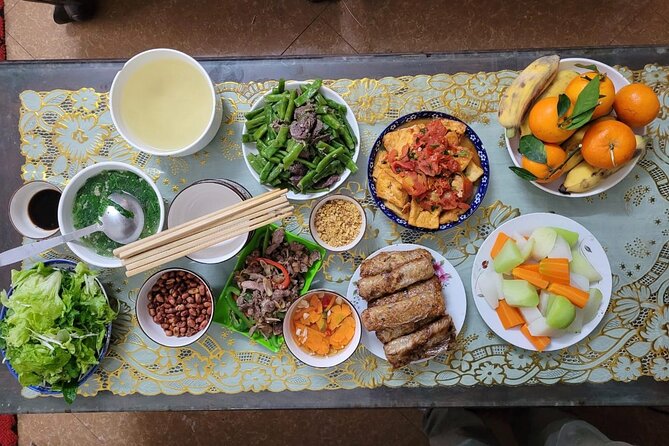
What you should expect here is a mix: a break for food and drink, then hands-on time with the hat craft. There’s time to indulge in a meal, and you can finish the break with local tea or a beer. That’s a thoughtful pacing choice. After the incense village, this gives you a moment to reset before you start doing.
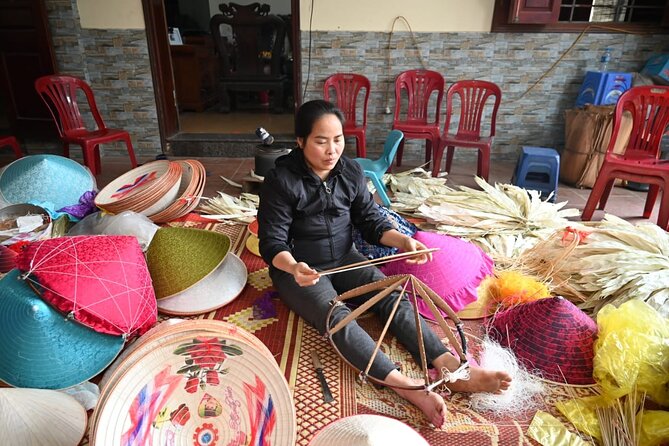
Then you get to the part most people remember: working with the cone-shaped leaf hat. Even without you aiming to become a maker yourself, the hands-on segment helps you see what goes into something you’ve likely only ever used as a tourist item.
The best value of this stop is that it turns a symbol into a skill. Once you’ve handled the materials, you understand why the hat is shaped the way it is and why it’s such a recognized craft product from this region.
Ha Thai Village Lacquer Painting: Layering Resin and Pigment Like an Artist
The final craft stop is Vietnamese lacquer painting in Ha Thai Village, running about 2 hours with admission included.
This is where the day turns more artistic and more technical. You meet a local artist and learn the history of the ancient craft. More importantly, you learn the practical workflow: preparing a wooden base, then applying layers of resin and pigment.
That step-by-step process is exactly why lacquer painting is such a standout craft. It’s not one-and-done. The work depends on patience and layering. Each stage matters, and the final look depends on how the materials are built up over time.
If you’re the kind of person who likes details, this stop will satisfy you. Even if you don’t buy a lacquer item, the explanation of wooden preparation and layered resin-and-pigment work gives you a much clearer idea of why lacquer art looks the way it does.
Also, since this stop includes admission, it adds extra value to your day compared with the free-entry stops. At $35, the included ticket at Ha Thai makes the pricing feel more balanced.



What the 7 to 8 Hours Actually Feels Like
A day like this can go two ways. It can feel rushed, or it can feel like you’re learning. This one, built around three distinct villages, is designed to feel like learning.
Here’s the rhythm based on the time allocated:
- About 2 hours at Quảng Phú Cầu
- About 3 hours at Chuong Village, with a meal break and tea or a beer before hands-on
- About 2 hours at Ha Thai lacquer painting
You’ll also have some time spent moving between villages. That travel time isn’t described in detail, so plan your day with a light schedule outside this tour. Treat it like a full activity, not a quick add-on.
Group size matters again here. With a max of 12, the day usually feels conversational. You’re more likely to hear your own questions answered instead of waiting for the group to catch up.
The day also avoids that big-tour vibe. One of the best parts of this style of craft tour is that villages are the workplace, not a staged attraction. You’re spending time in working environments where the craft is a lived thing.
What to Expect From the Hands-On Parts (Without Overpromising)
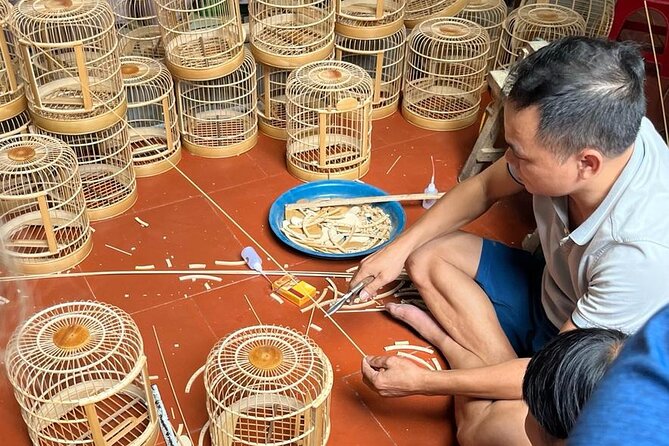
Hands-on time is a key reason to book. But it’s worth setting expectations the right way. You’re not signing up for a professional apprenticeship. You’re getting a taste of how makers work, with guidance.
In Chuong Village, the hands-on part centers on the traditional cone-shaped leaf hats. In Ha Thai Village, the learning centers on how lacquer painting is constructed with layers—wood preparation, then resin and pigment layers—guided by an artist.
So, if you want a day where you can ask questions and try things, you’ll likely be happy. If you want a tour where you only shop and move on, this probably won’t be your favorite use of time. This experience rewards curiosity.
It also helps to know you may spend time listening to explanations. That’s normal for a craft-focused day, and it’s the value you’re paying for.
Who Should Book This Craft Villages Tour in Hanoi
I think this tour is a strong match if:
- You want to see Vietnam beyond the Old Quarter streets
- You’re curious about how everyday products connect to local life
- You like small-group experiences and prefer a calmer pace
- You enjoy crafts where the process matters, not just the finished item
This is also a good pick if you’re traveling with someone who loves art, culture, or making things. The incense stop provides cultural context, the hat stop adds hands-on fun, and the lacquer stop adds an artistic, technical focus.
On the flip side, skip it if your main goal is city highlights and viewpoints. This is a craft and village day, so the appeal is in workshops and local processes, not in monuments or skyline stops.
Also, the tour is listed as something most travelers can participate in, which is reassuring. But it’s still a long day, roughly 7 to 8 hours, so bring your stamina and plan accordingly.
Should You Book Secret Handicraft Villages of Hanoi?
I recommend booking if you want a meaningful way to spend a full day in Hanoi that isn’t just traffic and shopping. For $35, the value comes from three places: a small group size, hands-on involvement at key craft stops, and the included admission for lacquer painting.
Before you lock it in, do two quick checks:
- Confirm whether your booking is for the full 7 to 8 hours route (the description can be confusing)
- Think about your comfort with a fragrant incense setting if you’re sensitive to smell
If that sounds like your kind of day, you’ll come away with a better understanding of how incense, conical hats, and lacquer art fit into Vietnam’s everyday culture.
FAQ
FAQ
How much does the Secret Handicraft Villages of Hanoi tour cost?
It costs $35 per person.
How long is the tour?
The duration is about 7 to 8 hours.
Is hotel pickup included?
Pickup is offered.
Do I need to print anything or can I use a mobile ticket?
You’ll have a mobile ticket.
What is the group size limit?
The tour has a maximum of 12 travelers.
Which village stops are included?
You’ll visit Quảng Phú Cầu (incense village), Chuong Village (conical hats), and Ha Thai Village (Vietnamese lacquer painting).
Are admission tickets included?
Admission is included for the Vietnamese Lacquer Painting stop in Ha Thai Village. The other two stops are listed as ticket-free.
Is there hands-on activity during the tour?
Yes. Hands-on time is included, including the conical hat experience and the lacquer painting craft learning with the artist.
What is the cancellation policy?
You can cancel for free up to 24 hours in advance for a full refund.
When will I receive confirmation after booking?
Confirmation is received at the time of booking, unless you book within 15 hours of travel. In that case, confirmation is received as soon as possible, subject to availability.