REVIEW · NINH BINH
Incense, Hat Villages Tour/Traditional Crafts with Options
Book on GetYourGuide →Operated by Tinny Travel Co.Ltd · Bookable on GetYourGuide
Five villages, one craft day. I like the hands-on workshops that end with a hat or ceramic keepsake, and I love how Quang Phu Cau incense turns your camera into a real job. The trade-off: the 6-hour schedule plus driving means some stops move quickly.
My other big win is the English-speaking guide. Names you might hear include Louisa (also called Lulu) or Eric, and the style tends to be clear and funny, with real how-it’s-made explanations. You’ll do a fair amount of walking, so comfortable shoes matter.
In This Review
- Key points you will care about
- Why this Hanoi crafts route works in a single day
- Pickup, drive time, and how the day stays on schedule
- Quang Phu Cau incense village: thousands of red sticks and the process behind the smell
- Chuong conical hat village: making your Non La and learning why it matters
- Ha Thai bamboo lacquer village: layered technique and the one cost to watch
- Bat Trang ceramic village: a pottery workshop you can actually take home
- Vạn Phúc silk village: wooden looms, dyeing, and what to buy without getting fooled
- What you actually get, and what you should budget for
- Guide style, group pace, and how to get great photos
- Who should book this craft day (and who might not)
- Should you book this Hanoi crafts tour?
- FAQ
- How long is the tour?
- Where is pickup in Hanoi?
- Is lunch included?
- What do I get to take home?
- Is the lacquer painting piece included?
- What’s included in the price?
- What should I bring?
- Can I bring a camera and take photos?
- Is the tour suitable for wheelchair users or pregnant women?
- Is cancellation free?
Key points you will care about
- Five craft villages in one route: incense, conical hats, lacquer, pottery, and silk
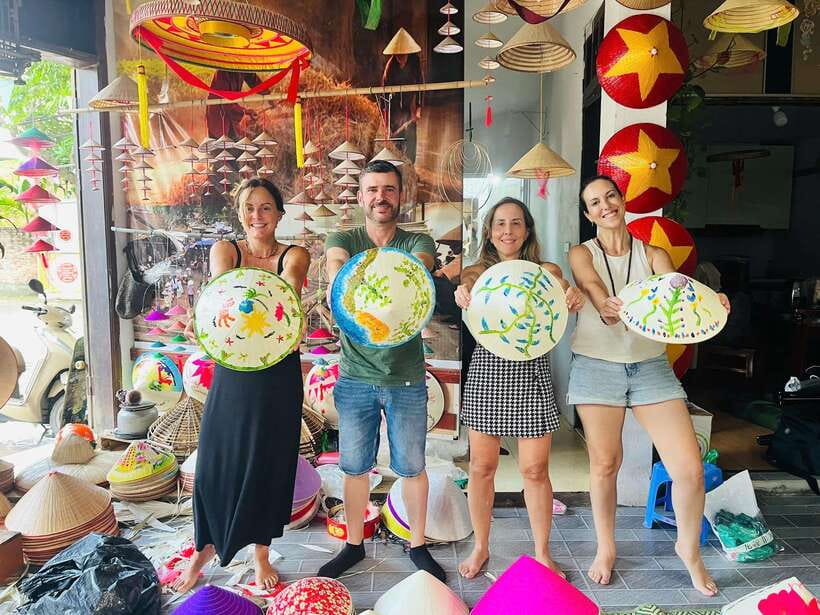
- You get a take-home conical hat and time to decorate or paint it
- Hands-on pottery workshop at Bat Trang, plus shopping time in the market
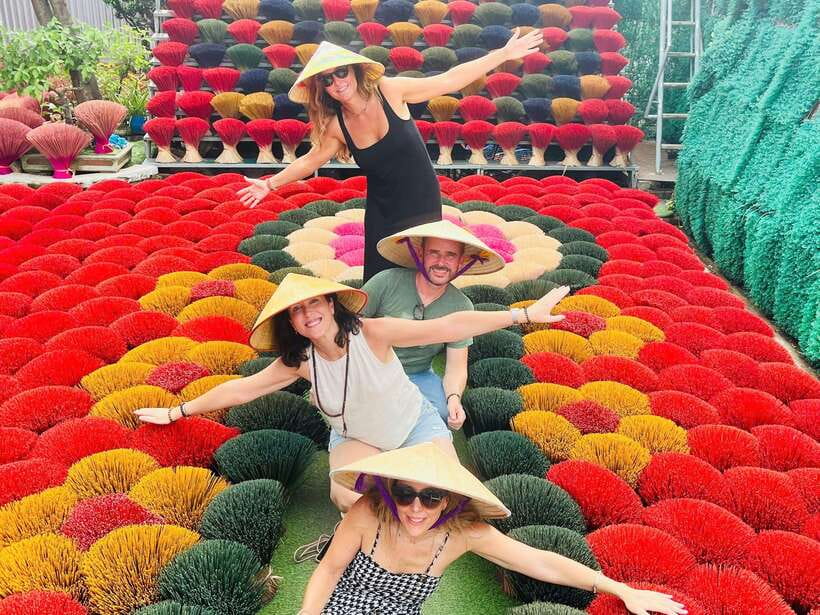
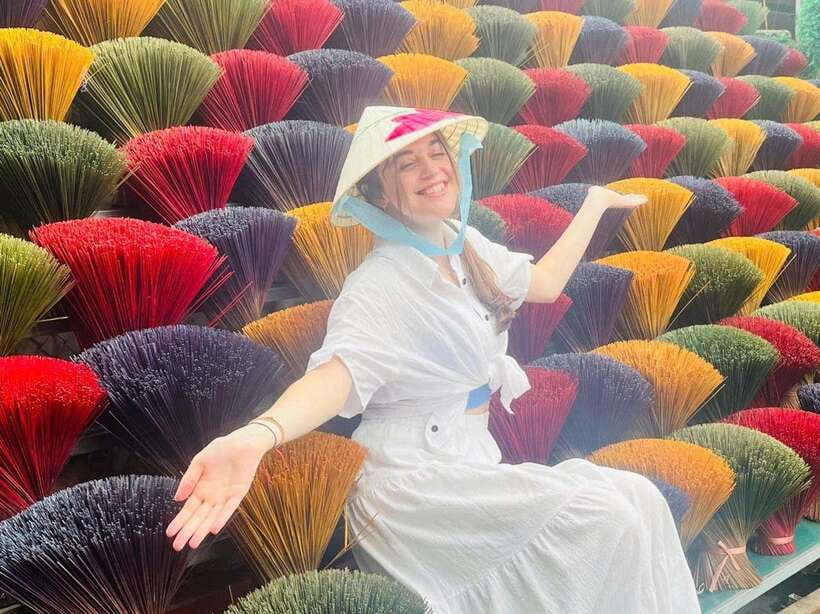
- Quang Phu Cau is a photo magnet with thousands of red incense sticks drying
- Lacquer village class is included, but the lacquer painting base is not
- Strong value at about $12 per person for a full craft day with transport and entry fees
Why this Hanoi crafts route works in a single day
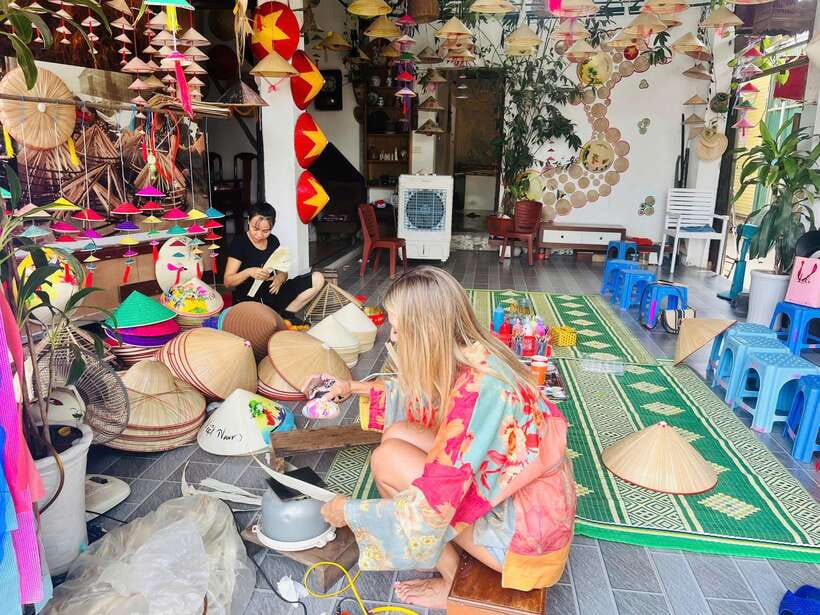
This tour makes sense if you want real Vietnamese craft culture without spending your whole trip on logistics. You’re not just looking at souvenirs in a store. You’re watching people make the stuff—silk on wooden looms, incense stick bundles, conical hats from bamboo and palm leaves, and ceramics fired in a traditional process.
The route also gives you a nice rhythm. Each village focuses on a different skill, so the day feels varied instead of repetitive. And because you’re guided, you can ask questions about the process and the meaning of what you’re seeing, not just snap pictures and move on.
The one thing to plan for: the total time is tight. You’ll have guided time plus short walks and photo stops, but you won’t linger. If you hate moving on quickly, consider booking the longest option where available.
You can also read our reviews of more tours and experiences in Ninh Binh.



Pickup, drive time, and how the day stays on schedule
You start with pickup in the Hanoi Old Quarter area, with the pickup point listed at Hoàn Kiếm. From there, you ride by bus/coach for about 70 minutes before the first village stop. That means you’ll likely begin with travel fatigue, then switch gears into craft mode fast.
The tour structure is practical: you get a guided visit at each place, then some freedom for shopping or photos. Entrance fees are included, and you’re provided a water bottle per person, which helps you keep moving without constantly buying snacks along the way.
On the pace: one practical consideration is that at least part of the drive can feel long, and a couple of stops can feel rushed. The upside is you still get all the main crafts, and you can keep your expectations realistic—this is a tour of many skills, not a slow village stay.
Quang Phu Cau incense village: thousands of red sticks and the process behind the smell
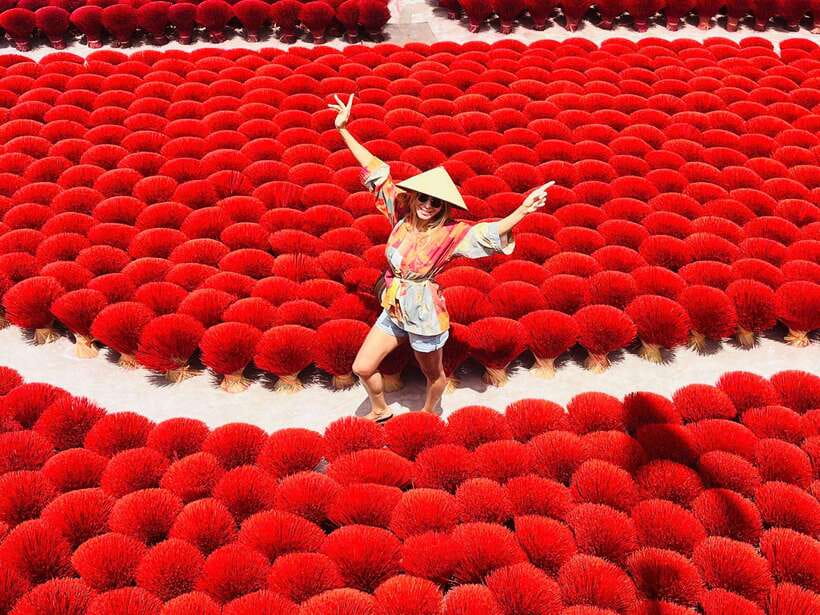
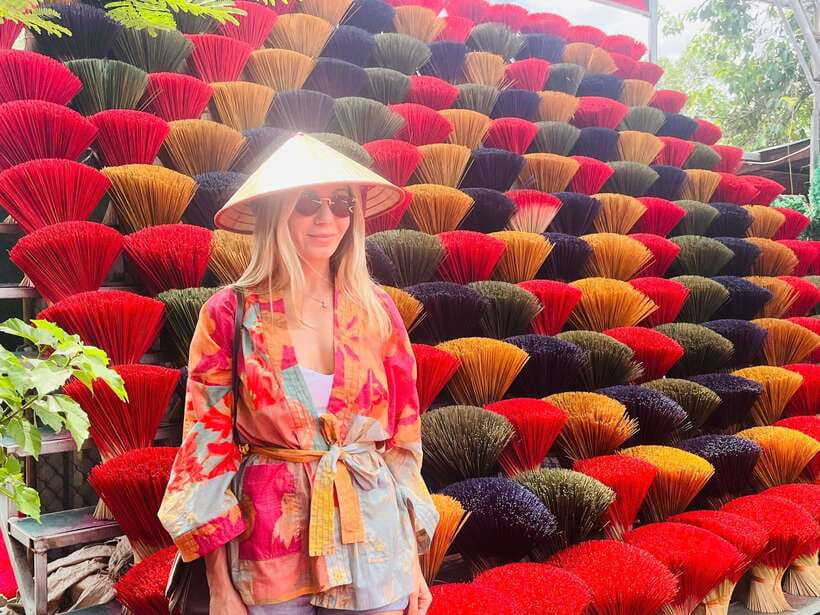
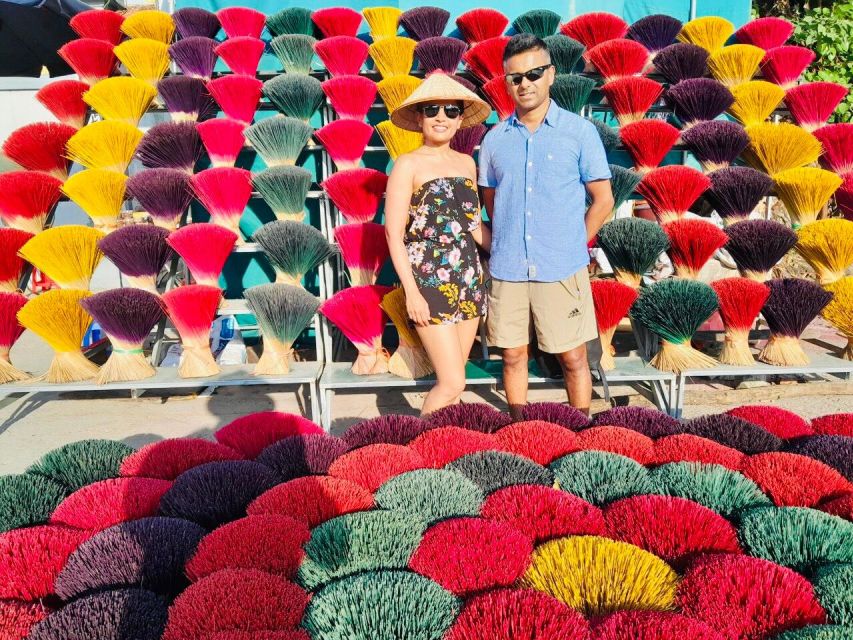
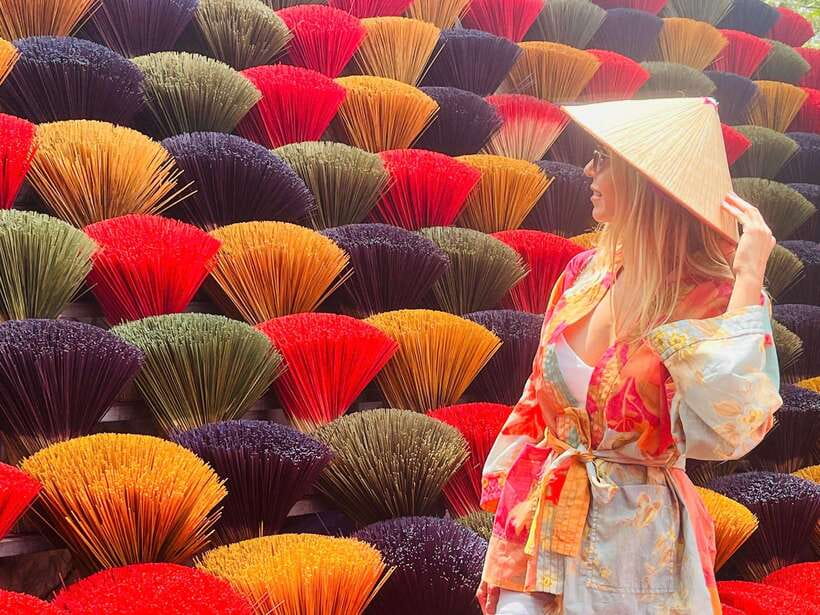
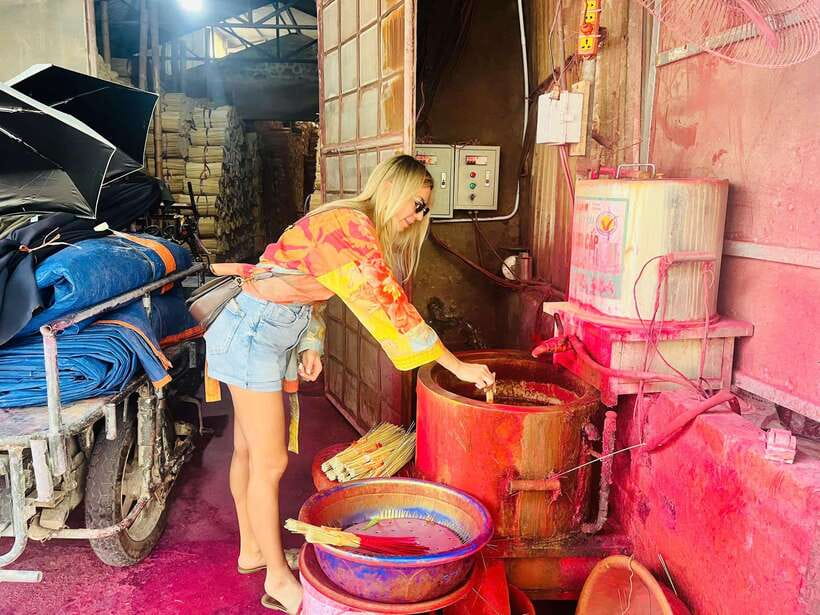
Quang Phu Cau is known as the Incense Stick Village, and the first thing you notice is the scale. You’ll see thousands of bright red incense sticks arranged for drying, which makes it incredibly photogenic. This is one of those places where you can get good photos even if you’re not trying hard—lines, colors, and workers moving around the racks.
What I like here is that you’re not just observing a finished product. You learn the full incense-making story, from cutting bamboo to bundling. That means the time isn’t only visual; it’s also educational, and it helps you understand why certain shapes and steps matter.
This stop also sets your day’s mood. Once you know how incense is made, the later villages feel more connected—each craft has tools, patience, and a workflow you can recognize.
Chuong conical hat village: making your Non La and learning why it matters
Next comes Chuong, the place associated with the famous Vietnamese Non La conical hat. You’ll see artisans make hats from bamboo and palm leaves, and then you get the fun part: time to make or decorate your own.
The guided explanation includes the hat’s cultural meaning in everyday Vietnamese life, not just how to hold the leaf-and-bamboo bundle. That context makes the souvenir feel more purposeful. It’s easier to appreciate the effort when you know what the hat represents.
Practical tip: bring a mindset that you might get a bit messy. You’re painting or decorating, and the process is hands-on. One earlier group described getting offered tea while working, which is a small comfort when you’re concentrating on careful brushwork.
At this village, you also get a break plus lunch time listed in the schedule. If you’re on the shorter option that doesn’t include lunch, plan to eat before pickup or bring a small snack so you don’t hit the workshop hungry.
Ha Thai bamboo lacquer village: layered technique and the one cost to watch
Ha Thai is a top northern Vietnam lacquer craft stop, and you’ll see a process that takes patience. Expect to learn how lacquer is made through layering and polishing, then into the detailed phase of hand painting.
What you get from this workshop is the workflow. Lacquer is famous because it isn’t instant—colors, shine, and durability come from careful building up and refining. Watching that step-by-step approach makes it easier to tell good lacquer work from decoration that’s more about appearance than craft.
There is one budget note. The plan does not include the lacquer piece for painting purposes only. So the class is included, but if you want to paint on your own base item, you’ll likely pay separately for that piece. If you’re trying to keep costs tight, ask your guide what’s included in the hands-on part and what’s optional.
Also, your hands will get close to tools and surfaces—so keep long sleeves comfortable, and don’t wear anything you’d hate to accidentally mark.






Bat Trang ceramic village: a pottery workshop you can actually take home
Bat Trang is famous for ceramics, and the village dates back to the 14th century, which adds weight to the whole experience. Here, you watch the traditional pottery cycle, from clay shaping to kiln firing. Even if you’ve never made ceramics before, the steps are easy to follow because the process is visual.
Then you get the workshop. The idea is simple: you create your own ceramic item to take home. That’s the kind of souvenir that feels different from buying something finished. It becomes proof you spent the day doing the craft, not just watching it.
After the making time, there’s also space to explore Bat Trang Market with vases, bowls, and home décor. This is where you can compare what you made to what’s for sale—handmade pieces often show tiny differences, and once you’ve gone through the clay stage, you start noticing details.
If you’re buying gifts, pottery is a good choice because it’s practical and easier to pack carefully than fragile souvenirs that rely on thin edges.
Vạn Phúc silk village: wooden looms, dyeing, and what to buy without getting fooled
The day ends at Vạn Phúc, known as Vietnam’s oldest silk village, tied to traditional weaving for more than 1,000 years. You’ll visit workshops and watch artisans work on wooden looms. You can also learn about the stages: weaving, dyeing, and finishing.
This is the stop where you’ll likely do your most serious shopping. The key is to slow down. Silk scarves and clothing are easy to impulse-buy when everything looks beautiful, but the best value comes from choosing what fits you and what you can actually use at home.
I also like that the tour doesn’t treat silk as a single product. It shows the process, so you can ask questions and understand what you’re paying for. If you’re buying gifts, consider scarves first. They’re easy to pack and they show off the craftsmanship without requiring careful sizing like clothing.
What you actually get, and what you should budget for
For the price—about $12 per person for a 6-hour craft tour—you’re getting more than a basic sightseeing loop. Your day includes pickup/drop-off in Hanoi Old Quarter, an English-speaking guide, entrance fees, a water bottle, and hands-on craft time with at least two take-home items tied to the workshops.
Here’s what to expect you can take away:
- One conical hat per person (included)
- A ceramic item you make in the Bat Trang pottery workshop
- Lacquer painting experience, but the lacquer painting base item is not included
Things not included that can quietly add up:
- Other drinks and personal expenses
- Tips for the guide and driver (appreciation is not included)
- Optional purchase choices in each market and workshop shop
If you want to keep things simple, set a rough spending target before the tour and stick to it. You’ll pass multiple shopping areas, and each one tempts you in a different way.
One more cost detail to know: there can be a $5 per person surcharge on specific major holidays such as New Year, Lunar New Year, Christmas, and national holidays.
Guide style, group pace, and how to get great photos
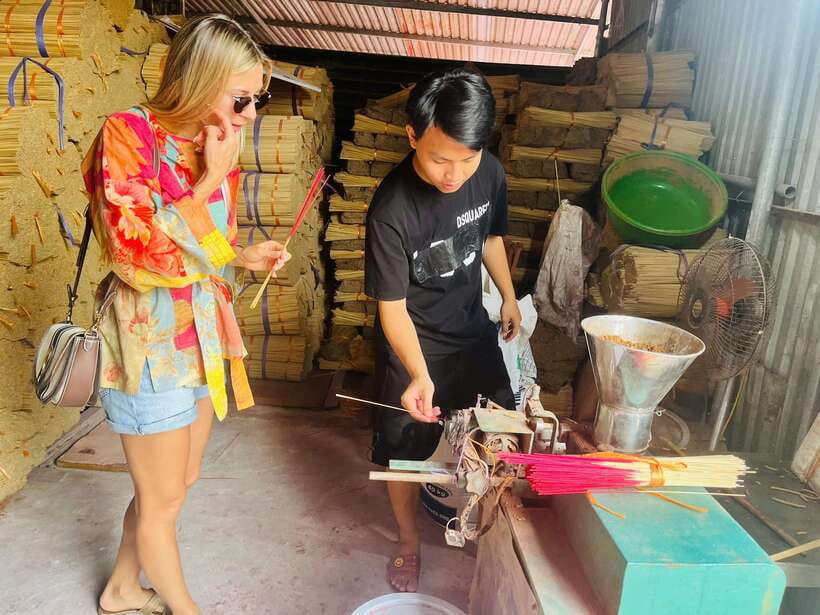
The guide experience seems to be one of the biggest reasons people enjoy this day. Names that come up include Louisa/Louise (Lulu) and Eric, and the tone tends to be personable—funny and helpful, with clear explanations of incense and hat-making steps. Some groups even described getting help with photos, including the guide taking pictures during the incense village moments.
The photo strategy is straightforward:
- Start the day with camera ready during Quang Phu Cau. The incense drying scenes are the easiest win.
- At Chuong, focus on your hat while you decorate. Those are the moments you’ll remember.
- At Bat Trang, take a shot before the kiln stage so you can compare the final item if you have time.
- In Vạn Phúc, photos can be great, but don’t rush buying; silk is where you’ll want to ask questions.
As for pace, you can expect guided time plus short walks. One thing to watch: if you’re sensitive to being moved along, treat this as a highlight tour. You’ll leave with a lot of crafts covered, but not deep, hour-by-hour village living.
Who should book this craft day (and who might not)
You’ll probably love this tour if:
- You like making things, not just looking
- You want variety across traditional crafts in a single day
- You enjoy markets but also want to understand what you’re buying
- You’d like a guided explanation in English
You might skip it if:
- You need minimal walking. The tour involves walking and does not suit wheelchair users.
- You are pregnant, since it’s listed as not suitable.
- You hate long travel segments. There’s a 70-minute bus ride before the first stop, plus movement between villages.
If you’re traveling as a couple or a group that wants control, private group options are available. That can help if you want slightly more time for photos or shopping at one specific village.
Should you book this Hanoi crafts tour?
Yes, if you want a fast, well-rounded craft day that mixes incense village photos, hands-on hat decorating, and a pottery workshop you can take home. The value is strong for a route that includes transport, English guiding, entrance fees, and multiple maker stops.
I’d book with a realistic expectation of pace. This isn’t a slow craft retreat; it’s a packed tour that covers five major villages. If you want more time in one place, treat this as the sampler, then plan a separate return visit to your favorite village after you see what you loved most.
If you’re ready for a practical, craft-focused afternoon and you wear comfy shoes, you’ll come away with stories and real items—plus a much better sense of why these crafts matter in daily life.
FAQ
How long is the tour?
The duration is listed as 6 hours up to 1 day, depending on the option and starting time available.
Where is pickup in Hanoi?
Pickup is included from your hotel in the Hanoi Old Quarter area, with pickup noted at Hoàn Kiếm.
Is lunch included?
The half-day option does not include lunch. A full-day tour option lists a home-cooked lunch as included.
What do I get to take home?
You receive one conical hat per person as part of the tour. You also join a pottery workshop at Bat Trang and make a ceramic item to take home.
Is the lacquer painting piece included?
No. The plan notes that the lacquer piece for painting purposes only is not included.
What’s included in the price?
Pickup and drop-off in the Hanoi Old Quarter area, an English-speaking tour guide, entrance fees for the sites in the plan, and a water bottle per person are included.
What should I bring?
Wear comfortable shoes since the tour involves walking. Bring a camera because photography opportunities are abundant.
Can I bring a camera and take photos?
Yes. Photography opportunities are described as abundant throughout the day.
Is the tour suitable for wheelchair users or pregnant women?
No. It is listed as not suitable for wheelchair users and pregnant women.
Is cancellation free?
Yes. Free cancellation is available up to 24 hours in advance for a full refund.