REVIEW · HANOI
Incense + Hat Villages/ Temple of Literature, Hoa Lo Prison
Book on GetYourGuide →Operated by Tinny Travel and Service Company Limited · Bookable on GetYourGuide
Follow the smoke to Hanoi’s real craft life. This trip strings together incense making, conical hat artistry, and two of Hanoi’s most story-heavy sights, so you’re not just shopping—you’re watching how things are made and why they matter. I like that the day stays practical and hands-on, then turns historical at exactly the right moments with the Temple of Literature and Hoa Lo Prison.
My favorite part is the craft detail: you see incense production at family scale in Quang Phu Cau, then you get to paint and decorate your own hat in Chuong Village. A smaller consideration: if you choose the half-day format, lunch isn’t included, so plan to eat beforehand or bring a snack.
In This Review
- Key highlights worth booking
- Incense and hats: a souvenir you actually understand
- Chuong Village: make sense of conical hats in 90 minutes
- Quang Phu Cau incense village: where the smell becomes a story
- Train Street option: control your time in the city
- Temple of Literature: first-university vibes without the museum fatigue
- Hoa Lo Prison: history that still hits
- Lunch and pacing: what to expect in the half-day vs full-day options
- Price and value: why this $11 craft-and-history combo can make sense
- Who this tour fits best (and who should skip)
- Quick practical checklist before you go
- Should you book this tour?
- FAQ
- Is lunch included in this tour?
- How long is the tour?
- Where do I get picked up?
- Can I choose where I get dropped off?
- What do I make and take home?
- What’s included in the price?
- Do I need to buy entrance tickets?
- What should I bring?
- Is the tour guided in English?
- Is this tour suitable for wheelchair users?
- How much is it?
Key highlights worth booking
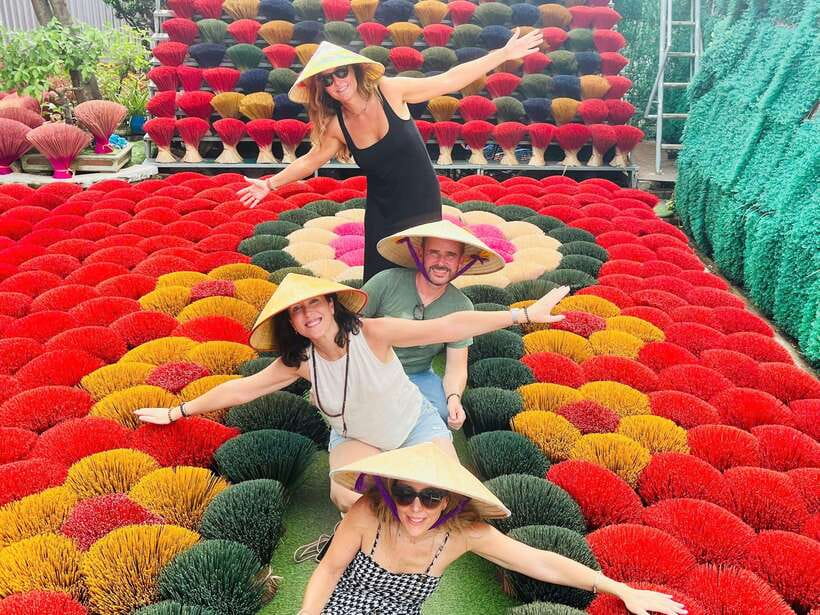
- Quang Phu Cau incense village: walk through a century-old village known for incense making and colorful stick bundles
- Chuong Village conical hat workshop: meet artisans, observe the process, and decorate your own hat to take home
- Photo-friendly guide support: guides help with timing and photos, so you don’t feel stuck figuring it out alone
- Hands-on seeing, not just watching: you’ll observe real manual production steps at artisanal scale (and a nearby factory)
- Optional train street drop-off: you can hop off there, or stay on the bus and continue without detours
- Full-day add-ons: Temple of Literature plus Hoa Lo Prison for context beyond crafts
Incense and hats: a souvenir you actually understand
In Hanoi, a lot of tours end with a bag full of items you can’t quite place. This one starts in a better place: the villages where incense and hats have been made for generations. You get to connect the object in your hands to the people and routines that created it.
The value is also in the variety. You’re not stuck in one room or one craft booth. One stop focuses on incense—smell, materials, and production flow—while another focuses on conical hats—craft technique plus decoration. Then the day pivots to education with the Temple of Literature and Hoa Lo Prison.
If you like your travel days structured but not stiff, this works. It’s guided, time-tagged, and still leaves room to look around, ask questions, and buy thoughtfully if you want.
You can also read our reviews of more tours and experiences in Hanoi.



Chuong Village: make sense of conical hats in 90 minutes
Chuong Village is known for conical hat making for over 300 years, and the tour is built to show you more than the finished product. You’ll meet local artisans, watch how hats are made, and get a chance to draw and decorate your own hat.
This is one of the best parts of the day because it turns a tourist item into a skill you can picture. When you paint it yourself, you understand why certain designs are easier than others, and you notice the craftsmanship that disappears when hats are just sold in shops.
Practical tip: wear comfortable shoes. You’re on your feet for village walking and workshop time, and the ground can be uneven in rural areas. If you’ve got a small bag, keep it close—your hat will be part of your day until you take it back with you.
Quang Phu Cau incense village: where the smell becomes a story
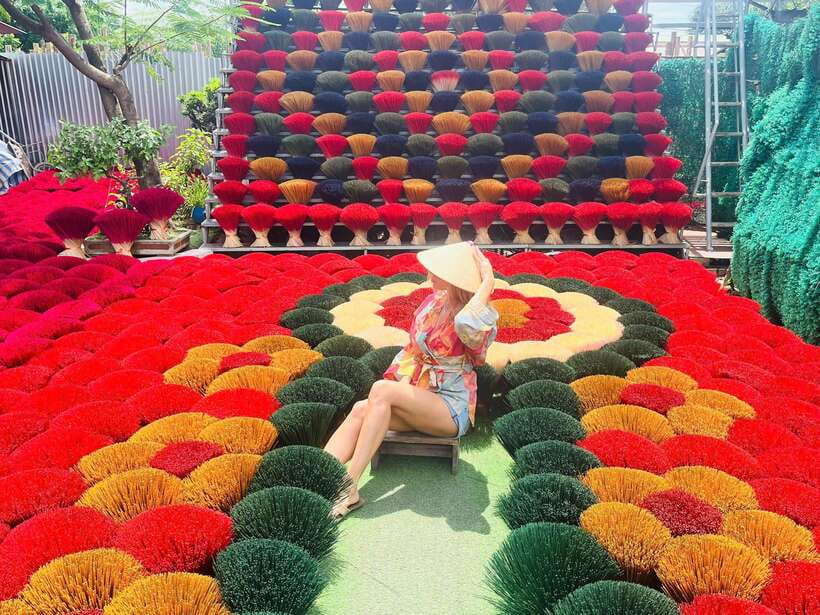
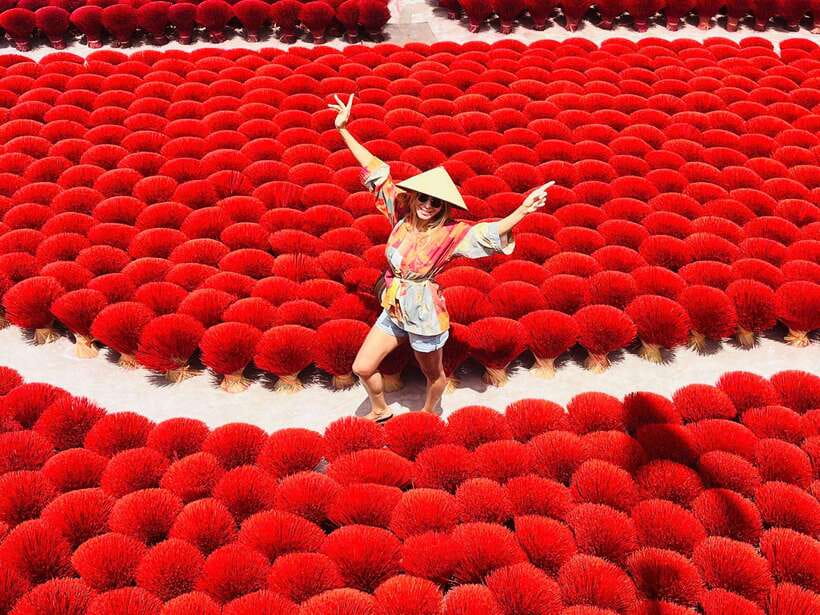
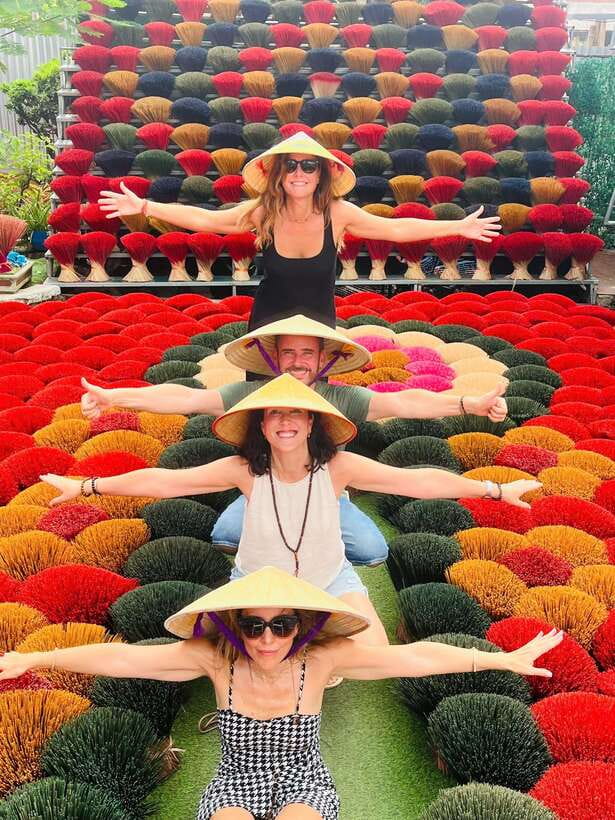
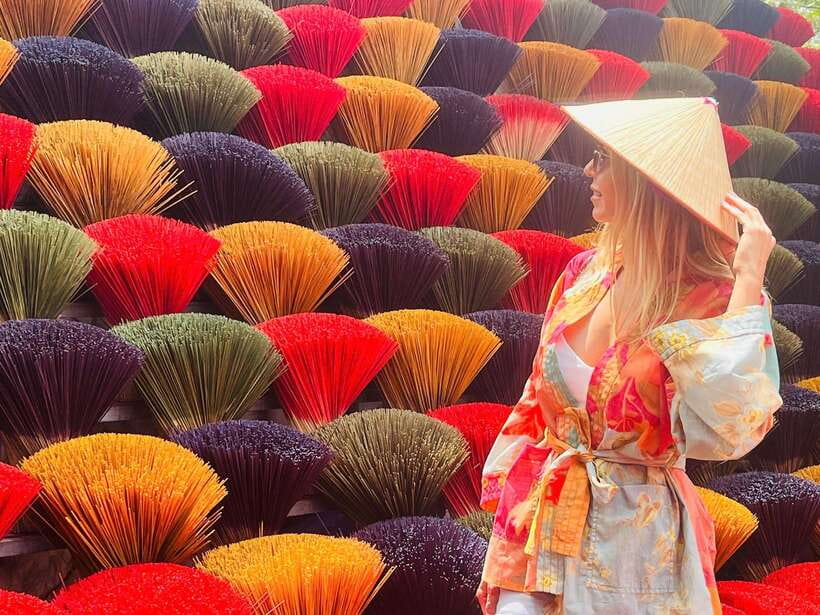
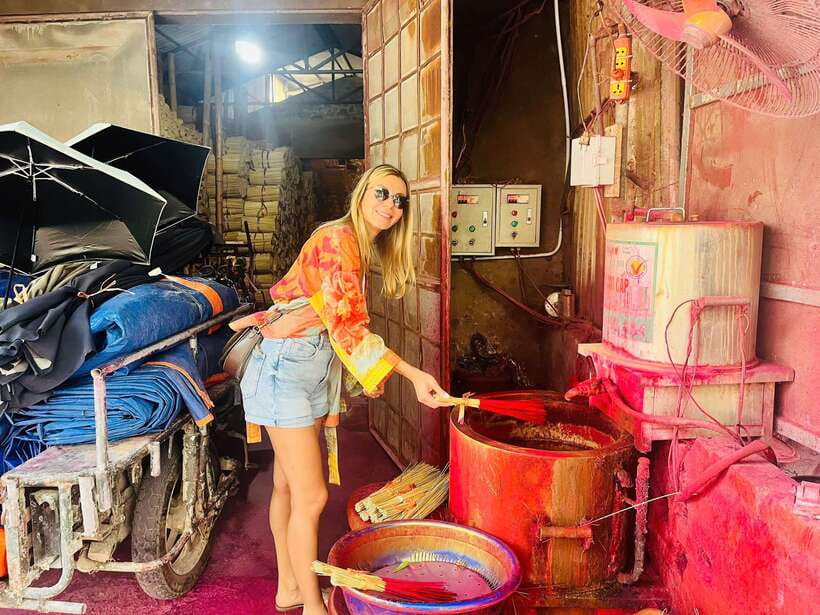
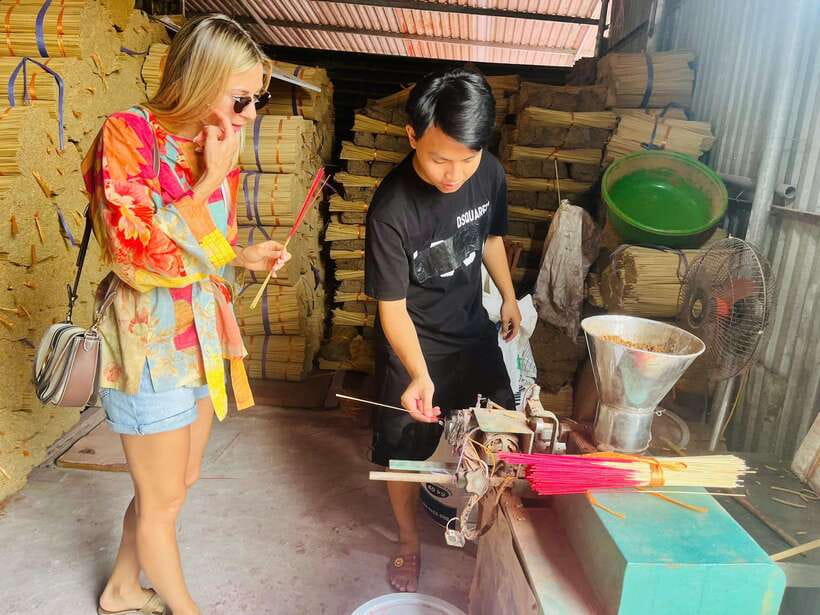
Quang Phu Cau is the incense village stop, and it’s the heart of the craft theme. Here you’ll walk to the village center and see incense production at artisanal, family-scale levels. You’ll also meet a family who specializes in dyeing incense sticks, and you’ll see those colorful bundles up close.
What I like about this stop is the way it teaches you the logic of incense making. You’re not just hearing a description. You’re observing the rhythm of the work and the care that goes into turning raw materials into something that’s sold across Vietnam—and used in daily life and ceremonies.
The itinerary also includes a look beyond artisanal production with a nearby factory visit. That contrast helps. You’ll see the same craft principles, but at a different scale, and you’ll get a more realistic sense of the workers’ roles in the chain from start to finish.
Smell check: come ready for incense scent that can linger on clothes. If you’re sensitive to strong smells, it helps to know you’ll be around finished sticks and bundles for part of the visit.
Train Street option: control your time in the city
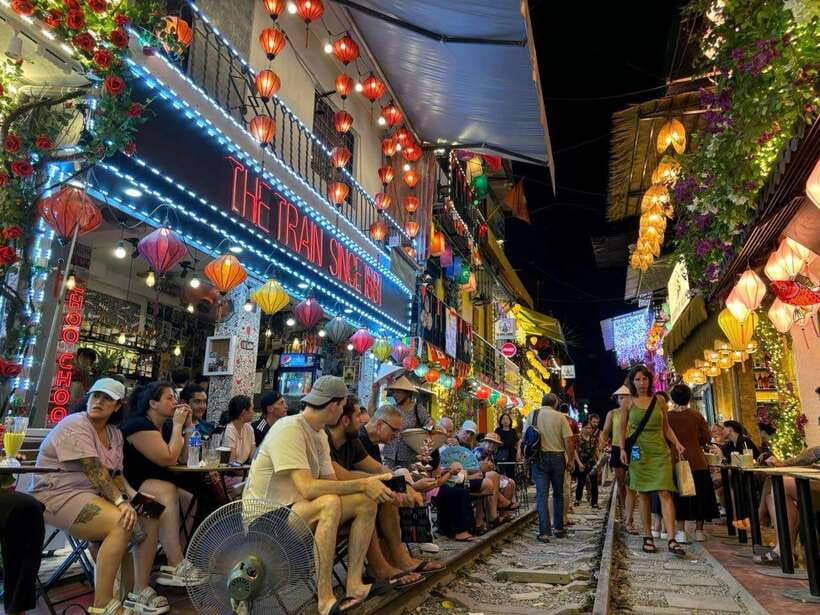
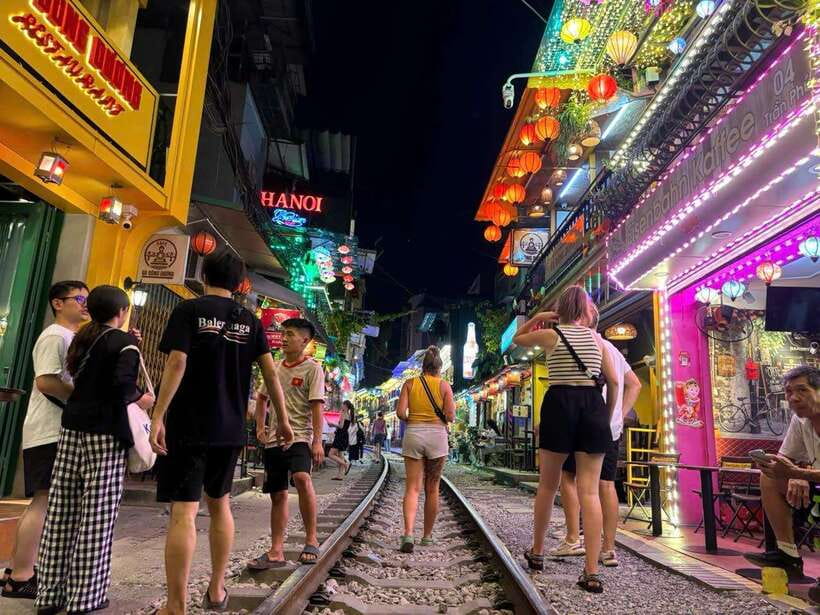
In the half-day version, the tour can drop you at Hanoi Train Street. If you don’t want to go, you wait on the bus and continue to drop-off later.
This is a smart setup because Train Street is one of those places people either love or find stressful. Getting the choice means you’re not forced to trade your village time for a crowd-control experience. It also keeps your schedule flexible if you want to do the rest of your afternoon on your own in the Old Quarter.
If you do choose Train Street, plan for quick pacing. Your day already has workshops and guided walking, so think of Train Street as a short add-on rather than a full extra tour.
Temple of Literature: first-university vibes without the museum fatigue
In the full-day itinerary, you’ll head to the Temple of Literature, established in the 11th century and described as Vietnam’s first university. This stop is intentionally timed after lunch, which matters because the grounds can take some walking.
What’s valuable here is context. After seeing crafts rooted in local tradition, the Temple offers a different kind of Vietnamese culture: education, scholarship, and respect for learning that goes back centuries. It helps the day feel bigger than souvenirs.
You’ll likely get photo stops plus guided time, with a guided walk through the site. If you’re the type who likes learning while you move, this one is easier to enjoy than a purely indoor museum stop.
Tip for photos: early afternoon lighting can be bright. If your group moves together, ask your guide when the quietest angles are best for shots.



Hoa Lo Prison: history that still hits
Hoa Lo Prison Museum is part of the later-day story. It was used by French colonists for political prisoners and later used by North Vietnam for U.S. prisoners of war during the Vietnam War, where it became known to American POWs as the Hanoi Hilton.
This stop can be emotionally heavy. The tour keeps it respectful: guided, timed, and focused on what the site represents. I like that the itinerary doesn’t treat it as a quick photo stop; it gives you a walk and guided tour time to process what you’re seeing.
Consideration: this is not a lighthearted add-on. If you prefer your day to stay upbeat, you might still find it meaningful, but you’ll want to go in mentally prepared.
Lunch and pacing: what to expect in the half-day vs full-day options
The full-day tour includes lunch described as a home-cooked meal. This matters because it protects your energy for the second half of the day, especially once you switch from villages (hands-on walking and workshops) to the Temple and then Hoa Lo Prison.
The half-day version does not include lunch. That’s the biggest mismatch between the two formats. Plan to eat beforehand, or you’ll likely feel it when you’re between craft stops and waiting for the city portion.
Easy move: keep snacks on hand in your day bag for the half-day choice. Even a small bite can make the later part more comfortable.
Price and value: why this $11 craft-and-history combo can make sense
At about $11 per person, the core question is simple: are you paying for a bus ride and a couple of shops, or are you getting more than that?
Here, you are paying for multiple distinct experiences: pickup and drop-off, an English-speaking guide, visits with guided touring, entrance fees, a conical hat per person, and a water bottle per person. Then you add the value of skill-building: you decorate a hat, and you see incense production steps at both village and factory scale.
Could you pay more elsewhere and get a more polished museum day? Sure. But for a Hanoi itinerary that mixes craft labor, hands-on creativity, and two major historical stops, the cost-to-experience ratio is strong.
Also, the tour isn’t just one sight. You’re effectively buying a whole storyline for the day: made-by-hand objects, then the place those objects sit in Vietnamese cultural life and memory.
Who this tour fits best (and who should skip)
This is a great fit if you want an active cultural day without needing to organize transport yourself. It’s also a strong option for people who like learning how everyday items are made, not only buying them at the end.
It’s especially good for:
- couples and solo travelers who want structure and guidance
- families who can handle walking and workshops (the style of stop is interactive and photo-friendly)
- craft fans who care about process, not just product
It’s not ideal if:
- you need wheelchair access, since it’s not suitable for wheelchair users
- you dislike incense scents or prefer fully quiet experiences
- you want a purely relaxed itinerary with no historical site visit
Quick practical checklist before you go
- Bring comfortable shoes for village walking and museum walking
- Expect incense scent to stick around
- If you do the half-day tour, eat beforehand
- If you choose the train street drop-off, plan a short visit rather than a long detour
Should you book this tour?
If you like hands-on travel, this one earns its place on your Hanoi list. The mix of incense village production plus a conical hat workshop gives you something tangible you’ll remember, and the Temple of Literature and Hoa Lo Prison add context so the day isn’t just about buying.
I’d book it if your ideal Hanoi day includes learning and making, with an organized guide to handle the pacing. I’d think twice if you want very light days, need wheelchair access, or are strongly uncomfortable with historical prison sites.
FAQ
Is lunch included in this tour?
It depends on the option. The half-day tour does not include lunch, while the full-day tour includes a home-cooked lunch.
How long is the tour?
The duration is listed as 330 minutes to 1 day. The half-day group tour runs about 6 hours.
Where do I get picked up?
Pickup is available at hotels in Hanoi Old Quarter. If your hotel is outside Old Quarter, you’ll need to come to office No. 27 Hang Bac Street, Hoan Kiem District.
Can I choose where I get dropped off?
Yes. For the half-day option, you can get dropped off at Hanoi Train Street or you can stay on the bus and wait if you prefer not to visit it.
What do I make and take home?
You’ll get 1 conical hat per person, and you’ll be able to draw or decorate it during the Chuong Village stop.
What’s included in the price?
Included items are hotel pickup and drop-off in the Hanoi Old Quarter area by bus, an English-speaking tour guide, entrance fees, 1 conical hat per person, and 1 water bottle per person (and home-cooked lunch on the full-day option).
Do I need to buy entrance tickets?
No. Entrance fees are included.
What should I bring?
Wear comfortable shoes. You may also want snacks if you take the half-day tour since lunch is not included.
Is the tour guided in English?
Yes, the tour includes an English-speaking guide.
Is this tour suitable for wheelchair users?
No, it’s not suitable for wheelchair users.
How much is it?
The price is listed at $11 per person.