A few cities are easy to cover fast. Hanoi isn’t one of them, which is why this private half-day tour feels like smart packing. I like that you get a tight mix of icons and quieter corners without spending your time figuring out routes, tickets, and timing. Two highlights for me are the chance to experience Train Street in real life and the way the stops connect Vietnam’s past to what you see today. One thing to consider: the Ho Chi Minh Mausoleum has strict hours and weekday closures, so on some days you’ll visit the area outside instead of going in.
This tour also wins on comfort and pacing. You get round-trip transfers from your Old Quarter hotel, a local English-speaking guide, and entrance fees where they apply—so your half day doesn’t turn into a long list of small headaches. Still, it’s a schedule with walking and quick transitions, so if you hate crowds or want a super relaxed, linger-all-day vibe, you might feel a bit rushed.
In This Review
- Key highlights
- How this private half-day tour fits Hanoi’s real rhythm
- Price and value: what $52 buys in Hanoi
- The best start: Ho Chi Minh Mausoleum rules you should plan around
- One Pillar Pagoda and the Temple of Literature: ceremony meets scholarship
- One Pillar Pagoda
- Temple of Literature & National University
- Dong Xuan Market and Long Bien Bridge: useful context between big sights
- Dong Xuan Market
- Long Bien Bridge
- Entering Train Street in Hanoi: the thrill, the tea, and the reality check
- Hanoi Opera House: why you go even if you can’t fully enter
- Pickup, meeting point, and getting around without stress
- Weather, closures, and why the tour still holds together
- Should you book this Hanoi Train Street private tour?
- FAQ
- How long is the Hanoi City Half Day Private Tour?
- Is this tour private or shared?
- What’s included in the price?
- What is not included?
- When can I visit Ho Chi Minh’s Mausoleum?
- Is there a dress code for Ho Chi Minh’s Mausoleum?
- Where do we meet, and is pickup included?
- Can I get a refund if I cancel?
Key highlights

- Train Street, not just videos: You walk right alongside the tracks and see how daily life works there.
- A guide who links the dots: Each stop connects to the next, from pagodas to French-era buildings.
- Major sites in one loop: Ho Chi Minh area, One Pillar Pagoda, Temple of Literature, and more.
- Hotel pickup in the Old Quarter: Less friction, more sightseeing time.
- Tea or egg-coffee during Train Street: A small comfort break built into the route.
How this private half-day tour fits Hanoi’s real rhythm
If you’re short on time in Hanoi, you need two things: the right route and someone who knows when and where to go. This private tour is built for that. Instead of hopping randomly between famous points, you run a logical loop through the city’s layers—Vietnamese cultural sites, old markets, and the French colonial leftovers you still see in the architecture.
It also helps that it’s private. Your group sets the tone. The guide can explain at the speed you want and you’re not stuck waiting on a large group to finish photos. Several guides have been mentioned by name—Linh, Lan, Sam, Ken, Anna, Andy Nguyen, and Khanh among them—so it’s clear the tour leans on guiding style, not just “drop you at the gate.”
The half-day length is the sweet spot. You won’t drain your energy, but you’ll still see a lot: multiple ticketed sights, plus Train Street and a quick architectural stop at the Opera House. In practice, that gives you a strong first impression of Hanoi’s contrasts: solemn and ceremonial in one block, commercial and noisy around the next turn.
You can also read our reviews of more city tours in Hanoi



Price and value: what $52 buys in Hanoi

At $52 per person, this isn’t the cheapest thing you can do, but it’s also not trying to be a luxury-only product. The value comes from stacking the usual travel costs into one package.
Here’s what’s included:
- English-speaking guide
- Entrance fees
- Private transfers for the whole tour
- Tea or egg-coffee during Train Street
And here’s what’s not included:
- Tips/gratuities
- Extra stops beyond the planned route
- Airport pickup (if you need it, it’s $15 per booking for hotels near the airport)
That “entrance fees + transfers” combo matters in Hanoi. If you try to do this solo, you quickly pay for taxis/Grab rides, then tickets, then time lost waiting for the right transport. This tour keeps that friction out of your day. Even if you already know how to ride around the city, the time savings are real—especially with places that have opening windows like the Mausoleum.
One more practical point: the tour offers a morning or afternoon itinerary and lets you choose a start time that suits your schedule. That flexibility can change your experience a lot, because not every stop is equally friendly to late starts.
The best start: Ho Chi Minh Mausoleum rules you should plan around
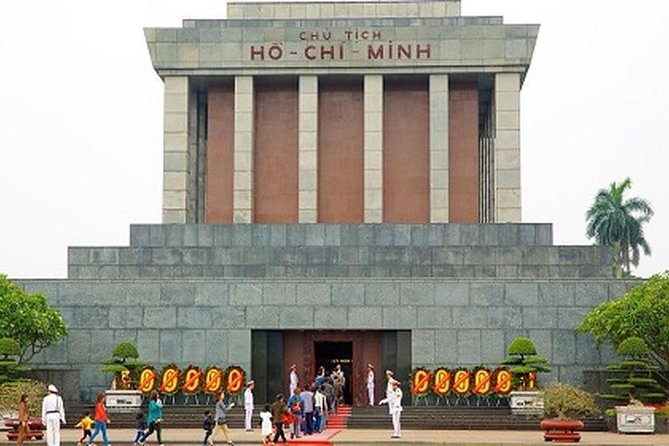
Ho Chi Minh’s Mausoleum is where timing gets serious. The mausoleum opens only in the morning, from 8:00 AM to 11:30 AM, and it’s closed weekly on Monday and Friday. Also, there’s an annual maintenance shutdown from June 10 to August 12. If your tour lands outside the allowed window, you’ll likely visit the area outside rather than going inside.
The dress requirement is also not optional. You need modest clothing: shoulders covered and shorts to at least knee length. This is one of those rules that can feel annoying until you realize it keeps the visit smooth. If you arrive dressed wrong, you risk delays or missing out.
One thing I appreciate about how this tour handles it: the plan anticipates the real-world restrictions. That means you’re not just gambling on opening hours. If you book the right time slot, you can include the ticketed visit; if you don’t, you still get the meaningful context and the chance to see the site’s place in Vietnam’s national story.
One Pillar Pagoda and the Temple of Literature: ceremony meets scholarship
After the Mausoleum area, the tour shifts into more spiritual and educational themes. That contrast is useful. It breaks up the heavy national symbolism with places where you can slow down for a moment and look closer.
One Pillar Pagoda
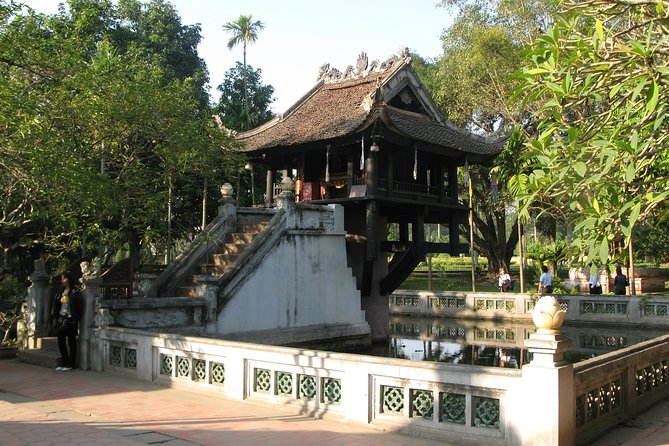
The One Pillar Pagoda is short on time but strong on meaning. The story is that it was built after a dream by a fatherless emperor, with an enlightened being (Avalokiteshvara) giving him a baby resting on a lotus flower. Even if you’re not into legends, it’s a good entry point for understanding how faith in Vietnam blends with the political and cultural landscape.
This stop is about 30 minutes. That’s enough to see the structure, take a few photos, and absorb the guide’s explanations without turning it into a long slog.
You can also read our reviews of more private tours in Hanoi
- Doris Cruise 5 star cruise 2 days visiting Halong Bay Lan Ha Bay private balcony
★ 5.0 · 2,338 reviews





Temple of Literature & National University
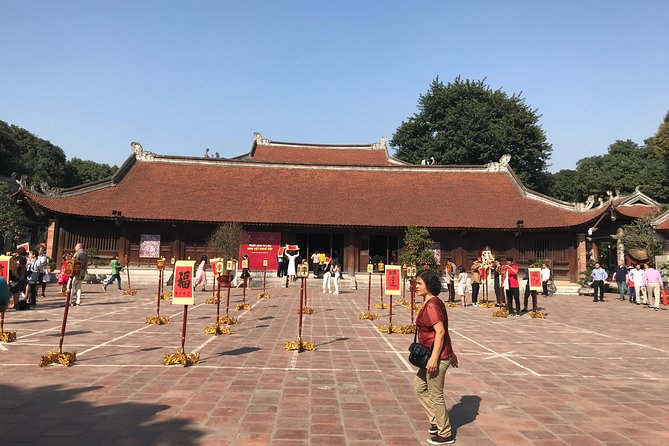
Then you move to the Temple of Literature, originally built as a university in 1070 dedicated to Confucius. This is one of those places where history feels architectural, not abstract. You see the layout and understand why scholars would want this setting—calm, formal, and built for study.
The tour allots about 1 hour here. That’s just right for walking the grounds and getting a clearer sense of why Vietnam’s exam culture and education legacy became such a big deal over time.
If you care about Vietnam beyond the street scenes, this pairing helps. Pagoda first, then scholarship. It’s a neat way to show two different paths of meaning.
Dong Xuan Market and Long Bien Bridge: useful context between big sights
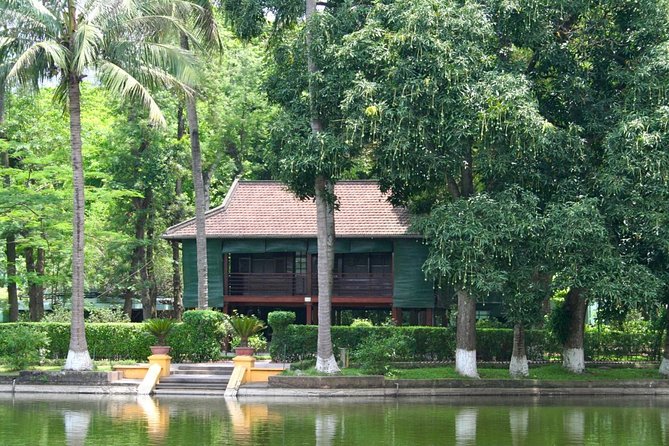
Not every Hanoi day needs more museums. Sometimes you need the city’s pulse. This tour includes that in two ways: a market stop and a bridge stop.
Dong Xuan Market
Dong Xuan Market is the kind of place that helps you understand Hanoi as a working city. It’s the largest wholesale market in Hanoi, built in 1889, and it sits in a prime location in the heart of town. Your time here is about 20 minutes—short, but enough to browse, spot local products, and taste the energy without getting stuck for hours.
In the accounts I gathered from the guiding styles used on this route, guides often add small extras here. For example, fruit tasting has come up as a way to turn a quick market stop into a sensory one. If you’re the type who likes food context, this is a good moment in the itinerary.
Long Bien Bridge
Long Bien Bridge is a quieter stop, but it adds a historical backbone. It was constructed after the French conquest of Hanoi, with a timeline that includes building beginnings in the late 1800s and completion in the early 1900s. The bridge has also been bombed during wartime.
You get about 20 minutes, and admission is free for this stop. It’s the kind of place where your guide can connect infrastructure to conflict, resilience, and how Hanoi grew around major routes.
If you dislike “history stops” that feel purely factual, don’t worry. The bridge works best as a photo-and-walk moment, then the guide fills in the why.
Entering Train Street in Hanoi: the thrill, the tea, and the reality check
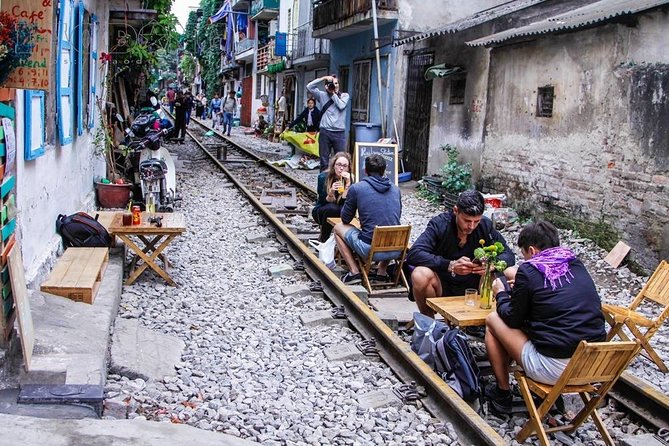
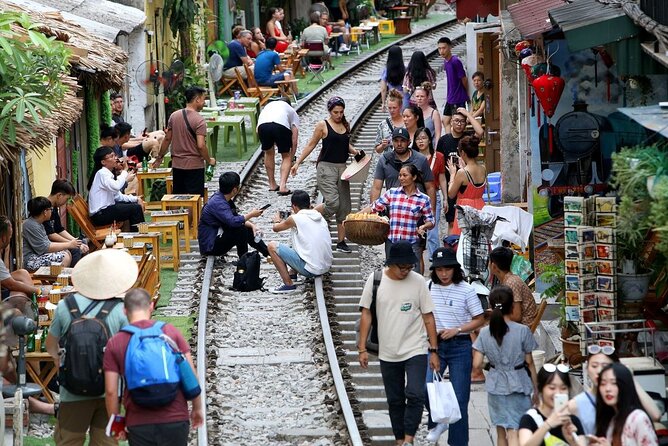
Train Street is the headline for a reason. It’s one of Hanoi’s most talked-about experiences: real railway tracks run through what looks like a narrow street corridor, with daily life built alongside it.
This tour schedules about 40 minutes at the Train Street entrance area, and it includes tea or egg-coffee while you’re there. That small break is more useful than it sounds. You’re standing, walking, and taking in the scene under the Hanoi weather, so having something warm or sweet during the stop keeps the whole experience from feeling exhausting.
Here’s what to expect in real life:
- You’ll be close to the tracks and the street-life edges.
- Your guide will give you practical direction on where to stand and how to enjoy it safely.
- It’s a photo moment, but it’s also a peek into how local life adapts to unusual infrastructure.
This is also where a good guide really matters. Several named guides—like Linh and Sam—were praised for how they made the experience feel organized and enjoyable, not chaotic. If you care about understanding what you’re seeing, this part of the tour is where the story snaps into focus.
One consideration: Train Street can be busy. If you’re someone who needs lots of personal space, plan to keep your patience handy and follow the guide’s cues.
Hanoi Opera House: why you go even if you can’t fully enter

The Hanoi Opera House stop is brief—about 10 minutes—and it’s not the typical inside-the-building visit. The Opera House is often described as closed to public access except for ceremonies and some special events. This tour’s visit is primarily to experience the French-style architecture from the outside and hear the history context from your guide.
So think of it as a photo stop with meaning. You get the shape, the style, and the reminder that Hanoi was under French colonial administration long enough to leave lasting architectural fingerprints. Even if you’re not an architecture person, it helps you build the full picture of why Hanoi looks the way it does.
If you’re visiting for the classic “Train Street to big landmarks” mix, this stop is a nice capstone. It rounds out the day with a different aesthetic than pagodas and market scenes.
Pickup, meeting point, and getting around without stress
This tour is designed to reduce logistics work. If your hotel is in Hanoi’s Old Quarter, pickup is offered. Then you return back to the meeting point at the end.
The stated meeting point is:
Thang Long Water Puppet Theatre, 57B Đinh Tiên Hoàng, Hàng Bạc, Hoàn Kiếm, Hà Nội, Vietnam
If your hotel is near Noi Bai airport, you may need to go to the meeting point for pickup, or contact the operator for details. That’s where a quick message via WhatsApp can save time. The contact number provided is +84-982-804-399 for pickup confirmation.
This matters because Hanoi can be slow to navigate in traffic. The “right pickup point + car” approach keeps the half-day schedule from slipping.
Weather, closures, and why the tour still holds together
This is a sightseeing route, and Hanoi weather can change fast. The tour notes that the experience requires good weather. If it’s canceled due to poor weather, you’ll be offered a different date or a full refund.
Even with those weather and closure rules, the itinerary still makes sense. If the Mausoleum is off due to hours or weekday closures, the tour still includes the One Pillar Pagoda, Temple of Literature, market time, Long Bien Bridge, Train Street, and the French-era architecture outside the Opera House. In other words, you don’t end up with a wasted day because one site was unavailable.
One more practical tip: the Mausoleum has the strictest rules, so keep that clothing requirement in mind before the day starts. Everything else is more flexible, but dressing correctly at the start prevents problems cascading later.
Should you book this Hanoi Train Street private tour?
I’d book it if:
- You want a structured half day that covers major sights without planning a route from scratch.
- You care about the meaning behind the landmarks, not just checking boxes.
- You’re excited about Train Street but want the visit organized and guided.
- You’re staying in or near the Old Quarter and want easy pickup.
I’d think twice if:
- You strongly prefer slow travel and long stays. This is a tight loop.
- You’re visiting during a time that makes Ho Chi Minh Mausoleum unlikely to be open. You may end up with an outside visit, which is still interesting, but it’s not the same as going in.
If you choose your start time carefully (especially for the Mausoleum window), this tour becomes an efficient, low-stress way to get your bearings fast. And if you end the day with a better understanding of why Hanoi looks and feels the way it does, that’s the real win.
FAQ
How long is the Hanoi City Half Day Private Tour?
The tour runs about 4 to 5 hours.
Is this tour private or shared?
It’s a private tour limited to your group.
What’s included in the price?
The price includes an English-speaking guide, entrance fees, private transfers for the tour, and tea (or egg-coffee) during the Train Street visit.
What is not included?
Tips/gratuities and extra sightseeing stops are not included. Pickup at the airport or at a hotel near the airport is $15.00 per booking.
When can I visit Ho Chi Minh’s Mausoleum?
The mausoleum opens only in the morning from 8:00 AM to 11:30 AM, and it is closed weekly on Monday and Friday. If the tour is on Monday or Friday, or scheduled after 10:00 AM, the visit may be outside.
Is there a dress code for Ho Chi Minh’s Mausoleum?
Yes. You must dress modestly: shoulders covered, and shorts must be to knee length.
Where do we meet, and is pickup included?
The meeting point is Thang Long Water Puppet Theatre, 57B Đinh Tiên Hoàng, Hàng Bạc, Hoàn Kiếm, Hà Nội. Pickup is offered from Hanoi’s Old Quarter hotels. If you’re near Noi Bai airport, you may need to go to the meeting point or contact the operator for details.
Can I get a refund if I cancel?
Yes. You can cancel up to 24 hours in advance for a full refund. If you cancel less than 24 hours before the start time, the amount paid is not refunded.
You Might Also Enjoy



More City Tours in Hanoi



More Tours in Hanoi
- Ninh Binh Full-Day Tour from Hanoi to Hoa Lu, Tam Coc & Mua Cave Via Boat & Bike
★ 5.0 · 4,384 reviews