
REVIEW · HANOI
Hanoi: Artisan Tour with Incense, Hat-Making, or Ceramics
Book on GetYourGuide →Operated by Tinny Travel Co.Ltd · Bookable on GetYourGuide
Paper-thin smoke and painted hats in one morning. This Hanoi artisan tour is built around real craft work, from the Quang Phu Cau incense village to hands-on hat- or ceramics-making with an English-speaking guide. I like the practical, step-by-step workshop vibe, and I like that the focus stays on the process rather than a hard sell.
The main thing to plan around: the half-day options do not include lunch, so you’ll want food or snacks ready before you head out (or you’ll feel it during the afternoon).
In This Review
- Key things I’d circle before booking
- Quang Phu Cau incense village: the everyday craft behind Vietnam’s scent
- Chuong conical hat village: make the Vietnam icon with paint and patience
- Bat Trang ceramics village: learn the craft, then try your hand at it
- Train Street: optional time for photos and coffee, plus a real return-plan
- Half-day vs full-day: how to choose based on your energy and interests
- Half-day option (Incense + Conical Hat, no lunch)
- Half-day option (Ceramics + Conical Hat, optional Train Street)
- Full-day option (3 villages + home-cooked lunch)
- Price and logistics: what your money is buying at $15
- How to get the most from the workshop time
- Wear and pack for comfort
- Let the guide do their job
- Take photos the smart way
- Who this artisan tour is best for
- Should you book this Hanoi artisan tour?
- FAQ
- How long is the Hanoi artisan tour?
- Which villages can I visit?
- Is lunch included?
- Do I get dropped off at Train Street?
- Is pickup included?
- What language is the tour guide?
- What should I bring?
- Are there extra charges on holidays?
Key things I’d circle before booking
- Quang Phu Cau incense village: learn how incense sticks are made, then grab photos in the colorful work lanes
- Chuong conical hat workshop: paint and make your own hat (and yes, you keep it when that option is chosen)
- Bat Trang ceramics experience: observe artisans, visit a ceramic artist’s house/workshop, then make something yourself
- Optional Train Street stop: you’ll get time to coffee and explore, but you handle your return from there
- English guides that actually guide: multiple guides (Phong, Lilly, Lana, Louisa, Lou Lou) are known for clarity and patience
- Good value for the day: pickup/drop-off in the Old Quarter plus entrance fees and workshop time for a low price
Quang Phu Cau incense village: the everyday craft behind Vietnam’s scent

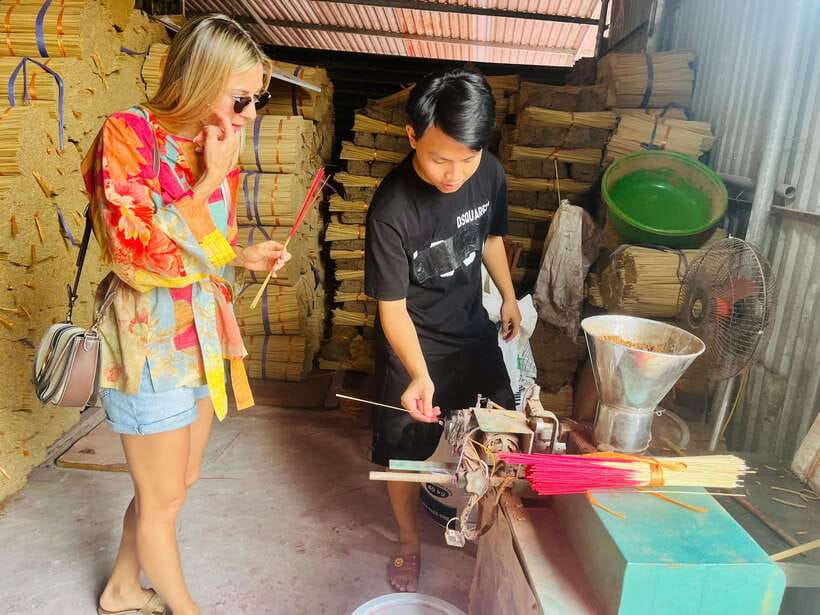
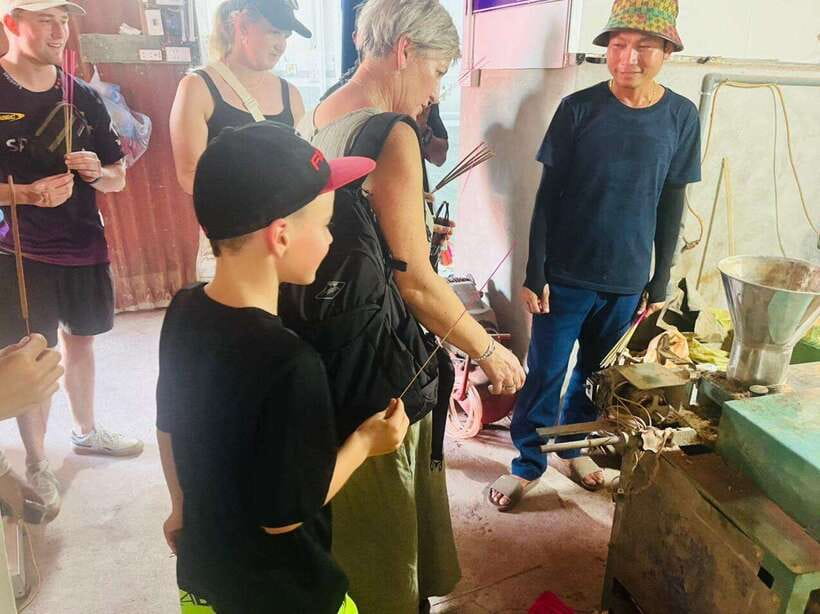
If you like cultural “how it’s made” visits, Quang Phu Cau is the reason this tour exists. You’ll spend about 1.5 hours in the incense village where workshops line up along narrow lanes, and the work is very much part of daily life—not staged entertainment.
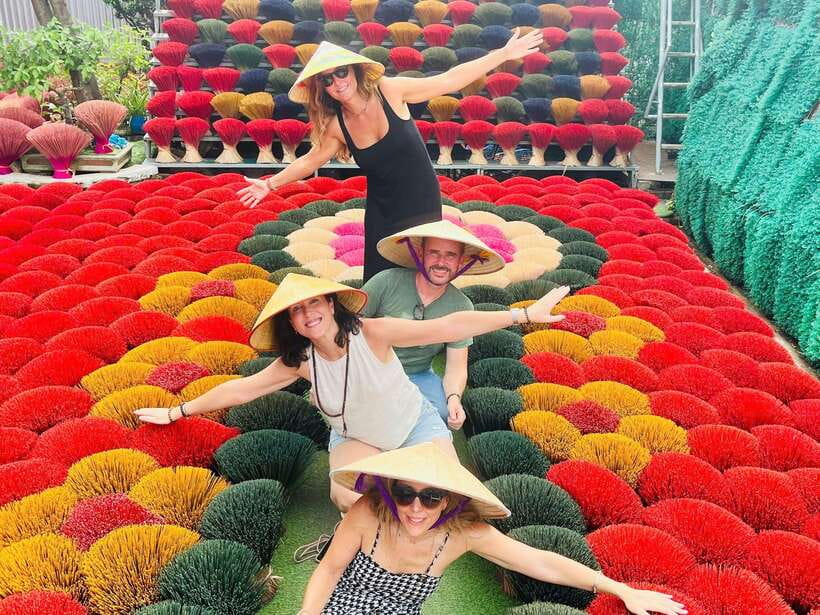
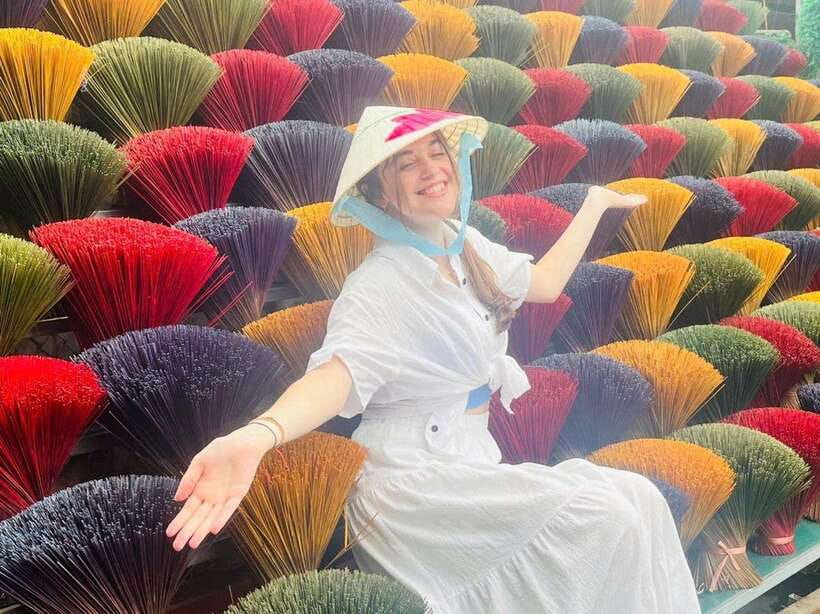
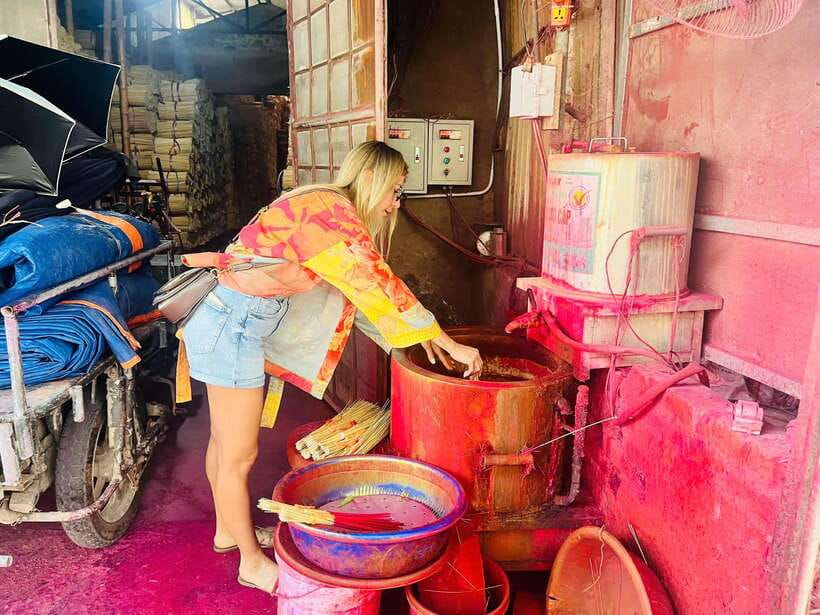
The tour guide helps you notice details that you’d normally miss. You’ll see the stages that go into incense-making as artisans work, and you’ll have time to take photos while the village is busy with color and motion. This is the kind of place where the visuals do a lot of storytelling: tools, drying areas, and finished sticks piled and sorted in ways that look simple until you understand the process.
One smart way to use your time here: pause between workshops. Instead of rushing for the next photo, watch for small workflow cues—how the work is handed off, how items are arranged, and how artisans keep the process moving. It makes the village feel alive, not like a museum stop.
Tip for photos: wear comfortable shoes and aim for steady footing. Some lanes can be uneven, and you’ll want your hands free to shoot and not fight balance.
You can also read our reviews of more tours and experiences in Hanoi.



Chuong conical hat village: make the Vietnam icon with paint and patience
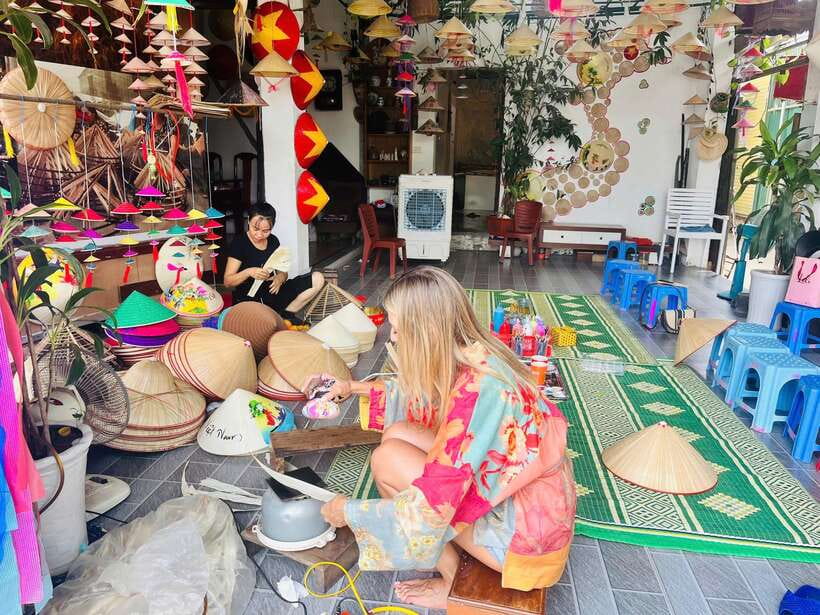
Next comes the Chuong conical hat village, and this part is built for participation. You get a guided look at how the craft works, plus an actual workshop where you make your own hat and then decorate/paint it.
You’ll typically get about 1.5 hours here, including a photo stop and guided tour time before the hands-on session. The hat-making process is usually taught clearly enough that even if you’re not crafty, you can still end up with something you’ll recognize as yours. A lot of the satisfaction is in the transformation: you start with the raw steps and materials, then finish with the hat that looks like the Vietnam souvenir you imagined.
What I particularly like about this stop is the balance. You’re not just watching from the sidelines. You’re participating, and the result matters because you can walk away with a physical item that you made. In one review, someone highlighted they were able to keep the hat, which is exactly the kind of tangible win that makes a craft tour feel worth it.
Practical note: hats take time to finish and paint. Don’t plan to sprint through this stop. Give yourself enough patience to let the guide’s instructions sink in.
Bat Trang ceramics village: learn the craft, then try your hand at it

If incense and hats are all about tools and tradition, Bat Trang is about shape, clay, and patience. This option sends you to Vietnam’s well-known ceramics region, where you’ll first observe artisans and learn what makes the work distinct.
You’ll have around 100 minutes for the ceramics stop, including photo and guided visit time, then time for a workshop. A highlight here is the stop at an artist’s ancient house and workshop, where you can hear about the village and see ceramic products up close.
What makes Bat Trang appealing is that it isn’t only about finished items behind a glass counter. You’ll see the practical side: how a workshop operates, and why handwork looks different from machine output. Then the tour gives you a chance to make something yourself—like a cap, vase, or bowl, depending on what’s available in your workshop session.
Could your final piece be perfect? Probably not. But that’s not the point. The value is that you understand the basics well enough to appreciate what you’re seeing—and to take home an object that feels like a memory rather than a purchased trinket.
If you’re choosing between hat vs ceramics: pick the one that matches your brain. If you love color and quick visual results, hats feel more immediate. If you like slow craft and working with form, ceramics will land better.
Train Street: optional time for photos and coffee, plus a real return-plan
Many Hanoi itineraries end with a sigh-and-a-photo moment at Train Street. This tour’s version is more controlled: you can get an optional drop-off there at the end of your village visits, with time to grab a coffee and explore on your own.
Here’s the part you must plan around. You’re responsible for your return from Train Street. The tour can drop you off, but you’ll need to arrange your taxi back to your hotel or back to wherever you’re staying.
So how do you keep this from becoming stressful? Decide your plan before you arrive:
- Pick a general meet-or-exit point in your mind (even if you don’t meet anyone, you’ll want a quick place to regroup)
- Budget a little extra time for walking and crowd navigation
- Keep an eye on your energy level, especially if it’s a half-day tour and you skipped lunch
Train Street can be fun, but it’s not the best moment to be tired and hungry. That’s why the earlier warning about no lunch on half-day options matters.
Half-day vs full-day: how to choose based on your energy and interests

This tour comes in two half-day shapes and one full-day format, and your choice changes the whole experience.



Half-day option (Incense + Conical Hat, no lunch)
You’ll start around 7:45 for the morning slot or 11:45 for the afternoon slot. The route visits:
- Quang Phu Cau incense village
- Chuong conical hat craft village
Then you can end at Train Street for optional drop-off.
This is the best pick if you want the classic “incense + hat” combo and you’re okay handling food yourself. You’ll want to eat beforehand, because half-day has no lunch included. Bring a snack if you tend to get cranky when schedules run tight.
Half-day option (Ceramics + Conical Hat, optional Train Street)
This schedule swaps the incense village for Bat Trang ceramics village. You’ll start around 8:00 for morning or 12:00 for afternoon, then do:
- Bat Trang ceramics
- A ceramics workshop experience where you try making something
- Optional end at Train Street
This option is ideal if ceramics is your priority, but you still want the hat component in the same day.
Full-day option (3 villages + home-cooked lunch)
The full-day run is about 8:00 to 16:30, and it adds a third stop while including home-cooked lunch. You’ll visit:
- Incense village
- Conical hat village
- Ceramics village
And you can also have an optional Train Street drop-off at the end.
For many people, full day is simply less mentally work. Lunch is included, and you’re less likely to feel like you’re constantly negotiating hunger and energy while learning craft details.
My honest “which should you pick?” shortcut:
- If you want a relaxed pace and don’t want to think about lunch: choose full day.
- If you want maximum village variety without the full-day commitment: choose a half-day, but plan food carefully.
Price and logistics: what your money is buying at $15
The headline price is $15 per person, and for what you’re getting—Old Quarter pickup/drop-off, an English guide, entrance fees, workshop time, and at least one crafted item in the hat option—it can be a strong value.
Here’s what that price tends to mean in real life:
- You’re not self-organizing transportation to multiple villages
- You’re paying for someone to explain what you’re seeing (and keep the timing sensible)
- You’re paying for time in workshops, not just a quick pass-by photo stop
Included extras add up too. You get hotel pickup and drop-off in the Hanoi Old Quarter area, an English-speaking guide, and a water bottle per person. Full-day includes home-cooked lunch.
Not included: personal drinks and expenses. And there are holiday surcharges in some periods (New Year, Lunar New Year, Christmas, national holidays) of $5 per person.
One practical consideration you should know: the bus ride can feel a bit cramped. It’s not a dealbreaker, but if you’re tall or very sensitive to tight seating, bring water and adjust your expectations for comfort during the transfer legs.
How to get the most from the workshop time
This tour works best when you treat it like a making day, not a sightseeing checklist.
Wear and pack for comfort
- Comfortable shoes matter a lot. You’ll be walking around active workshops and photo areas.
- If you’re on a half-day schedule, plan to eat beforehand or bring snacks so you don’t run out of steam.
Let the guide do their job
Guides like Phong, Lilly, Lana, Louisa, and Lou Lou are repeatedly praised for being friendly and patient, and for explaining things clearly. Lean on that. When the guide slows down to explain a step, you’ll get more out of the workshop and waste less time redoing mistakes.
Take photos the smart way
You’ll have photo opportunities in both the incense and conical hat areas. For the most Instagram-friendly results, position yourself before you start moving through a workshop lane, then shoot while the scene stays stable. In craft villages, the best photos come from timing your pictures with actual work moments.
Who this artisan tour is best for
This is a good fit if you want hands-on culture, not just “look at things from a distance.”
It works especially well for:
- People who like process-based travel (how everyday objects are made)
- Travelers who want a photo-friendly day without a hard sell
- Solo visitors too, since a number of reviews mention guides helping with photos and keeping the group comfortable
The tour isn’t a match if you:
- Are pregnant
- Need wheelchair accessibility
- Travel with pets (not allowed)
Should you book this Hanoi artisan tour?

I’d book it if you want a craft-heavy morning or day with clear workshop time and an English guide who helps you understand what you’re looking at. At $15, you’re getting real value through pickup, entrance fees, and structured visits to Quang Phu Cau, Chuong, and/or Bat Trang, plus a chance to create something yourself.
Skip it (or choose a different format) if you hate crowds, dislike buses, or you know you’ll struggle without lunch. If you’re doing half day, handle food and energy first. If you can do full day, it’s usually the smoother choice since lunch is included.
If you’re excited about incense, hats, ceramics, or you just want a break from pure city landmarks, this tour is one of the most practical ways to experience Hanoi’s craft villages in a single day.
FAQ
How long is the Hanoi artisan tour?
The experience runs about 5 hours for the half-day options, or about 8 hours for the full-day option, depending on which itinerary you choose.
Which villages can I visit?
You can choose among options that include Quang Phu Cau incense village, Chuong conical hat village, and Bat Trang ceramics village.
Is lunch included?
Lunch is included only with the full-day option. The half-day options do not include lunch.
Do I get dropped off at Train Street?
Train Street is an optional part of the tour, and you can get a drop-off there depending on your chosen option.
Is pickup included?
Yes. Pickup and drop-off are included for hotels in the Hanoi Old Quarter area.
What language is the tour guide?
The tour guide speaks English.
What should I bring?
Bring comfortable shoes. Half-day tours also don’t include lunch, so it’s wise to have food or snacks planned.
Are there extra charges on holidays?
Yes. There can be a surcharge of $5 per person on New Year, Lunar New Year, Christmas, and national holidays.
You Might Also Enjoy


More Tours in Hanoi
- Ninh Binh Full-Day Tour from Hanoi to Hoa Lu, Tam Coc & Mua Cave Via Boat & Bike
★ 5.0 · 4,384 reviews