REVIEW · CITY TOURS
Half-Day Ha Noi City Sightseeing Private Tour With Student
Book on Viator →Operated by Vietnam - Hanoi Package Tours · Bookable on Viator
A train really runs through a tiny alley. That simple fact is why I like this private half-day: it packs big landmarks and real street life into about 4 hours. You’ll see Hanoi’s spiritual side at the pagodas, the hard lines of history at the mausoleum and Thang Long Citadel, then finish with Old Quarter scenes that feel lived-in.
I also like the mix of included extras that make the day smooth: hotel pickup/drop-off, an English-speaking guide, and entrance tickets where they matter. And the route isn’t just box-checking. It links places that explain Vietnam’s story—from lotus legends and colonial-era buildings to the bridge and the daily rhythm of Train Street.
One drawback to plan around: the Ho Chi Minh Mausoleum has strict hours and closures, so you may need to adjust if your visit falls on the wrong day or dates. Dress codes and security rules also take time before you even step inside.
In This Review
- Key things that make this tour worth your time
- Why this four-hour Hanoi route is a smart use of limited time
- One Pillar Pagoda and Chua Tran Quoc: Hanoi’s spiritual anchors up close
- Ho Chi Minh Mausoleum: morning-only access and strict rules
- Imperial Citadel of Thang Long: UNESCO context without museum-fatigue
- Old Quarter + Hoan Kiem Lake: where the city actually breathes
- Dong Xuan Market and Hanoi Opera House exteriors: commerce and French-era architecture
- Long Bien Bridge and Train Street: two ways Hanoi shows its past and present
- Price and logistics: what $31.52 buys you in reality
- Guide quality is the secret sauce here
- Who this tour fits best (and who might want a different pace)
- Should you book this Hanoi half-day private tour?
- FAQ
- What is the duration of the Hanoi City Sightseeing Private Half-Day Tour?
- How much does the tour cost?
- Is this tour private or shared?
- Does the tour include hotel pickup and drop-off?
- Are entrance tickets included?
- Which major sights are included in the route?
- What are the Ho Chi Minh Mausoleum opening hours and closures?
- What should I wear for the mausoleum?
- Does Train Street require an admission ticket?
- Is free cancellation available?
Key things that make this tour worth your time
- A true private format for faster questions and less waiting at stops
- Hotel pickup and drop-off so you lose less time in traffic
- Entrance tickets are included for several key sights, not just the “photo spots”
- Train Street + Old Quarter in one run, so you don’t have to hunt them down separately
- A history stack: pagodas → mausoleum → Thang Long → colonial landmarks → modern street life
- Guides you can learn from (Le, James, Minh are specifically praised for clear explanations and friendly pacing)
Why this four-hour Hanoi route is a smart use of limited time
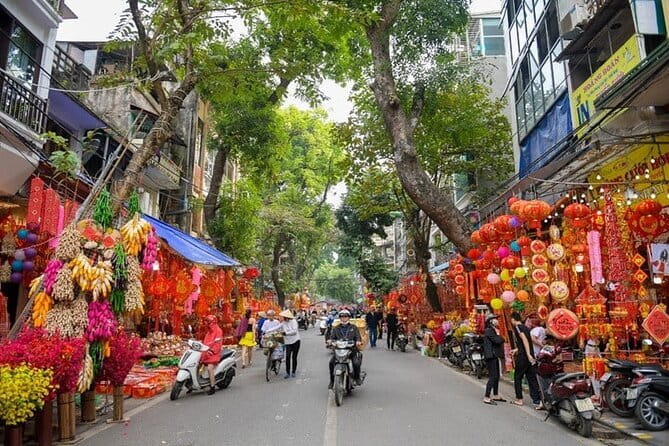
Hanoi can be a lot in a short stay. This tour is designed like a practical sampler: major landmarks early, then neighborhoods and street scenes when you’re ready to slow down. The private format matters here—when you’re short on time, you don’t want to spend it negotiating meeting points or figuring out transit.
At $31.52 per person for a half-day, the value comes from what’s included. You’re not just paying for a guide to stand near you. You’re also getting transportation, English commentary, and entrance coverage for several stops—so your cost-to-time ratio stays reasonable.
You can also read our reviews of more city tours in Hanoi



One Pillar Pagoda and Chua Tran Quoc: Hanoi’s spiritual anchors up close
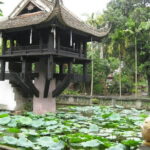
The day starts at One Pillar Pagoda, a famous Hanoi landmark tied to a very specific legend. The story says a fatherless emperor dreamed of Avalokiteshvara blessing him with a son resting on a lotus flower. The pagoda was then commissioned to resemble that lotus—so the architecture is part of the religious meaning, not just a pretty photo.
Inside, you’ll find a richly gilded statue of Quan Am at the main altar. One detail I think makes this stop more than a sightseeing checkbox: the current tiny pagoda sits on a concrete pillar today. That pillar is a replacement for the original one, which was blown up during the French departure, and the guide can explain what’s known (and what’s unclear) about the original structure.
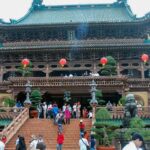
Next is Chua Tran Quoc, described as the famous pagoda. The key advantage here is pacing: you get one of Hanoi’s best-known pagodas first, then another major one while the day still feels calm and oriented.
Practical tip: both places are religious sites, so dress and behavior matter. You’ll get the best experience by keeping things respectful and unhurried, even if you’re on a tight schedule.
Ho Chi Minh Mausoleum: morning-only access and strict rules

This is the stop that needs your calendar brain switched on. The Ho Chi Minh Mausoleum is open 8:00 AM to 11:30 AM and it closes on Monday and Friday weekly. There’s also a seasonal closure: it’s closed from June 10 to August 12 each year for maintenance.
The good news is that this stop gives you direct context for how Vietnam remembers its leader. Ho Chi Minh’s body is preserved in a glass case at the mausoleum, and construction began in 1973. If you’re curious about how a country honors a public figure, this is where you see that process in full, including how the site is organized for visitors.
The less fun part is security. The tour description is clear: security is tight, and visitors must deposit bags and cameras before entering. You also need to dress appropriately—no shorts, sleeveless shirts, or miniskirts. That means if you’re planning to wander in hot weather earlier in the day, you should keep a cover-up option handy.
Imperial Citadel of Thang Long: UNESCO context without museum-fatigue

After the more ceremonial stops, Imperial Citadel of Thang Long shifts you into dynastic and military history. It’s a UNESCO World Heritage site and once served as the heart of Vietnam’s dynastic rulers and an important military base.
I like this stop because it gives structure to what you saw earlier. Pagodas explain spiritual belief through symbols and stories. The citadel explains power—how rule was organized, defended, and centered around a capital.
The tour time here is about 30 minutes, which is enough for orientation and key takeaways without turning your half-day into a marathon. If you’re the type who likes to connect the dots—legend, leadership, and the physical space of governance—this is the centerpiece that makes the route feel cohesive.
Old Quarter + Hoan Kiem Lake: where the city actually breathes

Once you’re in the Old Quarter, the tour becomes more about walking and atmosphere. You’ll have time for a peaceful walk around Hoan Kiem Lake, then explore Walking Street and Ta Hien Street, which are known for lively energy and street food.
Then you add a broader Old Quarter stroll (about 30 minutes), where you can see traditional shops and colonial-era buildings side by side. This is where you start understanding Hanoi as a living place—not just a collection of monuments.
A useful way to think about this section: the pagodas and citadel tell you what Hanoi represents. The streets and lake show you how Hanoi behaves day to day. If you want to balance photos with real sensory “on the ground” details, this is the part that does it.
You can also read our reviews of more private tours in Hanoi
- Doris Cruise 5 star cruise 2 days visiting Halong Bay Lan Ha Bay private balcony
★ 5.0 · 2,338 reviews



Dong Xuan Market and Hanoi Opera House exteriors: commerce and French-era architecture
The route includes Dong Xuan Market, described as Hanoi’s largest wholesale market built in 1889. It’s also a tourist attraction for a reason: the building sits in a prime location, and the market offers everything from fabric and clothing to local handicrafts and souvenirs. Street food is part of the mix too.
This stop is also anchored to a specific moment in Vietnam’s modern history. The description notes that during the war in 1946, Dong Xuan Market witnessed battles between Vietnamese resistance fighters and French soldiers. It adds that in February 1947, the Quyết Tử Quân (deciding-to-die soldiers) fought to prevent a French attack on the Inter-resistance Zone 1.
Even if you’re not a history buff, this matters because it shows how everyday commerce and historical events can share the same walls.
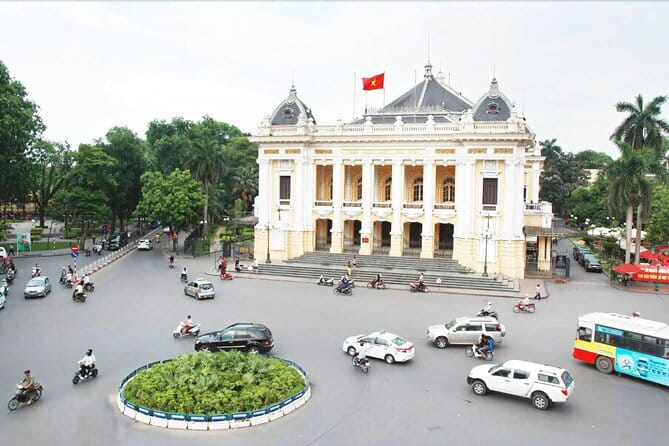
After the market, you also get the chance to see the Hanoi Opera House (Opéra de Hanoï) from the outside. It was erected by the French colonial administration between 1901 and 1911, and it’s modeled on Palais Garnier in Paris. The architectural style is described as Neoclassicism, so you’re seeing a direct link between French design influence and Hanoi’s colonial-era landmarks.
One detail that makes this worth slowing down for: after the French left, the opera house was used for political events and street fighting during the fight for Hanoi. You’re basically looking at a building that has shifted roles depending on who held power.
Long Bien Bridge and Train Street: two ways Hanoi shows its past and present
The tour includes Long Bien Bridge, built after the French conquered Hanoi. The description is a little date-heavy, but the big point is clear: the bridge was constructed in the late 1800s, completed in the early 1900s, and it’s a symbol of resilience. It was bombed during the American War and then repaired quickly each time.
Today, the bridge is still used for practical daily life. You’ll see that it’s used by trains, mopeds, and pedestrians. The tour description also notes reconstruction is underway to restore the original appearance, and it’s colorfully illuminated at night. Even during daylight, it’s one of those places where the city feels built rather than staged.
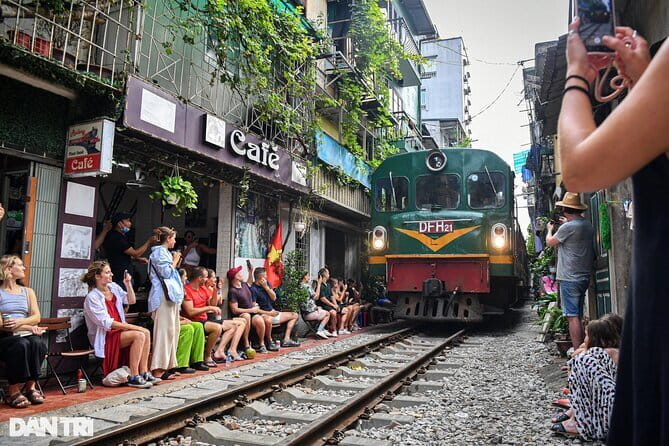
Then comes the unforgettable part: Hanoi Train Street. This narrow alley in the Old Quarter has actual railway lines running through it. People come for the photos, sure—but the tour description also emphasizes that it’s a residential area. Many locals have turned parts of houses into small cafes, so you might spot places where visitors sip drinks such as egg coffee while waiting for trains.
If you’re thinking of timing your shots, this is the key idea: don’t treat it like a theme park. It’s a working neighborhood with trains passing through, so keep a safe distance and follow any guidance your guide gives you. The best experience comes from watching the flow—shops, people, and then the train cutting through the frame.
Price and logistics: what $31.52 buys you in reality

The headline price is $31.52 per person, and the value is mostly in the package. You’re getting:
- English-speaking tour guide
- Transportation
- Pick up and drop off at your hotel
- Entrance tickets included for several stops
You’re also getting private service. That can matter a lot if you want to pause for a question, skip or spend a little longer in a specific place, or ask for local advice on what to eat and what to notice.
You can customize if you want, and the tour offers group discounts and a mobile ticket. Those aren’t glamorous, but they reduce friction. In a city where walking routes can be confusing, fewer logistics headaches means more time experiencing.
What’s not included is also part of the math: tips are not included, and Grab Car is mentioned as an option for walking scenarios (meaning you’re not forced into rides every moment). If you prefer to keep your spending predictable, plan to budget a bit for gratuity.
Guide quality is the secret sauce here
This tour is only as good as the person talking through it. And the strongest pattern in the provided feedback is about guides who explain clearly and move at a human pace.
Specific names show up as standouts: Le, James, and Minh. They’re praised for being well informed, friendly, and for giving a fresh take beyond the usual checklist. One key theme is that you don’t just get dates and facts—you get context that makes the streets make sense.
If you book this, I’d treat the guide like a resource. Ask what you should watch for at each stop: where the legends show up in the architecture, what to notice at Thang Long, or why Dong Xuan Market feels like more than a souvenir stop. The tour format supports that.
Who this tour fits best (and who might want a different pace)
This half-day works especially well for:
- First-time visitors who want major sights plus local streets
- People who hate wasting time figuring out transport
- Travelers who want history explained in a way that connects to today
It may be less ideal if:
- You’re trying to see everything in deep detail like a full-day museum plan
- You’re visiting during the Mausoleum closure window (June 10 to August 12) or on a day when it’s closed (Monday and Friday)
- You’re sensitive to tight security and dress requirements at government sites
Should you book this Hanoi half-day private tour?
I’d book it if you want a strong overview of Hanoi in one shot—and you care about understanding the city, not just collecting photos. The combination of pagodas, Thang Long, Old Quarter, Long Bien Bridge, and Train Street is unusual in a good way. And the private format, with hotel pickup and included tickets for key stops, keeps it efficient.
Before you commit, check two things:
- Your dates and day of week for the Ho Chi Minh Mausoleum hours and closures.
- Your comfort with street scenes and walking time once you’re in the Old Quarter and market area.
If those fit your travel style, this is a smart use of limited time—equal parts legend, government history, and everyday Hanoi life.
FAQ
What is the duration of the Hanoi City Sightseeing Private Half-Day Tour?
The tour is about 4 hours (approx.).
How much does the tour cost?
The price is $31.52 per person.
Is this tour private or shared?
It’s a private tour/activity, with only your group participating.
Does the tour include hotel pickup and drop-off?
Yes. Pick up and drop off at your hotel are included, and pickup is offered.
Are entrance tickets included?
Yes. Ticket entrance is included, and the tour includes admission tickets for stops such as One Pillar Pagoda, Chua Tran Quoc, Ho Chi Minh Mausoleum, Imperial Citadel of Thang Long, while some stops are listed as free.
Which major sights are included in the route?
The tour includes places such as One Pillar Pagoda, Chua Tran Quoc, Ho Chi Minh Mausoleum, Long Bien Bridge, Hanoi Opera House (outside only), Dong Xuan Market, Hanoi Train Street, Imperial Citadel of Thang Long, and the Old Quarter with a walk around Hoan Kiem Lake.
What are the Ho Chi Minh Mausoleum opening hours and closures?
It is open 8:00 AM–11:30 AM and closes on Monday and Friday weekly. It is also closed June 10 to August 12 each year for maintenance.
What should I wear for the mausoleum?
The tour notes strict security and respectful dress requirements: no shorts, sleeveless shirts, or miniskirts.
Does Train Street require an admission ticket?
No. Hanoi Train Street is listed as Admission Ticket Free.
Is free cancellation available?
Yes. Free cancellation is offered, and you can cancel up to 24 hours in advance for a full refund.
You Might Also Enjoy


More City Tours in Hanoi



More Tours in Hanoi
- Ninh Binh Full-Day Tour from Hanoi to Hoa Lu, Tam Coc & Mua Cave Via Boat & Bike
★ 5.0 · 4,384 reviews