REVIEW · FULL-DAY
Full-day Guided Meditation Experience in Ha Noi
Book on Viator →Operated by The Bodhi Journey · Bookable on Viator
A quiet pagoda day for your mind. This full-day guided meditation in Hanoi pairs Buddhist lessons with time in the main hall and practical guided meditation you can actually use afterward. It’s an 8-hour reset built for calm, reflection, and compassion.
I like how approachable the teaching feels. With guides such as Naya and Hung, the day runs in a relaxed rhythm, and you can ask plenty of questions without feeling rushed.
One catch: lunch and dinner aren’t included, so plan your meals for an about-8-hour experience.
In This Review
- Key things to know before you go
- A pagoda day that makes mindfulness feel grounded
- Starting point and schedule: an 8-hour morning reset
- The pagoda orientation: history, architecture, and getting your bearings fast
- Buddha’s life and doctrines: why the teaching portion matters
- Guided meditation: instruction first, quiet second
- Compassion rituals: training the heart, not just the mind
- Qigong movements: body support for mental calm
- Extra hands-on moments you might encounter
- Food reality check: plan for no lunch or dinner
- Price and value: $85 for guidance, not just atmosphere
- Who this experience fits best (and who may want something else)
- Guides and communication: why the teacher makes or breaks it
- Should you book this Hanoi guided meditation day?
- FAQ
- How long is the Hanoi guided meditation experience?
- What does it cost?
- Where do I meet the guide?
- What time does it start?
- What’s included in the price?
- What’s not included?
- Do I need to print anything?
- Is the group very large?
- Is free cancellation available?
- Is the experience open to most travelers?
Key things to know before you go
- Pagoda walk first: you start with an orientation around history and architecture, not straight into meditation
- Learn the Buddha’s life and doctrines: the day connects meditation to lived Buddhist ideas about how to be a better person
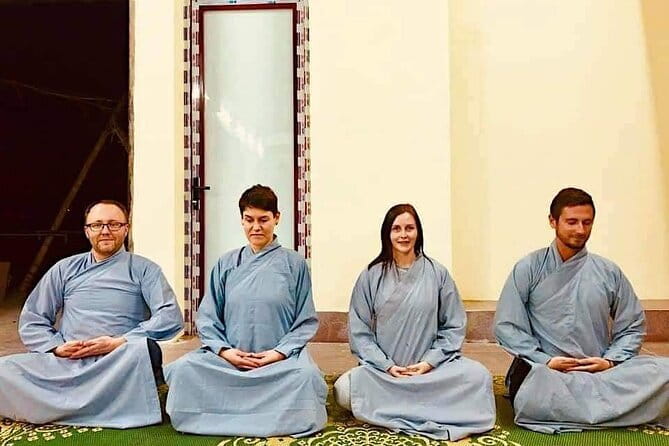
- Guided practice, then real sitting time: instruction comes first, and you get to practice with support
- Compassion tools, not just calm breathing: the schedule includes loving-kindness and compassion rituals
- Body practice included: qigong movements are part of the day’s health-and-mind connection
- Smart group size for attention: limited to up to 100 people, and the vibe is set up to stay personal
A pagoda day that makes mindfulness feel grounded
Hanoi has plenty of ways to keep busy. This experience goes the other direction. You spend the day at a Buddhist pagoda, where the meditation isn’t sold as a trendy stress hack. It’s framed as part of a longer way of living—slower, kinder, and more aware of how your mind works.
What helps is that the day is staged: you don’t jump into silence immediately. You get a guided orientation first, then you move into teachings, then into meditation, and only then into hands-on compassion and body practices like qigong. That order matters. It gives your brain a reason to slow down, instead of asking you to do it instantly.
The result is a full mental “pause button.” If you’ve been carrying stress, or you’re at a turning point in life, this format can feel like a safe place to land.
You can also read our reviews of more guided tours in Hanoi


Starting point and schedule: an 8-hour morning reset
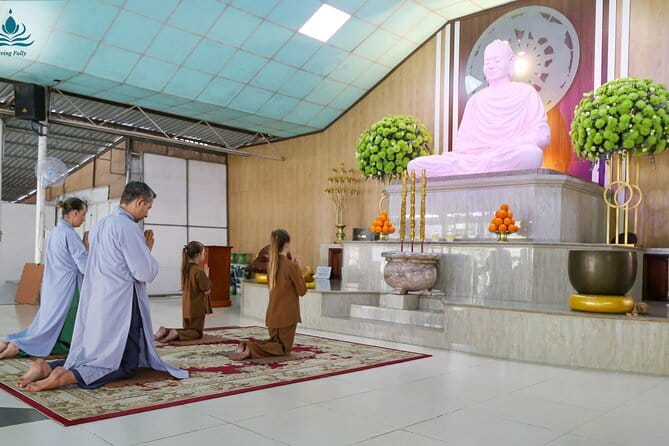
The day starts at 8:00 am at Ngõ 68 Phố Quan Nhân, Ng. 68 P. Quan Nhân, Trung Hoà, Cầu Giấy, Hà Nội, Vietnam. The activity ends back at the meeting point.
That timing is helpful. An early start often means you’ll beat some of the city’s later-day energy, and your mind is fresher for sitting practice. It also means you should treat the day as a true commitment, not a quick activity you’ll fit between plans.
Also note: the experience is capped at a maximum of 100 travelers. That doesn’t guarantee a small group, but it keeps things from becoming an enormous crowd event. And based on the teaching style described by past participants, the day is set up so you can still talk with the guide and ask questions.
The pagoda orientation: history, architecture, and getting your bearings fast
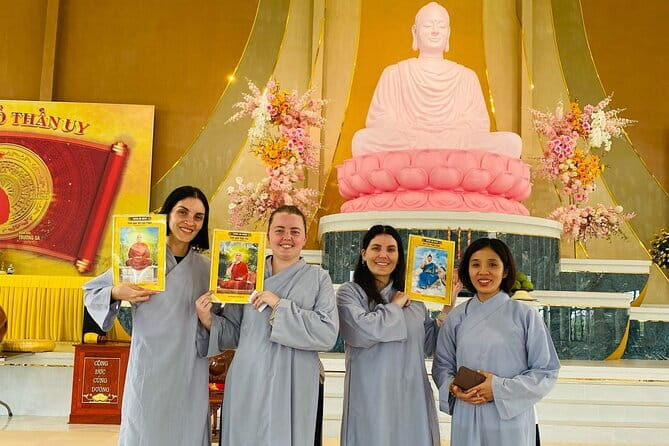
Before meditation, your guide meets you at the pagoda and runs a simple flow for the day. Then you walk around the grounds to learn about the pagoda’s history and architecture. This isn’t filler. It helps you read the space with respect, instead of just taking photos while your mind is elsewhere.
In my view, this part is what makes the meditation feel “real.” When you understand what you’re standing in—what the buildings are, what the main spaces mean—you stop treating the setting like a backdrop. You become a participant in the experience.
After the walk, you head to the main hall, where the day’s teachings take center stage. If you’ve ever tried meditation and felt lost on where to look, what to focus on, or what the practice is for, this orientation reduces that awkward uncertainty.
Buddha’s life and doctrines: why the teaching portion matters
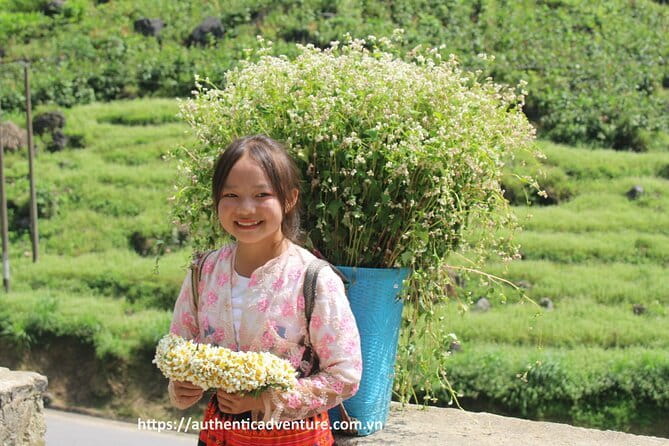
In the main hall, you learn about the life of Buddha and the profound Buddhist doctrines you can apply in daily life. The emphasis isn’t on memorizing details. It’s on what these ideas mean for how you live: how you think, how you respond, and how you treat others.
A lot of meditation experiences stop at technique—breathing, counting, maybe a short mantra. This day links meditation to values like gratitude, loving-kindness, and compassion. That connection is important because it changes the tone of practice. Sitting becomes less about emptying your head and more about training your attention while also shaping your character.
If you’re spiritually curious but not sure where to start, this structure can help you build a foundation. And if you’re searching for meaning beyond comfort and routines, this is the kind of day that turns search into something more grounded.
Guided meditation: instruction first, quiet second
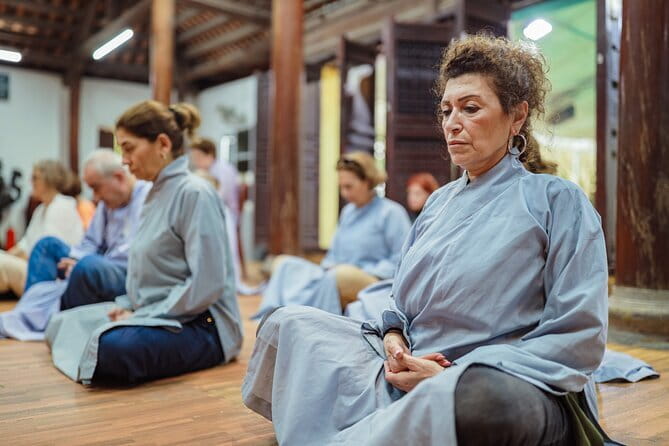
You get the method of meditation based on Buddha’s teachings, then you have time to practice. The guide leads you through what to do—how to focus your mind in tranquility—and supports you while you settle.
This is the part I’d call the heart of the value. Meditation is simple on paper, but tricky in real life. You might sit down, do your best, and still wonder if you’re doing it right. Having an accredited guide explain the method and then give you a chance to practice with that guidance can make a real difference, especially for beginners.
One practical benefit: when the guide speaks clearly and answers questions thoughtfully, you don’t waste your momentum trying to figure things out on your own. Past participants specifically praised guides like Naya, who was described as friendly, patient, and able to make the information accessible, including speaking great English. That kind of communication matters in a subject this personal and mental.
You can also read our reviews of more tours and experiences in Hanoi
- Ninh Binh Full-Day Tour from Hanoi to Hoa Lu, Tam Coc & Mua Cave Via Boat & Bike
★ 5.0 · 4,384 reviews






Compassion rituals: training the heart, not just the mind

The day doesn’t treat compassion as an abstract concept. It includes rituals to cultivate loving-kindness and compassion. You also practice in ways designed to strengthen your ability to care, not just to calm down.
From a travel perspective, this is where the experience feels different from a standard mindfulness class. Meditation is attention training, yes—but loving-kindness is mindset training. It pushes you to think about others while you’re practicing, even if it’s in a small, guided way.
If you’ve been feeling tense, stuck, or emotionally worn out, this portion can be surprisingly stabilizing. It’s easy to think kindness is hard when you’re overwhelmed. These rituals make it more systematic, less like a personality change you have to force.
Qigong movements: body support for mental calm

After the teachings and meditation, you also do qigong movements. The goal is to enhance health—so the day works on body and mind together.
Qigong is great for travelers because it meets you where you are. Even if you’re not flexible or you’ve never practiced anything like it, gentle movement can help you release stiffness and re-center your breathing. It also gives you a break from sitting, so you’re not spending the entire day in one position.
If you’ve got an achy back from Hanoi walking (or just life in general), this kind of body practice can make the meditation feel less fragile. You’re building calm with more than one tool.
Extra hands-on moments you might encounter

Beyond the core teaching-and-meditation rhythm, the day can include additional activities that participants described as fun and memorable—like a fish-releasing moment and other structured practices tied to the theme of mindfulness and compassion.
I can’t promise the exact mix for every day, but the pattern is clear: this isn’t a single lecture and then free time. It’s a guided flow with different formats, so you stay engaged and don’t lose focus halfway through.
Food reality check: plan for no lunch or dinner
Lunch and dinner are not included. That’s the one logistical friction point that can affect how enjoyable the day feels.
Because the day runs about 8 hours, I recommend you plan food in one of these simple ways:
- eat breakfast normally and bring water
- consider snacks if you get hungry easily (only if that fits the pagoda setting and guidance from your host)
- figure out where you’ll go afterward so you’re not making last-minute decisions
Also, note the day includes meditation and gentle movement. If you wait too long to eat, you may end up distracted by hunger while trying to focus. You want your attention to be on the practice, not on your stomach.
Price and value: $85 for guidance, not just atmosphere
The price is $85.00 per person for an experience that lasts about 8 hours. It includes parking fees and a licensed guide, and you get a mobile ticket.
Here’s how I think about value for this kind of tour:
- You’re paying for more than a location. You’re paying for teaching time and guided practice.
- You’re not just getting a walking tour of a pagoda. You’re getting instruction in Buddha’s life and doctrines plus structured meditation.
- You also get body-based practice (qigong) and compassion rituals.
If you’ve tried meditation before and found it hard to tell whether you were doing it correctly, a guided format like this can justify the cost quickly. If you’re an absolute pro meditator who already knows the method used here, the value will depend on how much new understanding you gain from the teaching and the compassionate framework.
Either way, it’s not a bargain-price activity. It’s a focused day with real guidance, which is why the rating is so strong.
Who this experience fits best (and who may want something else)
This day is especially suitable if you:
- want a calm, structured introduction to Buddhist teachings and meditation
- enjoy question-and-answer learning rather than passive listening
- value kindness and compassion as part of a mental practice, not just relaxation
- are traveling with a beginner mindset and want a guide-led method
You might want a different option if you:
- need a fully self-guided, no-structure experience
- strongly prefer days with meals included
- dislike religious or spiritual frameworks, even if the tone is peaceful and respectful
That said, the experience is described as something most travelers can participate in, which helps. The pace sounds beginner-friendly, and the day is designed around learning and practicing, not performing.
Guides and communication: why the teacher makes or breaks it
A meditation day lives or dies on the guide’s tone. Here, that matters.
Past experiences highlighted guides like Hung, described as kind, patient, and welcoming, and Hieu, described as an excellent teacher for understanding Buddhist basics and learning how to meditate according to their belief system. Another guide, Naya, was praised for speaking great English and keeping a relaxed feel while answering lots of questions.
So if your English is comfortable but you still want clear explanation, this looks like a good match. And if you’re the type who asks many questions, the format is set up to handle that.
Should you book this Hanoi guided meditation day?
Book it if you want a peaceful, respectful day that connects meditation to Buddhist teachings on how to live. The structure—pagoda orientation, teachings in the main hall, guided meditation, compassion rituals, and qigong—makes it easier to settle your mind and feel like the day has a purpose.
Skip it or compare alternatives if you really need meals included, or if you don’t want any spiritual framing at all. Also, make peace with the idea that an 8-hour day is longer than a half-day class. Plan your food and energy, and the experience will feel smoother.
If you’re looking for something beyond sightseeing in Hanoi—something quieter, kinder, and genuinely practical—this is a strong choice.
FAQ
How long is the Hanoi guided meditation experience?
It runs for about 8 hours.
What does it cost?
The price is $85.00 per person.
Where do I meet the guide?
The start meeting point is Ngõ 68 Phố Quan Nhân, Ng. 68 P. Quan Nhân, Trung Hoà, Cầu Giấy, Hà Nội, Vietnam. The tour ends back at the same meeting point.
What time does it start?
The start time is 8:00 am.
What’s included in the price?
Included items are parking fees and a licensed guide.
What’s not included?
Lunch and dinner are not included.
Do I need to print anything?
No. You’ll use a mobile ticket.
Is the group very large?
The experience has a maximum of 100 travelers.
Is free cancellation available?
Yes, free cancellation is available if you cancel up to 24 hours in advance of the experience start time.
Is the experience open to most travelers?
Yes, it’s described as suitable for most travelers.
You Might Also Enjoy



More Full-Day in Hanoi
- Ninh Binh Full-Day Tour from Hanoi to Hoa Lu, Tam Coc & Mua Cave Via Boat & Bike
★ 5.0 · 4,384 reviews