REVIEW · CAT BA
Deep Water Solo
Book on Viator →Operated by Langur's Adventures · Bookable on Viator
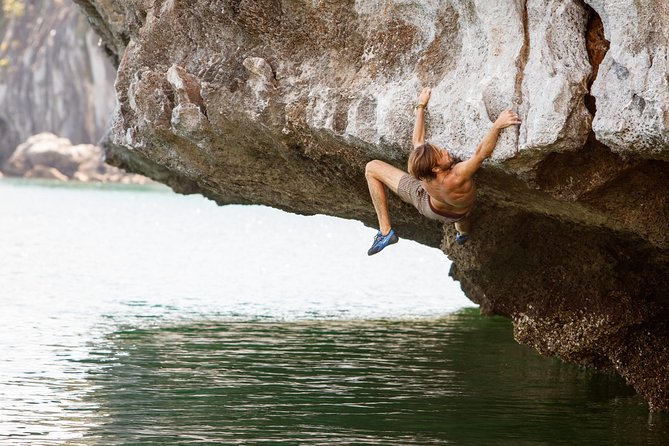
Climb, then jump, in the same breath. Deep water solo in Lan Ha Bay is one of the most original ways to see Cat Ba’s limestone coasts, because the rocks start the fun and the water finishes it. You’re on a basket boat, you climb with help from your guide, and when you’re done you drop into the bay’s bright blue water.
What I like most is the hands-on guidance. In practice, the guides focus on making the holds and the next move make sense, whether you’re nervous like a first-timer or trying harder lines. A second big win: the variety of routes and difficulty levels, so you can push your comfort zone without being forced into something way above you.
One thing to plan carefully is timing. This experience depends on the tide, so your half-day schedule (morning or afternoon) or full-day plan can shift, and you should book with a flexible mindset.
In This Review
- Key Highlights You Should Know Before You Go
- Deep Water Solo in Lan Ha Bay: Why This Place Works
- Basket Boat Start From Cat Ba: Getting to the Climbing
- Half-Day Morning or Afternoon vs Full Day: How Tides Drive the Plan
- Guided Climbing Routes: The Safety and Confidence Factor
- What Happens on the Rocks: Climb, Then Jump Into Blue Water
- Lunch Included: A Real Break Between Attempts
- Small Group Size (Max 8): Why Your Trip Feels Personal
- Price and Value: Is $58 a Good Deal?
- Who Should Book This Deep Water Solo Tour
- Should You Book Deep Water Solo in Cat Ba?
- FAQ
- FAQ
- How long does the Deep Water Solo tour take?
- How much does the tour cost?
- Is there a half-day option or only a full day?
- Where is the meeting point?
- What’s included in the experience?
- Do I need prior climbing experience?
- What happens if the weather is poor or I need to cancel?
Key Highlights You Should Know Before You Go
- Small group feel (max 8 travelers): easier pacing and more personal coaching.
- Tide-driven climbing windows: half-day or all-day depends on water level.
- Guides mark the moves: laser-pointer-style pointing and route guidance help you read the rock fast.
- Climbing shoes and route info included: you’re not showing up totally unprepared.
- Lunch on the water: you get a built-in break rather than scrambling for food.
- Jump after each climb: it’s part of the experience, so be ready for the water drop.
Deep Water Solo in Lan Ha Bay: Why This Place Works
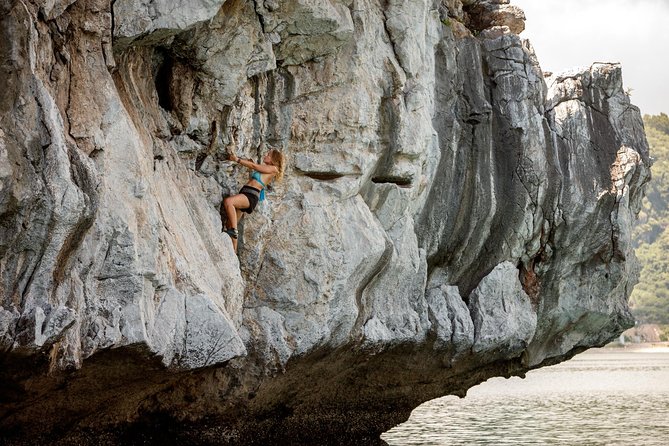
Lan Ha Bay, just off Cat Ba Island, is famous for extreme tidal changes. That matters because deep water solo is all about one key equation: the right amount of water beneath you, plus enough rock to climb with confidence. When the tide is in the right spot, you get that sweet combo of vertical limestone lines over real water, not a muddy guess.
The cliffs here also feel more immediate than the usual “look, then walk away” sightseeing. You’re not just standing on a viewpoint. You’re putting your hands on the rock, following a route, and learning the cliff’s logic as you go. And then you get the quick release of a jump straight into the bay.
If you’re the type who likes active travel with a clear goal, this is a great match. You’ll spend the hours doing, not drifting.
You can also read our reviews of more tours and experiences in Cat Ba.


Basket Boat Start From Cat Ba: Getting to the Climbing
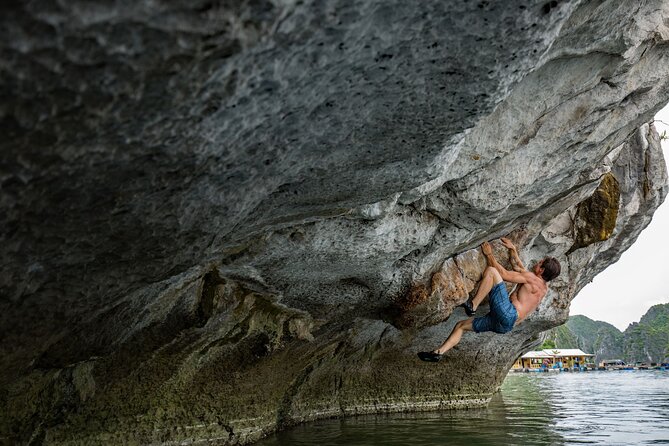
You meet back at Kem Tràng Tiền, 224 Đường 1/4, TT. Cát Bà, Cát Hải, Hải Phòng, Vietnam, and you return there at the end. That simple loop is a relief when you’re on a tight Cat Ba schedule.
Once you’re on the boat, you’re in the “get ready” mode. You’ll have your gear sorted (including climbing shoes), and your guides will set expectations for how the climbing flows. A basket boat isn’t about comfort; it’s about access. You’re going where the tides and cliffs allow the most fun.
Because your time on the rock is tied to tide level, the best advice is to treat the schedule like a living plan. Show up on time, but expect the real timing to be based on the water.
Half-Day Morning or Afternoon vs Full Day: How Tides Drive the Plan
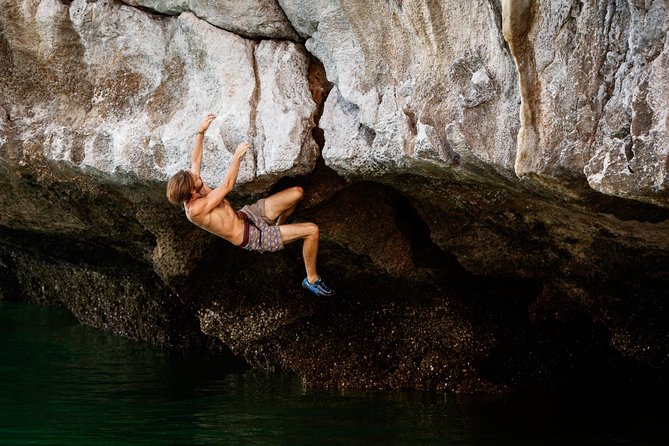
The tour can run as a half day in either the morning or afternoon, or as an all-day experience. The difference is basically tide windows. When conditions line up, you’ll likely get the climbing you came for with enough time for rests and jumps between routes.
A practical way to think about it:
- Half-day is best if you want one focused climbing block and don’t want your day eaten up.
- Full-day can be better if you like a longer rhythm: more attempts, more routes, more time in the water, and a steadier lunch break.
One review-style tip that’s worth taking seriously is this: check your tide timing before you book. You can’t control the ocean, but you can choose your best shot.
Guided Climbing Routes: The Safety and Confidence Factor
The biggest reason people love this experience isn’t only the cliff. It’s how the climbing is managed.
You’re guided through each step, and you get routes information ahead of time so you’re not guessing where to go. That helps you focus on the next move rather than on big-picture panic.
Guides also bring real technique. Some guides are serious climbers, with backgrounds reported as high-level grades (for example, one guide listed as 8a/V11). Even if you’re not chasing those grades, that matters because the guide knows how to teach: what to try first, what to avoid, and how to reframe a scary section into a doable sequence.
If you’re a beginner or you feel nervous, you’re in the right kind of environment. Several accounts highlight that the staff makes you feel secure and even uses playful encouragement when you need it. One guide described using a laser pen to point toward the next direction on the rock, which is a simple trick that makes a huge difference when you’re up close and your brain is trying to figure out how to stand on limestone.
What Happens on the Rocks: Climb, Then Jump Into Blue Water
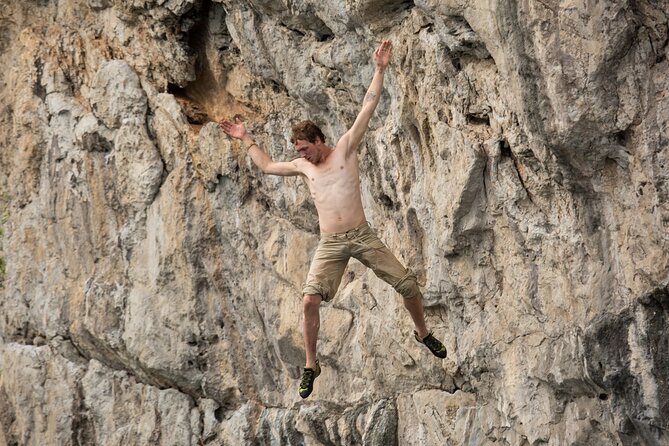
After you climb, the bay becomes part of the course. The trip includes a jump into the water after each climb, which is why it’s called deep water solo.
For most people, that jump is both thrilling and slightly surreal. You might feel fine on the route, then realize the landing is a straight drop. The good news is you’re not doing it alone. The guides keep the flow organized so you know when to move, when to rest, and when it’s your turn.
The route styles and difficulty levels are varied, so there’s room for:
- cautious attempts on easier problems,
- confidence-building moves as you get comfortable,
- and harder lines if you want to push.
One honest consideration: if you have zero climbing experience, you’ll still likely be able to try, but having some basic familiarity with climbing can make the experience easier to learn quickly. The guides can help, but deep water solo is its own skill set.

Lunch Included: A Real Break Between Attempts
You get lunch as part of the experience. That’s a big deal because climbing days can make you forget to eat until you’re wiped out.
Since lunch happens during the boat day rhythm, you don’t lose time searching for food in Cat Ba. It also helps keep your energy steady for more attempts and for the water jumps that come after each climb.
If you choose an all-day plan, it may also include extra time later in the day like kayaking. That depends on the day and the schedule that your operator sets, but longer formats can add an additional water activity after your climbing block.
Small Group Size (Max 8): Why Your Trip Feels Personal
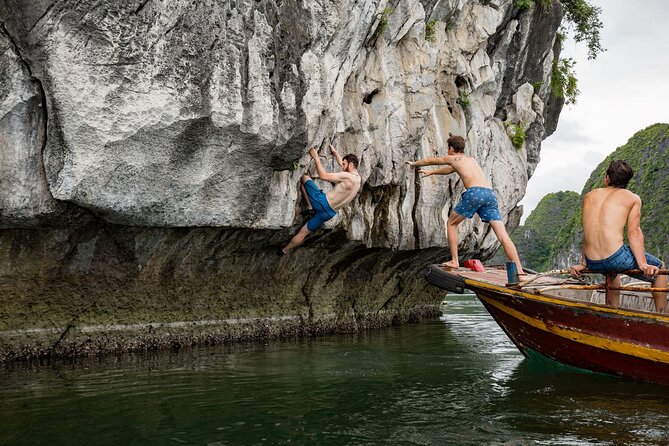
With a maximum of 8 travelers, you generally won’t get the “stand around while others go” feeling that can happen with larger groups. It also helps your guide actually remember what you’re working on.
In a sport like deep water solo, that attention matters. If you’re stuck, you want quick feedback on body position, hand choice, and how to keep your legs working. When the group is small, guidance can stay more immediate and less generic.
It’s also easier for nervous beginners, because the guide can pace the attempts and keep the energy supportive rather than rushed.
Price and Value: Is $58 a Good Deal?
At about $58, this is priced like an activity that’s meant to be accessible. You’re not just buying access to a view. You’re paying for:
- guided climbing,
- preparation such as climbing shoes and route information,
- basket boat access,
- and lunch.
That package is where the value lives. Many adventure tours charge separately for gear, guide time, and food, and the costs stack up. Here, the essentials are bundled.
The tradeoff is that the experience quality depends on conditions. This tour requires good weather, and if weather shuts things down you’ll have to move to another date or get your money back. You’re taking on some of the ocean-based uncertainty, but at this price point, that risk can feel reasonable.
Who Should Book This Deep Water Solo Tour
You’ll likely enjoy this if:
- you want a hands-on activity in Lan Ha Bay, not just photo stops,
- you like guided sports time where you learn as you go,
- you’re okay with a water jump as part of the deal,
- you want a small group setting.
It’s also a good match if you’re a mixed group of abilities. The route variety means you can pick problems that suit your level, and the guides can help you choose what to try.
I’d think twice if you’re extremely risk-averse about heights and sudden drops. The jump is part of the experience, and even with guidance, your comfort level needs to match the concept of deep water solo.
Should You Book Deep Water Solo in Cat Ba?
If you’re looking for the kind of activity that makes your Cat Ba trip feel specific and memorable, this is a strong pick. The best version of this day happens when you’re ready to follow the guide, try routes without overthinking, and accept the water jump as the finish to each climb.
My rule of thumb: if you can handle an active, tide-timed day, and you’re excited by climbing with coaching, book it. If your schedule is rigid or you hate unpredictable timing, you might prefer a different Cat Ba activity that isn’t so tide dependent.
FAQ
FAQ
How long does the Deep Water Solo tour take?
It lasts about 5 hours, depending on conditions and the tide window.
How much does the tour cost?
The price is listed as $58.
Is there a half-day option or only a full day?
You can do a half day in either the morning or afternoon, or an all-day option. The exact timing depends on the tide level.
Where is the meeting point?
You meet at Kem Tràng Tiền, 224 Đường 1/4, TT. Cát Bà, Cát Hải, Hải Phòng, Vietnam, and the tour ends back at the same meeting point.
What’s included in the experience?
The tour includes basket boat time, climbing shoes, information about climbing routes, lunch, and guidance from the tour’s instructors.
Do I need prior climbing experience?
Moderate physical fitness is required, and some guidance is provided for different difficulty levels. You may find it helps to have some climbing experience beforehand, but the trip is set up so beginners can still enjoy it with supportive coaching.
What happens if the weather is poor or I need to cancel?
The activity requires good weather. If it’s canceled due to poor weather, you’ll be offered another date or a full refund. You can cancel for a full refund up to 24 hours before the experience starts.