REVIEW · CRAFT VILLAGE TOURS
Colors of Incense village Quang Phu Cau
Book on Viator →Operated by Momentlives Photography tours · Bookable on Viator
Colorful incense meets a serious camera lesson. I love seeing the incense sticks being made up close, because you get more than one pretty courtyard shot. I also like the photographer escort who helps with angles and timing while translating so you can connect, not just photograph. One possible downside: it starts at 5:15 a.m., and the tour depends on good weather.
The drive out of Hanoi is part of the appeal. You leave early, roll into the village before the biggest waves, and then spend focused time watching the work unfold from raw materials to drying sticks in bright sun.
In This Review
- Key highlights you’ll feel the moment you arrive
- Quang Phu Cau: Why these incense sticks are so photogenic
- The 5:15 a.m. run from Hanoi (and why it helps your photos)
- Watching incense being made: bamboo, dyeing, drying, repeat
- How to get better photos without needing special gear
- The photographer escort: why the guidance really shows up in your images
- What this feels like on the ground
- A small practical note
- Value check: what $128 gets you (and what to watch for)
- Who should book this incense village photo tour
- Should you book Colors of Incense village Quang Phu Cau?
- FAQ
- How long is the Quang Phu Cau incense village tour?
- What time does the tour start?
- How far is Quang Phu Cau from Hanoi, and how do you get there?
- Is pickup included from Hanoi hotels?
- What does the tour include?
- Is this tour private?
- What if the weather is bad?
Key highlights you’ll feel the moment you arrive
- Early departure (5:15 a.m.) so you’re photographing before the day heats up and crowds build
- Step-by-step incense production you can follow, from bamboo to dyeing and drying
- A photographer guide who calls out angles and rhythm, even if you’re not a photographer
- 2-way private transfers from your Hanoi hotel, built to reduce stress and maximize shooting time
- Villager interaction that goes beyond taking photos from a distance
Quang Phu Cau: Why these incense sticks are so photogenic
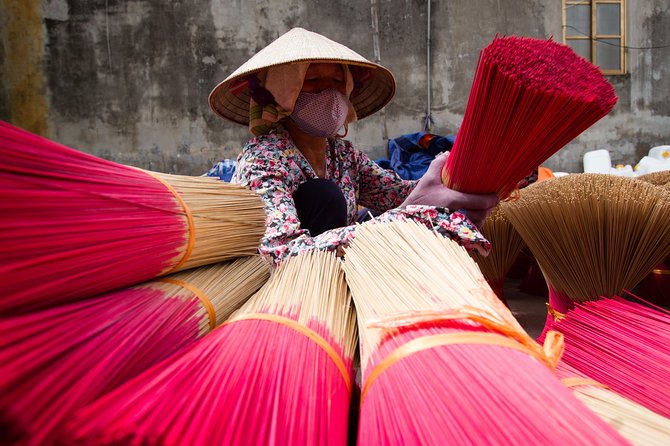
Quang Phu Cau incense village is known for making incense sticks that end up burning in family homes and in temples across Vietnam. That matters for photos, because you’re not just photographing craft for craft’s sake. You’re photographing the start of something that will eventually be used in daily rituals and ceremonies.
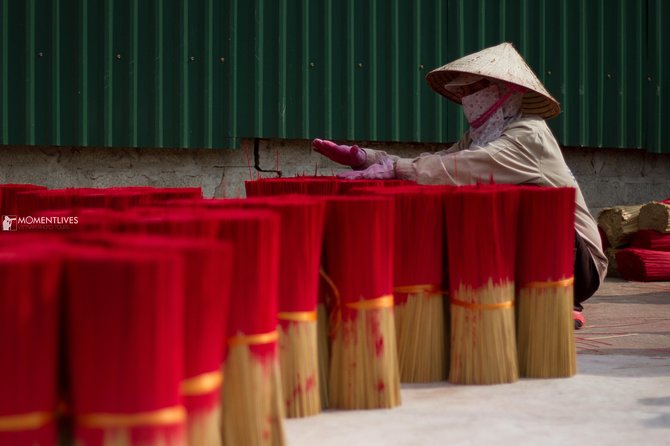
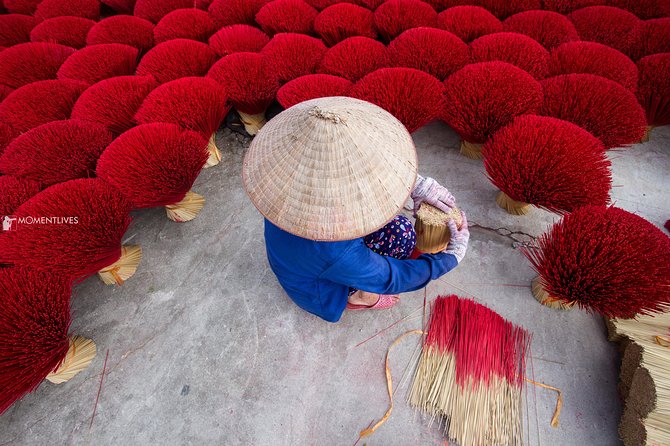
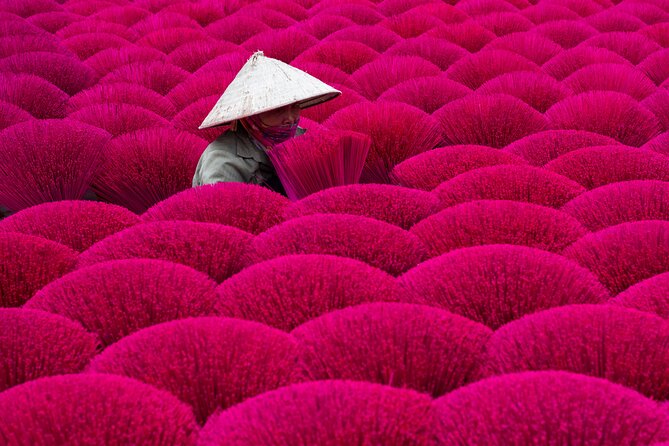
What makes this place visually addictive is the color stage. The process includes dyeing the sticks, then drying them in the sun. That means you can capture saturated blocks of color and repeating lines—perfect for clean compositions and strong backgrounds. If you like images with order (rows of sticks, working hands, motion in the air), this village delivers.
There’s also a bit of international attention attached to the craft. Photos of Quang Phu Cau incense-making have been published on major media and have drawn attention in photography contests. That’s not the reason to go—but it explains why your guide will nudge you toward camera angles that work.
And one more thing I appreciate: you’re not just watching “incense.” You’re watching a workflow. People cut, split, handle materials, apply the dye, and then set sticks out to dry. It’s the repetition and human rhythm that creates strong images.
You can also read our reviews of more tours and experiences in Hanoi.

The 5:15 a.m. run from Hanoi (and why it helps your photos)
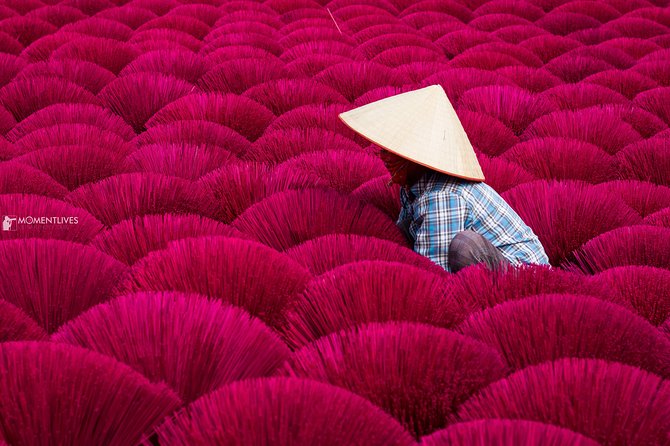
The tour start time is 5:15 a.m., and yes, your alarm clock will feel personally offended. But the early start is practical. You’re traveling about 1.5 hours from Hanoi, and reaching the village in the morning gives you softer light and calmer conditions for photography.
You also avoid some of the stress that can kill a good photo day. With the included 2-way private transfers from any Hanoi hotel, you’re not coordinating multiple forms of transport, or hunting for a pickup van at the last minute. The car is air-conditioned, and you get bottled water along the way.
This matters because photography at a craft village is timing-sensitive. If you arrive late, you can miss parts of the process—or you’ll be photographing over shoulders instead of around the action. The early schedule also fits a simple reality: the village work and the drying setup depend on the day’s conditions.
One important caution: good weather is required. If the day is too poor for viewing and photographing, the experience can be canceled and you’ll be offered a different date or a full refund. Plan to be flexible.
Watching incense being made: bamboo, dyeing, drying, repeat
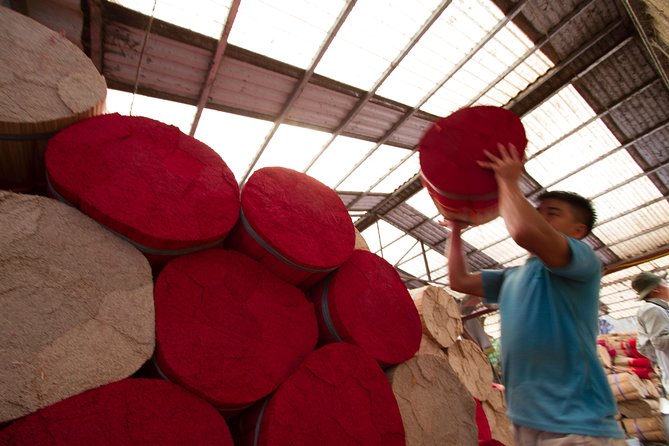
Once you get to Quang Phu Cau, your time is about careful observation. You’ll see the process in stages, including splitting/cutting, dyeing, and drying. The overall flow is easy to follow even if you don’t speak Vietnamese, because the escort photographer can translate and point out what’s happening.
Here’s what tends to make the experience feel real instead of staged:
- The work is hands-on. You’re seeing tools and material handling up close, not just a finished product behind glass.
- The sticks move through the day in sequences. That means there’s always another “moment” to capture, not one static scene.
- You get color plus repetition. Dye-coated sticks and drying rows create strong patterns that are friendly to both phone cameras and serious cameras.
I’d treat this like a guided photo walk with a craft lesson attached. Your guide isn’t only telling you where to stand; they’re helping you understand how the village work creates photo opportunities.
How to get better photos without needing special gear
You don’t need fancy equipment for this. What helps is how you look:
- Start by photographing the process in order: raw material → hands at work → dye stage → drying rows.
- Then switch to tighter angles: close details of hands, tools, and texture in dyed surfaces.
- Use the sun-drying setup as your “wide shot anchor.” It’s the scene that naturally gives structure to your album.
And if you’re someone who freezes when a camera comes out, don’t worry. The vibe here is practical, and your guide helps you feel confident about what angle to try next.
The photographer escort: why the guidance really shows up in your images
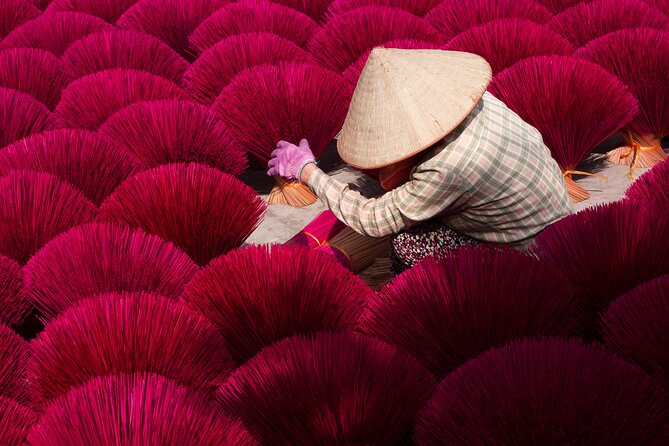
The biggest strength of this tour is the escort photographer’s coaching. This isn’t generic “take a picture of that” advice. The guide helps with best angles and the rhythm of the village work, so you’re shooting when something meaningful is happening.
In the experience’s past tours, guides like James and Mike have been highlighted for exactly this: clear shooting guidance that makes a difference quickly. They also help with translation, which is huge. When you can ask questions or chat briefly, you start photographing people as people, not just subjects.
What this feels like on the ground
Expect your guide to:
- Suggest angles that match the scene’s geometry (lines of sticks, hands at work, drying arrangements).
- Encourage you to move your position as the work changes, not just hold one spot.
- Translate when needed, so you can communicate with villagers instead of acting like you’re invisible.
This is also why the tour works even if you’re not a photographer. You’re not being tested. You’re being guided. That’s a different kind of value than a typical sightseeing tour where your main job is to show up and hope the light is good.
A small practical note
Because it’s early and you’ll be outside during parts of the process, come prepared for light, posture changes, and quick movement. You’ll likely spend time adjusting stance to find a better angle over the repeating patterns of sticks.
Value check: what $128 gets you (and what to watch for)
At $128 per person for roughly 6 hours, this tour can be a good deal if you care about three things: logistics, guidance, and access to the craft process.
Here’s what you actually get:
- Air-conditioned vehicle
- Escorted photographer
- Entrance fees
- Bottled water
- 2-way private transfers from any Hanoi hotel
That bundle matters because getting to Quang Phu Cau isn’t the hard part—planning the timing and having a guide inside the village is. The private transfers reduce friction, and the photographer escort boosts your results if you want more than “I was there” photos.
What’s not included is also clearly stated: insurance and airport transfer. So if you’re building a full itinerary around Hanoi and onward travel, make sure you handle those separately.
One more sign that it’s popular: on average it gets booked about 58 days in advance. If you have firm dates, I’d reserve earlier rather than hoping.
Who should book this incense village photo tour
This is a strong fit if:
- You want colorful photos of incense sticks drying in sunlight, not just a quick stop-and-go market moment
- You like craft processes and want to see the work in stages
- You appreciate a guide who can help you photograph with intention, even if you’re starting from zero
- You want smooth Hanoi logistics with private transfers and a focused day
It’s less ideal if:
- You hate early mornings and would rather travel at a calmer hour
- You’re unwilling to be flexible if the day is canceled due to weather
Because it’s a private tour/activity with only your group, it’s also a good option if you’re traveling with someone you want to share the day with without joining a larger crowd.
Should you book Colors of Incense village Quang Phu Cau?
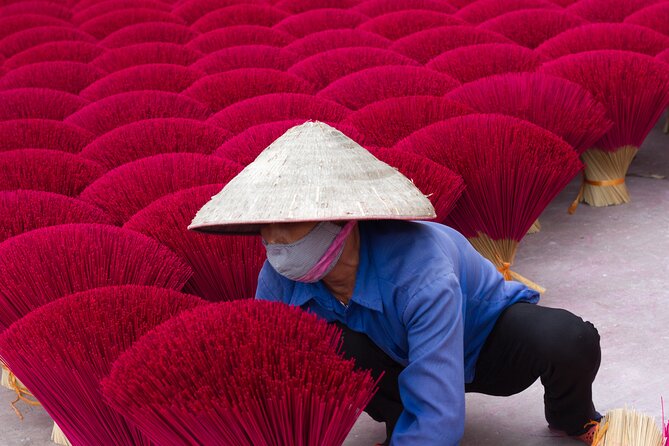
If your goal is photos with a real process behind them—color stages, hands-on craft work, and village life—this is easy to recommend. The combination of step-by-step incense-making visuals plus a guide who understands angles and timing is the real reason it feels worthwhile.
I’d book it if you can handle a 5:15 a.m. start and you’re traveling on a day where weather is likely to cooperate. If that sounds doable, you’re set up for a morning that’s both visually rewarding and genuinely different from the usual Hanoi sightseeing rhythm.
FAQ
How long is the Quang Phu Cau incense village tour?
It runs for about 6 hours.
What time does the tour start?
The start time is 5:15 am.
How far is Quang Phu Cau from Hanoi, and how do you get there?
It’s about a 1.5-hour drive from Hanoi, with an air-conditioned vehicle provided.
Is pickup included from Hanoi hotels?
Yes. The tour includes 2-way private transfers from any hotel in Hanoi.
What does the tour include?
It includes air-conditioned vehicle, escorted photographer, entrance fees, and bottled water.
Is this tour private?
Yes. It’s listed as a private tour/activity, meaning only your group participates.
What if the weather is bad?
The experience requires good weather. If canceled due to poor weather, you’ll be offered a different date or a full refund.