REVIEW · CAT BA ISLAND TOURS
Cat Ba: Advanced Rock Climbing & Cliff Jumping Boat Tour
Book on GetYourGuide →Operated by Chestnut Travel · Bookable on GetYourGuide
One jump changes everything. This Cat Ba adventure turns deep water soloing into a full day on Lan Ha Bay—limestone climbing with big views, then cliff jumps straight into deep water. I love how the guides start you on an easy low climb so you can build confidence fast, and I love that you can choose your effort level, including resting or swimming from the boat. The main catch: it’s heavily weather and tide dependent, so the day’s timing can shift.
You’ll climb as part of a small group (limited to 8), with English-speaking guides and a captain/crew running the boats. Since the plan is built around moving from wall to wall, you get plenty of “rock time” without it turning into one long waiting game.
In This Review
- Key highlights at a glance
- Why Cat Ba limestone suits advanced deep water soloing
- Your 6.5-hour rhythm: boats, two walls, and timed climbing
- The no-rope system: how you solo safely (and what that still means)
- Climbing grades and what “progressive options” means in real life
- Boat time on Lan Ha Bay: transfers, lunch afloat, and break periods
- What it costs and why $73 can feel like good value
- What to pack (so you’re not stuck wet and cold)
- Who this tour is for (and who should skip it)
- Should you book this Cat Ba advanced rock climbing & cliff jumping tour?
- FAQ
- How much does the Cat Ba deep water soloing & cliff jumping boat tour cost?
- How long is the tour?
- What time does the tour run?
- Is pickup included, and where does it happen?
- Are climbing shoes and chalk included?
- What should I bring besides what’s included?
- Do I need swimming ability and climbing experience?
- Is the climbing done with ropes?
- Is lunch included?
- What’s the cancellation and payment policy?
Key highlights at a glance
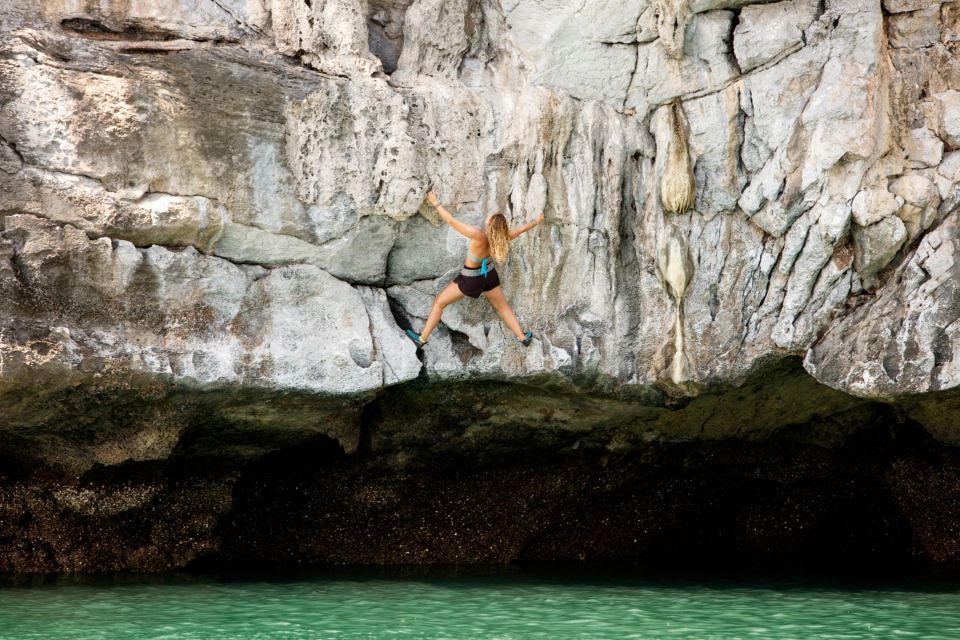
- Deep water soloing on limestone: climb directly above the water, then jump when you’re done or you hit the top
- A confidence-first start: easy, low options at the beginning with progressively harder choices
- Two main climbing areas: swap walls mid-day so you’re not repeating the same moves
- Boat-based breaks: sit back, take in Lan Ha Bay, or jump in for a swim between climbs
- Hands-on guidance: route advice and safety instruction before you’re left to solo your way up
- All the core gear included: climbing shoes and chalk, plus lunch on board
Why Cat Ba limestone suits advanced deep water soloing
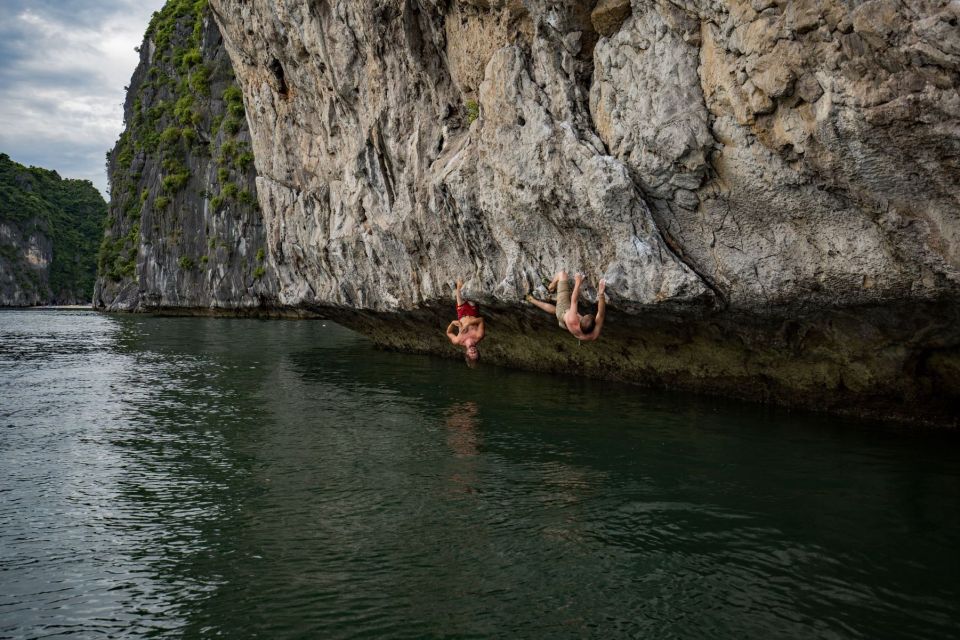
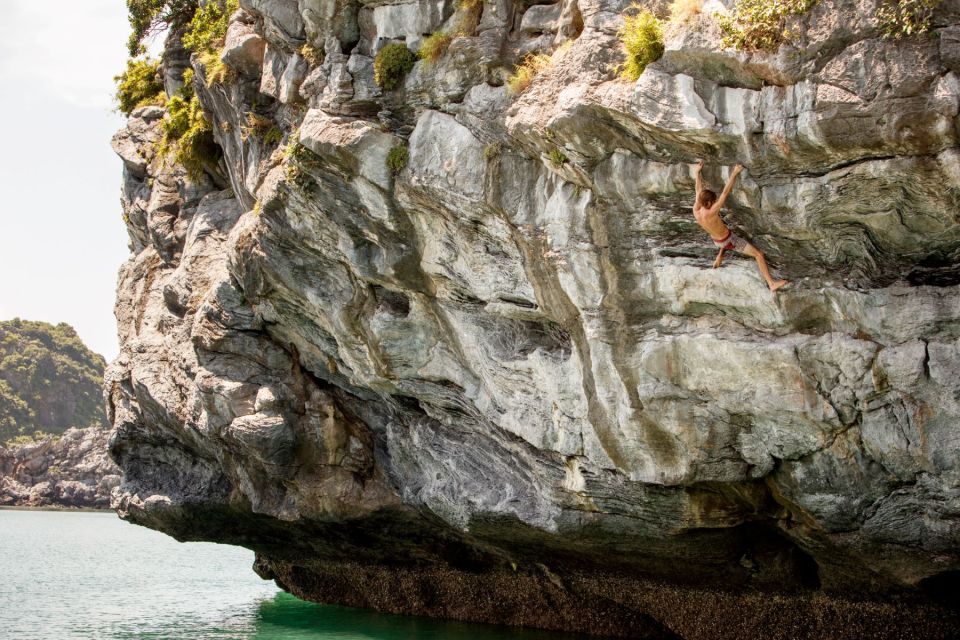
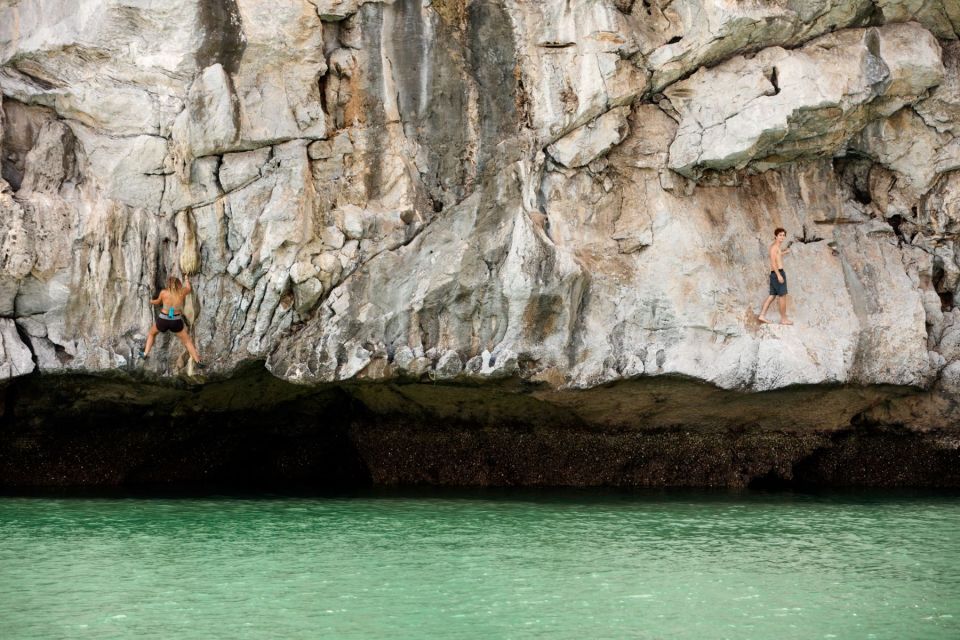
Cat Ba’s Lan Ha Bay has a very specific recipe for this kind of climbing: big limestone walls dropping into deep water. That pairing is exactly what deep water soloing is about. You’re not protecting yourself with ropes. The rock is your line, and the water is your landing zone.
What makes the setting feel special is the way tidal changes affect access and conditions. The tour is designed for the bay’s rhythm. When tides are right, the climbing areas work well and the angles make sense for safer entry and exit from the water.
The “advanced” label matters, but it doesn’t mean you get thrown straight onto the hardest line. In practice, the structure is staged. Guides start you on something low and manageable, then offer options that can step up in difficulty and height. One recent climber noted the grade range can run from about 4b up to 7c depending on where you climb, so you’re not stuck doing the same grade all day.
You do need to be realistic about the physical side: you’ll want moderate fitness and agility, plus comfort in the water. If that’s you, the setting turns into a rare combo of technical climbing decisions and instant consequences.
You can also read our reviews of more boat tours in Ha Long


Your 6.5-hour rhythm: boats, two walls, and timed climbing
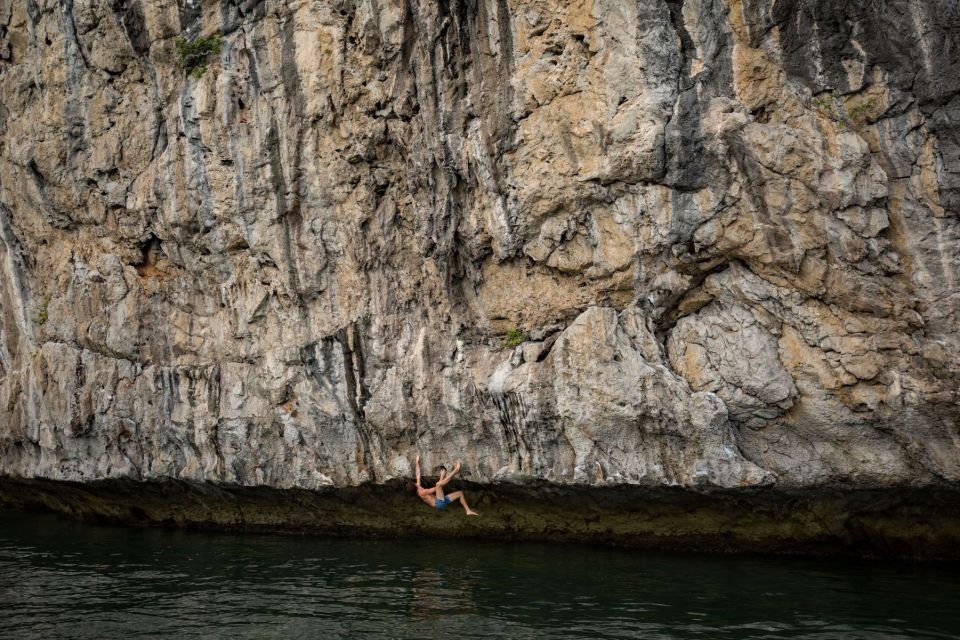
This tour is built around a 6.5-hour window, with start times that shift based on tides. Expect a day that flows in clear chapters: check-in, boat transport, a first wall, cruise time, a second wall, lunch, and then more climbing before you’re back at the office.
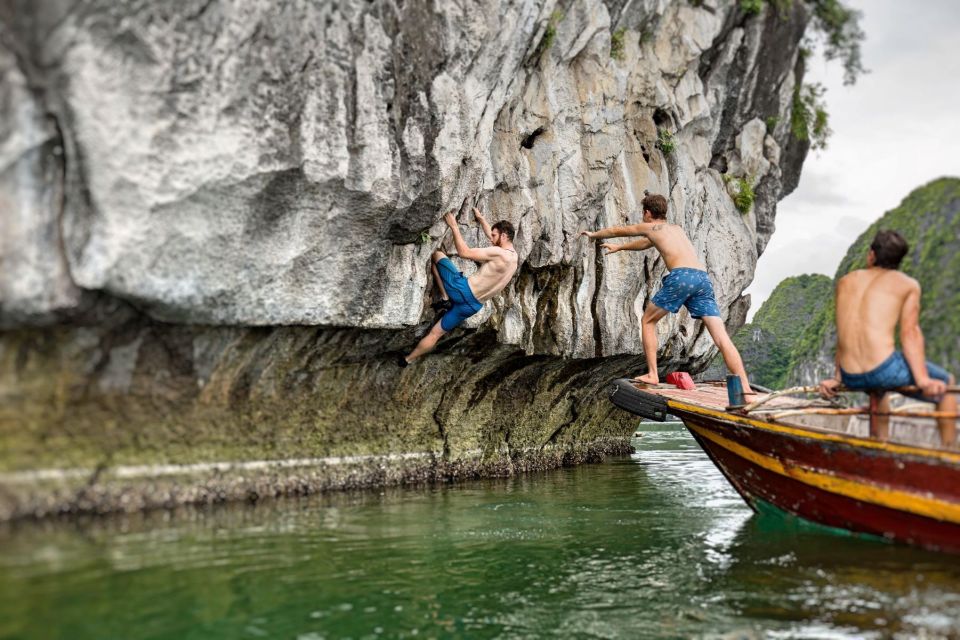
You begin by meeting at the operator’s office for check-in, then you head out by boat. At some point early in the day, you transfer to a smaller “basket” boat that gets you closer to the wall. That transfer is more than a logistical step. It’s what makes the climbing feel tight and focused instead of distant and slow.
At the first wall, the guides help you get oriented and settle into the deep water solo mindset. The goal is to get you moving on the rock quickly, with enough coaching that you can manage fear and decision-making. You’re given route advice, then you climb and choose when to stop—either when you feel done or when you reach the top.
After you finish at the first area, you cruise to the second wall. This is one of the nice parts of the format: you’re not stuck with only one set of holds or one view for the whole trip. A second wall also keeps energy from sagging, because your brain has to reset to new lines and new water entry points.
Lunch happens on the boat. That matters more than it sounds. It saves time, keeps you in tour mode, and gives you a warm break between climbing sessions.
By the end, you’re back on the main boat, and you return to the office. The day’s timing is consistent in spirit, even if the exact tide-driven schedule changes.
The no-rope system: how you solo safely (and what that still means)
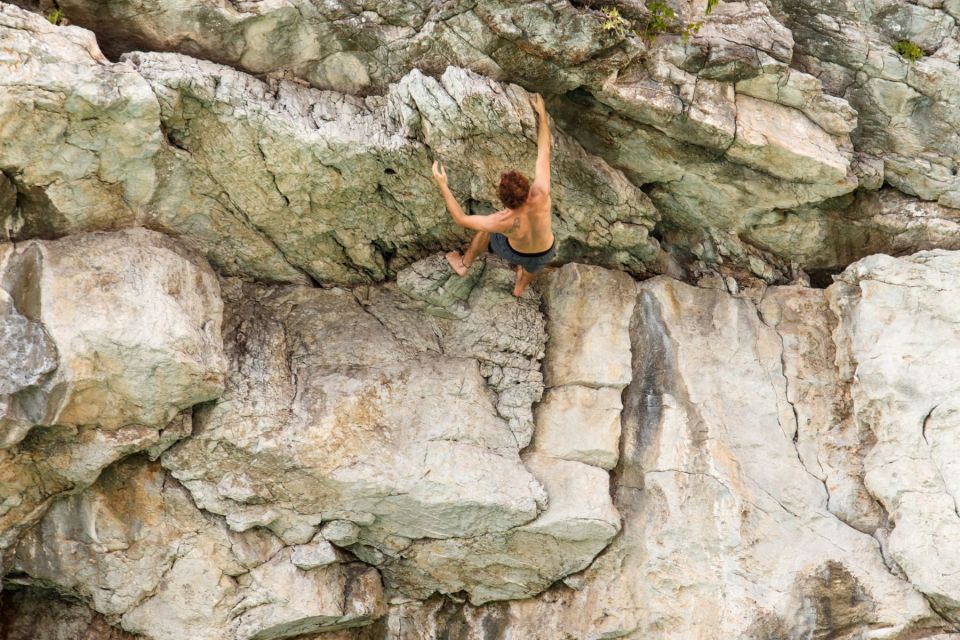
Deep water soloing isn’t “safe” in the way a gym is safe. It’s controlled risk. Your guides understand that, and the tour is designed around instruction and progression.
Here’s what you can count on based on the way this is run:
- You receive safety instructions and guidance throughout the day.
- You’re not expected to jump into the hardest line right away.
- The guides offer route advice so you’re not guessing every move.
But you should still treat this as inherently risky, because you are climbing without ropes. That means you must follow guide instructions exactly, and you should climb conservatively when conditions feel off.
A useful detail is that the tour is specifically described as okay for nervous climbers, as long as you’re willing to work up gradually. They start you on easier climbs to build confidence, then progressively give you harder and taller options. Translation: you can push your limits without forcing yourself to jump beyond your comfort before you’re ready.
One more practical point: water temperature can change with the season. If you’re thinking you’ll be “fine” with a cold splash, consider that the cold water plunges are part of the experience. I’d treat that as a mental warm-up topic before you go.
Climbing grades and what “progressive options” means in real life
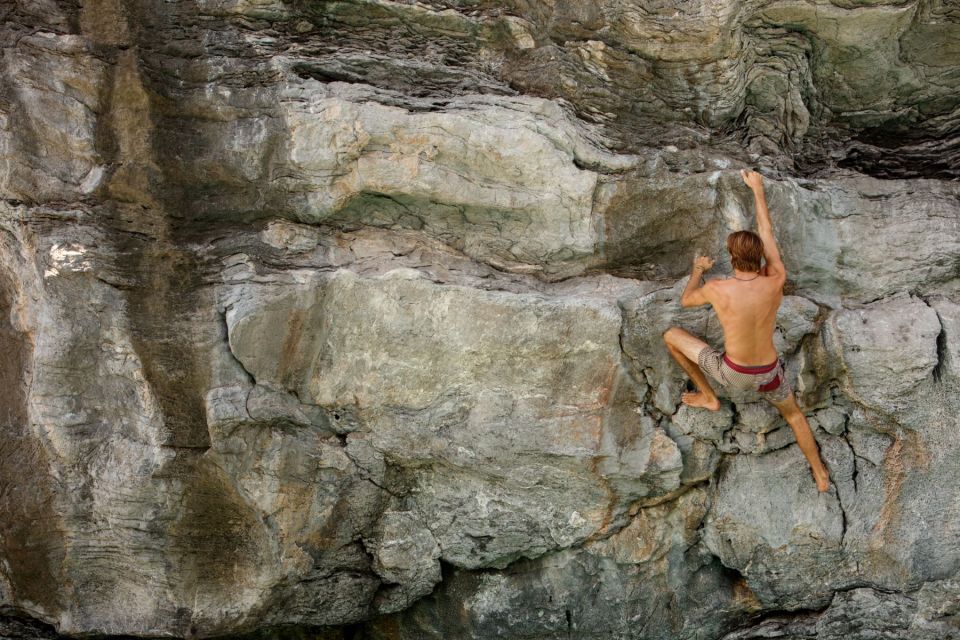
If you like having a sense of what you might actually try, deep water soloing can be clearer than many adventure activities. The guides set you up with a starting climb that’s manageable and low. Then they progressively give you options that are harder and taller.
A recent climber described route grades ranging from about 4b to 7c. You might not personally climb that whole range, and you might not want to. But it helps you understand that you won’t only be doing tiny confidence taps. The tour can deliver meaningful climbing challenges.
What you get from this progressive approach is control. You choose how high you go and when you stop. At the point where you don’t want to climb higher—or once you reach the top—you jump into the deep water below. That simple rule shapes the whole emotional experience: instead of being trapped by a route, you’re making decisions in real time.
For “advanced” climbers, that freedom is a plus. For newer or cautious climbers, that same freedom can reduce panic—because you can stop when you’re ready rather than forcing the next move.
The key is to climb with good judgment. Deep water soloing rewards smooth movement and calm decision-making. It doesn’t reward rushing.
Boat time on Lan Ha Bay: transfers, lunch afloat, and break periods
The boats are a big part of why this feels like more than just climbing. You’re not just getting transported—you’re living inside the bay for hours.
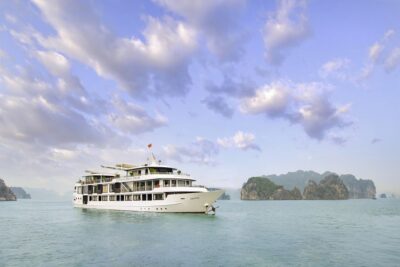
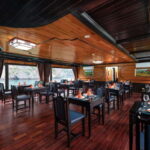
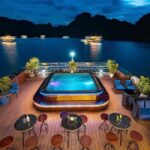
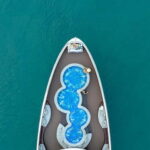
You’ll start on a junk boat with a captain and crew, then ride smaller basket boats to reach the best wall areas. That combo keeps things moving while still giving you the “cruise” feel between sessions.
Between climbs, you can relax on the boat. The schedule gives you real break periods, not just short pauses. If you fancy it, you can also jump into the water from the boat for a swim. That’s especially nice when you want to cool down after climbing or just reset your legs and breathing.
Lunch is served traditionally Vietnamese while you’re still out on the water. Eating on the boat keeps you from losing time to detours and makes the whole day feel like an organized outing, not a rushed checklists situation.
One small drawback to keep in mind: boat transfers and riding time mean you’ll spend more of the day “not on the rock.” If your top priority is maximum climbing minutes only, you might feel like the day is longer than the actual wall time.



What it costs and why $73 can feel like good value
At $73 per person, you’re paying for a package that includes a lot of the expensive bits you’d otherwise have to sort out yourself: transportation, access fees/tickets, English-speaking guides, boat operations (junk boat plus smaller basket boats), lunch, climbing shoes, and chalk.
The value isn’t only the gear. It’s the route selection and on-water logistics. Guides take you to the best areas, and they help you get onto the rock correctly—plus they advise on routes as you solo. In activities like this, that guidance can be the difference between a fun day and a stressful one.
Also, small group size matters for value. Limited to 8 participants means you’re less likely to feel like you’re waiting while everyone else cycles through instructions.
If you’re comparing this to “DIY” deep water soloing, the difference is obvious: you’re paying to have the whole system handled—boats, access, safety briefings, and guide coaching—so you can focus on climbing and jumping.
What to pack (so you’re not stuck wet and cold)
This is a water + rock day. Pack like you plan to get wet.
Bring:
- Swimwear
- A towel
- Sunscreen
- Insect repellent
Also, I strongly recommend you plan for the full cycle: climb, jump, reset, then climb again. The tour notes you should bring a change of clothes and a dry bag to keep your personal belongings protected.
Climbing shoes and chalk are provided, which is a relief—no scrambling for gear quality at the last minute. Still, make sure you’re thinking about comfort and fit. If your feet hate the shoes, your whole day suffers.
If you’re sensitive to cold water, remember that the experience includes water plunges. Timing and season can make that part feel more intense.
Who this tour is for (and who should skip it)
This one is not for everyone.
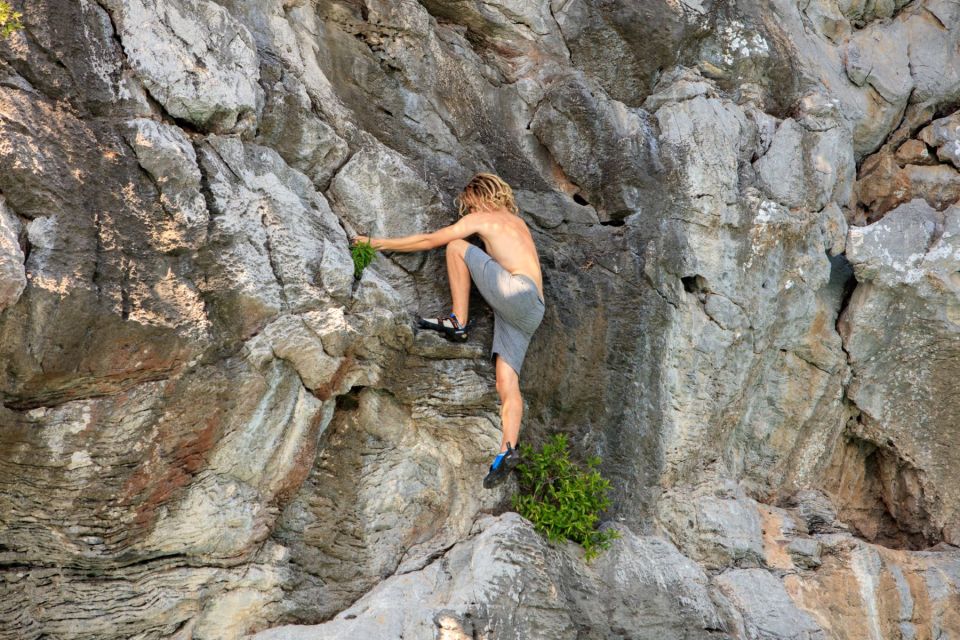
Deep water soloing here requires moderate physical fitness and agility, plus comfort with swimming and basic climbing experience. Even if you’re nervous, the guides help you start easy and build up, but you still need that baseline competence.
It’s also not suitable for:
- Children under 15
- Pregnant women
- People over 70
So if you fall in one of those groups, don’t treat this as a “maybe.” The activity demands safety and physical responsiveness, and the tour is explicit about the limits.
If you are a climber who wants a real challenge, this tour is a strong match—especially if you want limestone climbing without ropes, and you’re excited by the idea of jumping into deep water when you choose.
Should you book this Cat Ba advanced rock climbing & cliff jumping tour?
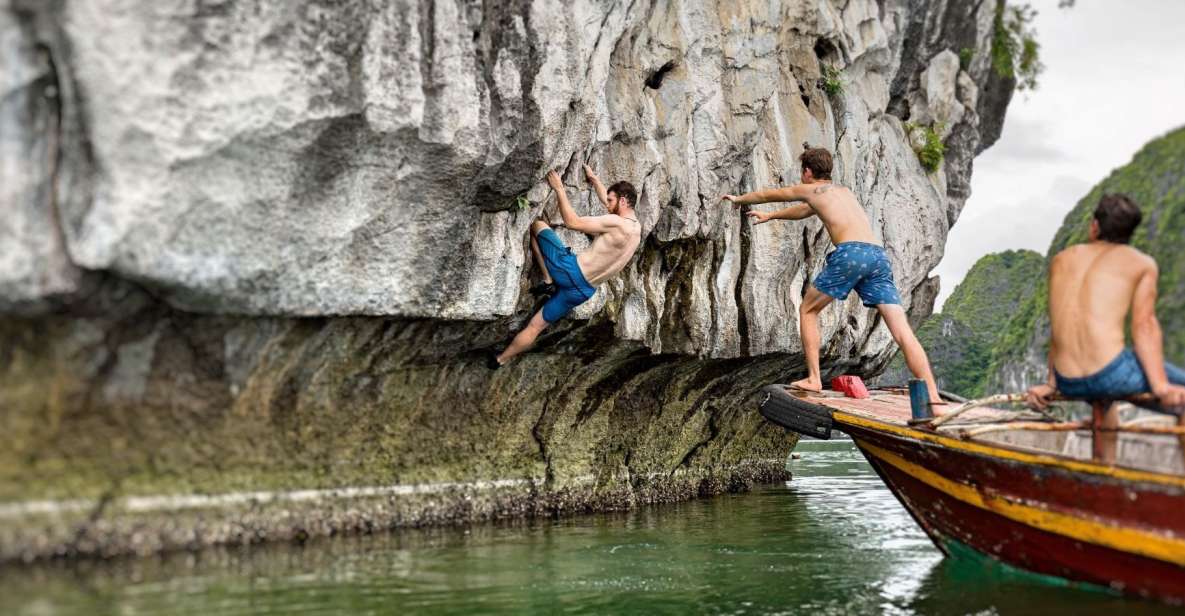
Book it if you want the real deep water soloing experience in Lan Ha Bay, and you’re comfortable with the tradeoffs: no ropes, real consequence, and a day tied to tides and weather. The guided progression from easy low climbs to tougher options makes it approachable for cautious climbers, not only hard-core ones.
Skip it if you want a guaranteed fixed schedule, or if you aren’t comfortable swimming and reacting quickly in and around the water. Also, if you’re in any category listed as not suitable (under 15, pregnant, over 70), this isn’t the right choice.
If you’re trying to decide last-minute, focus on two things:
1) Are you genuinely okay with the cold splash reality and the no-rope risk model?
2) Can you be flexible about morning vs afternoon depending on tides?
If the answer is yes, this is the kind of Cat Ba day you’ll remember for the climb and the jump, in the same breath.
FAQ
How much does the Cat Ba deep water soloing & cliff jumping boat tour cost?
The price is $73 per person.
How long is the tour?
The duration is about 6.5 hours. Starting times depend on availability and the tide schedule.
What time does the tour run?
The deep water soloing experience is weather and tides dependent, so the tour may take place in the morning or afternoon.
Is pickup included, and where does it happen?
Yes. Pickup is available from hotels and accommodations in Cat Ba Town.
Are climbing shoes and chalk included?
Yes. The tour includes climbing shoes and climbing chalk.
What should I bring besides what’s included?
Bring swimwear, a towel, sunscreen, and insect repellent. The tour also recommends a change of clothes and a dry bag.
Do I need swimming ability and climbing experience?
Yes. Deep water soloing requires you to be comfortable with swimming and to have a basic level of climbing experience, along with moderate physical fitness and agility.
Is the climbing done with ropes?
No. The experience is described as climbing without ropes, using expert guide instruction for safety.
Is lunch included?
Yes. Lunch is included and is described as a traditional Vietnamese meal served on the boat.
What’s the cancellation and payment policy?
You can cancel up to 24 hours in advance for a full refund, and you can reserve now and pay later (booking lets you pay nothing today).