REVIEW · HANOI
Vietnam War: Uncovering Hanoi’s Untold Stories
Book on Viator →Operated by OneTrip With Local · Bookable on Viator
War leaves fingerprints on Hanoi. This tour connects familiar landmarks to the Vietnam War era through places most people skip. You’ll move from memorials to street markets, all explained in a relaxed, talk-it-out style with untold stories behind the scenery.
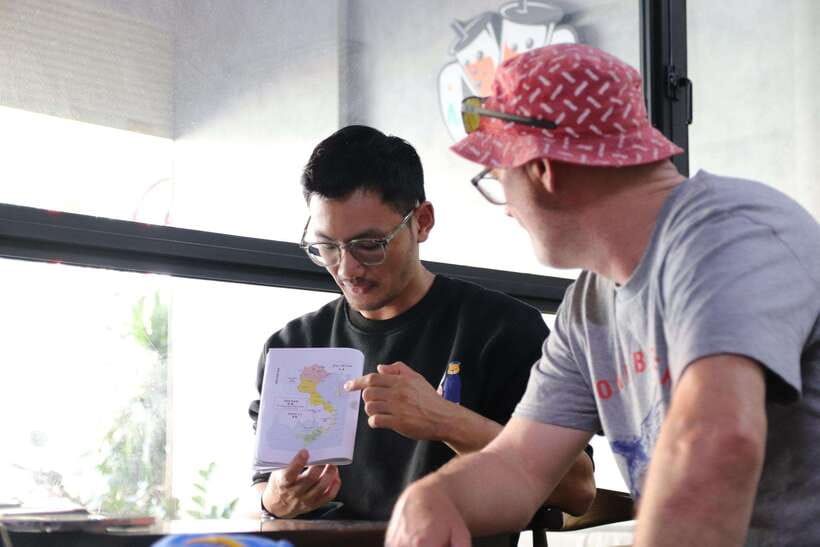
I love the small-group pace (10 people max), where questions actually get answered. I also like that the tour starts with context over coffee/tea near 24B P. Chùa Vua, so the rest of the walk makes sense fast.
One possible drawback: the subject matter is emotionally heavy, so it’s not the best fit if you want a purely light, photo-only day.
In This Review
- Key highlights you’ll feel right away
- Why this Vietnam War walk feels different in Hanoi
- Value for money: $37 for 2.5 hours plus context
- The meeting point and the “start with a seat” approach
- Duờng Tau: hearing veteran stories in the neighborhood fabric
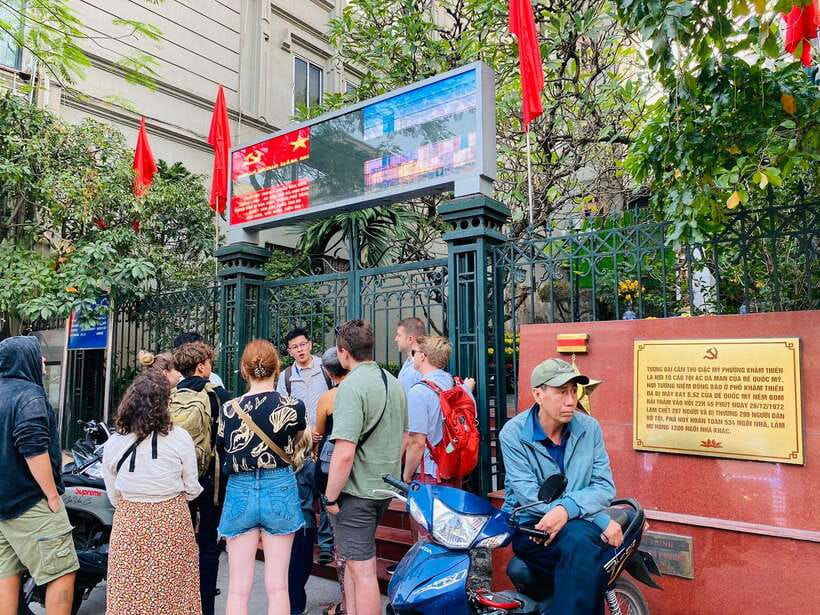
- Kham Thiên B52 Memorial: more than a photo stop
- Chợ Giời black market: the survival economy after the war
- Train Street community: the present tense of adaptation
- Getting the route right: how the walk is paced
- Who this tour suits best (and who might want a different option)
- The guides: why good storytelling makes the history stick
- The donation piece: turning learning into action
- Should you book this Hanoi Vietnam War tour?
- FAQ
- FAQ
- How long is the Hanoi Vietnam War tour?
- Where does the tour start and end?
- What is the price per person?
- What’s included in the tour?
- Is admission included for any stops?
- Does the tour involve a lot of walking?
- What group size should I expect?
- Can I cancel for a full refund?
Key highlights you’ll feel right away
- Conversation-first context at 24B P. Chùa Vua helps you understand what you’re seeing before you hit the streets
- Duờng Tau mixes veteran stories with the daily-life reality of wartime and post-war pressure
- Kham Thiên B52 Memorial teaches you how to remember without turning tragedy into a sightseeing stop
- Chợ Giời black market shows survival math in a planned economy, not just war headlines
- A short taxi ride halfway through keeps the flow manageable and gets you to neighborhoods most guidebooks ignore
- Train Street community time adds a present-day lens on how people adapt after conflict
- 20% of profit donated to Agen Orange/Dioxin victims and Blue Dragon’s Children Foundation
Why this Vietnam War walk feels different in Hanoi
Hanoi has a way of stacking layers on top of layers. One minute you’re on a normal sidewalk, the next you’re hearing why that street exists in the first place. This experience is built to help you read the city like a story, not like a list of monuments.
The big difference is tone. This isn’t a slideshow lecture. You get a proper setup—over coffee/tea—then you walk and talk through specific neighborhoods, including places that often fall off the standard tourist radar. The result is that the war stops being a distant concept and starts behaving like something that shaped real households, real choices, and real streets.
You can also read our reviews of more tours and experiences in Hanoi.



Value for money: $37 for 2.5 hours plus context
$37 might sound like a small price for a war-focused tour. In practice, it covers more than you’d expect because several costs are folded in: coffee/tea, a short private transport/taxi ride, and at least one stop with admission included.
You’re also paying for interpretation. The guide’s job here isn’t just to point at sites; it’s to connect what happened (North vs. South, unification, the Cold War backdrop) to what you can still see today in daily neighborhood life. With a maximum group size of 10, you’re not stuck passively following along.
The meeting point and the “start with a seat” approach
You meet at 24B P. Chùa Vua (near Phố Huế, Hai Bà Trưng) and you’ll spend the first chunk of time in a calmer, sit-down conversation. That matters more than it sounds. When you understand the broader timeline—division of Vietnam, the war’s pressures, and the eventual unification—you’ll interpret the later stops more accurately.
Expect the guide to frame the city’s wartime and post-war reality: the planned economy, how local people coped, and why different communities experienced the same era in different ways. This kind of preparation is the difference between seeing a memorial and understanding what it’s for.
And yes, you get coffee and/or tea. It’s a small thing, but it helps you settle in before the more serious parts of the walk.
Duờng Tau: hearing veteran stories in the neighborhood fabric
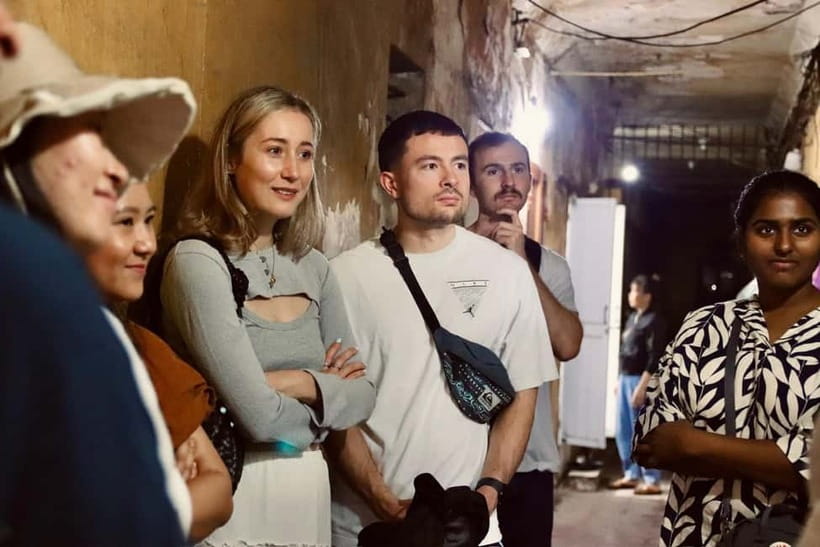
One of the most powerful parts is time at Duờng Tau, where you’ll hear from veterans and learn how local people lived through the pressure of war and its aftermath. This is not presented as trivia. It’s framed as lived experience—what life looked like, what people had to figure out, and what changed afterward.
This stop is about 30 minutes and includes admission. That inclusion matters because you’re not just walking past a viewpoint; you’re spending time inside a context that the site itself is trying to preserve.
Practical tip: since this part is grounded in personal stories, go in with a bit of mental space. If you rush through, you’ll miss the emotional logic that makes the rest of Hanoi click.
Kham Thiên B52 Memorial: more than a photo stop
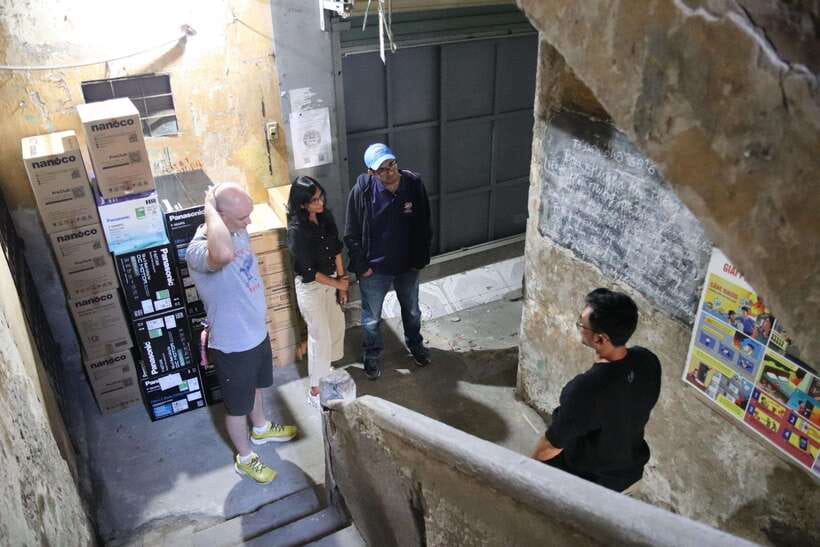
At Kham Thiên, you visit the B52 memorial for about 15 minutes. It’s free to enter, but it doesn’t feel casual. The point here is remembrance with understanding—learning what the past taught and why the site continues to matter.
This stop is short on purpose. The danger with memorials is turning them into checkmarks. Here, the guide nudges you toward reflection: how a tragedy reaches beyond the moment of impact, and how communities carry that weight into daily choices.
If you’re the type who likes to ask questions, this is usually a good moment to do it. Keep expectations simple: you won’t leave with every historical detail, but you’ll leave with a clearer moral and historical frame.


Chợ Giời black market: the survival economy after the war
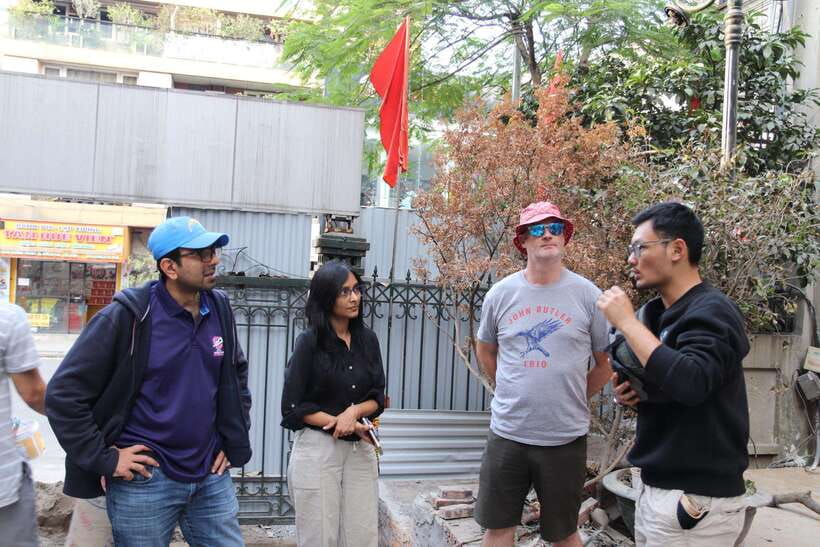
Then comes one of the most interesting stops: Chợ Giời, described as a historic black market. This isn’t a “look at old stalls” detour. The focus is on the aftermath: how ingenuity and a secret economy became survival tools when official systems couldn’t meet everyday needs.
You spend about 1 hour here, and it’s free. That time is important. The guide’s approach helps you see how the planned economy shaped ordinary life—who could move resources, how people adapted, and why informal trade became a lifeline.
What I like about this stop is that it doesn’t treat the war as an isolated event. Instead, it shows how conflict alters the rules of daily living. Even if you’ve read about Vietnam’s history, this is the kind of street-level explanation that makes the timeline feel human.
Train Street community: the present tense of adaptation
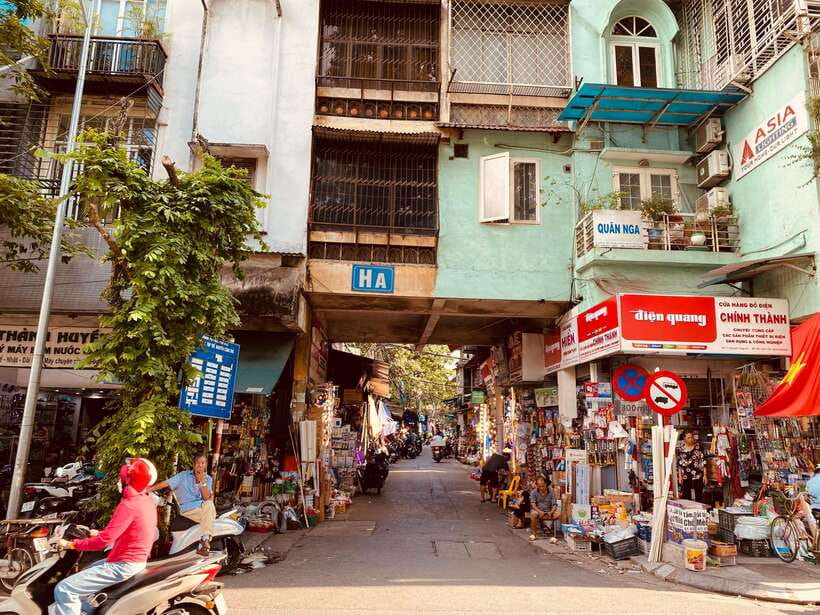
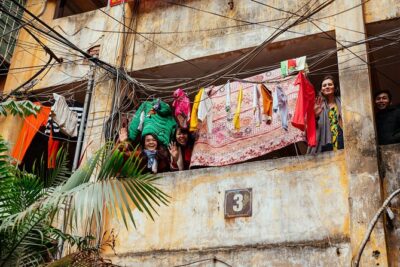
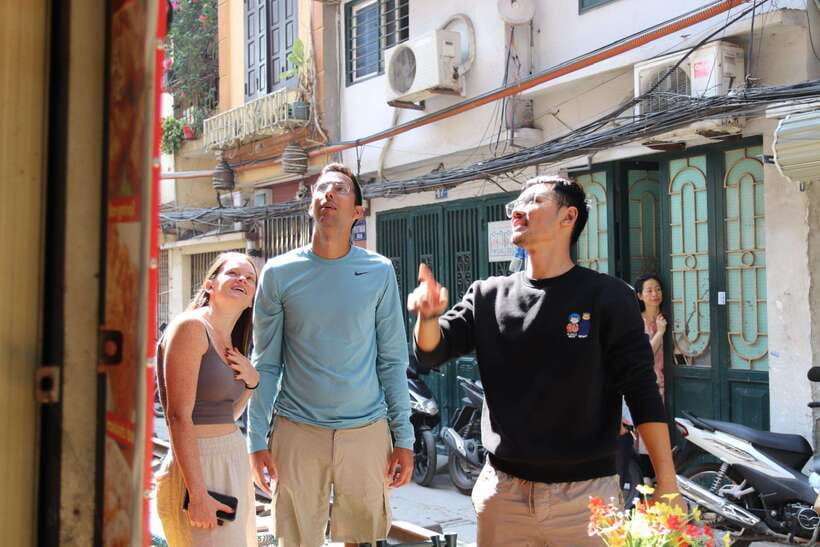
The tour also includes the Hanoi Train Street community, giving you a present-day slice of how people live in spaces created by earlier decisions. This isn’t presented as a gimmick. It’s used as a lens for resilience and practicality—how neighborhoods reorganize around infrastructure and risk.
Because the itinerary includes a short taxi ride halfway through, you shouldn’t expect every stop to be purely footpower. That helps keep the overall rhythm calm, especially since the tour is listed for moderate physical fitness.
When you’re there, pay attention to how daily life works around constraints. It’s a reminder that history isn’t just museums and monuments. It’s architecture, routine, and the constant negotiation between what exists and what people need.
Getting the route right: how the walk is paced
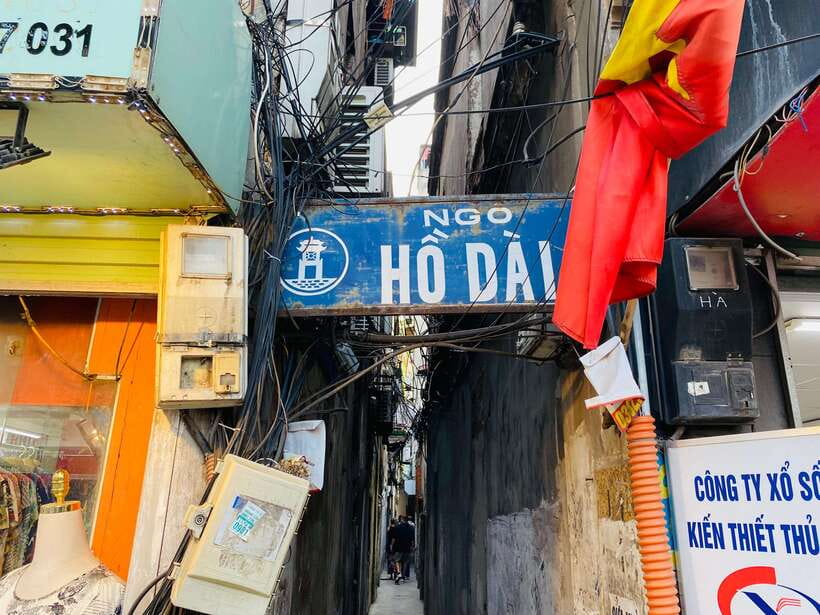
The full stroll is about 2 hours 30 minutes (approx.) with that short taxi ride in the middle. This matters if you’re trying to plan a full day in Hanoi. You can fit this before or after other Old Quarter sights without turning the day into a marathon.
The tour also ends on Phố Khâm Thiên (P. Khâm Thiên, Đống Đa). The operator notes it’s easy to walk back to the Old Quarter from there, which is a big plus if you want dinner afterward without another transport hunt.
Group size stays small (max 10), so you won’t be trapped in a herd. You should still wear comfortable shoes—Hanoi sidewalks can be uneven, and you’ll be moving at a human walking pace.
Who this tour suits best (and who might want a different option)
This is a great fit if you’re the kind of person who likes context. You want to know why certain neighborhoods look the way they do, and you want the war explained as something that shaped real systems and real families.
It also works well if you’re traveling with teenagers. Several groups in the operator’s orbit have included kids and older teens, and the format seems designed to keep attention: short site visits, guided explanations, and an easy back-and-forth style.
That said, if you want a purely cheerful sightseeing day with light facts and no emotional weight, this may feel too serious. The subject matter is tough, so you’ll want to go in ready to slow your pace mentally.
The guides: why good storytelling makes the history stick
The tour’s success rides heavily on the local expert guiding the conversation. Past tours have featured guides such as Dung, Kien, and Thomas, and the common thread in their approach is story clarity plus a human feel for Hanoi.
What you’ll notice on the walk is how explanations land. Instead of drowning you in dates, the guide helps you connect cause and effect: division and unification, planned economy pressures, and how everyday people survived. That’s why the tour can feel both informative and genuinely enjoyable.
If you speak up, you’ll likely get better answers than you would on a scripted walk. This format works best when you treat it like a guided conversation, not a museum audio track.
The donation piece: turning learning into action
A meaningful detail: 20% of the profit is donated to the Vietnam Association for Victims of Agen Orange/Dioxin and the Blue Dragon’s Children Foundation. That means your ticket supports causes tied directly to the war’s lingering human impact.
It doesn’t make the tour lighter. If anything, it adds weight to the “why” behind the sites. But it does give your day a clear purpose beyond information.
Should you book this Hanoi Vietnam War tour?
I think you should book this if you want Hanoi to make sense beyond monuments. The mix of veteran-linked stories, the B52 memorial, the Chợ Giời survival economy, and the present-day Train Street neighborhood gives you a full view of how war echoes in streets and households.
Book it especially if you like asking questions and you appreciate guides who explain context before you walk. At $37 for about 2.5 hours with coffee/tea, private transport, and time at several meaningful sites, the value is strong—especially with a max 10 group size.
Skip it if you want a short, easy, mostly scenic tour. The topic is heavy, and the experience asks you to pay attention, not just to take photos.
FAQ
FAQ
How long is the Hanoi Vietnam War tour?
It’s approximately 2 hours 30 minutes.
Where does the tour start and end?
It starts at 24B P. Chùa Vua, Phố Huế, Hai Bà Trưng, Hanoi, and ends at P. Khâm Thiên, Khâm Thiên, Đống Đa, Hanoi.
What is the price per person?
The price is $37.00 per person.
What’s included in the tour?
Coffee and/or tea are included, along with private transportation.
Is admission included for any stops?
Admission ticket is included at Duờng Tau. Kham Thiên B52 Memorial and Chợ Giời are listed as free.
Does the tour involve a lot of walking?
It lists a moderate physical fitness level, and it also includes a short taxi ride halfway through.
What group size should I expect?
There’s a maximum of 10 travelers.
Can I cancel for a full refund?
Yes. You can cancel up to 24 hours in advance for a full refund.