REVIEW · WATER PUPPET SHOW TICKETS
Vietnam: Thang Long Water Puppet Show
Book on Viator →Operated by GlobalTix Pte Ltd · Bookable on Viator
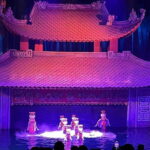
Watching water puppets feel like a magic trick. At the Thang Long Water Puppet Theatre in Hanoi, ancient village tales are performed right on a lit pool, powered by clever stagecraft and live music. It’s one of those rare shows where the point is as much the artistry as the story.
I especially love how the show balances everyday life (farming, fishing, kids playing) with older legends you can sense even if your Vietnamese isn’t perfect. One thing to consider: if you’re counting on an audio guide, stock can be limited, and the performance is in Vietnamese—so you may want to plan for at least some moments you follow by music and action alone.
In This Review
- Quick hits before you go
- Why Thang Long water puppets still work today
- What you’ll see in the 50–80 minute performance
- Behind the screen: the mechanics that make it believable
- Sound, singing, and why the theater can feel intense
- Audio guides and the Vietnamese language reality
- Getting seated: timing, ticket pickup, and avoiding last-minute stress
- Price and value: why $5.99 is a smart cultural buy
- When to book: best fit for your travel style
- Final verdict: should you book the Thang Long show?
- FAQ
- How long is the Thang Long Water Puppet show?
- Is the show near public transportation?
- Do I need to collect tickets before the show?
- When should I arrive at the theater?
- Is flash photography allowed?
- What language is the show in, and do I need an audio guide?
- Can I get a full refund if I cancel?
Quick hits before you go
- Water puppetry is controlled from behind the screen, using rods and precise timing to move puppets across the water
- Expect 50 minutes to about 1 hour 20 minutes, depending on the show slot
- Village scenes plus myths and legends keep the pace changing, not just one long story
- Live orchestra and singing are part of the experience, and the sound level can be strong inside
- Audio guides may be out of stock, so it’s smart to be ready without one
- Arrive early and be ready to collect tickets in person, even if you booked ahead
Why Thang Long water puppets still work today
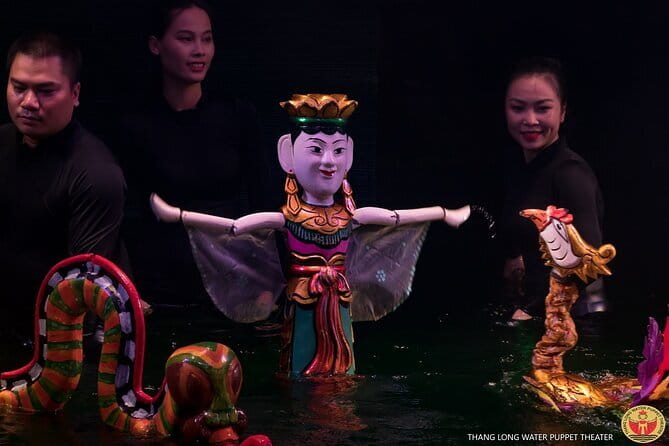
The Thang Long Water Puppet Theatre is all about a very old idea: stories told in water. The tradition began in Vietnam’s Red River Delta, where villagers spent time in flooded rice paddies. Instead of pulling away from the water, they turned it into the stage. The result is instantly memorable in a way that still feels modern.
You’re not watching puppets hang from strings in the air. You’re watching figures glide across a surface that behaves like water—not a flat platform. That’s the trick. The pool, the lighting, and the way the puppets move all sell the illusion that the characters are truly alive and navigating a real landscape.
What makes this show worth your time in Hanoi is that it’s not only a performance. It’s a living craft. The theater itself is designed so the behind-the-scenes control system stays hidden while the puppets do their thing. And once you get past the first few minutes of wow, you start noticing the details: how fast a character switches direction, how the water effects match the scene, and how the music syncs with the action.
You can also read our reviews of more tours and experiences in Hanoi
What you’ll see in the 50–80 minute performance
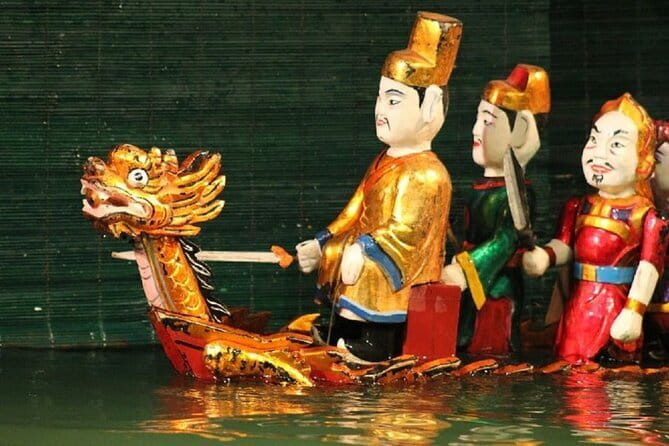
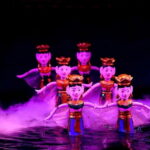
Most performances land somewhere around 50 minutes to about 1 hour 20 minutes, so it’s a realistic evening plan even if you’re pacing your Hanoi days. When the show starts, you’ll quickly pick up the rhythm: scenes unfold in short acts, with music and singing carrying you from one tableau to the next.
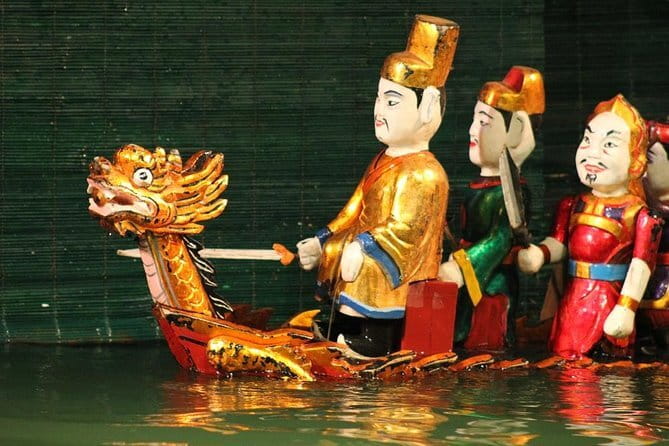
The stories tend to include village life. You may see moments related to farming and fishing, plus playful scenes that feel like everyday life—children running games, people working, and routines that would be familiar across generations. Then the show shifts into older legends and myths, adding a more dramatic flavor. Even if you don’t understand every word, you can still follow the meaning through actions, facial expressions, and the mood set by the music.
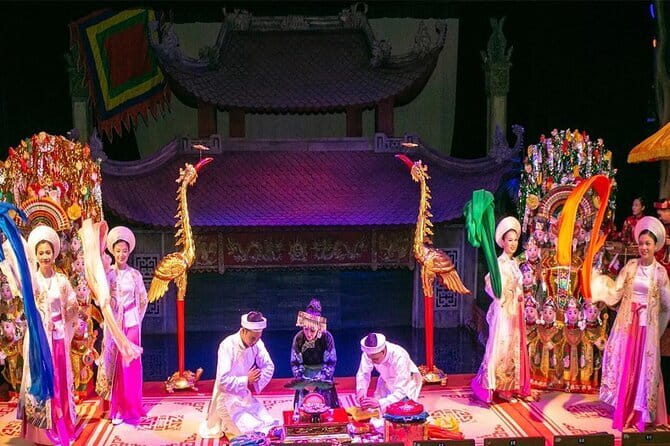
This is also a show where the plot isn’t the only driver. The craft is. The costumes are detailed, and the puppets are built to read clearly from your seat. Characters usually appear and disappear with a clean stage flow, so you don’t feel lost waiting for the next moment. If you like traditional theater where movement and music do heavy lifting, you’ll likely enjoy it.
Behind the screen: the mechanics that make it believable
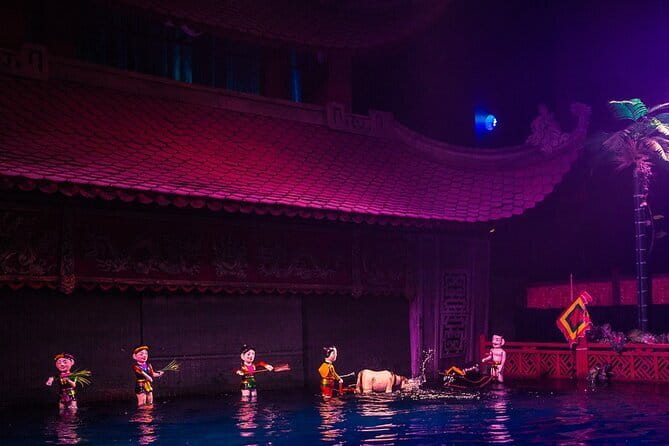
Here’s the part that keeps pulling you back in: the puppeteers aren’t visible. That illusion matters. The performers control intricately made puppets from behind screens, using long rods that reach into the water.
You can think of it like this: the show sells the motion, but the real talent is precision. The puppets need to respond fast enough to match the timing of the orchestra and the scene changes. They also need to look right on water, which means the motion has to be controlled even though the surface is constantly moving.
Once you start paying attention, you’ll notice patterns. A puppet glides smoothly when it’s supposed to look calm. Then a different action happens when the scene turns energetic. The same figure can look graceful one moment and lively the next. That’s why so many people walk out talking less about the storyline and more about the stagecraft.
If you’re the type who likes understanding how things work—gear, choreography, timing—this show delivers. It’s practical magic: not random, not guesswork. Just trained control and careful design.
Sound, singing, and why the theater can feel intense
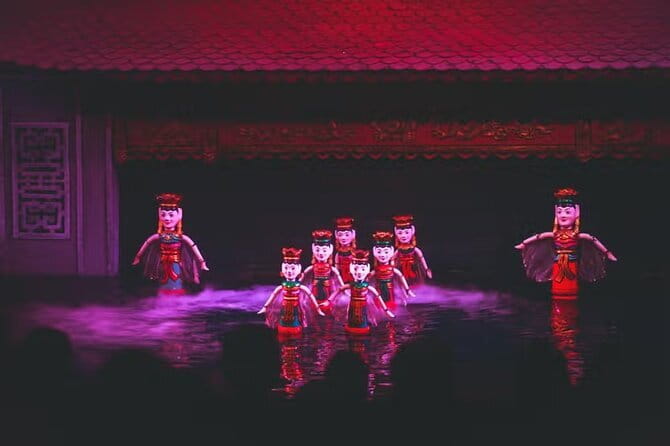
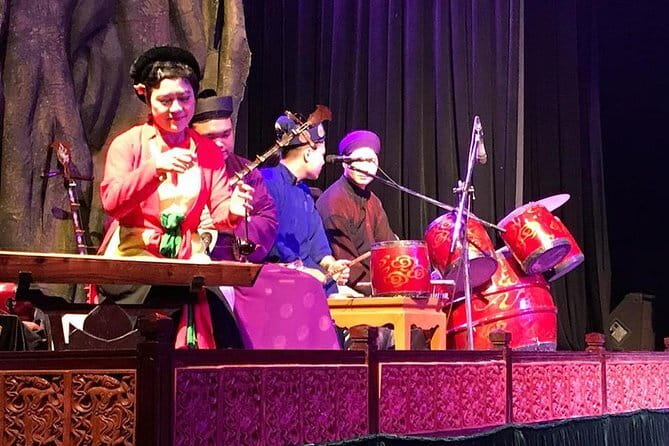
Water puppet theater has a built-in soundtrack. You’re not just hearing music in the background; the orchestra and singing are tied to what you watch on the pool. If you enjoy live performance energy, this is a big reason to go.
That said, the sound level can be quite loud in the hall. If you’re sensitive to volume, consider bringing earplugs. It won’t ruin the experience. You’ll still get the music and mood; you’ll just be more comfortable inside a busy theater space.
Also, the show’s pacing depends on the audio. The singing and instruments help cue scene transitions. So if you’re expecting a quiet, relaxing cultural stop, you might find it more energetic than you planned.
Audio guides and the Vietnamese language reality
If you’re non-Vietnamese speaking, plan for the language piece. The performance is in Vietnamese, and an audio guide can help you catch what’s happening between scenes—names, legends, and cultural details that don’t come through just from visuals.
Here’s the practical catch: audio guides may not always be available. Sometimes the theater runs out of them, even if you planned for one. So I wouldn’t base your whole experience on understanding every line. Instead, use visuals, music, and your general sense of the story.
If you do end up with audio support, you’ll likely enjoy it more—especially for the myth and legend segments. And even without it, you can still get value. The show is built for comprehension through action. You’ll still see farming and fishing scenes. You’ll still feel the emotional shifts when the music changes.





Getting seated: timing, ticket pickup, and avoiding last-minute stress

This is one of those attractions where timing affects your comfort. You’ll want to be at the theater 10 to 30 minutes early. That buffer gives you time to handle ticket collection and find your seat without rushing.
Even if you booked in advance, the official tickets may not be waiting as a simple scan at the door. The instructions are clear: you need to collect the actual tickets at the local operator’s office at least 30 minutes before the show. And if you’re working from a voucher, you’ll exchange it for a seated ticket shortly before the performance starts.
Show times can also shift. Availability can change, and in that case the operator should contact you in advance. Bottom line: choose a show time that doesn’t trap you in transit chaos, because there isn’t much slack once you’re close to start.
One more rule to note: no flash photography is permitted. It’s common in theaters, but it matters here because the lighting is doing so much work on the water effects.
Price and value: why $5.99 is a smart cultural buy

At $5.99 per person, this is priced like a budget-friendly cultural stop—and that’s the point. For roughly an hour, you’re getting a live production with music, singing, and a specialized craft that you won’t replicate anywhere else in Vietnam.
What makes it good value isn’t only the cost. It’s the distinctiveness. String puppets are everywhere. Water puppetry is not. The mechanics, the hidden control system, the pool stage, and the tradition behind it are all special. You’re not paying for a generic theater evening—you’re paying for a specific art form tied to Hanoi and the Red River Delta.
It’s also a convenient pick if you’re trying to fit in something traditional without committing a full afternoon. The duration stays reasonable, and the show is near public transportation, which makes it easier to plug into a day of sightseeing.
When to book: best fit for your travel style
I’d book this if you want a cultural experience that doesn’t require deep reading or complicated logistics on arrival. It’s also great for people who enjoy watching craft and performance mechanics—how the puppets move, how timing works, and how music shapes the action.
It can work well for families too, since the show often includes everyday-life scenes and clear visual storytelling. Even when language is an obstacle, visuals and music still do a lot of lifting.
I’d think twice if you’re very strict about understanding every word. If you hate not knowing what’s being said, and you can’t get an audio guide, you might feel bored during the legend-heavy parts. In that case, consider treating it like a visual-and-musical experience, not a word-for-word story.
Final verdict: should you book the Thang Long show?
Yes—if you go with the right expectations. This is one of Hanoi’s most recognizable traditions for a reason. The craft is genuinely impressive, and the combination of puppets, music, and pool stage makes it memorable even when you can’t catch every detail in Vietnamese.
Book it if you want a low-cost, high-impact evening plan and you enjoy seeing how something technical still ends up feeling magical. Skip or adjust your expectations if audio support is a must for you and you’re the type who struggles with loud theater sound.
If you do book, do yourself one favor: arrive early and don’t leave ticket pickup until the last minute. That’s the difference between a relaxed show and a stressful scramble.
FAQ
How long is the Thang Long Water Puppet show?
The performance runs about 50 minutes to 1 hour 20 minutes, depending on the show slot.
Is the show near public transportation?
Yes. The theater area is described as being near public transportation.
Do I need to collect tickets before the show?
You should plan to collect the actual tickets at the local operator’s office at least 30 minutes before the show.
When should I arrive at the theater?
Arrive about 10 to 30 minutes before the show start time.
Is flash photography allowed?
No. Flash photography is not permitted.
What language is the show in, and do I need an audio guide?
The show involves Vietnamese language. If you can get an audio guide, it can help a lot, but availability may vary.
Can I get a full refund if I cancel?
Yes. Free cancellation is available up to 24 hours before the experience’s start time.