REVIEW · CITY TOURS
Hanoi City Half Day – A City Saves Traditional Beauties
Book on GetYourGuide →Operated by Asian Travel Discovery · Bookable on GetYourGuide
Hanoi rewards people who look closely. In just 4 hours, this tour strings together some of Hanoi’s most meaningful stops with everyday street scenes, from Ba Dinh Square to the train tracks where locals carry on their day. I especially liked how guides can connect the big political moments with small-life details, and names like Chiến, Alex, and Tony come up for a reason: they tend to keep the pacing clear and the stories understandable.
What I love most is the contrast: you’ll stand in sacred, official places like Ho Chi Minh Mausoleum and One Pillar Pagoda, then you’ll shift gears to Old Quarter corners where food, music, and daily errands take over. The second thing I really liked is the Train Street egg coffee stop, where the “wow” isn’t staged—it’s just how the neighborhood works, train or no train. One possible drawback: the description is broad, and a couple of past bookings flagged that the tour didn’t match expectations, so it’s smart to confirm exactly what’s covered on the day (especially around the egg coffee and any ticket questions).
In This Review
- Key things to know before you go
- A Tight 4 Hours That Shows Hanoi’s Two Faces
- Ba Dinh Square and Ho Chi Minh’s Everyday Footsteps
- One Pillar Pagoda: Small Size, Big Meaning
- Temple of Literature: Hanoi’s “School That Became History”
- Old Quarter Views: Markets, Ta Hien, and Street Life
- Train Street Egg Coffee: Watching Daily Life on Rails
- Opera House and Cathedral: Hanoi’s Colonial-Era Architecture
- Ngoc Son Temple and Hoan Kiem Lake: Legends at the Heart of the City
- Price and Value: Is $22 Worth It?
- The Main Trade-Offs (So You’re Not Surprised)
- Who This Tour Suits Best
- Should You Book This Half-Day Hanoi Loop?
- FAQ
- How long is the Hanoi City Half Day tour?
- Where does the pickup and drop-off happen?
- Is the tour offered in English?
- Does the price include the car, water, and tickets?
- Is egg coffee included?
- What main places are visited?
- Do I need to pay extra for languages other than English?
- Can I cancel for a refund?
Key things to know before you go
- Ho Chi Minh’s life sites in one Ba Dinh Square circuit: mausoleum plus nearby daily-life locations
- One Pillar Pagoda’s iconic shape and meaning in the middle of your route
- Temple of Literature’s long teaching legacy—built as a training ground and still used for study prayers
- Old Quarter street atmosphere with practical viewpoints: Dong Xuan Market from the car, plus Ta Hien Street
- Train Street egg coffee in a residential pocket—you’ll see how life continues around the rails
A Tight 4 Hours That Shows Hanoi’s Two Faces
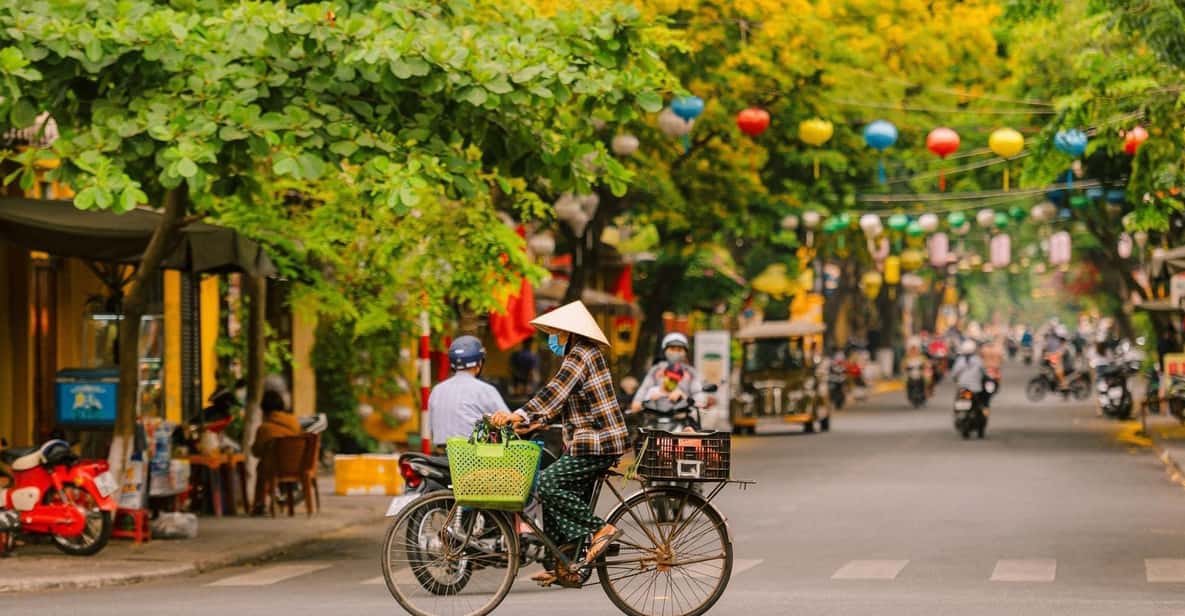
This is the kind of half-day tour that works if you only have one morning (or one afternoon) to get oriented. The format is simple: a pickup from the center of Hanoi, a car with AC for key hops, and an English-speaking guide who keeps moving while still explaining what you’re looking at.
You’ll get two Hanoi modes in one trip. The first is official and spiritual—places that feel formal, symbolic, and important. The second is neighborhood Hanoi—narrow streets, street food energy, and that specific kind of daily rhythm you only notice when you’re near locals and not just at photo spots. If you like your travel with context, this tour is designed to give it to you fast.
At the same time, the “fast” part matters. In four hours, you’re not expected to wander for long periods. You’re going to see a lot and move on. That’s great for first-timers, but if you prefer slow strolling and lots of free time, you may want to plan your own follow-up later.
You can also read our reviews of more city tours in Hanoi

Ba Dinh Square and Ho Chi Minh’s Everyday Footsteps
Your morning starts with pickup and a car ride to Ba Dinh Square. The big first stop is the Ho Chi Minh Mausoleum, described as the most important and sacred place in Hanoi, tied to the moment Vietnam’s Declaration of Independence was read. Even if you don’t know the full history, the layout and the solemn atmosphere do something. You get a sense of why this location matters beyond sightseeing.
What helps is that you’re not only visiting a monument. You also have a cluster of associated sites tied to Uncle Ho’s daily life, including the Presidential Palace, Uncle Ho’s stilt house, a fish pond, and the Ho Chi Minh Museum. The tour’s value here is that it links ideology to routine. The story isn’t only about a leader; it’s about how he lived, worked, and was presented to the public.
Practical note: these are sensitive, ceremonial places, so dress and behavior matter. You’ll want to keep your daypack neat, have sleeves/pants that feel respectful, and expect that the pace here is more “observe and follow the guide” than “hang out and take your time.”
One Pillar Pagoda: Small Size, Big Meaning
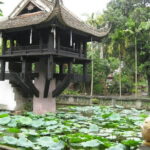
After the Ba Dinh Square circuit, you’ll head to One Pillar Pagoda, one of Hanoi’s most famous sacred pagodas. The highlight isn’t just that it’s old—it’s that its architecture is unique enough to be a cultural symbol of the city.
This stop also gives you a change in atmosphere. Hanoi can feel layered like that: one minute you’re in official space, the next you’re somewhere where spirituality is part of everyday tradition. The guide’s job matters here. When the guide explains the symbolism and why people treat the pagoda as sacred, it stops being just a pretty structure and becomes part of how locals understand the world.
If you care about religious architecture, you’ll appreciate how the tour pairs this with the next educational stop at the Temple of Literature.
Temple of Literature: Hanoi’s “School That Became History”
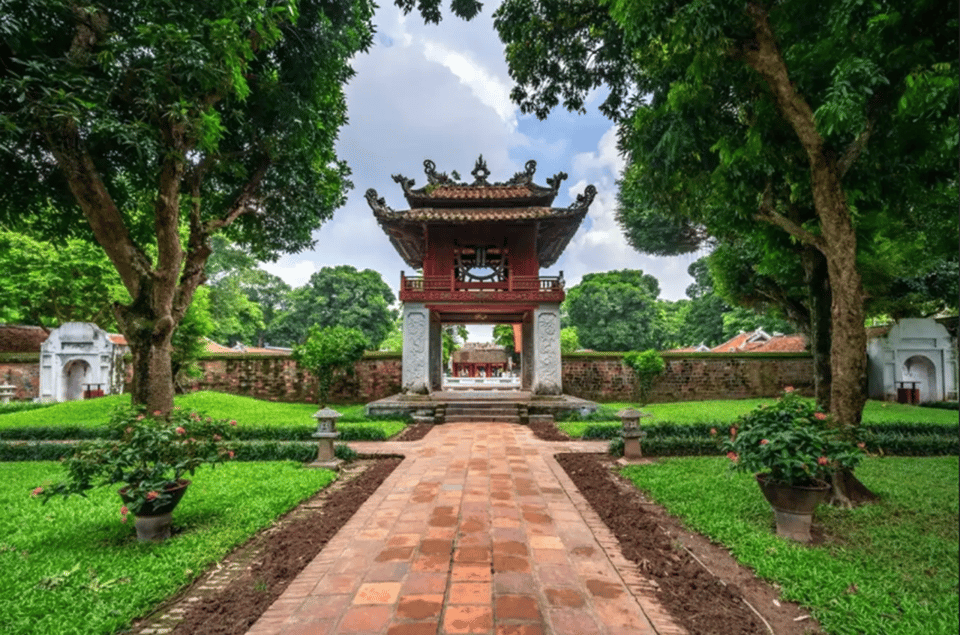
Then comes the Temple of Literature, described as the first university in Vietnam and established in a temple to train royals, mandarins, and elite students. This isn’t a museum that only shows objects; it’s a place built to represent the idea of learning and status over centuries.
You’ll also hear why it has stayed meaningful: students often come here to pray for their studies. That little detail is what makes the place feel alive. You’re not only looking back; you’re seeing a tradition that continues today.
The grounds are lined with giant trees, and the architecture is described as meticulous and lavish, reflecting the wealth of the aristocracy that supported it for a long time. In other words: it’s educational history with a strong visual payoff. Even if you’re not a student at all, the idea of treating learning as a respectful, almost sacred pursuit comes through.
Old Quarter Views: Markets, Ta Hien, and Street Life
Next you’ll shift into Hanoi Old Quarter. The tour positions this part around narrow streets, busy marketplaces, and street life. You’ll get a mix of viewpoints and actual street atmosphere without trying to cover every lane on foot.
A key street-level element is Dong Xuan Market, the largest famous traditional market in Hanoi, which you can see from the car on this route. Even from a vehicle, you’ll get a sense of scale and motion—this is where local shopping energy is on display.
Then you’ll reach Ta Hien Street, known as the street that never sleeps. The tour describes it as less than 100 meters long, always busy with music, laughter from bars, and the aroma of street food stalls. You don’t need to overthink this stop. It’s here so you can feel how Hanoi “sounds” at street level, not just at landmark level.
A good moment here is to pause and people-watch. Listen for the mix of music and conversation. Notice how food and small business sit right next to residential life. That’s the theme of the tour: Hanoi isn’t separated into “tour” and “real life.” It’s the same city.





Train Street Egg Coffee: Watching Daily Life on Rails
Now for the stop that most people remember: egg coffee on the train track. The tour describes the train track as running right through a crowded residential area, just steps away from people’s houses.
What’s fascinating is how strange-and-familiar it feels. In between trains, the small roads along both sides of the tracks become living space. Children play. Adults cook, sit, drink tea, or knit. It’s not a theme park scene. It’s daily routine shaped around train timing.
When trains pass, everything changes fast. The tour is built around getting you there at the right moment—one guide experience you can take seriously is the way Chiến helped a booking get to the train street to see a train pass. That’s exactly what you should hope for: not just the photo, but the timing.
Important practical point: egg coffee is listed as not included, so plan for that extra cost. If you’re sensitive to crowds, you may want to approach this stop with realistic expectations—this is a small, busy space.
Opera House and Cathedral: Hanoi’s Colonial-Era Architecture
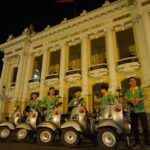
After Old Quarter street life, you’ll see Hanoi’s famous architecture from the route, including the Opera House and the Cathedral. These are classic “big exterior” stops, and they work best if you treat them as contrast points.
One of my favorite ways to understand Hanoi is to see how eras overlap in the same city. These buildings help you recognize that Hanoi isn’t only ancient temples and legends. It has layers of foreign-influenced architecture too, standing in the same urban fabric.
You don’t need to be an architecture expert here. If the guide explains a bit about what you’re looking at, you’ll leave with a clearer sense of time periods and design influences.
Ngoc Son Temple and Hoan Kiem Lake: Legends at the Heart of the City

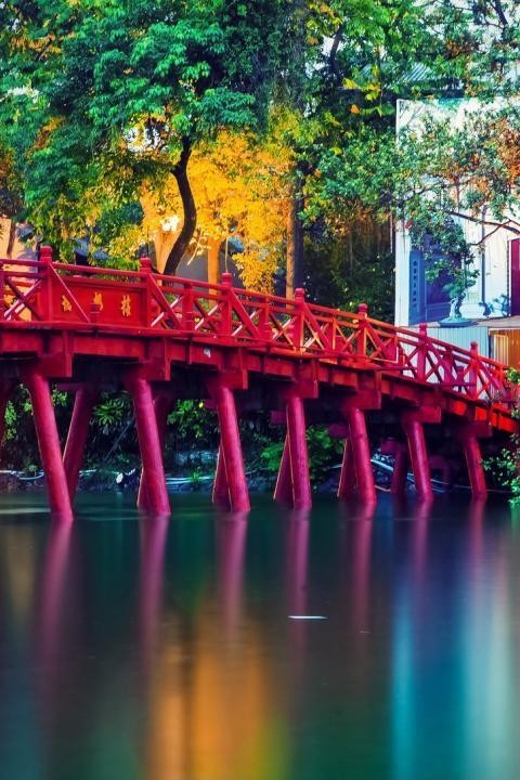
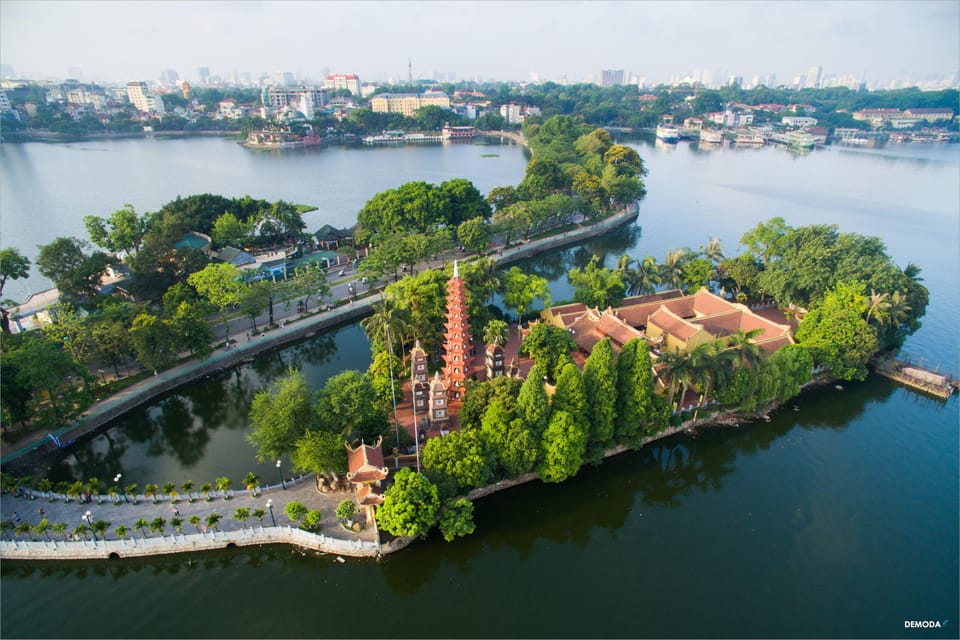
Your day ends around Hoan Kiem Lake, described as the heart of the capital where the legend of the Divine Turtle returning the sword is kept. The tour includes Ngoc Son Temple, located in the heart of the lake.
This is a meaningful closing choice. After seeing formal political spaces and education history, you end with a spiritual legend tied to place. The lake itself gives you breathing room. Even if your schedule is tight, this ending is calmer—more reflective, more scenic, and more about myth and meaning than about facts and dates.
Ngoc Son Temple is described as having unique architecture and a beautiful view over the lake. If you like your landmarks with a little atmosphere, this is the part where your day starts to feel like it’s rounding out rather than just compiling stops.
Price and Value: Is $22 Worth It?

At about $22 per person for a 4-hour tour, this price lands in the “good deal if you’ll use it well” category.
Here’s why the value can be strong:
- You’re getting a guided route that strings together major sites across different themes: politics, religion, education, neighborhoods, and legends.
- The tour includes car transfer with AC, bottled water, pickup/drop-off at the center of Hanoi, and it states all entrance tickets are included—though the exclusions list also mentions Ticket, so you’ll want to confirm what’s actually covered.
- The biggest experiential feature is Train Street egg coffee, but it’s explicitly not included, so you should budget a bit extra if you want it.
So is it worth it? Yes, if you want a first-pass overview without building your own route from scratch. If you’d rather spend more time inside each site or you’re picky about exact inclusions, you should do one quick check with the provider before paying—especially about entrance ticket coverage.
The Main Trade-Offs (So You’re Not Surprised)

Every good half-day tour has trade-offs, and this one is no exception.
First trade-off: it’s a tight schedule. You’ll see more than you’ll linger. For many people, that’s the whole point. For others, it can feel a bit like you’re constantly moving.
Second trade-off: the “included” details matter. The tour says egg coffee is not included, so don’t count on it being free. Also, the inclusion/exclusion wording around Ticket versus entrance tickets can be confusing, so it’s worth verifying what you personally will have to pay on the day.
Finally: guide quality can make or break a short tour. The positive side is strong, with guides like Chiến, Alex, and Tony earning high praise. The negative side shows up as complaints about mismatch with the description or simply a bad experience. That’s not something you can fully control, but you can reduce risk by confirming inclusions and being clear about what you want to accomplish in four hours.
Who This Tour Suits Best
This tour fits you if:
- you’re in Hanoi for a short stay and want a guided snapshot with context
- you like seeing both landmarks and local street energy
- you’re curious about cultural traditions, from pagodas to the Temple of Literature’s study prayers
- you’re willing to pay a bit extra for the egg coffee if you want the full experience
It might not fit you as well if:
- you hate crowds or tight spaces (Train Street is popular)
- you want lots of free time to roam on your own
- you need absolute clarity on every single inclusion without checking anything first
Should You Book This Half-Day Hanoi Loop?
If you’re choosing between doing nothing organized and building your own day, I’d lean toward booking—this route is designed to cover key Hanoi themes in a manageable time frame.
But do it smart. Before you go, confirm two things:
1) what you personally pay for on-site (especially the egg coffee, and the entrance ticket question)
2) what pace you should expect in those sacred and official stops
If your goal is to get oriented, see the big cultural stops, and experience a truly unusual city habit at Train Street, this tour is a strong starting point. And if you end your day at Hoan Kiem Lake with the legend in mind, you’ll understand why Hanoi keeps pulling people back.
FAQ
How long is the Hanoi City Half Day tour?
The tour lasts 4 hours.
Where does the pickup and drop-off happen?
Pickup and drop-off are at the center of Hanoi.
Is the tour offered in English?
Yes. The guide is described as English-speaking, and the tour also lists multiple other languages.
Does the price include the car, water, and tickets?
The tour includes car transfer with AC and bottled water. It also lists all entrance ticket as included, but the exclusions list Ticket, so you should confirm what is covered for your booking.
Is egg coffee included?
No. Egg coffee is not included.
What main places are visited?
You’ll visit Ho Chi Minh Mausoleum (with nearby associated sites), One Pillar Pagoda, Temple of Literature, Old Quarter highlights including Dong Xuan Market and Ta Hien Street, Train Street egg coffee, Opera House and Cathedral, and Ngoc Son Temple and Hoan Kiem Lake.
Do I need to pay extra for languages other than English?
The guide section says there is a surcharge for other languages.
Can I cancel for a refund?
Yes. It states free cancellation up to 24 hours in advance for a full refund.