
REVIEW · CITY TOURS
Hanoi City Bike Tour through Banana Island & Food Tasting
Book on Viator →Operated by Vietnam Travelers Tour · Bookable on Viator
Hanoi on two wheels can feel like a movie scene—until you get the hang of it. This half-day bike tour is interesting because it mixes classic sights with street-level Hanoi moments: Long Bien Bridge, the Old Quarter lanes, and stops tied to the B-52 story. I love how the ride gives you the daily rhythm of the city, not just photos from the usual viewpoints, and I also like that you get snacks plus coffee or tea along the way.
The one thing to think about is comfort. You’ll be joining Hanoi’s traffic flow, and if you’re a very new cyclist, you may feel anxious at the start. The good news: the guides are English-speaking and the names Nathan and Minh come up often for helping riders feel settled quickly.
In This Review
- Key Highlights to Expect
- A Bicycle Ride That Gets Past Hanoi’s Usual Postcard Spots
- Price, Timing, and Who This Half-Day Tour Fits
- Crossing Long Bien Bridge and Finding the City’s Real Momentum
- Duong Tau and the Railway Tracks: When Trains Still Shape the Streets
- Old Quarter Lanes, the Street of Youth, and West Lake Views
- Lake B52 and the Conversation That Gives the Trip Context
- Snacks, Coffee or Tea, and Food Tasting Without the FOMO
- Bike Comfort and Safety in Hanoi Traffic
- Logistics That Actually Affect Your Day
- Should You Book This Hanoi Bike Tour?
- FAQ
- How long is the Hanoi City Bike Tour?
- What does the tour cost?
- Is pickup included?
- What’s included with the tour?
- Where does the tour go?
- What happens if the weather is bad?
Key Highlights to Expect

- Long Bien Bridge: Ride across a bridge that’s over 100 years old
- Huu Tiep Lake & the Downed B-52: A somber stop that’s explained in plain, human terms
- Duong Tau railway area: Watch trains still run through the city and see cafés near the tracks
- Old Quarter alleyways: Narrow lanes, heavy scooter traffic, and very real street life
- Lake B52 story time: A guided conversation that ties the lakes together
A Bicycle Ride That Gets Past Hanoi’s Usual Postcard Spots
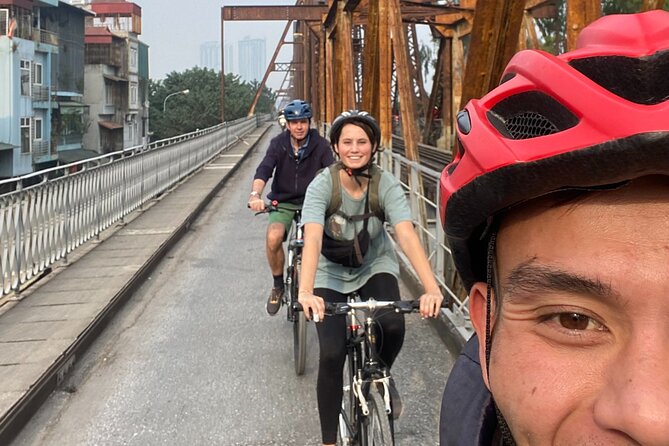
This is the kind of tour that helps you understand Hanoi by moving like a local. You don’t just drive past things and point. You ride through it. That changes everything.
You’ll start by going from your hotel area to a bike shop, where you choose a suitable bicycle. Then you head out for a loop that keeps shifting scenes: big river crossing, then city arteries, then the Old Quarter’s tight lanes. Along the way, your guide connects landmarks to everyday life—how people commute, where they pause to drink coffee, and why certain places feel different when you’re on a bike instead of in a car.
What I like most is the range of viewpoints in one morning or afternoon. You get the Red River Delta area when you go toward Banana Island, you get the layered traffic experience that Hanoi is famous for, and you also get calm moments near lakes. Even if you only stay in Hanoi for a short time, this tour gives you a stronger sense of the city’s geography and pace.
One more detail that matters: the tour includes use of bike, snacks, coffee/tea, and bottled water. That means you’re not constantly hunting for food or drinks while you’re concentrating on traffic and navigation. In a city where timing can get weird, that small support helps you stay relaxed.
You can also read our reviews of more food & drink experiences in Hanoi



Price, Timing, and Who This Half-Day Tour Fits
The price is $45 per person for about 4 hours. On paper, that’s not a bargain deal. But biking tours in Hanoi often carry real value in two areas: guiding and logistics. You’re getting an English-speaking guide, bike use, and included refreshments, plus an air-conditioned vehicle is part of the package. That combination matters when you’re trying to move efficiently without spending your limited energy figuring out routes.
Booking pace is also a useful clue. This kind of tour is typically booked about 24 days in advance on average, which suggests it’s a solid option for people planning around short stays.
You can choose a morning or afternoon time slot, which is helpful if you’re also doing museums or a food-focused evening plan. Four hours is long enough to feel like you did something real, but not so long that you’re stuck in one mode all day.
This is a good fit if:
- you enjoy street-level travel
- you want to see more than a tight cluster of Old Quarter sites
- you’re comfortable riding with a guide in active traffic
It’s a weaker fit if:
- you’re brand-new to cycling and can’t tolerate uncertainty
- you dislike safety briefing and pace changes
- you want a quiet sightseeing experience without traffic
Crossing Long Bien Bridge and Finding the City’s Real Momentum
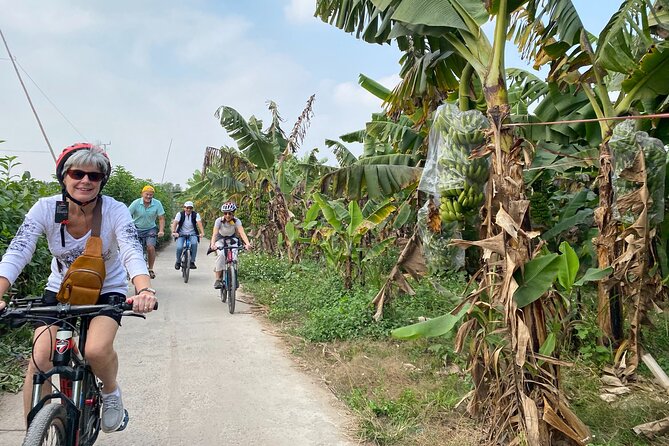
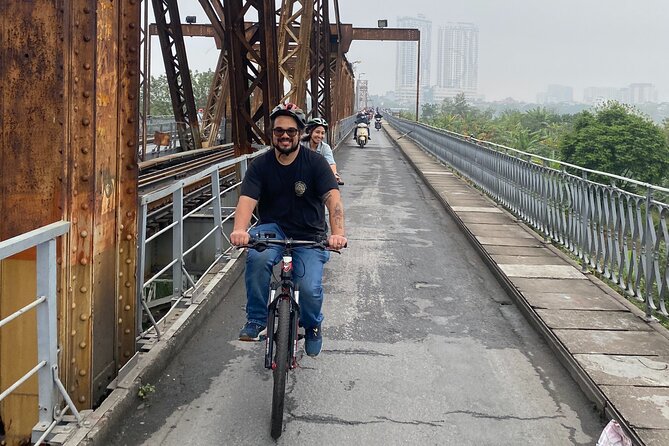
Your first major stop is Long Bien Bridge. This is more than a “look at the bridge” moment. The ride across helps you reorient. From there, Hanoi starts to make sense as a set of connected routes rather than scattered attractions.
After the bridge, you move toward Huu Tiep Lake and the area associated with the Downed B-52. This is where the tour shifts tone. You’re still on the bike, but the explanation becomes more serious, anchored in the Vietnam War era. The guide’s job here is important: you need context that’s clear and respectful, not rushed. Expect the conversation to focus on why the area is remembered and how the story is tied to the landscape.
Then the tour presses back into everyday Hanoi. You’ll pass through busy zones and narrow streets where scooter traffic is the norm. There’s a practical rhythm to it: you don’t ride like you’re on a bike path. You ride like you’re part of the street flow, under your guide’s instructions.
This is also the point where the guide quality shows. People who were worried often say the guide made them feel comfortable quickly. Names like Nathan and Minh tend to be associated with being kind, friendly, and calm when riders feel overwhelmed. That matters because a good guide doesn’t just know where to go. They manage your stress level too.
Duong Tau and the Railway Tracks: When Trains Still Shape the Streets
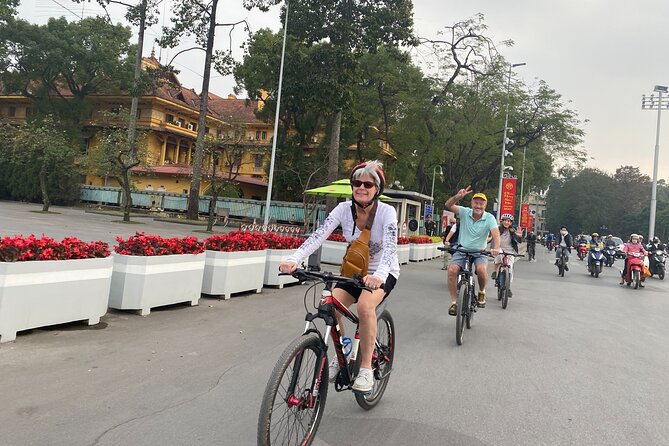
Next comes a very Hanoi kind of sight: the Duong Tau area, with railway tracks where trains still run through the city every day. It’s a strange contrast at first. Rail lines cut through neighborhoods, and nearby you’ll find cafés that feel like they grew right alongside the tracks.
What makes this stop valuable is how it reframes your idea of a city. Instead of seeing infrastructure as background, you see it as part of daily routine. Your guide can point out details you might otherwise miss—how people live alongside the tracks, how the street energy changes around the rails, and why this area feels layered rather than planned in a straight line.
A small note for expectations: you’re not there for a museum lecture. This is a street-side stop that’s meant to be seen with your eyes and understood with your guide’s explanation. If you’re sensitive to noise or close-to-traffic environments, take it in slowly and follow your guide’s pace.
Also, because you’re biking, you’ll appreciate this as more than a quick photo stop. Your route keeps moving, so you learn the pattern of the city while you’re actually in it. That’s the difference between “seeing” Hanoi and getting your bearings fast.
Old Quarter Lanes, the Street of Youth, and West Lake Views
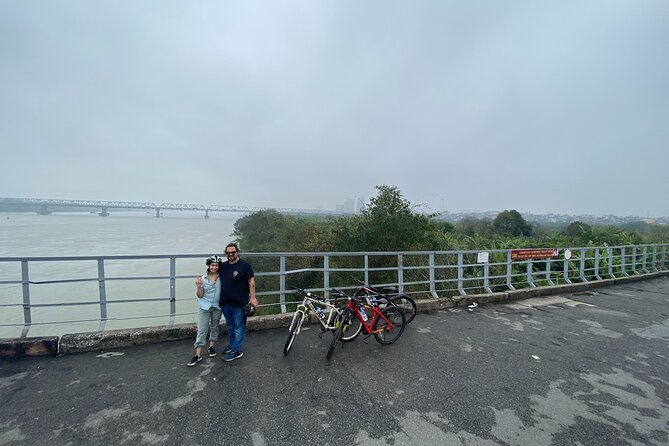
Once you’re past the railway area, the tour slides into the Old Quarter experience: narrow alleys with heavy traffic. The Old Quarter is famous for being walkable and chaotic, but biking changes your relationship to it. You go through spaces faster than on foot, yet you still feel the tight geometry of the streets.
This is where you’ll notice the contrast between tourist Hanoi and lived-in Hanoi. Tourist spots can feel staged. Old Quarter lanes feel like the city is continuing around you—shops, scooters, people weaving through, and constant motion. The guide helps you read what you’re seeing so it doesn’t just blur into noise.
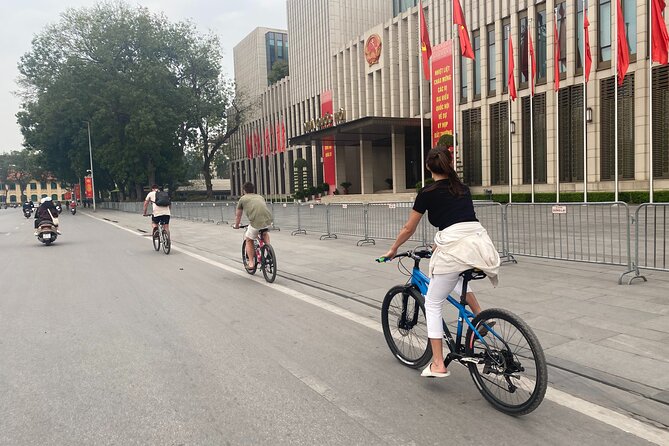
As you ride onward, you’ll also pass by the Ho Chi Minh mausoleum area. Your route includes passing through this area rather than a long museum-style stop. Still, it’s a major landmark, and seeing it from the road helps you understand where power, memory, and city traffic intersect.
Then you’ll make your way toward the street of youth and West Lake. The tone can shift here from intense street navigation to wider, more open scenery. Even if you don’t stop for a long scenic break, this part of the ride adds air to the route. It’s also a good place to reset mentally after the densest lanes.
You can also read our reviews of more tours and experiences in Hanoi





Lake B52 and the Conversation That Gives the Trip Context
The tour’s final thematic stop centers on Lake B52. You’ll have an interesting conversation about the US military shelling connected to the lake.
This section is worth approaching with patience. It’s not just a story stop; it’s part of how the tour ties Hanoi’s geography to historical memory. If you’re someone who likes history but doesn’t want a textbook, this is the kind of explanation that can feel human and grounded.
Also, you’ll likely pass by or connect through Huu Tiep Lake and then end with the Lake B52 discussion. The route structure matters because it shows how multiple points in the city relate to each other rather than existing as separate “facts” to memorize.
One practical benefit: having this conversation at the end of the ride makes the earlier scenes feel more meaningful. When you’ve already seen traffic patterns, daily routines, and local street life, the historical explanation lands with more weight. You’re not learning from a distance.
Snacks, Coffee or Tea, and Food Tasting Without the FOMO
This tour is billed as a food tasting experience, but it’s also a bike ride first. That’s a good balance for most people because you get a taste of Vietnamese flavors without turning the day into a full-on restaurant crawl.
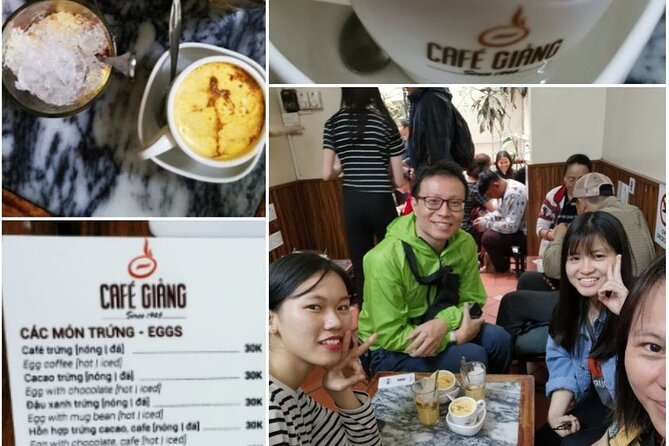
You can count on snacks plus coffee and/or tea, and bottled water is included. That’s not just comfort. It helps you keep your energy up while you’re navigating active roads. And when you’re on a bike, you want small fuel stops rather than big meals that make you feel sluggish.
What’s likely included in the tasting can vary by the route timing and what the guide brings in practice, but the overall idea is consistent: you’ll eat along the way, learn a little, and keep moving. If you tend to get hangry while sightseeing, this tour’s structure will feel smart.
Bike Comfort and Safety in Hanoi Traffic
Hanoi traffic is the main reason people hesitate—and the main reason this tour’s guide matters so much.
If you’re an inexperienced cyclist, the first moments can feel like a test. One partner reportedly decided against it at first due to fear, then survived by trusting the guide’s direction. Others describe the start as adrenaline-high, then say it gets easier once you find the rhythm.
Here’s the practical takeaway for you:
- take the first few minutes slow and follow the guide’s pace
- keep your focus on steady movement rather than scenery every second
- use the rest stops to breathe and reset before the next traffic stretch
The best guides do more than steer you through routes. They also help you interpret the flow so you aren’t panicking at every scooter pass. That’s why names like Nathan and Minh show up again and again in positive comments: people feel comfortable right away, and they feel safe once they understand the system.
The tour has a maximum group size of 20 travelers, which helps reduce chaos. Smaller groups generally mean you’re not trying to steer around a long line of bikes through tight lanes.
Logistics That Actually Affect Your Day
A few details will make your experience smoother.
Pickup is offered, but you should note that it’s not included if you stay outside the Old Quarter of Hanoi. If you’re staying farther out, ask ahead so you don’t arrive at the start point tired and confused. The tour also uses a mobile ticket, so you’ll want your phone ready at check-in time.
The ride lasts about 4 hours, which is long enough to feel complete but short enough to pair with dinner plans. Confirmation happens at booking, and the tour is described as near public transportation, which is handy if you need a backup plan.
Weather matters here. The experience requires good weather. If it’s canceled due to poor weather, you’ll be offered another date or a full refund.
What to bring:
- water sense matters since water is included, but you’ll still feel better with a plan
- comfortable clothes and shoes for biking
- a willingness to go at the guide’s speed, especially early on
Should You Book This Hanoi Bike Tour?
Book it if you want a real-feeling Hanoi day: bridge views, Old Quarter lanes, railway-track weirdness, lake stories, snacks, and a guide who can keep you calm while scooters fly past.
Skip it if you strongly dislike traffic environments or you know you can’t handle cycling in active streets. You’ll get more frustration than fun.
If you’re somewhere in the middle—curious but a little nervous—this tour can still work, especially because English-speaking guides can coach your comfort level quickly. And if you’re the type who loves history but hates “lecture days,” the B-52-linked lake conversation gives you context without turning the ride into a classroom.
FAQ
How long is the Hanoi City Bike Tour?
It’s about 4 hours.
What does the tour cost?
The price is $45.00 per person.
Is pickup included?
Pickup is offered, but it may not be included if you stay outside the Old Quarter of Hanoi.
What’s included with the tour?
It includes a bike, snacks, coffee and/or tea, bottled water, an enthusiastic English-speaking guide, and all fees and taxes. There’s also an air-conditioned vehicle included.
Where does the tour go?
The route includes stops at Long Bien Bridge, Huu Tiep Lake and the Downed B-52 area, Duong Tau (the railway tracks), passing through Ho Chi Minh mausoleum, and rides through Hanoi including West Lake and the Lake B52 area.
What happens if the weather is bad?
The experience requires good weather. If it’s canceled due to poor weather, you’ll be offered a different date or a full refund.
You Might Also Enjoy


More Food & Drink Experiences in Hanoi
More Tours in Hanoi
- Ninh Binh Full-Day Tour from Hanoi to Hoa Lu, Tam Coc & Mua Cave Via Boat & Bike
★ 5.0 · 4,384 reviews