REVIEW · CAT BA
Half day Deep Water Solo
Book on Viator →Operated by catba climbing · Bookable on Viator
Climb. Jump. Repeat. That’s Cat Ba DWS. This half-day deep water solo outing combines a boat ride with coached climbing on two limestone walls, plus the big moment: landing in warm sea water. You’ll start on Sea Face, then level up on the harder Three Brothers wall.
Two things I really like about this tour are how the guides teach jump-and-landing technique before you free-climb, and how they steer you toward routes that match your comfort and ability. A possible drawback: the activity is built around jumping off a rock face, so if you’re nervous about heights or water, you’ll want to think it through.
In This Review
- Key points before you book
- Deep Water Solo in Cat Ba: What You’re Actually Signing Up For
- The Half-Day Flow: Shoes, Harbor, and the Sea Face Warm-Up
- Sea Face Routes (4a–7a): How the Guides Match You to Your Comfort Level
- Transition to Three Brothers: What Changes When the Grades Jump
- Landing, Timing, and the Part Climbers Actually Need Help With
- The Swim Reset: Beer, Chill Time, and Why It’s Part of the Value
- Price and Value at $58: What You Get for a Half-Day
- Who This Tour Fits Best (And Who Should Think Twice)
- Practical Tips to Make Your Day Easier
- Booking, Weather, and Group Size Notes
- Should You Book This Half-Day Deep Water Solo in Cat Ba?
- FAQ
- How long is the Half-Day Deep Water Solo?
- Where do I meet for the tour?
- Is hotel pick up or drop off included?
- What’s included in the price?
- Do I need to bring climbing shoes?
- How many people are in a group?
- What kinds of climbs do you do at Sea Face?
- Is there an option if I don’t want to jump from high points?
- What happens if the weather is bad or I need to cancel?
Key points before you book
- Shoe fitting before the boat ride: plan to arrive about 15 minutes early for the right fit.
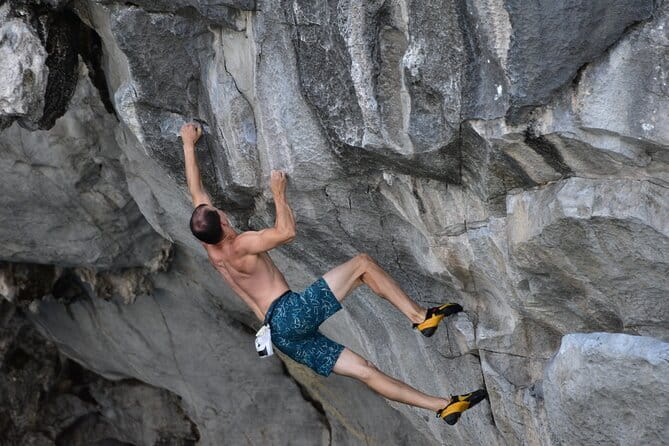
- Two walls, two difficulty tiers: Sea Face (mostly 5a–6b) then Three Brothers (5b–7c+).
- Technique coaching, not just routes: you get named grades plus notes on harder moves.
- Traverse options exist: if you don’t want to jump from higher points, you can choose lower-risk lines.
- Small group size: capped at 11, which helps with attention from guides.
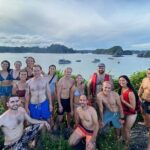
- You finish with a swim and chill time: about 10–15 minutes, plus beers and fruits.
Deep Water Solo in Cat Ba: What You’re Actually Signing Up For
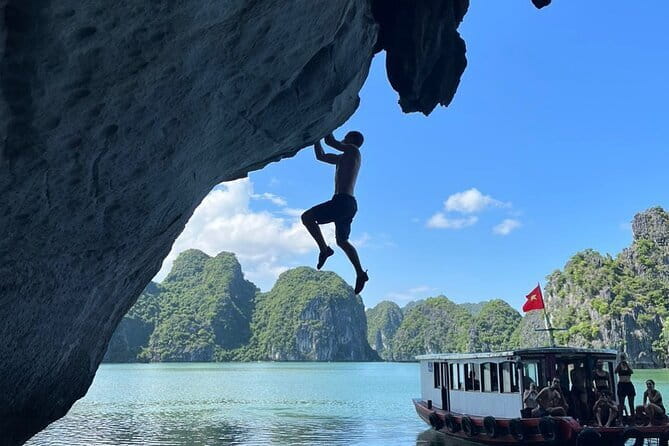
Cat Ba’s deep water solo is not a stunt show. It’s climbing where the safety plan is the sea—meaning you climb, then jump from the wall into water and swim back. That changes everything about how you move. It’s not just about grip strength. It’s about control: jumping with the right timing and landing with your body set up to take the hit.
The tour is built around two climbing areas. First you work Sea Face, which is where you learn the rhythm: jump, land, reset, then climb again. After that comes Three Brothers, a step up in difficulty with more routes in higher grades. If you’ve climbed on land before, you’ll recognize the logic. If you haven’t, the coaching is the main point.
You can also read our reviews of more tours and experiences in Cat Ba.


The Half-Day Flow: Shoes, Harbor, and the Sea Face Warm-Up
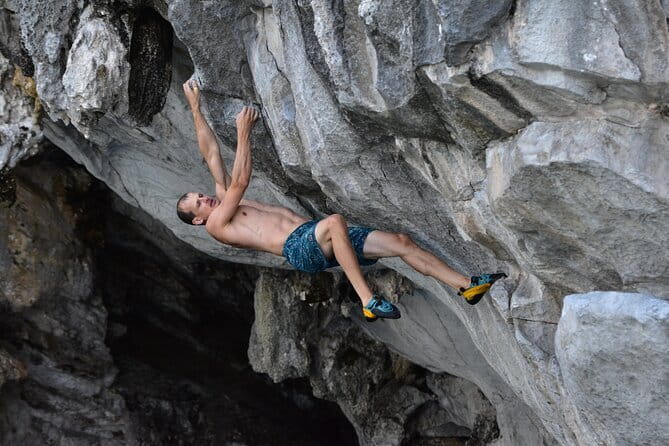
Timing matters here because you don’t just show up and start pulling on rock. You’ll come to the office at 120 Núi Ngọc about 15 minutes before departure to try on the climbing shoes and get fitted properly. After that, there’s a car transfer to the harbor where the boat is waiting.
Once on the water, the boat cruises out to the first wall: Sea Face. Before the first climb, the guides explain jumping and landing techniques. That might sound basic, but it’s the difference between feeling scared and feeling prepared. They also walk you through what to expect on each line: the climb name, the grade, and any hard moves you should watch for.
Then you start with a basic introduction climb: 4a, about 5 meters high. It’s low enough to focus on technique, not survival. And it’s a smart way to get your confidence without skipping ahead too fast.
Sea Face Routes (4a–7a): How the Guides Match You to Your Comfort Level
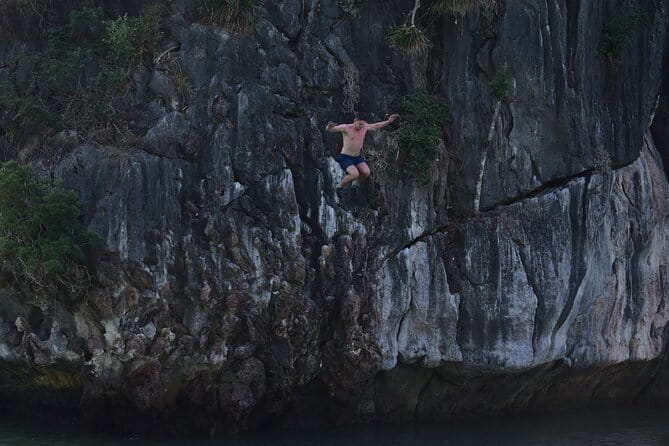
Sea Face has about 15 routes, graded from 4a to 7a, with most options in the 5a to 6b zone. That spread is exactly what you want on a half-day: enough variety that you’re not stuck repeating the same level, but structured enough that you can progress without guessing.
Here’s what the good guiding looks like on this tour: before each climb, they explain the route’s intent and the parts that tend to feel tricky. In a DWS context, that matters because the climb ends in a jump. If you rush a move that’s supposed to set you up for the exit, you’ll feel it later—either in your balance or your confidence.
There are also traverse routes if you want to avoid jumping from too high. That’s a big deal for first-timers. Not everyone needs to shoot for the highest exit to have fun. You get the climbing movement, the rock texture, and the sea landing experience without forcing fear into the process.
From the guide names shared in past experiences, you may work with instructors such as Hai, Ting, Mik, or Tinh—and the consistent theme is friendly coaching with clear instruction, not pressure.
Transition to Three Brothers: What Changes When the Grades Jump

After Sea Face, you head to the second wall: Three Brothers. This one is harder, with about 17 routes graded from 5b to 7c+. Expect more routes in the higher-strength band, so you’ll likely move more deliberately. Even if your climbing style is decent, DWS ups the mental load because your end goal is a jump, not a top-out.
The same coaching pattern continues. Before you climb, you’ll get the route name and grade, plus guidance on hard movements. That’s helpful when you’re trying to decide what to send next. Instead of guessing, you get the practical “why this move is hard” explanation that helps you commit.
If you’re a beginner, you can still enjoy Three Brothers—but your experience will depend on how confidently you handle the technique side. If you’ve been through the 4a warm-up and you felt good landing, you’ll usually find you can climb more than you expected. If jumping still feels sketchy, prioritize controlled routes and listen closely to the guide’s recommendations.
Landing, Timing, and the Part Climbers Actually Need Help With
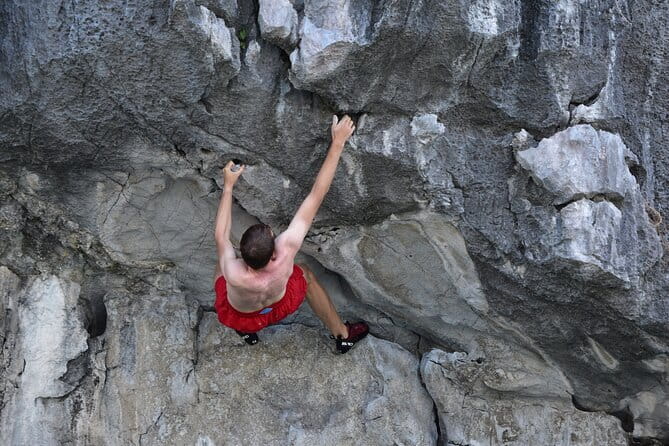
Deep water solo has a reputation for adrenaline, but the real skill is landing cleanly. The tour explicitly teaches that: before the climbs, the guides cover how to jump and how to land in the water. You’re not just tossed into the deep end.
What I like about the way this tour handles technique is that it starts small—4a at ~5m—and then builds. You learn how your body feels when you commit. After that, you can scale up with guidance. Guides also talk through the hard movements on each route, which helps you plan the exit rather than scrambling at the last second.
That blend—technique explanation plus practical movement notes—is why this tour works for different levels. One person might keep choosing 5-ish routes and focus on smooth jumps. Another person might push into 6b and beyond because the coaching reduces the guesswork.

The Swim Reset: Beer, Chill Time, and Why It’s Part of the Value
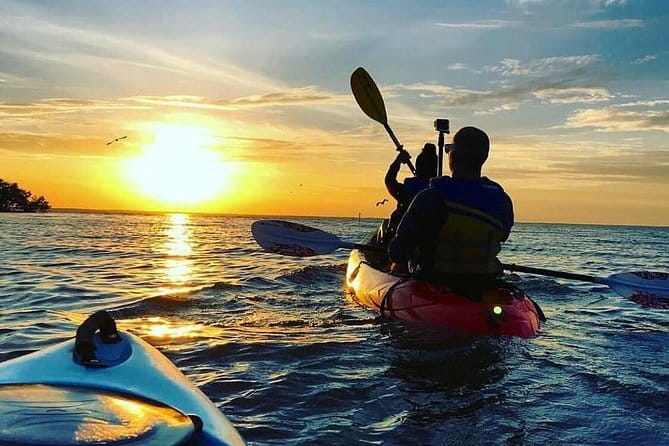
After climbing at both walls, you get about 10 to 15 minutes to swim, have some beers, and chill before returning to the harbor. It’s not a long beach break, but it’s enough time to cool off and let your shoulders un-clench.
There’s also a simple value here: you’re not spending the entire day in “work mode.” The tour builds in a reward loop. Finish the climbs, soak in the sea, then relax for the ride back.
If you’re sensitive to fatigue, take this seriously. Your body will feel different after repeated jumps and climbs. That short swim and chill window helps you end the experience feeling more like you had a day out—not like you got worn out and rushed back.
Price and Value at $58: What You Get for a Half-Day
At $58 per person for about 5 hours, this isn’t just a cheap thrill. You’re paying for a full setup: boat and entrance ticket, experienced climbing guides, climbing shoes, chalk, taxi to and from the harbor, plus 2 drinks and fruits.
The biggest value is the gear and instruction. If you were to piece together climbing shoes, entrance fees, and guided coaching on your own, the cost and hassle usually climb fast. Here, the tour handles the admin and gets you to the cliffs with shoes fitted and chalk ready.
Hotel pickup is not included, so you’ll want to plan your own way to the meeting point at 120 Núi Ngọc. That’s the one trade-off: you’re saving money and keeping things simple, but you’re responsible for getting there.
Also, the tour is booked on short-to-mid timelines—on average about 17 days in advance—which suggests it’s popular but not impossible to get.
Who This Tour Fits Best (And Who Should Think Twice)

This activity is rated for moderate physical fitness. That makes sense: even if you’re not trying to climb at the top of Three Brothers’ scale, you’ll be moving up the wall, making careful jumps, and doing repeated attempts.
Who it suits:
- Beginners who want real coaching and a gradual intro climb (4a at ~5m).
- Intermediate climbers who want multiple routes and a reason to work on DWS technique.
- People who like structure: guides explain grade, routes, and harder moves before you start.
Who should think twice:
- Anyone who is very uncomfortable with jumping from rock faces, even at lower heights.
- Anyone hoping for a casual sightseeing boat trip. This is active climbing with the jump component at the center.
If you’re on the fence, focus on how the guides set you up: technique instruction first, then a basic climb, then route recommendations. That lowers the stress of “what if I’m not ready?”
Practical Tips to Make Your Day Easier
Arrive early enough to get your shoe fit right. Shoes matter in DWS because you need secure contact on the rock while your mind is also tracking the next jump.
When the guide explains a route’s grade and hard movements, treat it like a game plan. Ask questions if something feels unclear—especially anything related to how you’ll position for the jump. The whole point is that you’re not just guessing your way off the wall.
Also, plan for getting wet. Even if you keep your jumps short, you’ll be landing in the sea and cooling off afterward. Having a way to stay comfortable after the swim time is a smart move, even if the tour itself supplies the climbing gear.
Booking, Weather, and Group Size Notes
This is a small-group experience with a maximum of 11 travelers, which usually means more attention from the guides and less standing around. Confirmation comes at booking, so you can usually lock in plans without long waits.
Weather matters. The tour requires good weather. If it’s canceled due to poor conditions, you’ll be offered a different date or a full refund. And if your schedule changes, cancellation is free up to 24 hours in advance, with the refund rules following that cutoff.
If you’re traveling around Cat Ba and you’re serious about doing this, try to build in a bit of flexibility. DWS is weather-dependent, and Cat Ba’s sea experience is the whole point.
Should You Book This Half-Day Deep Water Solo in Cat Ba?
I’d book it if you want a real climbing-and-jumping experience with coaching, not just a random outdoor activity. The structure is the selling point: shoe fitting, technique teaching, a 4a warm-up, then route options across Sea Face and Three Brothers. You also get the built-in reset with swimming and chill time afterward.
You might skip it if you’re mainly chasing views and easy walking. This tour is action-first, and your comfort with jumping will shape how much you enjoy it.
If you’re curious, this is also one of the better “first DWS” formats because it starts low and builds. You’ll get the feeling of the jump and the landing, then choose how far you want to push.
FAQ
How long is the Half-Day Deep Water Solo?
It runs for about 5 hours (approx.). The day includes climbing at two walls and a short swim and chill period before returning.
Where do I meet for the tour?
You meet at 120 Núi Ngọc, TT. Cát Bà, Cát Hải, Hải Phòng 180000, Vietnam. The activity ends back at this same meeting point.
Is hotel pick up or drop off included?
No. Hotel pick up/drop off is not included, but there is a taxi to/from the harbor as part of the tour.
What’s included in the price?
The tour includes boat & entrance ticket, experienced climbing guides, climbing shoes, chalk, taxi to/from harbor, and 2 drinks and fruits.
Do I need to bring climbing shoes?
No. Climbing shoes are included, and you’ll try on the right size at the office about 15 minutes before the trip.
How many people are in a group?
The tour has a maximum of 11 travelers.
What kinds of climbs do you do at Sea Face?
Sea Face has about 15 routes graded 4a to 7a, mostly in the 5a to 6b range. You start with a basic route (4a, about 5m high) to learn jumping and landing.
Is there an option if I don’t want to jump from high points?
Yes. There are traverse routes available if you don’t want to jump from a too-high level.
What happens if the weather is bad or I need to cancel?
This activity requires good weather. If it’s canceled due to poor weather, you’ll be offered a different date or a full refund. Cancellation is free up to 24 hours before the experience, with full refund rules based on that cutoff.