REVIEW · HALF-DAY
Ha Noi – Half-day Mindfulness meditation retreat
Book on GetYourGuide →Operated by JANGTOURS · Bookable on GetYourGuide
A calm pagoda morning can reset your head. This half-day mindfulness meditation retreat in Dong Bac gives you a guided mix of sitting, walking, chanting, and Buddhist practice in a setting that’s meant to slow you down fast. You also learn the simple etiquette of being around monks and nuns, so you’re not just meditating—you’re practicing respect as part of the lesson.
I especially like the way you’re taught the basics of meditation technique, not just told to be quiet. And the guidance from Hieu (along with Hung being very accommodating) makes the philosophy feel understandable, even if you’re brand-new.
One thing to consider: this is a rules-and-rituals experience. Dress code is strict (long sleeves and long pants), and you need to keep your voice and movement low—so bring a calm, respectful mindset along with your curiosity.
In This Review
- Key Highlights You’ll Actually Notice
- Where This Retreat Takes Place: Dong Bac’s Pagoda-Quiet Tempo
- The Start: Pagoda Etiquette and How to Greet Monks and Nuns
- Buddhist Rituals and Sutras: Learning What the Practice Is For
- Walking Meditation and Mindful Breathing: Peace You Can Use Outside
- Sitting Practice and “Touching Peace”: The Happiness Philosophy
- Soul Purification, Letting Go, and Mind Away from Thoughts
- Mindful Talking, Karma Law, and Photo-Based Explanations
- The Arhat Ritual and Blessings: Understanding the Meaning Without Guesswork
- Compassion Practice Through Releasing Beings
- Gratitude Vegetarian Lunch and a Proper Before/After Mindset
- Instruction Style: Patient Coaching for Beginners
- Price and Value: What $65 Buys in a Four-Hour Hanoi Retreat
- What to Bring, What Not to Do, and How to Avoid Awkward Moments
- Who This Half-Day Retreat Suits (and Who Might Want Another Option)
- Should You Book This Hanoi Mindfulness Meditation Retreat?
- FAQ
- How long is the Hanoi half-day mindfulness meditation retreat?
- Where does the retreat take place?
- What is included in the price?
- Is transportation included?
- What language are the instructions in?
- What should I wear?
- What is not allowed during the retreat?
- Is the retreat refundable?
Key Highlights You’ll Actually Notice
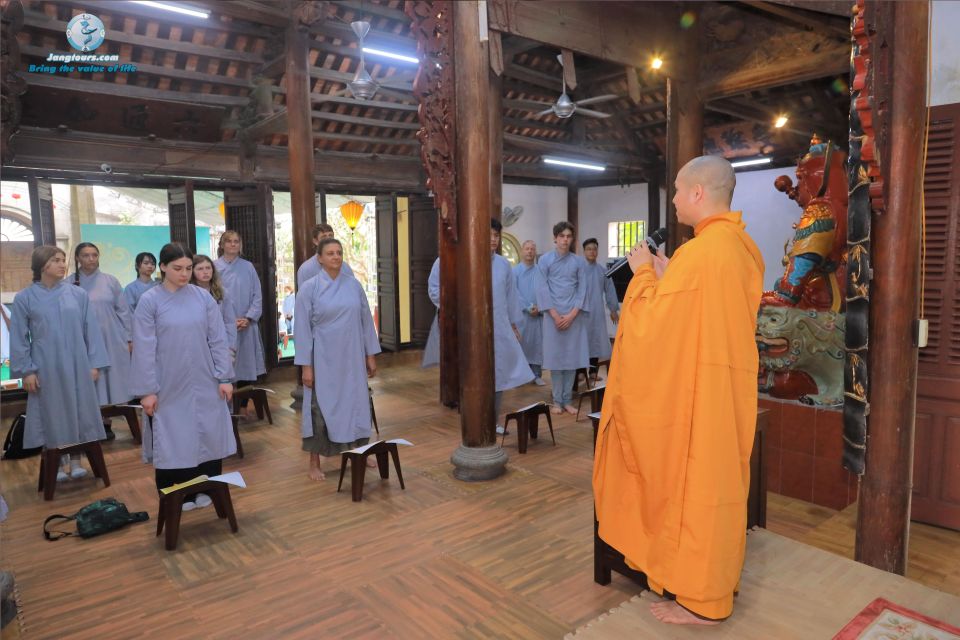
- English guidance that explains what you’re doing so you don’t feel lost halfway through
- Walking meditation + mindful breathing that teach you how to slow your pace, step by step
- Buddhist rituals and sutra practice that turn doctrine into everyday habits
- A monk Q&A style moment where you can ask about spiritual practice questions
- Compassion ritual through releasing beings as a hands-on lesson in loving-kindness
- Gratitude before and after eating with a vegetarian lunch in a peaceful pagoda setting
Where This Retreat Takes Place: Dong Bac’s Pagoda-Quiet Tempo
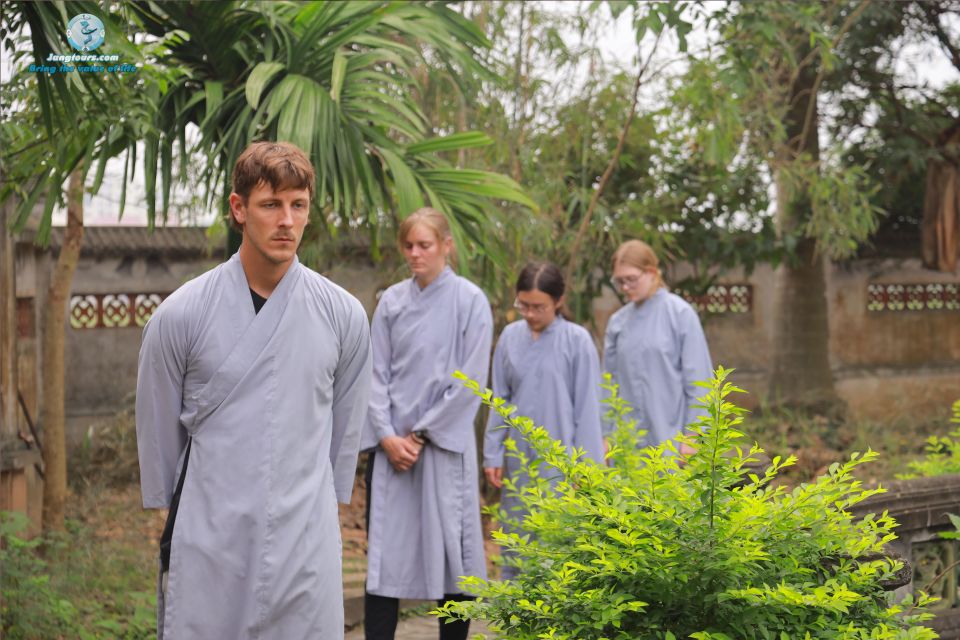
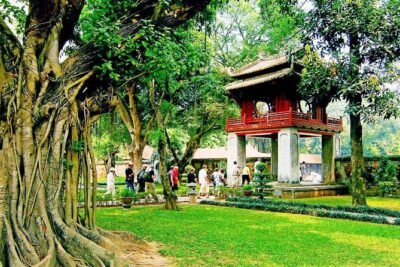
This retreat is built around a pagoda space in Dong Bac, Hanoi’s greener side. The whole point is to take you out of that constant street-speed mode and into a slower rhythm. You’re there for about four hours, so it’s long enough to feel real, but short enough that you can still enjoy the rest of your day in Hanoi.
Pagoda life can include ceremonies for local residents, and the organizers may shift the exact activity location to a comparable pagoda if needed. The bright side: the program content is designed to stay aligned with your booking, so you’re not thrown into a totally different experience. Still, it’s smart to leave a little flexibility in your schedule.
If you want quiet, structure, and a guided path, this setting does the work for you.
You can also read our reviews of more tours and experiences in Hanoi


The Start: Pagoda Etiquette and How to Greet Monks and Nuns
Right away, you get practical basics. You’ll learn the regulations for staying in a pagoda and how to greet monks and nuns when you meet them. This matters more than it sounds.
Meditation can be personal, but the environment isn’t. Knowing how to behave helps you relax. You stop worrying about whether you’re doing something disrespectful and you can focus on the actual practice.
There’s also a clear vibe to follow during the retreat: keep noise down, avoid distractions, and respect the space. It’s not about being stiff. It’s about creating conditions where your mind can settle.
Buddhist Rituals and Sutras: Learning What the Practice Is For
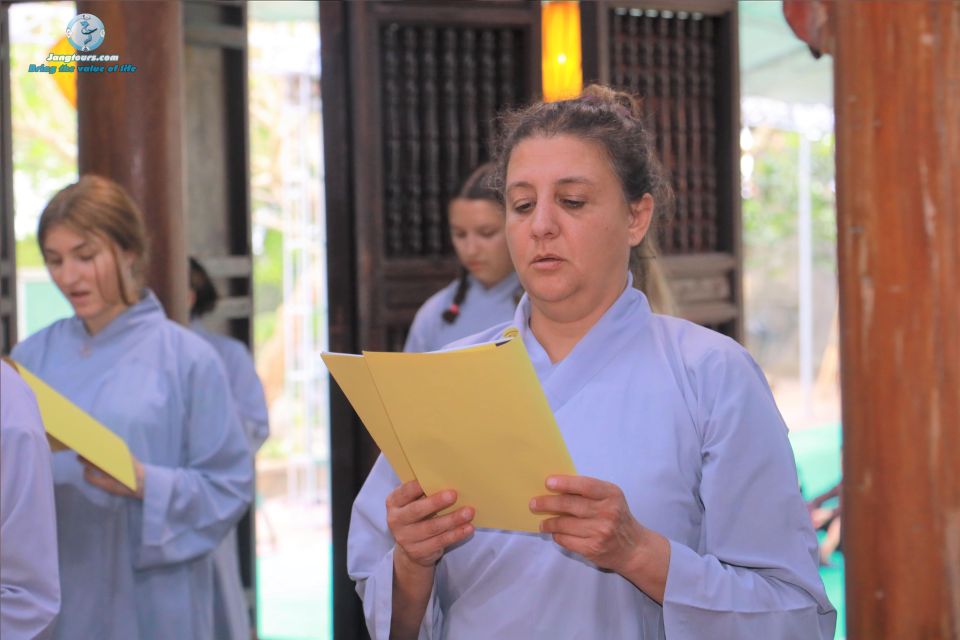
After the greetings, the retreat moves into Buddhist rituals and sutras. You’re taught that sutras are the Buddha’s teachings, and the idea is to bring those teachings into daily life. That’s the difference between “religion as a story” and “religion as a practice.”
You’ll connect practice to benefit: how you live and train your mind affects what you experience. If you’ve ever felt that meditation is just about calm for calm’s sake, this part is the correction. It frames peace as something you work with, not something you randomly stumble into.
You’ll also hear ideas that explain happiness and suffering in practice terms—what you change inside leads to what you experience outside.
Walking Meditation and Mindful Breathing: Peace You Can Use Outside
This is one of the most useful parts for first-timers. The retreat includes walking meditation, with a focus on mindfulness in each moment: breath, step, and full presence. Even if you’ve sat for meditation before, walking often reveals what your mind is doing when you’re not sitting still.
Then comes mindful breathing, paired with inner energy movement. You’re not asked to perform complicated spirituality on your own. The goal is to develop a healthy body and mind that strengthens your ability to meditate.
In plain terms, you learn a technique you can recreate later. You can use it when you’re stressed at work. You can use it on a busy street when your brain wants to sprint. It’s also a good antidote to the common travel problem: you’re in a new place, but your mind stays stuck in old habits.
Some visitors also mention Qi Gong-style meditations as part of the experience. That fits the overall theme: train your attention with both breath and body, so calm feels more physical, not just mental.
Sitting Practice and “Touching Peace”: The Happiness Philosophy
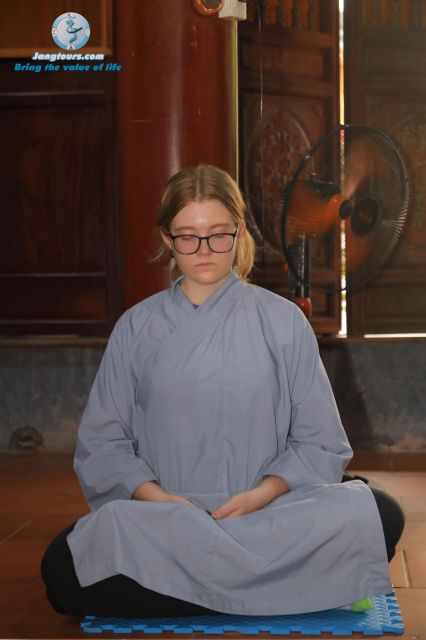
Next, the retreat zeroes in on the art of touching peace. Meditation is presented like a philosophy of happiness: the peace of your mind matters more than chasing pleasure. It sounds simple. It’s not always simple to practice.
This section guides you through how meditation works as a skill. The practice is about training attention, not about instantly achieving perfect serenity. You learn to notice what pulls you away—thought, feeling, mental noise—and then return.
Even if you don’t fully buy into every religious framing, you can still take the method. The technique is the real gift: quieting the mind by repeatedly coming back.




Soul Purification, Letting Go, and Mind Away from Thoughts
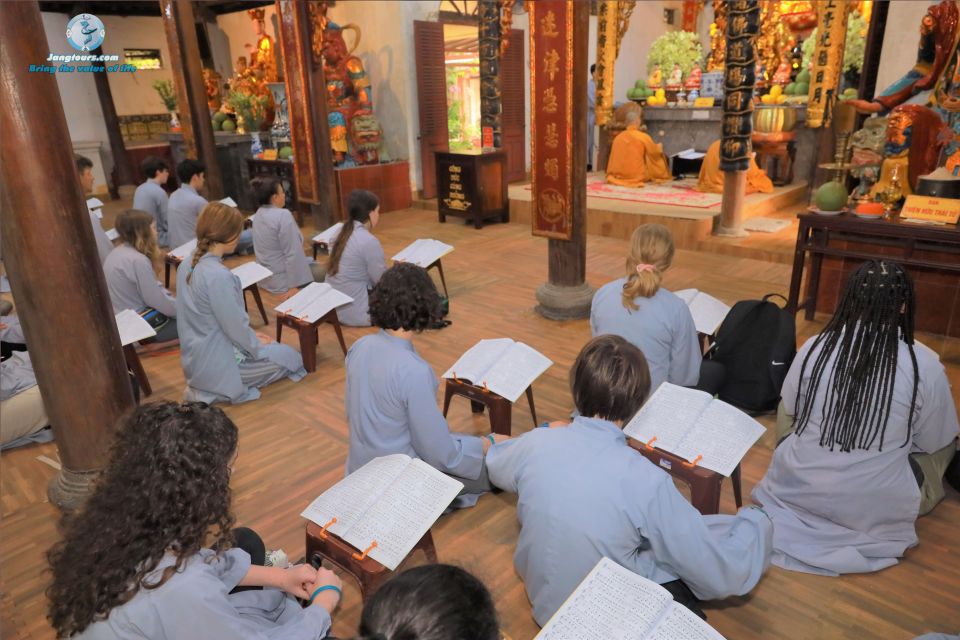
You’ll also practice meditation described as soul purification and insight. The language here is traditional: the mind moves toward peace and clarity, and you work to keep it away from unhelpful thought and emotional spirals.
There’s also a clear aim described: reduce self-ignorance to move toward enlightenment. If you’re new, don’t get stuck on the big word. You can translate the idea into something practical: meditation helps you see your mental patterns more clearly, so you stop automatically believing every thought.
This part is helpful if you’ve tried meditation apps that tell you to clear your mind, then wonder why your mind won’t cooperate. Here, the approach is steadier. You’re practicing how to relate to thoughts, not pretending they don’t exist.
Mindful Talking, Karma Law, and Photo-Based Explanations
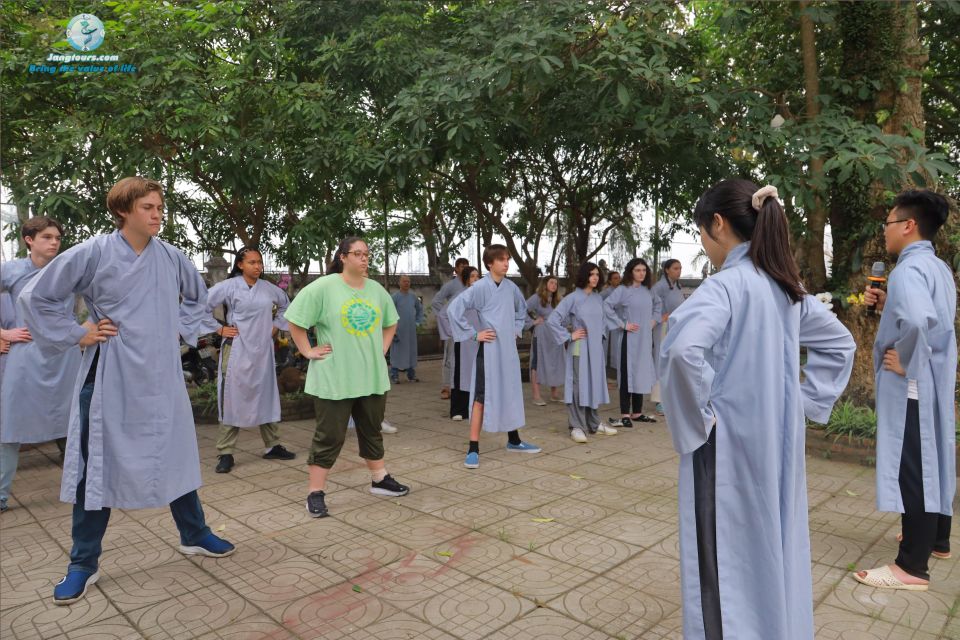
Mid-program, you’ll get mindful talking with the monk and learn about Karma law through photos. This is a different teaching style than pure meditation instruction. The photo element can make abstract ideas easier to grasp quickly.
A practical bonus: the Q&A element gives you a chance to ask real questions about spiritual practice. If you’ve ever had the moment where you think, I don’t know what I’m doing, this is the kind of moment that prevents confusion from turning into boredom.
There’s also a calm benefit here. Talking mindfully doesn’t just teach doctrine—it models how to speak and listen without ego noise.
The Arhat Ritual and Blessings: Understanding the Meaning Without Guesswork
You’ll hear about a ritual of asking for the Arhat, and you’ll be guided through the proper worship structure. The retreat explains that worshiping Arhats is a proper way to request blessings and plant seeds for enlightenment in future lives.
If that sounds heavy, keep it grounded. Think of it like learning the logic behind a ritual so you can participate with intention. You’re not asked to improvise. You’re shown what the act represents, so it becomes another form of practice rather than a random ceremony you sit through.
When you understand the why, you can relax into the how.
Compassion Practice Through Releasing Beings
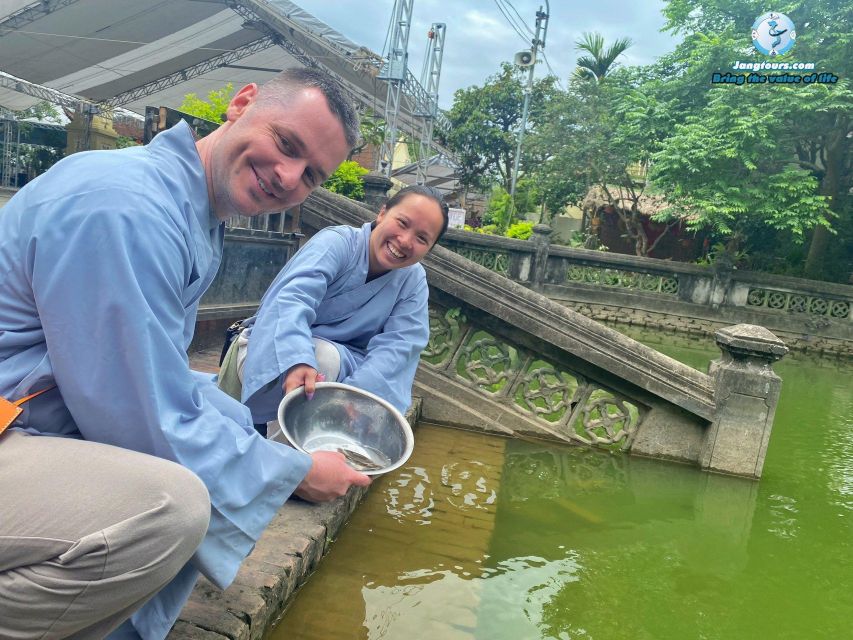
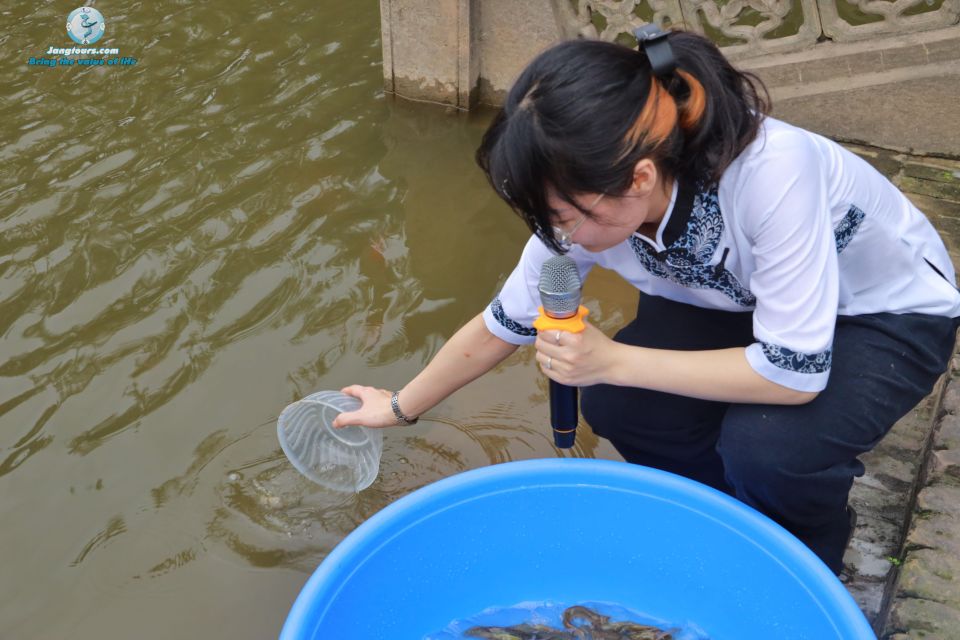
One of the most emotionally memorable pieces is compassionate practicing through releasing beings. The retreat explains that releasing beings is a way to practice compassion and good deeds, connected to a long life.
This is the part where you’ll feel the retreat’s moral center. Meditation trains the mind. Compassion practice trains your actions and your mindset toward other living beings. Even if you’re not religious in the same way, this is still a strong lesson: empathy isn’t only a feeling. It’s something you practice.
If you’re sensitive about animal release practices, it’s worth approaching this part with awareness and respect. You’ll be following the ritual as taught, not deciding the method on your own.
Gratitude Vegetarian Lunch and a Proper Before/After Mindset
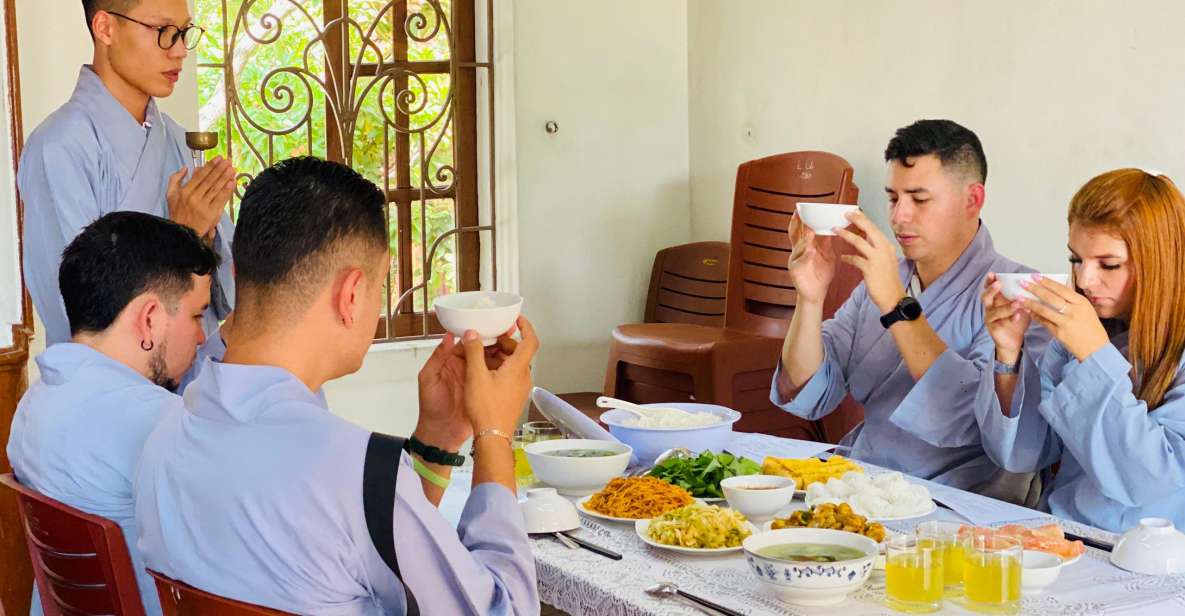
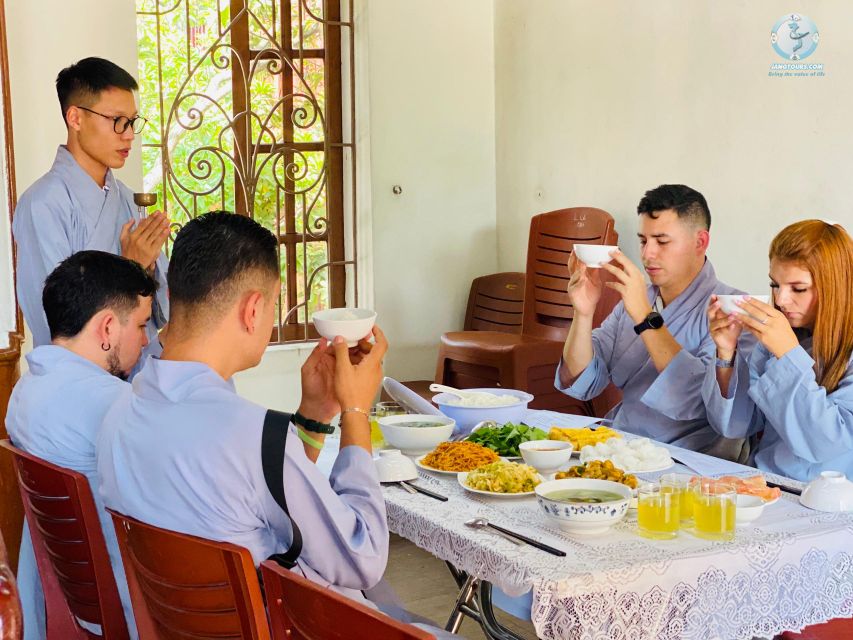
Then you eat. But it’s not just lunch; it’s part of training. You’ll take part in a grateful meal practice that focuses on expressing gratitude before and after eating. The point is mindfulness for food and avoiding waste.
This is one of those small things that changes your day. If you’re used to grabbing food while scrolling your phone, this slows you down. You start noticing how you eat and what you’re taking for granted.
You’ll have a vegetarian lunch plus mineral water. There’s also a visitor gift at the end, so you leave with more than just lessons in your head.
Instruction Style: Patient Coaching for Beginners
The strongest recurring theme from the experience is how supportive the guidance feels for beginners. Hieu is described as patient and kind, which matters because meditation instruction can be intimidating if you’re unsure of basic posture, timing, or what you’re supposed to feel.
Hung is also mentioned as accommodating, which suggests the organizers take care of the group experience beyond the formal ritual pieces. You’re not just dropped into a practice. You’re guided through it.
This matters for value because a meditation retreat can easily turn into awkward silence if you don’t know what to do. Here, you get a framework and the chance to ask questions.
Price and Value: What $65 Buys in a Four-Hour Hanoi Retreat
At $65 per person for about four hours, the math is pretty straightforward: you’re paying for guided instruction, entrance fees, spiritual rituals, and a vegetarian lunch with mineral water. Transportation isn’t included, so you’ll need to get yourself to the pagoda meeting point.
So is it worth it? For the right person, yes, because you’re getting more than time sitting. You’re getting structured teaching, etiquette coaching, multiple types of meditation practice, and Buddhist explanations delivered in English.
If you’ve been wanting to try meditation in Hanoi but you’re not sure where to start, paying for guidance can save you weeks of trial and error. You leave with techniques you can repeat without needing to decode a manual.
What to Bring, What Not to Do, and How to Avoid Awkward Moments
Plan around the dress rules. Bring a long-sleeved shirt and long pants. Short skirts aren’t appropriate. Expect the pagoda to be conservative with clothing, and dressing accordingly helps you feel comfortable and respectful.
Also don’t smoke. Avoid making noise during the session. And skip any alcohol or drugs. Red wine isn’t allowed either.
Bring a calm attitude more than anything else. This isn’t a party, and the retreat works best when you treat it like practice rather than a performance.
Who This Half-Day Retreat Suits (and Who Might Want Another Option)
This retreat is a good fit if you want a beginner-friendly introduction to meditation techniques and you’re open to Buddhist teachings in a structured way. You’ll benefit most if you like routines, want guidance in English, and enjoy learning spiritual practice with explanation, not just instruction.
It’s not suitable for wheelchair users based on the information provided. It also isn’t suitable for babies under 1 year.
If you’re looking for a silent retreat with zero talking, this likely won’t match, since you’ll do mindful talking and learn through guidance. If you like guided conversation and learning, that’s a plus.
Should You Book This Hanoi Mindfulness Meditation Retreat?
If you want a focused reset in Hanoi—real instruction, not guesswork—this is a strong choice. The combination of meditation practice (sitting, walking, breathing, and likely Qi Gong-style movements), Buddhist teachings, and a gratitude meal makes it feel complete for a half day.
Book it if you’re a beginner or you want your first meditation experience to come with structure and respectful guidance from teachers like Hieu and Hung. Skip it if strict dress rules and quiet behavior will feel stressful for you, or if you need wheelchair accessibility.
FAQ
How long is the Hanoi half-day mindfulness meditation retreat?
It lasts about 4 hours.
Where does the retreat take place?
It takes place at a pagoda in Dong Bac, Vietnam. If the pagoda needs to perform ceremonies for local residents, the program may shift to an equivalent pagoda without changing the planned experience.
What is included in the price?
You get a local guide on the spot, entrance fees, spiritual rituals, a vegetarian lunch, and mineral water.
Is transportation included?
No. Transportation is not included.
What language are the instructions in?
The instructor provides instruction in English.
What should I wear?
Bring a long-sleeved shirt and long pants. Short attire is not appropriate.
What is not allowed during the retreat?
Smoking is not allowed. Also avoid short skirts, red wine, alcohol and drugs, ripped clothing, and making noise.
Is the retreat refundable?
Yes. Free cancellation is available up to 24 hours in advance for a full refund.