REVIEW · CANOES & KAYAKS
Full day deep water soloing – Kayaking in Cat Ba – Ha Long Bay.
Book on Viator →Operated by Cat Ba Ventures · Bookable on Viator
Salt air, then a rope-free wall.
This Cat Ba day trip blends deep water soloing and kayaking around Lan Ha Bay’s limestone scenery, timed to the day’s tide so you climb at high water and paddle at low water. I like how the day is built for real progression, starting you on easier lines at the first area and then stepping up to harder walls at Three Brothers and Le Mekong. One thing to consider: it’s physically active, includes jumping/landing technique coaching, and the rock can be sharp, so a little protection mindset helps.
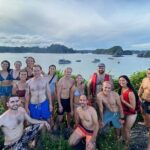
The small-group feel matters here: you’ll travel with a max of 10 people and an English-speaking local guide (names like Ninh, Windy, Kai, and Tuan/Tony come up often). The schedule also has a relaxing payoff—after climbing, you can kayak through caves and limestone channels, with options to swim if you need a break. Finally, the price is not a bargain, but it stacks value with boat time, equipment, and a guided day in some of the best cliff-and-water scenery in the region.
In This Review
- Key highlights worth planning for
- Cat Ba’s Lan Ha Bay, and why the tide runs the show
- The full-day flow from 8:00 to 17:30
- Hòn Tay Kéo: your first DWS taste and the technique basics
- Three Brothers walls: where grades get serious (5a to 7c+)
- Le Mekong overhangs, and climbing again when the water allows
- Kayaking through limestone islands, caves, and Hồ Ba Hầm
- What’s included, what isn’t, and the small gear details that matter
- English guides, route finding, and why names keep coming up
- Price and value: is $118.73 a fair deal?
- Who should book this Cat Ba DWS plus kayaking day
- Should you book Cat Ba full-day deep water soloing and kayaking?
- FAQ
- What time does the tour start and end?
- Where does it meet and where does it end?
- How does the tide affect what you do each day?
- What climbing difficulty levels should I expect?
- Is kayaking included and is it part of every day?
- What’s included in the price?
- What isn’t included?
- What if the weather is bad?
Key highlights worth planning for
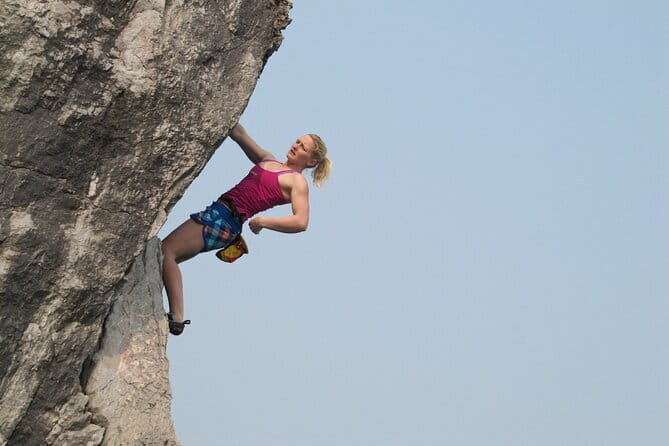
- Tide-driven route plan: climb when the water level is right, kayak when it’s low enough for better access.
- Skill progression built into the day: you start easy, then move to harder grades at later stops.
- Two climbing zones plus optional rest time: Three Brothers (up to 7c+) and Le Mekong (often overhangs), then kayaking and possible swimming.
- Kayak time through limestone islands and caves: when conditions match, Hồ Ba Hầm’s 3 lagoons can be on the menu.
- Small group and English guide support: max 10 people, local guidance for finding routes and handling technique.
- Bring climbing tape if you’re prone to scrapes: it’s a small thing that can save your skin on sharp rock.
Cat Ba’s Lan Ha Bay, and why the tide runs the show
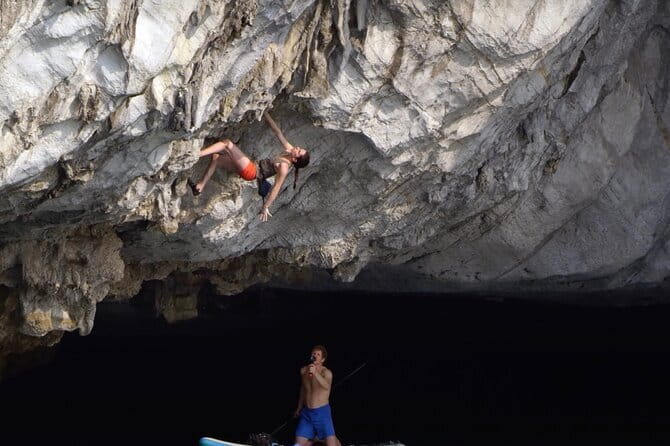
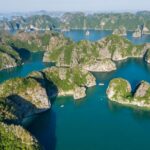
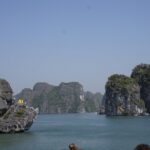
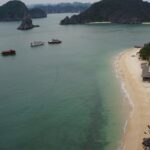
This is a full-day mix of two very different kinds of time on the water: time on a boat cruising past iconic limestone scenery, and time actually moving through it by kayak. The reason the itinerary feels smart is that the team doesn’t treat tide like a background detail. They treat it like the main organizer.
In practice, you’ll climb when tide is high so your approach and starting position work best. When the tide drops, you switch to kayaking, which makes it easier to reach certain areas, paddle through narrow limestone channels, and (when conditions allow) work toward Hồ Ba Hầm, a set of 3 lagoons.
That matters because deep water soloing isn’t just about being fearless. It’s about being set up so you can try the move, land cleanly, and keep moving safely. The guide’s job is to get you onto routes that match the water conditions of that day, not just a generic plan.
You can also read our reviews of more tours and experiences in Cat Ba

The full-day flow from 8:00 to 17:30
The day starts early in Cat Ba town. You leave at 8:00, head out by boat around Lan Ha Bay, and spend the morning alternating between cruising, route briefings, and actual climbing.
By 12:00, you’re back to boat life for lunch. The lunch is included and you can choose among seafood, meat, or vegetarian/vegan options (you’ll confirm this when booking). Then the afternoon keeps rolling: more cruising into another Ha Long Bay area, climbing again at Le Mekong, and finally kayaking toward Hồ Ba Hầm if the tide gives you access.
You’ll return to Cat Ba town around 17:30. If you like a day that stays active without turning into a rushed blur, this pacing is a solid fit. If you hate switching between intense moments and waiting periods, you’ll want to accept that boat travel and tide timing create natural pauses.
Hòn Tay Kéo: your first DWS taste and the technique basics
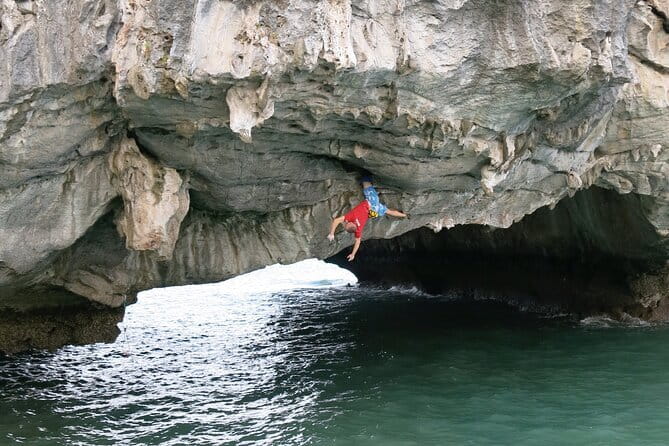
Your first climbing area is Hòn Tay Kéo. This is where you get your bearings. The team sets you up with routes that are easier than what comes next so you can feel the height, understand the movement patterns, and learn what good starts and landings look like.
Before you clip into your own effort, the English-speaking guide gives you practical instruction tied to conditions that day—especially tide details, plus jumping and landing technique. Even if you’ve climbed before, this part is useful because deep water soloing changes the way you think about commitment. There’s no harness in the routine described here; it’s about controlled decisions and clean execution.
The grades at the overall experience are listed from 4a up to 7b+, and this first stop is structured as the ramp-up. So you’re not thrown straight at the hardest options. You’re coached into the day, then you progress to the next area when your comfort grows.
Why I like this start: it turns the “scary unknown” into something you can practice quickly. You’re not just paying for big views. You’re paying for the learning curve to be handled.
Three Brothers walls: where grades get serious (5a to 7c+)
After the first area, you move to Three Brothers. This is described as the harder zone, with over 15 routes spanning 5a to 7c+. Many of these routes make use of features that feel more complex than the earlier climbs, and you can expect the physical demand to rise as the day progresses.
Three Brothers is also where the guide’s role becomes more than “pointing you to a route.” Their job is helping you find and reach the routes and pairing you with options that fit your ability and the tide conditions.
The way the day is staged is key for value. You get multiple chances at route types and difficulty rather than doing one long grind and calling it a day. If you’re an experienced climber, this is where you’ll likely feel the best “try-harder” energy. If you’re new to rope-free climbing, the earlier progression still matters, because it helps you get through the intimidation factor before you hit 7c+ territory on the same calendar day.
Le Mekong overhangs, and climbing again when the water allows
After lunch, you keep cruising and then reach the Le Mekong area. This is another climbing zone, with routes graded 5a to 7c and described as often overhang-heavy.
This stop is different from Three Brothers in feel: overhangs tend to force more body tension and more precise foot placement. The good news is that the plan still respects tides. It’s noted that you can climb here even when the tide is low, which suggests your guide is paying attention to access and route feasibility rather than only doing “high water equals climb” as a rule.
If you want variety—different angles, different demands—Le Mekong is the afternoon anchor. It’s also the part of the day that can make or break your energy levels. You’ll have boat time, lunch, then a second climbing block. Go into lunch thinking ahead about your climbing legs, not just your appetite.
You can also read our reviews of more tours and experiences in Cat Ba

Kayaking through limestone islands, caves, and Hồ Ba Hầm
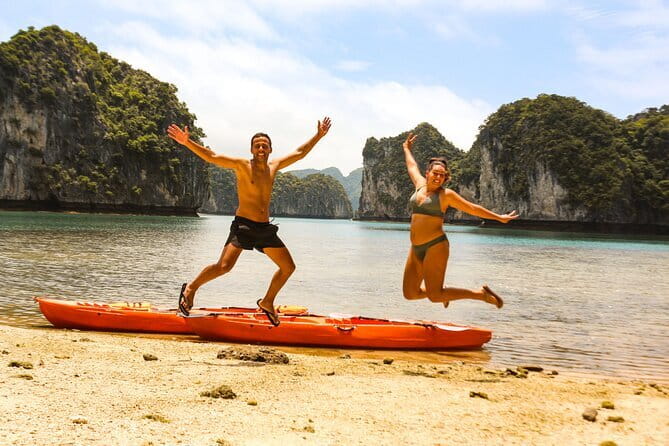
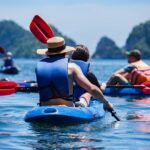
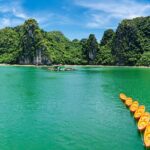
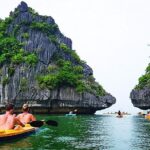
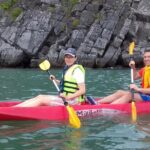
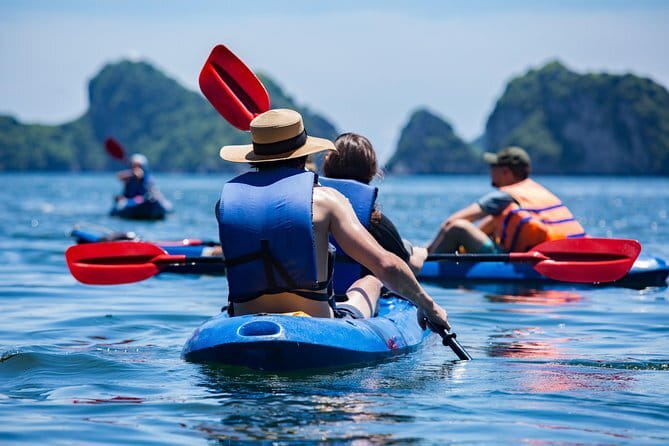
Once the climbing portion shifts, you move into kayaking. This is where the scenery becomes active. You’re not just watching cliffs from a distance. You’re paddling through limestone channels and around islands, with the option to explore caves at low tide.
The tour description emphasizes safe routes for kayaking, and the plan includes a potential stop at Hồ Ba Hầm, which means 3 hidden lagoons. The key phrase is “if the tide that day is low enough,” so the lagoons are a conditional highlight. If the water level cooperates, this is the moment that feels the most special and “Cat Ba-like,” because you’re working through narrow, secluded-feeling water spaces.
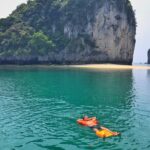
After some climbing, kayaking can feel like the right kind of decompression. It’s not a lazy float; it’s still physical, but it’s easier to pace. You can also rest by swimming if you want a break after climbing—so the day gives you multiple ways to recover without ending the adventure.
What’s included, what isn’t, and the small gear details that matter
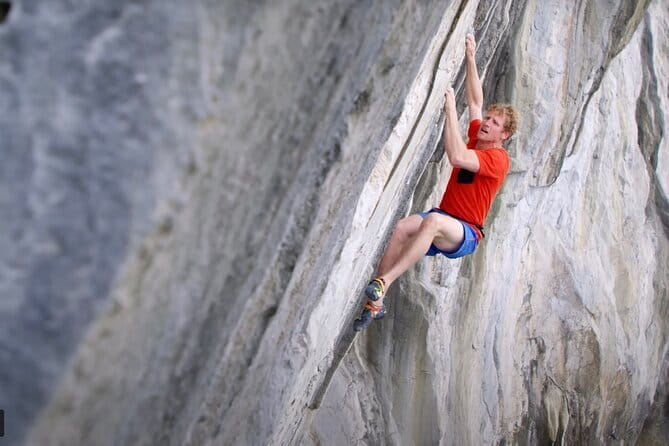
This trip includes a lot of the moving parts that often make adventure days expensive.
Included:
- Lunch on the boat (seafood or meat, plus vegetarian/vegan options when confirmed)
- Bottled water (1.5 liters)
- Climbing shoes and kayak
- English guide
- A mobile ticket
Not included:
- Coffee and/or tea
- Alcoholic beverages
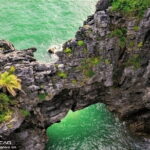
Two practical takeaways. First, you should treat the included climbing shoes as part of your comfort planning. If your feet are picky, it’s worth paying attention to fit during the swap. Second, think about rock texture. One guide mentioned as bringing chalk also used the sharpness of the limestone as a reason to consider protection, like bringing climbing tape to handle scrapes.
Finally, remember this day is designed for people with moderate physical fitness. You’re climbing, moving over uneven ground, paddling, and swimming if you choose. If your idea of “adventure” is short walks and museum stops, this won’t match your pace.
English guides, route finding, and why names keep coming up

One of the strongest signals from what’s shared about this day trip is the guide standard. You’ll have a local English-speaking guide who acts as your partner—helping you easily reach and find the routes, and giving you coaching for techniques tied to tide and safety.
Names that come up again and again include Ninh and Windy. Other guides mentioned include Kai and Tuan/Tony. Beyond the names, what matters for your decision is the pattern: guides are described as structured, conscientious, and focused on helping you climb with better timing and safer technique.
That shows up in the schedule too. The day isn’t just “here’s a wall, good luck.” It’s: brief, ramp-up, then step-up, then kayaking access, then back to town.
Price and value: is $118.73 a fair deal?
At $118.73 per person, this isn’t a budget activity. But it can be good value if you want a single day that covers a lot of real adventure in a small group.
Here’s why the price can make sense:
- You’re paying for a guided day with English instruction and route support.
- You get multiple climbing zones rather than one short try.
- You get kayak time that depends on tide timing.
- Your day includes a boat cruise plus a full lunch with options.
- You’re provided climbing shoes and a kayak, which lowers hassle and rental costs.
Where the price might feel high: if you’re a casual sightseer who only wants views and doesn’t care about the technical side of jumping/landing technique. In that case, you’d probably spend less money on an all-cruise day and enjoy the bay the same way, just with less effort.
The best match is someone who wants to earn their views with an active, guided day, and who’s comfortable climbing in moving-water conditions.
Who should book this Cat Ba DWS plus kayaking day
Book this if you:
- Want rope-free climbing with a clear progression from easier to harder routes
- Like the idea of tide timing shaping your experience, not ruining it
- Want both climbing and kayaking on the same day
- Prefer small groups (max 10) with strong English-speaking local guidance
You might skip this if you:
- Don’t like active days with multiple physical segments
- Are not comfortable with jumping/landing technique coaching tied to deep water soloing
- Want a calm, low-effort sightseeing day only
Also, if you’re traveling with someone who climbs at a different level than you, the route variety helps. The experience includes routes across a broad grade range, from 4a up to 7b+ overall, with sections noted up to 7c+.
Should you book Cat Ba full-day deep water soloing and kayaking?
If you’re the kind of traveler who likes to learn a skill while you’re on vacation, this is an excellent pick. The day is built around real technique (tide logic, jumping/landing guidance, and route finding) and it pairs that with genuinely fun water time on a kayak.
I’d book it if you already climb, or if you’re curious about trying rope-free climbing with coaching and a structured ramp-up. I’d pause if you want only easy sightseeing or if you know you’re not feeling confident with heights and water.
One last practical tip: plan your expectations around the tide. When it clicks, you get both climbing and kayaking in the best order. When it doesn’t, the experience still runs, but the lagoon part can change.
FAQ
What time does the tour start and end?
You depart at 8:00 and return to Cat Ba town at about 17:30.
Where does it meet and where does it end?
The meeting point is 223 Một Tháng Tư, TT. Cát Bà, Cát Hải, Hải Phòng, Vietnam. The activity ends back at the meeting point.
How does the tide affect what you do each day?
The plan is to climb at high tide and kayak at low tide. Certain kayaking access points, like Hồ Ba Hầm, depend on the tide being low enough.
What climbing difficulty levels should I expect?
The overall experience lists routes from 4a to 7b+. The first area is described as starting easier for technique, Three Brothers is graded from 5a to 7c+, and Le Mekong is graded from 5a to 7c.
Is kayaking included and is it part of every day?
Kayaking is included. You’ll kayak to discover Hồ Ba Hầm if the tide is low enough, so the exact lagoon experience can be tide-dependent.
What’s included in the price?
Lunch (with seafood or meat, and vegetarian/vegan options when confirmed), 1.5 liters of bottled water, climbing shoes, a kayak, and an English-speaking local guide.
What isn’t included?
Coffee and/or tea are not included, and alcoholic beverages are also not included.
What if the weather is bad?
The experience requires good weather. If it’s canceled due to poor weather, you’ll be offered a different date or a full refund.