
REVIEW · HANOI
Enjoy making pottery in Amazing Ancient Village!
Book on Viator →Operated by Hanoi Memories · Bookable on Viator
Pottery in Bat Trang feels oddly calming. I love the hands-on pottery-making and the chance to watch the real ceramic process up close. The main catch is timing: your piece needs kiln time, so plan for the extra two days to finish well.
This is the kind of activity that breaks up Hanoi fast. You start with a village visit and factory-style glimpses, then you switch gears and shape, paint, and finish your own souvenir. A standout in the experience is the guide—Son—who makes the whole workflow feel clear instead of random.
One more consideration before you book: it depends on good weather, and the finished ceramic part of the process takes longer than the tour itself (5 to 6 hours). If you’re heading out of Hanoi quickly, ask about the shorter raw option.
In This Review
- Key things I’d pay attention to
- Bat Trang Ceramic Village: the half-day reason to escape Hanoi
- Getting there from Hanoi: pickup offered, or meet at Long Bien
- Village ancient town first: history you can actually see
- The factory-style flow: from raw materials to finished ware
- Making your own pottery: shape, paint, and kiln it
- Lunch in Bat Trang: fuel for the clay work
- The big timing reality: two extra days for proper ceramics
- Price and value: $52 for a real craft day
- Who should book this pottery workshop in Hanoi
- Should you book this Bat Trang pottery experience?
- FAQ
- FAQ
- What city is this pottery tour based in?
- How much does the tour cost?
- How long is the experience?
- Is pickup available from Hanoi?
- What’s included in the tour besides pottery making?
- Do I need extra time after the tour to get the final ceramic?
- Is there an option if I’m short on time?
- How big is the group?
- What ticket do I get?
- Is the experience weather-dependent?
Key things I’d pay attention to
- A working factory visit, not just a show: you can see how locals move through ceramic stages.
- Small group size (max 8): easier questions and more hands-on attention.
- You make, paint, and put it in the kiln: your souvenir is truly yours.
- Kiln/cool-down takes 48+ hours: you’ll need a little schedule flexibility.
- Lunch is included: you’re not trying to hunt food right after the messy part.
- Weather-dependent: plan this earlier in your Hanoi stay.
Bat Trang Ceramic Village: the half-day reason to escape Hanoi
Bat Trang is famous for pottery, but what makes this tour smart is that it treats ceramics like a real craft workflow—not just a selfie stop. You start in the village ancient-town area and get a guide-led sense of how the place grew around ceramics and production. Then you move through what amounts to an on-the-ground look at local work at different stages.
That order matters. When you understand the steps first, your own piece feels less like a random craft project and more like part of a process. And when you later paint, you’re not just copying colors—you’re choosing a finish that actually fits how ceramics work.
Also, I like that this isn’t some huge bus-trip circus. The group is capped at 8 travelers, so the pace stays human and you’re more likely to get direct help when you’re shaping or decorating.
You can also read our reviews of more tours and experiences in Hanoi.



Getting there from Hanoi: pickup offered, or meet at Long Bien
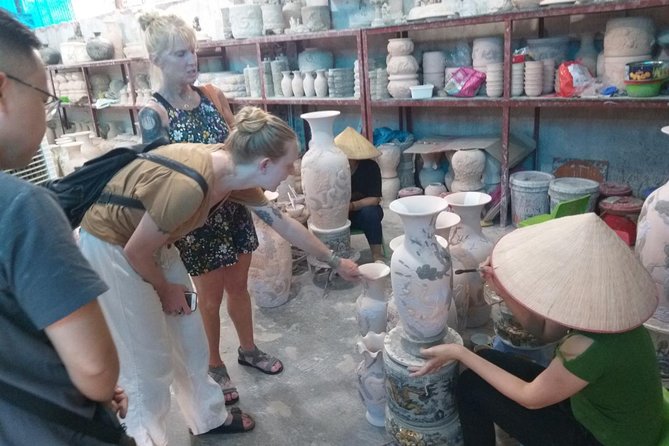
This tour runs out of Hanoi and is designed to be easy to reach. Pickup is offered, and there’s also a clear meeting point option if you prefer to manage your own transit.
If you’re meeting on your own, you go by bus from Long Bien Interchange bus station on Yen Phu street. That’s useful if you’re already near that area or want a simpler plan than coordinating with a driver.
You’ll also have a mobile ticket, so you’re not dealing with paper confirmations when you’re traveling through Vietnam’s busy transit points. And it’s near public transportation, which helps if you decide to adjust your day.
Village ancient town first: history you can actually see
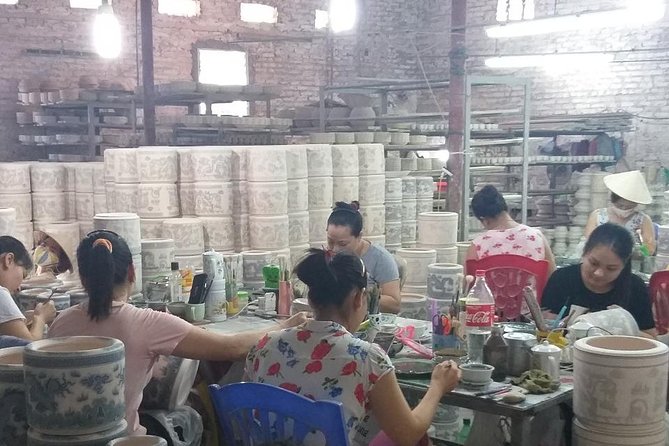
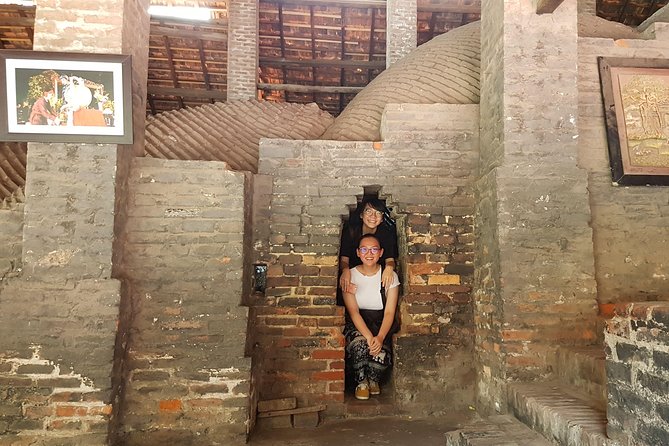
The visit starts with the village ancient town and a local guide who explains the background and culture of Bat Trang. Instead of being stuck with a lecture, you get time to watch local workers and the ceramics process across stages.
This is where the tour feels most authentic. Pottery village work is hands-on by nature, and even short observations help you notice the rhythm: making, drying, preparing, then moving into firing. Watching this in person is a good reset from Hanoi streets, because it slows your day down.
The main drawback here is simple: you’re outdoors and in active work areas. Wear comfortable shoes and expect some visual intensity around tools, materials, and the production environment.
The factory-style flow: from raw materials to finished ware
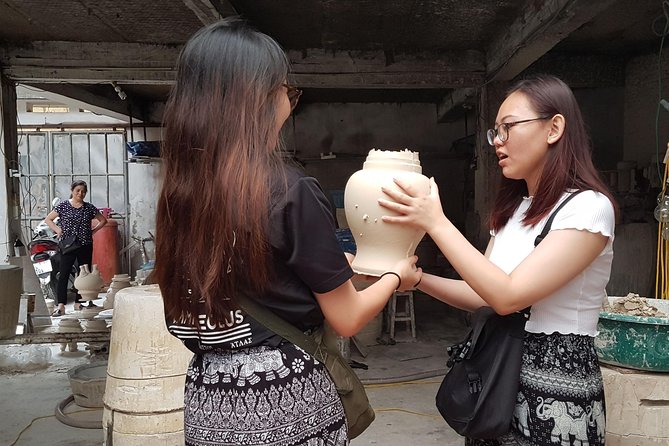
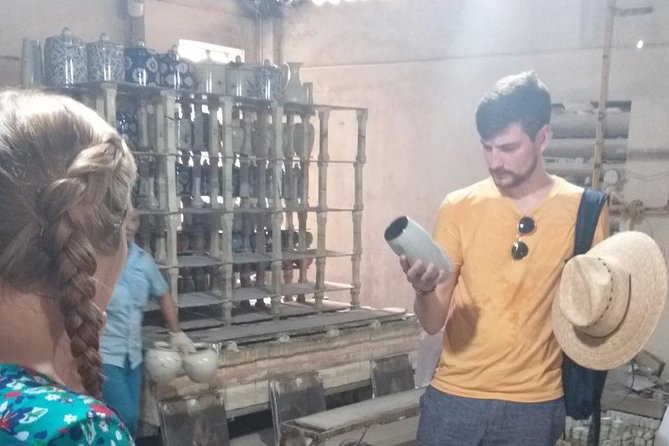
After the village intro, the tour shifts into a more “factory” style walkthrough. You get to see ceramic-making in different steps, which is a big part of why this experience is worth doing even if you’re only half-heartedly interested in pottery.
In practical terms, this sets you up for the class portion. When your hands go into the clay later, you already have a mental model of what happens after you finish—drying, then kiln firing, then proper cool-down.
That context also changes how you paint. You can think about design choices with the end result in mind, instead of treating it like temporary craft paint.
Making your own pottery: shape, paint, and kiln it

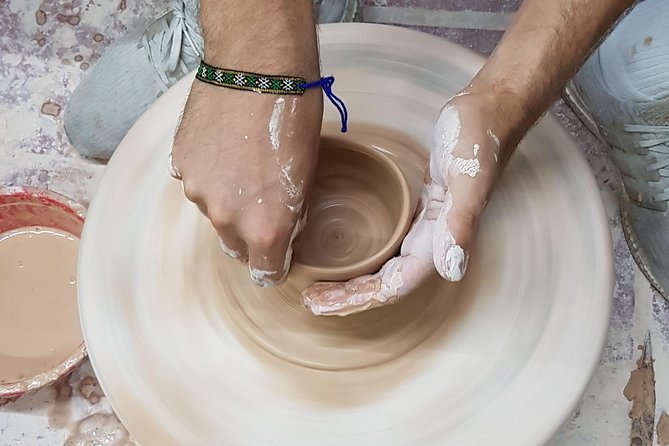
This is the heart of the experience: you get a pottery making class where you personally create a piece. The flow is straightforward:
- You make the pottery by hand.
- You paint your design.
- You place it in the kiln for the real finishing step.
This matters because pottery isn’t just decoration. Your early choices—how you form the shape and how thick or even your work feels—affect what survives the kiln stage and how it comes out after.
And the painting part is where your souvenir becomes a personal story. You’re not buying an item off a shelf; you’re participating in the part of the craft that people in the village do every day.
One practical note: pottery work can be messy. Even with guidance, expect that you’ll want to wear clothes you don’t mind getting clay dust on. If you’re sensitive to that, bring a change of top for later in your Hanoi evening plans.



Lunch in Bat Trang: fuel for the clay work
A complimentary lunch is included in the village. That’s not a small perk—pottery makes you hungry in a very specific way, because you’re concentrating and moving around more than a typical “tour with snacks.”
Having lunch covered means you don’t have to time your meal around the class schedule. It also makes the day feel complete: you’re not only in the workshops, you’re also getting a break where the local rhythm continues.
The big timing reality: two extra days for proper ceramics
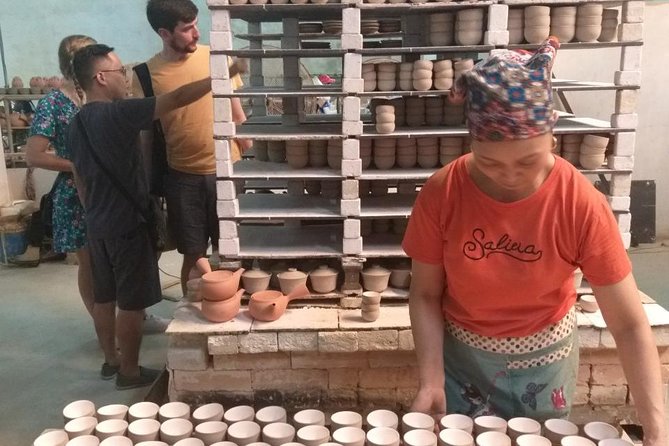
Here’s the part you need to plan for. Ceramics require an extra two days to be properly completed after they go into the kiln. That includes firing and cool-down—cool enough that your finished piece is ready and durable.
So even though the tour itself runs about 5 to 6 hours, your actual souvenir readiness lives on your calendar for a bit longer. If you can, schedule this earlier in your Hanoi stay so those two days don’t collide with your train or flight.
If you’re truly short on time, there’s still a possible workaround: you can be given a raw version that dries naturally in a few days after you leave Hanoi. It’s not the same as fully fired completion, but it can still fit travelers who need something to take home sooner.
I strongly recommend you book this earlier during your trip for exactly this reason. It’s the difference between a “project souvenir” and something that will be more useful for everyday life.
Price and value: $52 for a real craft day
At $52 per person, this tour isn’t positioned as a cheap “activity add-on.” But it also isn’t trying to be an all-day luxury extravaganza. The value comes from three things you actually do:
- You tour the Bat Trang village and see ceramic production stages with a guide.
- You participate in a hands-on class: make, paint, and put it into the kiln.
- Lunch is included, which saves you both money and time.
If you like craft work and want something you can’t just buy anywhere in a tourist shop, this pricing makes sense. You’re paying for instructor time, materials, and the real finishing step (the kiln/cool-down process you can’t replicate on your own).
Who should book this pottery workshop in Hanoi
This is a good match if you:
- Want a break from the usual Hanoi routine.
- Like hands-on activities that produce an item you made yourself.
- Prefer a small group rather than a crowd.
The tour also states most travelers can participate, and service animals are allowed. It’s near public transportation, which adds another layer of convenience for independent planning.
It may be less ideal if:
- You can’t handle the extra two days needed for proper ceramic finishing.
- You’re visiting in a period where weather is uncertain and you can’t move dates.
If you fall into either of those groups, ask early about the raw version option and plan around the kiln timeline.
Should you book this Bat Trang pottery experience?
I’d book it if you want a meaningful souvenir and a day that feels local, not staged. The combination of a village + working-process tour, then a real class where you shape and paint your own item, is exactly the kind of activity that makes a Hanoi trip feel more personal.
But do book with your schedule in mind. If the two-day kiln/cool-down window fits your trip, you’re likely to walk away with something you’ll use, not just something you’ll keep in a bag.
If it doesn’t fit, don’t panic—there’s a raw-drying option. It’s just not the same as fully finished ceramics, so manage expectations before you decide.
FAQ
FAQ
What city is this pottery tour based in?
It’s in Hanoi, Vietnam, with the pottery experience centered around Bat Trang Ceramic Village.
How much does the tour cost?
The price is $52.00 per person.
How long is the experience?
It runs about 5 to 6 hours.
Is pickup available from Hanoi?
Pickup is offered.
What’s included in the tour besides pottery making?
You get a guide-led tour of the ceramic village/production area and complimentary lunch in the village.
Do I need extra time after the tour to get the final ceramic?
Yes. Ceramics require an extra two days to be properly completed after being fired and cooled in the kiln.
Is there an option if I’m short on time?
If you’re short on time, the tour can provide a raw version that dries naturally in a few days after you leave Hanoi.
How big is the group?
The maximum group size is 8 travelers.
What ticket do I get?
You receive a mobile ticket.
Is the experience weather-dependent?
Yes. It requires good weather, and if it’s canceled due to poor weather, you’ll be offered a different date or a full refund.