REVIEW · CITY TOURS
4 Hours Private City Tour with Highligh Train Street
Book on Viator →Operated by Vietnam Travel Advisor · Bookable on Viator
Train rails, close enough to smell coffee. This 4 to 5 hour private tour strings together Hanoi’s must-see landmarks and everyday street life, with pickup offered and a guide who speaks English. I especially like the Train Street stop with a drink included, and the fact that several top sights on the route are free to enter, so your money goes to guide time and smart pacing.
One thing to consider: you’re moving through a mix of formal sites and a live working railway area. Plan for short walks and keep your expectations flexible around where trains are running and when you’ll be allowed to stand and take photos.
In This Review
- Key things I’d plan around
- Entering Hanoi’s most unusual street: Train Street
- Ho Chi Minh Mausoleum: a landmark that comes with rules
- Temple of Literature: built in 1070, still teaching lessons
- Dong Xuan Market: where the Old Quarter turns practical
- Long Bien Bridge: a quick Red River historical snapshot
- Hanoi Opera House start point and French colonial architecture
- St. Joseph’s Cathedral: Gothic Revival in the Old Quarter
- Price and logistics: why $53.32 can still feel fair
- The guide factor: when Nhat helps make the day smooth
- Should you book this Hanoi Train Street private tour?
- FAQ
- How long is the Hanoi private city tour with Train Street?
- Is the tour private?
- What is the meeting point for the tour?
- Do you get pickup and transport during the trip?
- What’s included in the price?
- Are the entrance fees included for all stops?
- Is food included?
- Are tips included for the guide or driver?
- What is the cancellation policy?
Key things I’d plan around
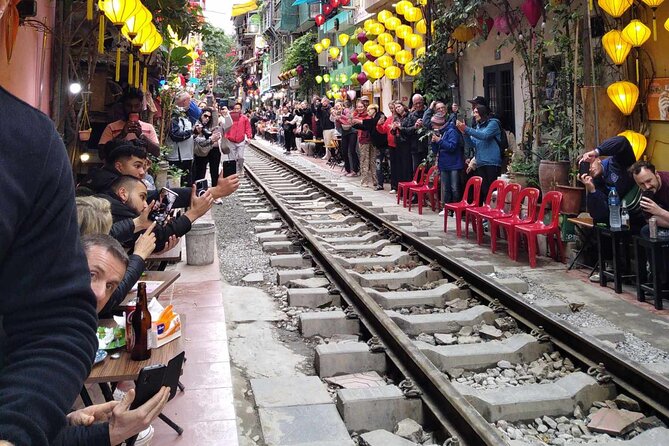
- Train Street drink stop is included so you’re not scrambling for cash or a café when you arrive.
- Ho Chi Minh Mausoleum + Temple of Literature give you both political context and early education history in one afternoon.
- Dong Xuan Market is Old Quarter central—good if you like shopping, snacks, and street scenes more than museums.
- Long Bien Bridge adds a Red River viewpoint without eating up a big chunk of your time.
- French-era architecture shows up twice with the Hanoi Opera House area and St. Joseph’s Cathedral.
- English-speaking private guide with pickup means you spend less time figuring out transport in Hanoi traffic.
Entering Hanoi’s most unusual street: Train Street
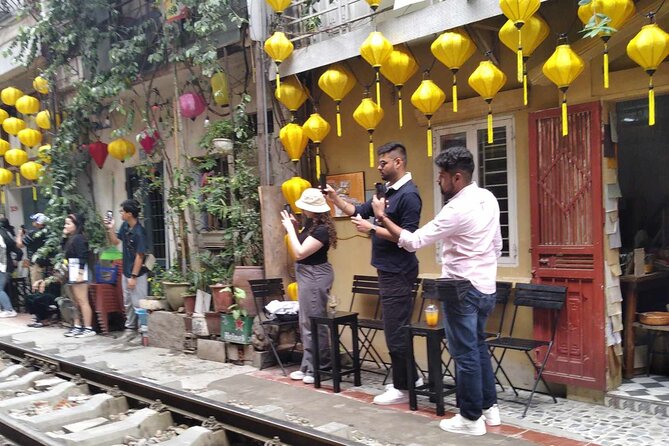
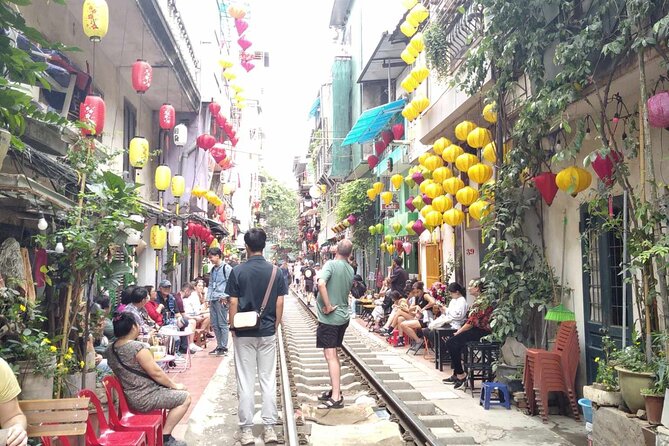
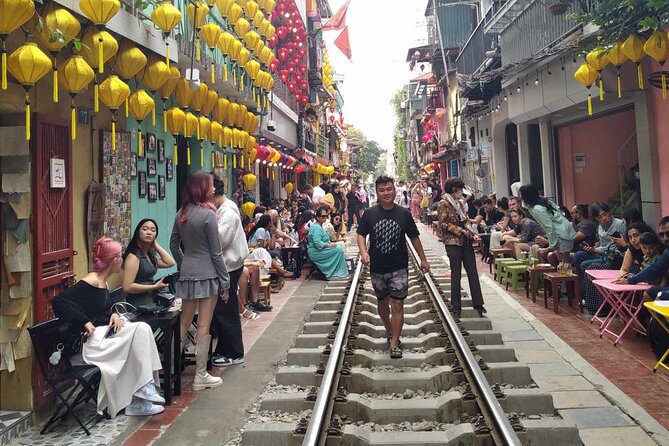
The tour starts with the kind of scene you don’t forget: Hanoi Train Street, where trains pass very close to homes turned into mini cafés and shops. It’s not just a photo stop. You’ll see how locals use the space around the tracks, and you’ll understand why this place became famous in the first place.
You’ll get a coffee and/or tea plus beer or a soft drink during the Train Street visit. That small inclusion matters. Train Street can turn into a frantic “where do we go next” moment if you arrive unprepared, but having the drink planned in keeps the stop relaxed. It also nudges you to slow down long enough to notice details like handwritten menus, stools pushed to the edge, and the way people keep living right beside the railway.
Practical tip: wear closed-toe shoes. Even if you’re careful, old-quarter streets and rail-adjacent sidewalks can be uneven. Keep your phone secured if you’re walking close to passing trains, and don’t treat it like a theme park—this is an operating rail corridor.
You can also read our reviews of more city tours in Hanoi



Ho Chi Minh Mausoleum: a landmark that comes with rules
Next is the Ho Chi Minh Mausoleum, the final resting place of Ho Chi Minh, widely known as Uncle Ho. Even if you’re not a history buff, this is one of those places where you can feel the weight of national memory. The tour keeps it to about an hour, which is a good window: long enough to see what matters, not so long that you feel stuck.
This stop is free to enter. That’s a nice bonus, because it helps make the tour value stronger—your paid portion mostly covers the guide, transfer, and the Train Street moment that you can’t easily replicate on your own without some planning.
What I like here: the guide can tie together why the mausoleum is treated differently than a typical monument. You’re not just looking at architecture; you’re seeing a place that locals and visitors view with real seriousness.
One consideration: the mausoleum experience can feel more structured than the other stops. If you prefer a relaxed schedule, wear comfortable clothing and expect you may need to follow on-site instructions closely.
Temple of Literature: built in 1070, still teaching lessons
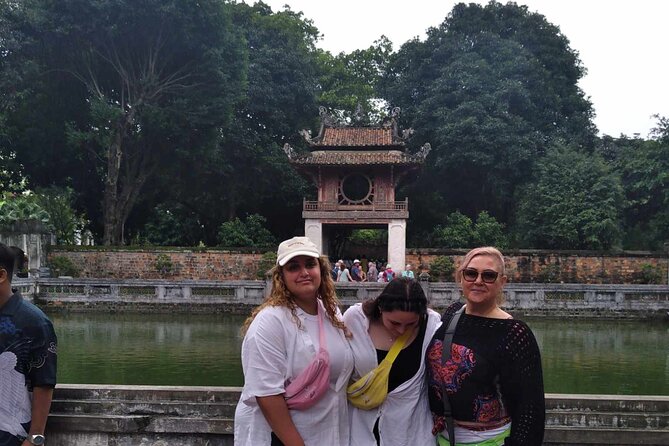
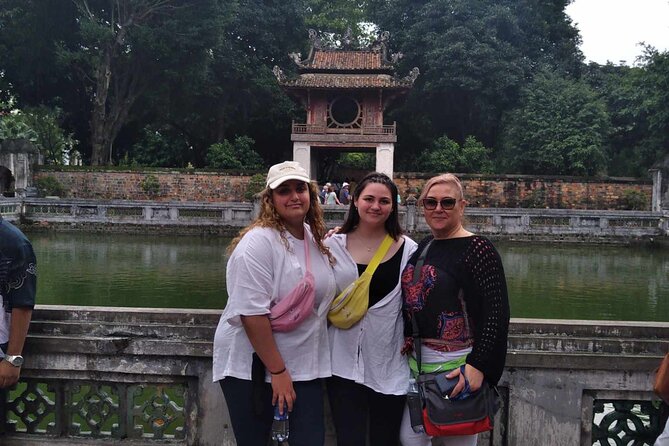
Then you’ll head to the Temple of Literature and National University area (Văn Miếu). This is where Hanoi slows down a bit. The temple is dedicated to Confucius and scholars and was built in 1070, which makes it Vietnam’s first university.
You’ll get roughly 45 minutes here, and entrance is included for this part of the tour. If you like places where you can walk through courtyards and imagine how education and scholarship shaped society, this stop is a solid payoff. Even if you only skim the key areas, the layout helps you understand why this site became a symbol of learning.
Why it’s worth your time on a short tour: it gives you a different angle on Vietnam than monuments and rail-street life. It’s culture you can move through on foot, not culture you have to “learn” like a textbook.
Practical advice: take a light layer. Courtyards can feel cooler than the surrounding streets, and you’ll likely be grateful if you’re doing photos between warm and cool zones.
Dong Xuan Market: where the Old Quarter turns practical
After the temples, the route shifts to the Old Quarter’s shopping engine: Dong Xuan Market. This is described as the largest and oldest market in Hanoi, built in 1889, and located right in the Old Quarter. The vibe is what you’d expect from a central market: people moving fast, lots of choices, and stalls organized for real-life shopping.
You’ll spend about 30 minutes here, and entry is free. That’s important. It’s easy to overspend your time in a market if you let it. The short time box keeps you from getting lost in decision fatigue, while still letting you browse the kind of items Hanoi is known for.
What you can realistically do in 30 minutes: check out souvenirs, grab a snack if you find something you like, and get your bearings for the Old Quarter streets that come right after. It’s also useful if you’re trying to understand prices and quality before buying elsewhere.
If you’re picky or budget-focused: set a quick goal before you go in. For example, pick one item you want from the market and ignore everything else until you find it. Markets can be sensory overload, and a private guide helps you move without wasting time.
Long Bien Bridge: a quick Red River historical snapshot
Next up is Long Bien Bridge, a historic French-era structure built in 1902 across the Red River. It connects the city to eastern districts and has seen important events, including bombings. Even though the stop is brief—about 15 minutes—this is a good “pause and look” moment.
This kind of stop is underrated on short city tours. When you’ve spent time among courtyards and crowded streets, you need a viewpoint to reset your brain. Long Bien Bridge does that. It also helps you understand Hanoi’s geography: the river isn’t just scenery, it’s part of how the city grew and moved.
Photo tip: bring your camera strap and keep your lens protected. Riverside areas can involve dust and wind, depending on the day.
You can also read our reviews of more private tours in Hanoi
- Doris Cruise 5 star cruise 2 days visiting Halong Bay Lan Ha Bay private balcony
★ 5.0 · 2,338 reviews




Hanoi Opera House start point and French colonial architecture
The tour begins at Hanoi Opera House (1 Tràng Tiền, Phan Chu Trinh, Hoàn Kiếm, Hà Nội), and you’ll also see it as part of your route. This opera house was built during French colonial rule between 1901 and 1911 and has a neoclassical style inspired by the Palais Garnier in Paris.
Even with a quick stop, the details are easy to spot—columns, symmetry, and that grand “European streetscape” feeling that Hanoi still carries in pockets. It’s the kind of place that makes a short city tour feel more complete because you get a visual timeline: how colonial-era Hanoi looked, not just what the monuments are named.
Why I like including it: it gives you a break from the Old Quarter’s tight street texture. You go from narrow lanes and market density to a big open architectural face. It’s a nice contrast.
St. Joseph’s Cathedral: Gothic Revival in the Old Quarter
The last major sight is St. Joseph’s Cathedral, built between 1886 and 1889 by French colonialists. It’s Gothic Revival architecture and is noted as the largest Catholic church in Hanoi.
You’ll have about 20 minutes here. That’s usually enough to see the exterior details, get a few photos, and notice how the cathedral fits into the surrounding urban fabric. The Old Quarter isn’t only about shopping and trades; it also has spiritual landmarks tucked into the same city rhythm.
If you like architecture: this is one of the best “quick” stops on the list because the style reads clearly from outside. If you’re more about stories than buildings, the guide can help connect the cathedral to the broader colonial-era presence you’re also seeing at the opera house.
Price and logistics: why $53.32 can still feel fair
The price is $53.32 per person for a private 4 to 5 hour tour, with pickup offered and private transfer during the trip. You also get a private English-speaking guide, entrance fees included, and a drink during the Train Street stop.
On paper, $53.32 can look like a “tour tax.” In real Hanoi terms, it’s often a good deal because transportation and time matter. Old Quarter traffic is busy, and getting between major sites without a plan can chew up your afternoon fast—especially when you only have a few hours.
Also, several stops on your route are free to enter (like the Ho Chi Minh Mausoleum, Dong Xuan Market, and St. Joseph’s Cathedral). That helps your money go toward the guide experience and the one truly specialized stop: Train Street, where you wouldn’t want to guess your way in.
What you don’t get: tips for the guide and driver, extra sightseeing beyond the main route, and meals. That’s standard for private tours, but it’s worth planning so you’re not hungry and stressed when the route moves between stops.
The guide factor: when Nhat helps make the day smooth
A standout theme in the experience is how the guide keeps things comfortable and organized. One guide named Nhat gets specific praise, including for being a safe moped rider and for going the extra mile to assist guests—especially seniors. That matters more than people think. In Hanoi, a good guide reduces friction: where to stand, how long to spend, when to move, and how to adjust if your group moves slower.
That same kind of care shows up in how guests describe not having to wait around for transport or deal with check-in chaos when they’re doing multiple parts of a trip. You’re essentially paying for a calm route.
My advice: if you have any mobility needs or a tight schedule, tell the guide at the start. Private touring works best when you treat it like a customized plan, not a factory line.
Should you book this Hanoi Train Street private tour?
I think this tour is a great fit if you want a short, high-coverage afternoon that mixes iconic sights with daily-life details. It works well for families, first-time visitors, and anyone who wants the Train Street moment without hunting down logistics alone.
Book it if you:
- Want Train Street plus major landmarks in about half a day
- Prefer a private, English-speaking guide and pickup
- Like getting your bearings in the Old Quarter with minimal stress
Skip it (or adjust expectations) if you:
- Need a super relaxed pace with lots of downtime
- Don’t want any railway-related crowding or timing considerations
- Are looking for a deep museum-focused day rather than city walking and architectural stops
If you want a practical Hanoi afternoon that feels efficient but not rushed, this is a smart way to do it.
FAQ
How long is the Hanoi private city tour with Train Street?
It runs about 4 to 5 hours.
Is the tour private?
Yes. It’s a private tour/activity, and only your group participates.
What is the meeting point for the tour?
The tour starts at Hanoi Opera House, 1 Tràng Tiền, Phan Chu Trinh, Hoàn Kiếm, Hà Nội, Vietnam.
Do you get pickup and transport during the trip?
Pickup is offered, and there is a private transfer during the trip.
What’s included in the price?
Included are a private English-speaking guide, private transfer during the trip, entrance fees, and coffee/tea plus beer or soft drinks at Train Street.
Are the entrance fees included for all stops?
Entrance fees are included overall, and at least some stops on the route are listed as admission free (such as Ho Chi Minh Mausoleum and Dong Xuan Market), while Temple of Literature has admission included.
Is food included?
No meal is included.
Are tips included for the guide or driver?
No. Tips for the tour guide and driver are not included.
What is the cancellation policy?
You can cancel for a full refund up to 24 hours before the experience start time. Free cancellation is offered.
You Might Also Enjoy




More City Tours in Hanoi



More Tours in Hanoi
- Ninh Binh Full-Day Tour from Hanoi to Hoa Lu, Tam Coc & Mua Cave Via Boat & Bike
★ 5.0 · 4,384 reviews