
REVIEW · HANOI
Knife Making in Blacksmith Village in Hanoi
Book on GetYourGuide →Operated by Beyond Backstreet Tours · Bookable on GetYourGuide
Fire, hammers, and a knife you’ll truly own. In Da Sy, a Hanoi-area blacksmith village in Ha Dong, you spend about 2.5 hours learning the full process of making a simple knife, right alongside the people who still keep the craft alive. With an English-speaking facilitator and a small group (up to 10), you get a hands-on experience that feels local and practical—not just a photo stop.
I especially like two things. First, you don’t just watch—you forge your own one-of-a-kind knife through the key steps like shaping red-hot iron and tempering with water. Second, the host experience matters: Mai’s English-friendly guidance makes the whole workshop easier to follow, and it also keeps you feeling safe while you’re working around heat and sparks.
One thing to plan for: this is real blacksmith work. You’ll be near hot metal, so you’ll want long sleeves and long pants (no dresses) and you should come ready for sparks.
In This Review
- Key highlights at a glance
- From Hanoi to Da Sy: why this knife-making stops you in your tracks
- The 2.5-hour flow: what you’ll do step by step
- Meeting point and getting oriented
- Safety gear and clothing rules
- Making a simple knife: the core forge stages
- Light refreshments and taking your knife home
- What you’ll learn beyond the hammer swing
- 1) You learn the logic behind each forge stage
- 2) You get a clearer picture of village blacksmith life
- 3) The “traditional technique” angle is practical
- Da Sy’s history: from wartime weapons to kitchen tools
- Price and value: is $54 actually fair?
- Meeting logistics that can trip you up (and how to avoid it)
- Who this Hanoi knife workshop fits best
- Tips to get the most out of it (and keep your knife safe)
- Should you book Knife Making in Blacksmith Village in Hanoi?
- FAQ
- How long is the knife-making workshop?
- How much does it cost?
- Where do we meet for the workshop?
- Is pick-up and drop-off included in Hanoi?
- What’s included in the price?
- Do I get to take the knife home?
- What should I wear?
- Is a knife cover included?
- Is the activity refundable if my plans change?
Key highlights at a glance
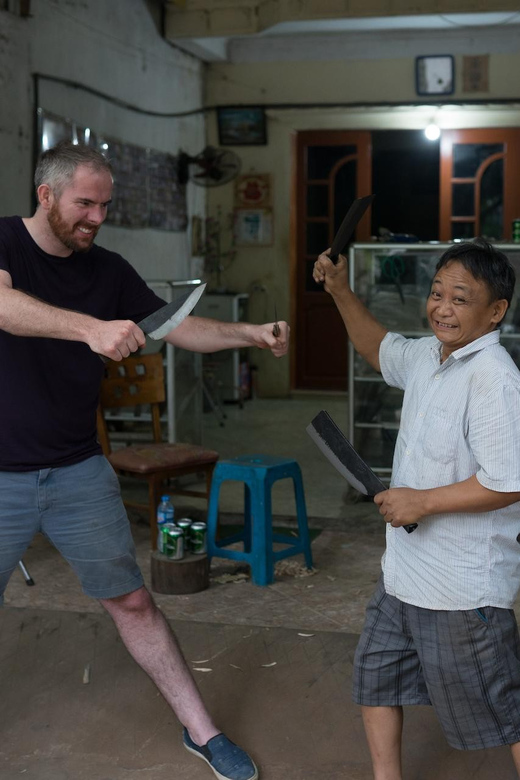
- Forge your own hand-made knife through the main stages of the process
- Learn a blacksmith’s day-to-day routine in Da Sy’s working village setting
- Tempering and shaping techniques like heating, hammering, and quenching in water
- English facilitation so you understand what you’re doing as you do it
- Take home a functional souvenir (not a decorative replica)
- Small group size up to 10, for a more personal feel
From Hanoi to Da Sy: why this knife-making stops you in your tracks
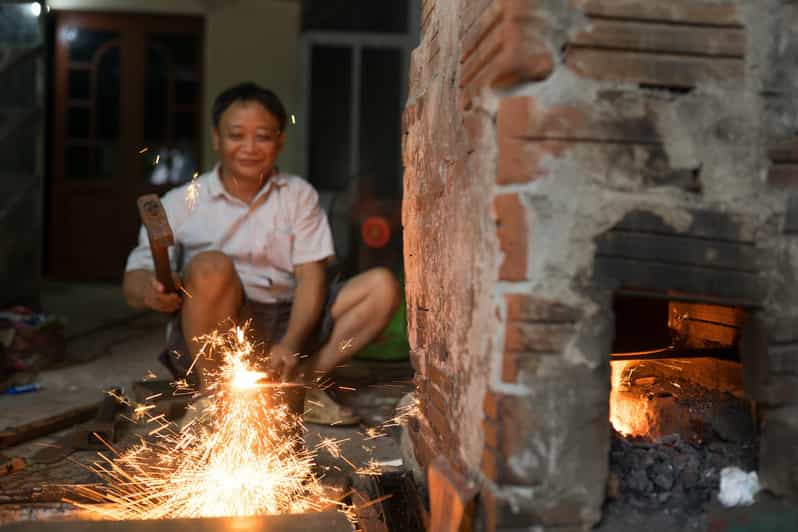
Knife-making sounds like a “cool activity,” but this one works because it’s tied to a working place with real history. You’re headed to Da Sy, a blacksmith village in Kien Hung Commune, Ha Dong Town (in Hanoi’s wider area). It’s known for long-standing forging craft, and the story behind it gives the experience weight.
During wartime, Da Sy helped support Vietnam’s military by producing weapons. When peace returned about 40 years ago, the craft didn’t disappear—it shifted. Blacksmiths turned to agricultural tools like ploughs and rakes, plus machinery parts and kitchen implements. That change matters because it means you’re not just learning “a trick”—you’re learning how a community adapted its metal skills to ordinary daily life.
What you’ll feel in the workshop is that this is still a trade. Even with machines helping blacksmiths today, you’ll focus on traditional, hands-on techniques for making a knife. You’re doing the work, not just hearing about it.
You can also read our reviews of more tours and experiences in Hanoi.



The 2.5-hour flow: what you’ll do step by step
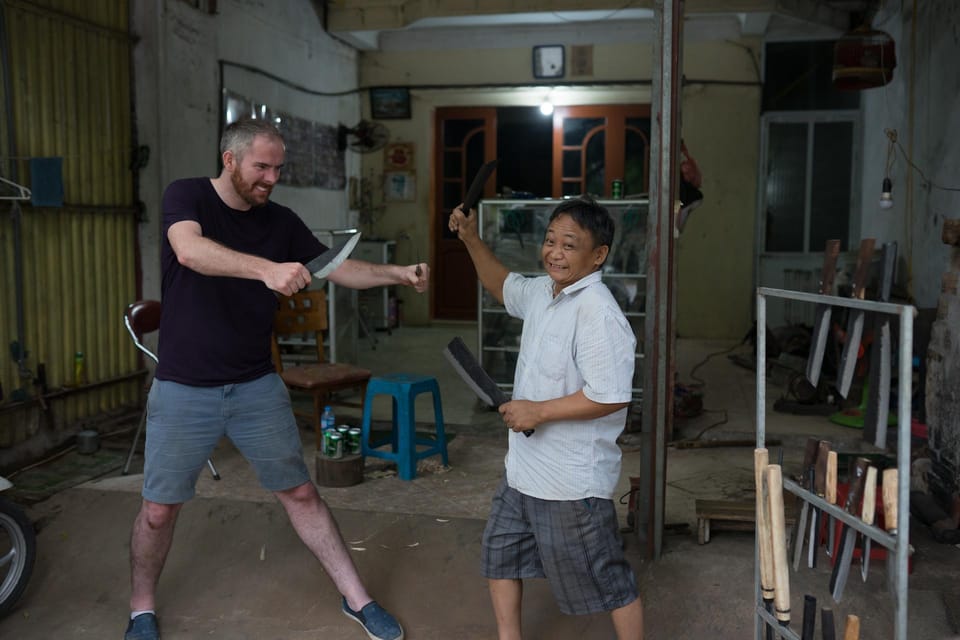
Your workshop runs about 2.5 hours. Timings can vary, and you’ll want to check available starting times before you lock in the rest of your Hanoi day. The group is small (limited to 10), which helps with supervision while you’re using tools and working around heat.
Meeting point and getting oriented
You’ll meet at the entrance of a football field next to a green fence. The session ends back at the same meeting point. Once everyone’s gathered, the facilitator helps you get set up and explains the plan for the knife-making process.
This matters more than you might think. Knife forging has multiple steps, and if you lose the thread—heat, shaping, quenching, sharpening—you end up with a frustrating result. Here, you’re guided so you understand what each stage is trying to achieve.
Safety gear and clothing rules
You’ll be provided with mask and eye protection accessories. That’s a key part of why the workshop feels organized. You also need to wear the right clothes: long sleeves and long pants are strongly recommended to avoid sparks, and no dresses.
If you’re thinking, I’ll just wear shorts, don’t. It’s not worth risking exposed skin for a souvenir knife. Come dressed for work, not sightseeing.
Making a simple knife: the core forge stages
The course takes you through the full process of making a simple knife. Even though you’ll be learning a guided craft step-by-step, you’ll be doing the forging work yourself. The main stages you’ll go through include:
- Making rough drafts
This is where the shape starts. You’re getting a basic knife form rather than jumping straight to polishing.
- Keeping fires burning and working with hot iron
Blacksmithing is all about timing and heat control. You’ll learn how to manage the pace of the work while the metal stays at the right temperature.
- Hitting red-hot iron into shape with hammers
This is the moment most people come for. You’ll hammer and refine the blade’s shape, and you’ll see how repeated strikes change both the form and thickness.
- Tempering (strengthening) with water
Tempering is the functional step that affects how the metal holds up. You’re learning the idea of strengthening the blade after shaping.
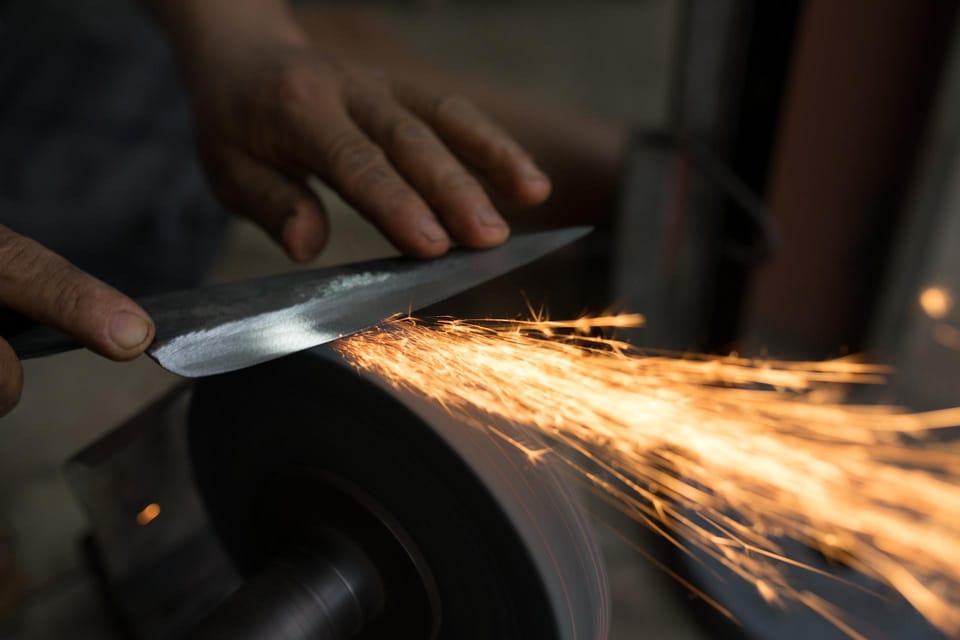
- Sharpening the final product
The last step turns your hammered metal into something you can actually use. By the end, your knife isn’t just a forged souvenir—it’s a tool you can take home.
Even if machines exist in modern blacksmithing, this workshop focuses on the traditional, hands-on methods because that’s what creates the right learning experience and a better-quality result.



Light refreshments and taking your knife home
You’ll get light refreshments during the workshop. Plan to pace yourself—two and a half hours near heat and physical tool work can be tiring, even if you’re not doing every heavy action for long.
At the end, you take home the knife you made. The knife is included, and it’s meant to be used back home—not just displayed.
What you’ll learn beyond the hammer swing
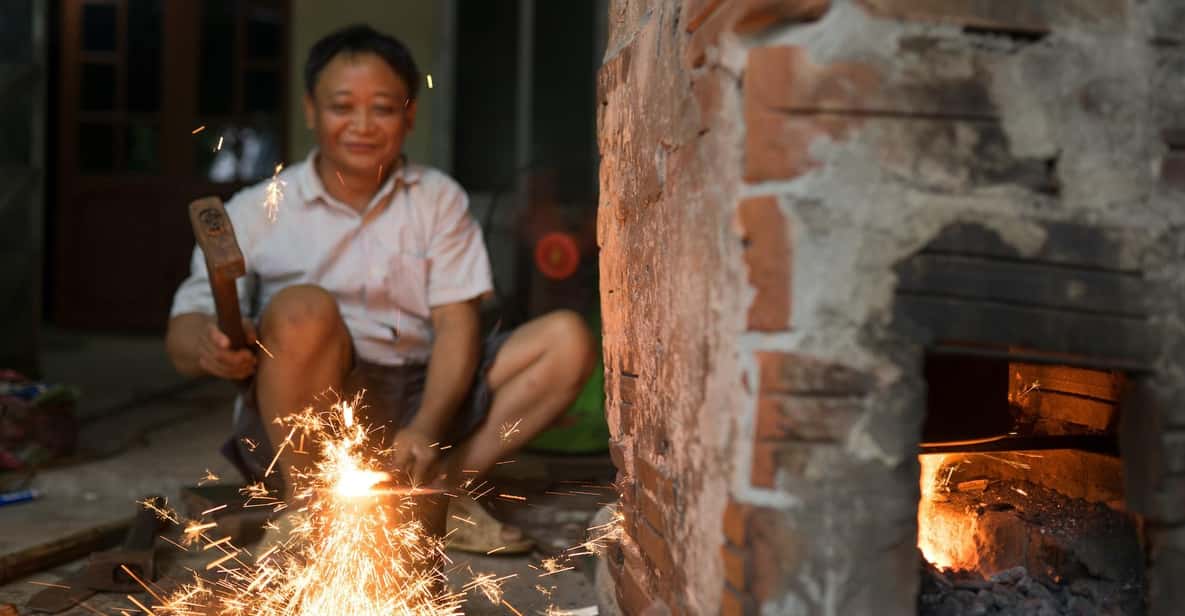
It’s easy to call this a “knife-making class,” but the real value is what the process teaches you about metal and craft culture.
1) You learn the logic behind each forge stage
Most hands-on workshops just say do this next. Here, the learning is framed around the process itself: rough draft, fire and shaping, tempering with water, then sharpening. When you understand the purpose of each step, you’re more likely to appreciate why the final knife looks and works the way it does.
2) You get a clearer picture of village blacksmith life
A big part of the day is “seeing a day in the life of a local Vietnamese blacksmith.” That’s not just background scenery—it’s what makes the craft feel grounded. You’re watching how the work is structured, not treating it like a staged demonstration.
3) The “traditional technique” angle is practical
The workshop notes that even today blacksmiths are supported by machines, yet you’ll still learn basic techniques of handmade forging. Translation: you’ll come away with real impressions of how traditional metalwork works, including how much attention and care goes into the right heat and timing.
One more practical detail: your knife is one-of-a-kind. That means your final piece will reflect your effort and the natural variability of handmade work, which is part of the charm. It also means you’ll likely feel more ownership than you would with a factory-made souvenir.
Da Sy’s history: from wartime weapons to kitchen tools
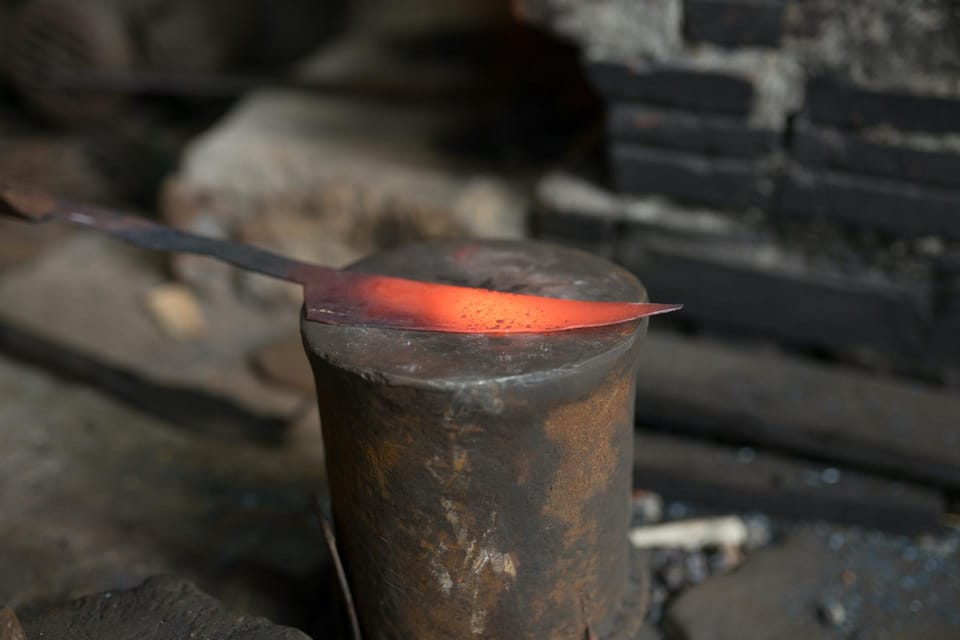
Da Sy’s story makes this experience more than a fun afternoon. During the Vietnam wars, Da Sy served as a main source supporting weapons for the military. Then, once peace returned around 40 years ago, people returned to making agricultural implements like ploughs, rakes, and machinery parts—plus kitchen implements.
That shift explains why knife-making fits here. A knife is both practical and symbolic. It’s a kitchen tool, yes, but it also represents the skills that helped build the country’s metalworking capacity during earlier eras.
When you connect that history to the hands-on steps you’re doing—hammering red-hot iron, then tempering and sharpening—you start to understand why communities pass down techniques. It’s not nostalgia. It’s survival, adaptation, and craft identity.
Price and value: is $54 actually fair?
The price is $54 per person for a workshop lasting about 2.5 hours. On paper, that can sound like “just a class.” In practice, the inclusions make a difference.
What you get for that price includes:
- All equipment, tools, and materials necessary for the workshop
- The knife you make (included in the cost)
- An English-speaking facilitator
- Light refreshments
- Mask and eye protection accessories
What’s not included:
- Pick-up and drop-off within Hanoi (you can add this at additional cost)
- A knife cover
- Other personal expenses
Here’s the simple value math: you’re paying for the full use of tools and materials, expert facilitation in English, and a finished handmade knife to take home. Most experiences that focus on craft learning either give you a “small souvenir” only, or they leave you to buy your own materials. This one includes the core materials and gives you the real product at the end.
Also, the small-group limit (up to 10) improves the value. You’ll get more attention while handling tools and moving through safety-sensitive stages.
Meeting logistics that can trip you up (and how to avoid it)
This is one place where planning pays off. You meet at the entrance of a football field next to a green fence, and the activity ends back there. There’s no default pick-up or drop-off within Hanoi (it can be added for an extra cost).
If you’re staying far from the meeting point, you’ll want to confirm your transport plan ahead of time. Don’t assume it’s easy to improvise once you’re tired after the workshop.
Another small but important detail: the workshop suggests you use check-in luggage to carry your knife home. That’s not a throwaway line—it’s part of making sure your knife survives the trip and arrives safely.
And if you’re thinking about packing: since a knife cover isn’t included, you’ll want to protect the blade and your other belongings yourself (for example, by using your own wrapping or protective material).
Who this Hanoi knife workshop fits best
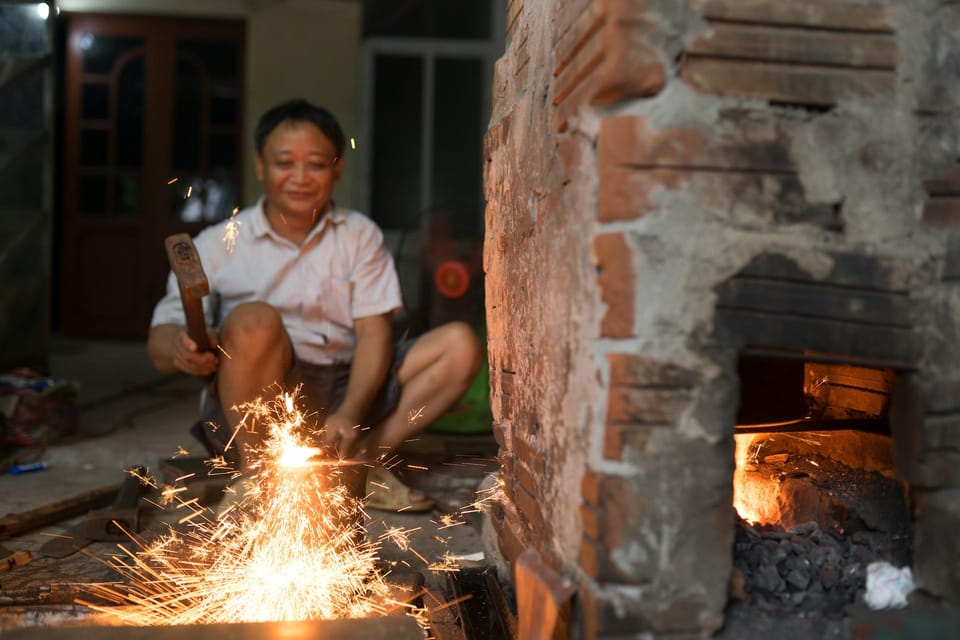
This works for a wide range of visitors because it’s not purely “for experts.” You’re taught the process step-by-step, and the facilitator is English-speaking.
You’ll especially like it if:
- You want a hands-on, practical souvenir rather than another shopping stop
- You’re curious about local craft culture in Hanoi beyond the city center
- You like activities where you actively create something you can use later
It’s also a good choice for families with teens, as long as the kids can handle following safety instructions and wearing proper clothing. The workshop is structured and supervised, and the English facilitation helps everyone stay on track.
If you’re uncomfortable around heat, sparks, or physical tool use, you’ll want to think twice. The experience is rewarding, but it’s still blacksmith work, not a gentle demonstration.
Tips to get the most out of it (and keep your knife safe)
Come dressed right. Long sleeves and long pants are strongly recommended to avoid sparks, and dresses aren’t the move here. If you’ve got a long-sleeve shirt you don’t mind getting scuffed, wear that. Comfortable closed-toe shoes help too (even though the workshop data only explicitly mentions sleeves and pants).
Bring a plan for taking your knife home:
- Use check-in luggage
- Protect the blade since a knife cover isn’t included
Also, show up ready to concentrate for the full 2.5 hours. If you’re half-focused because you’re thinking about lunch or your next stop, you’ll miss important cues about heat timing and the shaping/tempering sequence.
Finally, go in with a “make something real” mindset. The goal isn’t perfection. The goal is learning the process and leaving with a knife you helped create.
Should you book Knife Making in Blacksmith Village in Hanoi?
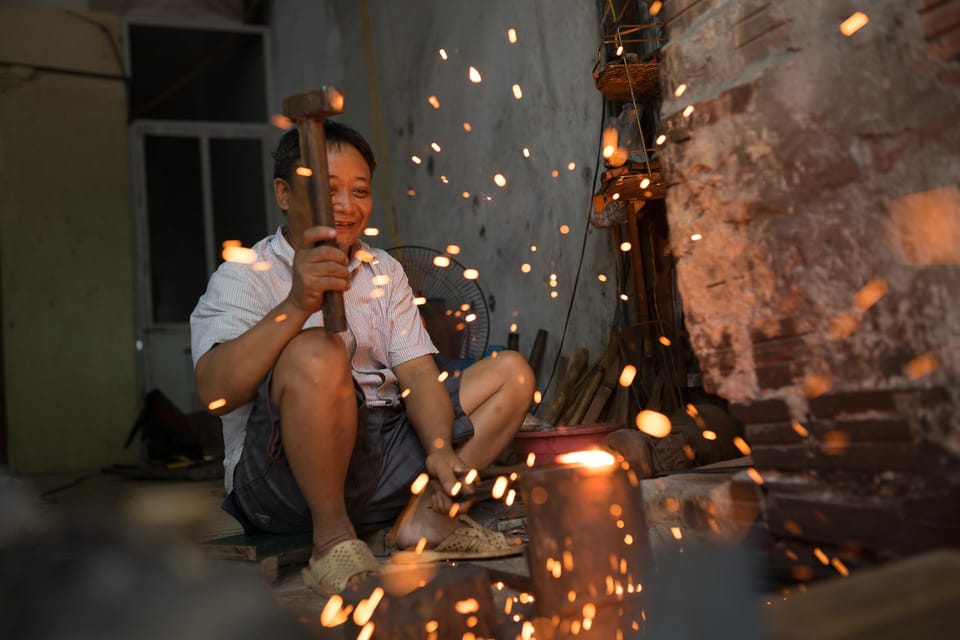
If you want a memorable Hanoi experience that’s both hands-on and locally grounded, this is an easy yes. The strongest reasons to book are the small-group, guided process that walks you through rough draft, hammer shaping, tempering with water, and sharpening—and the fact that you take home the knife you made.
You should consider skipping (or booking only if you’re comfortable with heat and sparks) if you don’t want to wear protective clothing, or if you’re relying on included transport and don’t want to handle the meeting point near the green-fenced football field.
If your travel style values practical craft, real culture, and a souvenir with function, this is a solid use of your time in Hanoi.
FAQ
How long is the knife-making workshop?
The workshop lasts about 2.5 hours. Starting times can vary, so you’ll want to check availability.
How much does it cost?
It costs $54 per person.
Where do we meet for the workshop?
The guide waits at the entrance of a football field next to a green fence. The activity ends back at the same meeting point.
Is pick-up and drop-off included in Hanoi?
No. Pick-up and drop-off within Hanoi is not included, but it can be arranged for an additional cost.
What’s included in the price?
All equipment, tools, and materials are included, along with the knife you take home, an English-speaking facilitator, light refreshments, and mask and eye protection accessories.
Do I get to take the knife home?
Yes. The knife you make is included and you take it home with you.
What should I wear?
Long sleeves and long pants are strongly recommended to help avoid sparks. No dress is recommended.
Is a knife cover included?
No. A knife cover is not included.
Is the activity refundable if my plans change?
Yes. It offers free cancellation up to 24 hours in advance for a full refund.