REVIEW · HANOI MOTORBIKE TOURS
Hanoi Unique Motorbike Tour
Book on Viator →Operated by Vietnam Travel Heaven (VTH travel) · Bookable on Viator
A motorbike tour in Hanoi is the shortcut. You’ll zip between landmark districts fast, guided end-to-end, with stops like Hoan Kiem Lake and Long Bien Bridge built into one smooth 4-hour loop.
What I like most is how the ride keeps you moving while your guide explains what you’re seeing, not just where it is. I also like that the tour includes a traditional lunch or dinner plus bottled water, so the half day feels complete instead of piecemeal. One drawback to keep in mind: you’re riding on a motorbike as a passenger, behind a guide, so if you’re uneasy around traffic, heat, or sudden rain, this may not feel relaxing.
In This Review
- Key things I’d put on your shortlist
- Why This Hanoi Motorbike Tour Works for a Half Day
- Price and Logistics: What $59 Covers (and What It Doesn’t)
- Before You Go: How the Ride Feels and How to Prepare
- St. Joseph’s Cathedral and Hoan Kiem Lake: First Impressions of Hanoi
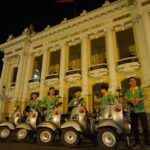
- Hanoi Opera House and the French-Era Connections
- Long Bien Bridge: Colonial Engineering and Big Red River Views
- Tran Quoc Pagoda on Tay Ho: A Calm Stop That Resets Your Mind
- Ba Dinh District and the Ho Chi Minh Complex: When Hanoi Shows Its Power
- Hanoi Flag Tower (Cột Cờ Hà Nội): A Military-Era Symbol You Can Still See Today
- Northern Gate of Hanoi (Cửa Bắc): Learning History at the City Boundary
- Dong Xuan Market: Covered Shopping With a Wholesale and Retail Pulse
- Phùng Hưng Mural Street: A Modern Cultural Memory in Paint
- Should You Book the Hanoi Unique Motorbike Tour
- FAQ
- How long is the Hanoi Unique Motorbike Tour?
- Where does the tour start and end?
- What’s included in the price?
- Do I have to pay admission tickets at the stops?
- Is pickup available?
- How big is the group?
- Are drinks like coffee or tea included?
- What if I need to cancel?
Key things I’d put on your shortlist
- 4 hours, maximum 6 riders: small enough to feel personal, big enough to keep energy up
- Helmet + bottled water + guide: practical basics handled for you
- Hoan Kiem to Ba Dinh in one run: see both old-city Hanoi and the political center
- Photo stops at major French-era and religious sites: St. Joseph’s Cathedral and Opera House included
- A real local break on the route: Tran Quoc Pagoda and an included traditional meal
Why This Hanoi Motorbike Tour Works for a Half Day
If you only have a morning or afternoon in Hanoi, you face a common problem: the city is dense, and walking alone can turn into a slow grind. This tour solves that by using motorbikes to connect far-apart stops in a short amount of time, while still giving you time on foot when it matters.
You start in Hoàn Kiếm, Hanoi’s central area, and you end back at the same place. That loop is a big deal. You’re not trekking across town just to stand around waiting for your next ride segment. Instead, you get a guided route through the city’s key layers: French-colonial landmarks, historic lakeside streets, Buddhist temple heritage, and then the major government complex.
The tone is also practical. Guides talk you through what you’re looking at—religion, colonial history, and modern culture—so the sights make sense as you move between neighborhoods. In the local-guiding style, you may hear names of dynasties, the reason for specific monuments, and stories tied to major turning points.
You can also read our reviews of more tours and experiences in Hanoi.


Price and Logistics: What $59 Covers (and What It Doesn’t)
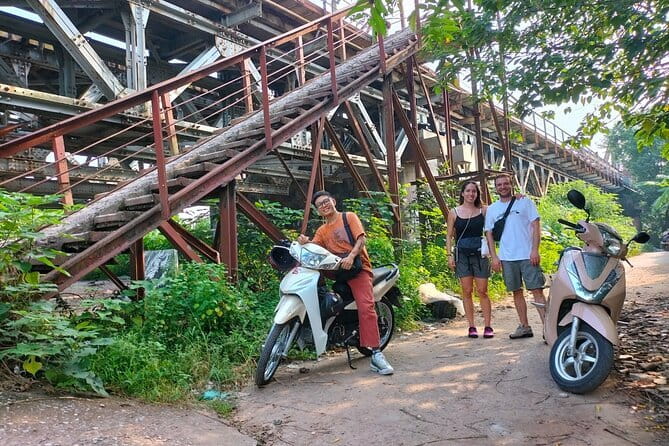
For $59 per person, you’re buying more than a ride. You’re paying for coordination, a professional guide, a helmet, bottled water, and an included traditional meal (lunch or dinner, selected by the guide). You also get a mobile ticket, and pickup is offered.
That bundle matters because Vietnam motorbike tours can vary widely in what’s included. Here, the basics are handled, so you can focus on the route and the conversations instead of scrambling for logistics mid-day.
What’s not included is also clear: coffee and/or tea and any personal drinks or souvenirs. If you’re the type who likes a drink break, plan on paying for it yourself.
Schedule note: the order and timing can shift due to weather, traffic, or hazard situations. Times per stop are estimates. That flexibility is normal in Hanoi, where rain can pop up fast and traffic patterns change hour to hour.
Before You Go: How the Ride Feels and How to Prepare

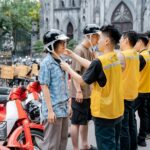
This is a motorbike tour where you sit behind one tour guide with a helmet. That means you aren’t driving, and it also means you’re more exposed to the elements than someone in a car. I’d treat it like outdoor sightseeing with motion.
Wear something you can move in and that won’t make you feel tangled. Bring a light rain layer if weather looks uncertain. Even if you’re not expecting rain, Hanoi can surprise you—so having a small plan for wet conditions helps.
Also: you’ll be stopping at sites where you may want decent photos. St. Joseph’s Cathedral, Hoan Kiem Lake area, the Opera House frontage, and the Long Bien Bridge viewpoints are all on the route. In religious places, you’ll want to respect the space and dress appropriately, but you’ll be guided on-site.
St. Joseph’s Cathedral and Hoan Kiem Lake: First Impressions of Hanoi

Your tour starts with St. Joseph’s Cathedral, a Catholic church built in the late 1800s (1883–1886). The big payoff here is shape and atmosphere. It’s described as looking like a version of Notre-Dame in Paris, and once you stand near it, you’ll understand why. The guide helps connect the sight to the story of Catholic presence in Vietnam, and you get time for authentic photos.
After that, you motor to the Hoàn Kiếm Lake walking street area. This is the emotional center of central Hanoi—the place locals treat as a daily reference point, and visitors treat as a must-see. You ride around the lake and your guide points out highlights, then you stop near the statue of King Lý Thái Tổ, the figure tied to Hanoi being established as Vietnam’s capital more than a millennium ago.
This combo—cathedral first, then the historic lake area—sets up the rest of the day nicely. You see how Hanoi holds different eras and beliefs side-by-side, and you start learning the city’s timeline before heading into more “big monument” territory.
Hanoi Opera House and the French-Era Connections

Next comes the Hanoi Opera House area. The key idea isn’t just the building. It’s that this part of Hanoi reads like French-era planning: formal public architecture, grand sightlines, and a different rhythm of streets than the lanes you might associate with older Hanoi.
The tour keeps you close to the lake (about a short walk away), so you aren’t stuck far from the sights. Your guide also mentions nearby stops you can look for, including the Hanoi Stock Exchange exterior area and the Sofitel Metropole area, with its history as a five-star hotel building dating to 1901.
If you care about architecture or you like connecting a city’s present to its earlier influence periods, this segment gives you quick context. If you don’t care about buildings that much, it still works because the ride route helps you see how Hanoi’s districts stitch together.


Long Bien Bridge: Colonial Engineering and Big Red River Views

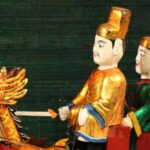
Long Bien Bridge is one of those landmarks you can’t fully appreciate until you’re there. It was built by the French across the Red River between 1899 and 1902, and the tour uses the bridge to talk about layered 20th-century history—French control before 1954 and later damage connected to the US bombing campaign over North Vietnam.
You also get time for the view. There’s a mention of banana forest scenery from the viewpoint, which hints at the river-edge world you’re looking over beyond the bridge itself. That matters because it makes the history feel grounded: the bridge wasn’t built in a vacuum. It sits in a lived landscape along the river.
A practical note: bridges can be windy. If you’re sensitive to wind or chill, bring a light layer.
Tran Quoc Pagoda on Tay Ho: A Calm Stop That Resets Your Mind
After the political and historic heaviness of the earlier stops, Tran Quoc Pagoda offers a different kind of energy. You visit Tran Quoc—also known as Defending pagoda—on the pearl island of Tay Ho.
This pagoda is described as having nearly 1,500 years of history and as being among the oldest in Thăng Long–Hanoi. Under the Ly and Trần dynasties, it was a Buddhist center for the city. That kind of lineage can sound abstract until you’re standing in the place and your guide points out how the site fits into centuries of belief and power.
What I appreciate about including this stop is the pacing. After a few more structured monuments, a temple break gives your eyes and attention a reset. Even if you’re not deeply religious, the setting helps you slow down and understand Hanoi’s spiritual “background music.”
Ba Dinh District and the Ho Chi Minh Complex: When Hanoi Shows Its Power

Then you move into Ba Đình district, the political center often described as the brain of Vietnam. The area spans over 20 hectares and includes administrative buildings, plus the central offices associated with major government functions.
This segment is mostly about scale and symbolism:
- The central office buildings and the government complex layout.
- The Presidential Palace, where the head of state of Vietnam welcomes and works with visiting leaders.
- Ba Đình Square, tied to September 2, 1945, when President Hồ Chí Minh read the Declaration of Independence.
Even if you’ve seen photos before, the best part here is context. A guide helps explain why this district is treated as a historical milestone, not just a place to pass through.
One consideration: because it’s a major political area, you might find it more rigid in terms of how things flow than the older-city areas. Keep your pace slow, follow instructions, and plan to focus on the facts your guide provides instead of trying to “wander freely.”
Hanoi Flag Tower (Cột Cờ Hà Nội): A Military-Era Symbol You Can Still See Today
From Ba Đình you continue toward the Flag Tower of Hanoi, a city symbol tied to Hanoi Citadel heritage. The tour notes the tower’s height (33.4 meters, or about 41 meters with the flag) and that it was built during the Nguyen dynasty as an observation post.
What’s especially useful here is the survival story. Unlike many other structures in Hanoi, the Flag Tower wasn’t destroyed during the French invasion (1896–1897) and continued as a military post. Today it sits within the area near the Vietnam Military History Museum.
This stop works well because it gives you a concrete way to understand how power operated in different periods: observation posts, control, and defense. It’s not just a photo point; it’s a piece of the city’s strategic layout.
Northern Gate of Hanoi (Cửa Bắc): Learning History at the City Boundary
Next is Northern Gate, known as Cửa Bắc. This gate is described as the only remaining gate of Hanoi, located on Phan Đình Phùng Street. It also has a tragic, battle-centered history involving attempts by French colonialists to capture the area.
In other words, it’s not a “pretty ruin” stop. It’s a boundary marker where history shows up in a very specific way. The tour gives you time to learn about the Cửa Bắc relic and why this gate became a tourist attraction and historical remnant.
If you like old-city edges—places where a city once ended—you’ll probably enjoy this. It’s a different feeling than the markets or lakes because it points backward in time and focuses on what the city used to be protected by.
Dong Xuan Market: Covered Shopping With a Wholesale and Retail Pulse
Dong Xuan Market is next, and it’s one of the easiest places to feel Hanoi as a working city. The market was originally built by French administration in 1889, renovated multiple times, and most recently rebuilt after a fire that nearly destroyed it, with renovations noted in 1994.
Today, it’s described as the largest covered market in Hanoi, with two shopping modes:
- Wholesale buying in bulk
- Retail buying in smaller shops and stalls
You can find clothes, household goods, and foodstuff. The tour gives you time to wander inside, so it’s not just a quick pass-by. Even if you don’t plan to buy much, it’s worth using this stop to understand daily commerce.
Practical tip: if you want photos inside, move slowly at natural intersections and don’t block anyone’s path. Markets move fast.
Phùng Hưng Mural Street: A Modern Cultural Memory in Paint
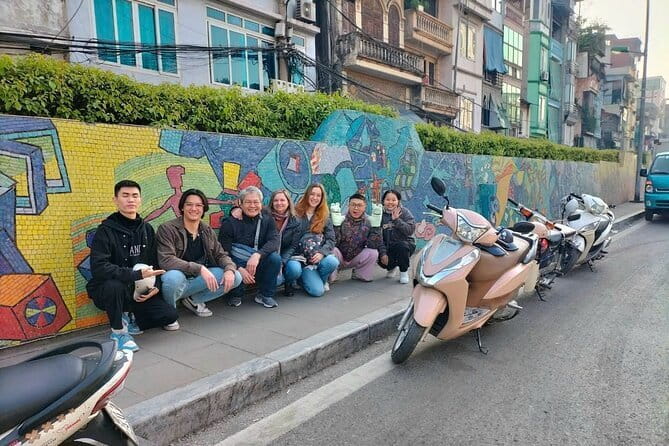
To finish, you visit Phùng Hưng Mural Street. This is an art project tied to the 25th anniversary of Vietnam–Korea diplomatic relations, with artists from both countries contributing to more than 20 murals.
The murals depict features of Hanoi’s culture over the past century. This makes it a nice closing note because you’re shifting from “monuments and institutions” to “how culture is remembered and retold in everyday streets.”
If you like street art with context, this is a good way to end the day. It also gives you something to photograph that isn’t another landmark building or temple façade.
Should You Book the Hanoi Unique Motorbike Tour
Book it if you want a high-value half day that covers a lot of real Hanoi in one run, and you’re comfortable being a passenger on a motorbike behind a guide with a helmet. It’s also a good fit if you like guided storytelling: the tour is structured so you can learn why each place matters, not just what it looks like.
Skip it or think twice if you’re very sensitive to traffic energy, sudden weather changes, or you dislike moving around on busy streets. Also, if you want lots of long sit-down time at each site, the half-day pace may feel brisk, since you’ll be moving between areas often.
One more practical reason to consider it: the included meal and water remove a common headache. When you get a tour that handles basics like that, you spend less time managing your day and more time seeing the city.
FAQ
How long is the Hanoi Unique Motorbike Tour?
It’s about 4 hours, though the schedule can be adjusted based on weather, traffic, and other on-the-ground factors.
Where does the tour start and end?
You start at 1 P. Hàng Gai, Hàng Trống, Hoàn Kiếm, Hà Nội, Vietnam, and it ends back at the meeting point.
What’s included in the price?
The price includes bottled water, a helmet, a professional guide, and a traditional lunch or dinner chosen by the guide.
Do I have to pay admission tickets at the stops?
The listed stops are marked as free admission tickets in the tour details you provided.
Is pickup available?
Yes, pickup is offered.
How big is the group?
The tour has a maximum of 6 travelers.
Are drinks like coffee or tea included?
No. Coffee and/or tea and any other personal drinks are not included.
What if I need to cancel?
You can cancel for free up to 24 hours in advance for a full refund. If you cancel less than 24 hours before the start time, the amount paid is not refunded.
You Might Also Enjoy



More Tours in Hanoi
- Ninh Binh Full-Day Tour from Hanoi to Hoa Lu, Tam Coc & Mua Cave Via Boat & Bike
★ 5.0 · 4,384 reviews