REVIEW · PHOTOGRAPHY SESSIONS
Hanoi Street Photography in a Vintage Community
Book on Viator →Operated by Momentlives Photography tours · Bookable on Viator
Old Hanoi lanes make your camera earn its keep. This Hanoi street photography workshop takes you off the main tourist tracks into a residential area shaped by mid-century state housing, with Soviet-style influence—and the result is a goldmine of textures, faces, and everyday moments. I love the small group size (up to 4 people), and I also love that the instructor focuses on how to frame and set your camera while you’re walking. One drawback to plan for: it’s an active neighborhood walk with no included lunch, so you’ll want to bring water and be ready for a few hours without a full meal stop.
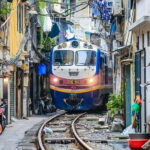
What makes it special is the kind of scenery you can’t fake with a postcard shot. You’ll photograph aging building details like yellow walls and worn staircases, tangled electric wires, roadside tea stalls, scooter repair and barber shops, and the calmer beats of everyday life—kids and elderly people relaxing or playing in a playground. You’re not chasing monuments here. You’re capturing how a neighborhood actually breathes.
The logistics are refreshingly straightforward: there’s pickup offered, you ride in an air-conditioned vehicle, and you get coffee and/or tea during the session. Expect about 4 hours total. In past trips with guides such as Mike, Son, and James, the coaching has been strong on camera settings and how to turn small scenes into stronger photos.
In This Review
- Key highlights to look for
- Why Hanoi’s Soviet-era housing makes strong street photos
- Meeting, transport, and getting your camera-ready in 4 hours
- The architecture walk: aging walls, staircases, and wire-filled frames
- Roadside tea stalls: quiet moments inside noisy lanes
- Scooter repair shops and barber stations for real portrait energy
- Market scenes and playground life: the neighborhood’s main characters
- Photo coaching you can use immediately, not later
- Price and value: is $98 worth it?
- Who should book this Hanoi street photography session
- Should you book this tour or skip it?
- FAQ
- How long is the Hanoi street photography experience?
- What does it cost?
- What’s included in the tour?
- Is lunch included?
- Is pickup offered, and how large is the group?
- How do ticketing and confirmation work?
- What’s the cancellation policy?
Key highlights to look for
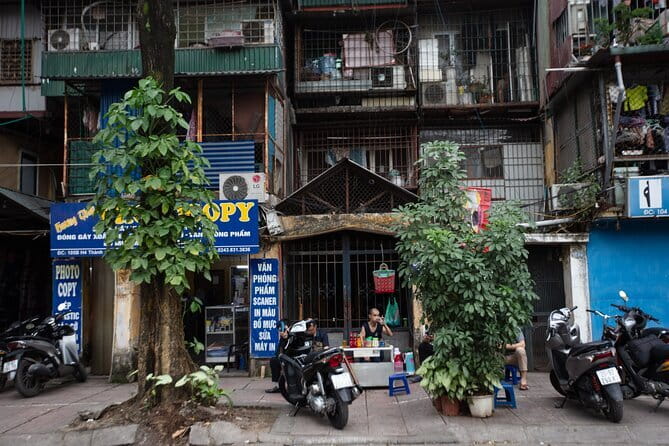
- Off-the-map neighborhood scenes from mid-century residential housing in Hanoi
- Action at street level: tea stalls, repair shops, barber stations, and local market life
- Small group attention with a photography instructor guiding your shots and camera settings
- Street textures you can’t buy: aging walls, stairways, wires, and improvised details
- Comfort touches like an air-conditioned ride plus coffee and/or tea
Why Hanoi’s Soviet-era housing makes strong street photos
Hanoi has plenty of classic photo angles, but this workshop goes for something more useful: the everyday architecture that turns into storytelling. The residential blocks and lanes you’ll move through were built for working-class communities from the 1960s, with earlier state-built housing influenced by a Soviet model. Even if you don’t care about architectural history, you’ll feel it in the photos.
Those long, repetitive building patterns create natural lines. The narrow lanes force you to work closer to people and details. And the buildings aren’t polished. The walls show age, the staircases look worn, and the wires and small street fixtures make the frame feel lived-in, not staged.
The best part is that you’re photographing a place that still functions as a neighborhood. That means the scenes aren’t frozen for visitors. You’ll often find busy markets, quiet tea moments, and small everyday stops happening right where you’re standing with your camera.
If you’re only interested in big landmarks or sweeping city views, this might feel less dramatic than you expect. But if you want photos with real atmosphere—built from small contrasts—you’re in the right place.
You can also read our reviews of more photography tours in Hanoi
Meeting, transport, and getting your camera-ready in 4 hours
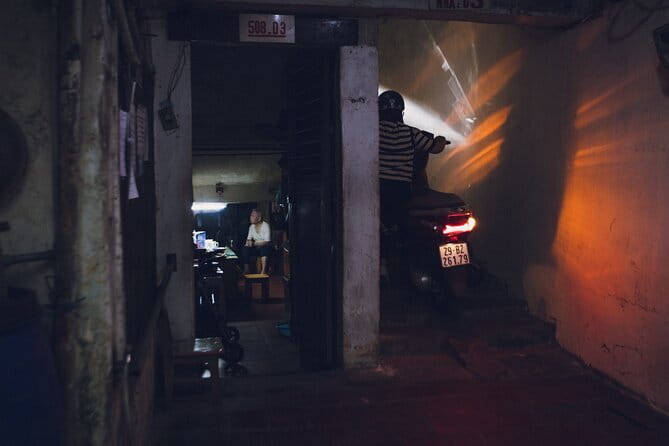
You’ll start with a group meeting and pickup (if you choose that option), then head to the neighborhood by air-conditioned vehicle. That matters more than it sounds. Four hours isn’t long. Getting you there comfortably helps you spend more time photographing instead of burning the clock in traffic.
Once you’re on foot, the instructor becomes the reason this tour works for beginners and for more experienced shooters. The coaching isn’t just theoretical. Based on what guides like Mike, Son, and James have done on past sessions, you can expect practical help with camera settings and how to make your framing sharper while you’re moving through real streets.
Here’s the real trick for street photography: don’t wait for the perfect moment. Use the instructor’s guidance to set yourself up so you can react fast. If someone is mid-conversation at a tea stall, you need settings you trust and a quick way to compose without thinking too hard.
Because the group is capped at 4 people, you’re less likely to feel rushed or lost. You should still be ready to walk and to reposition often. This is a working neighborhood, not a scenic park with a slow-moving loop.
The architecture walk: aging walls, staircases, and wire-filled frames
One section of the session focuses on the architecture and the layers around it. You’ll photograph those older houses and the “in-between” spaces that give street photos depth—yellowing exterior walls next to worn staircases, tight lane geometry, and the visual clutter that actually tells the truth (like tangled electric wires).
Don’t think of this as a sightseeing pass. Think of it as a study session in how to find structure inside chaos. The lanes create leading lines. Doorways and windows give you frames within frames. Even simple textures—peeling paint, concrete edges, scuffed steps—help your photos feel grounded.
A practical consideration: if you love wide landscapes, you might find yourself using shorter focal lengths and lower angles more often than you expect. The neighborhood lanes are close. That’s a feature, not a bug. Your photos will look more intimate and less like you photographed a city from a distance.
Also, street photography here is about angles you can’t always capture from a main road. That’s why the tour aims for a community that sits off the typical visitor route. If you’ve only shot Hanoi from famous viewpoints, this is where you’ll start seeing different kinds of “Hanoi.”
Roadside tea stalls: quiet moments inside noisy lanes
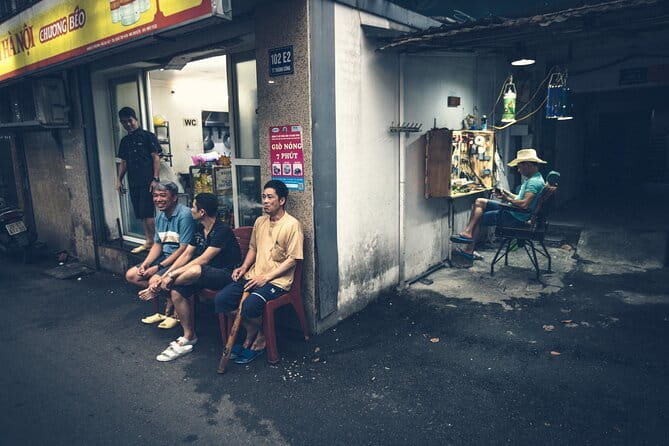
You’ll also spend time around tea stalls by the roadside. These spots are gold for a simple reason: the setting invites small human actions. Someone pours tea. Someone pauses to talk. Someone checks a phone or settles in for a minute while scooters pass.
What I like about photographing tea-stall scenes is the contrast they create in your set. Architecture frames bring structure. Market shots bring energy. Tea-stall photos bring breath—soft pauses that make your photo story feel complete.
This is the kind of place where you can work on timing. If you rely on fast luck, you’ll miss the subtle moments. Instead, use the instructor’s help to choose settings that keep you flexible for changing light, then watch for micro-actions—hands moving, faces turning, steam rising.
A small drawback: tea-stall photos can be busy around the edges. If you hate visual clutter, you’ll want to focus on tight compositions that isolate people and gestures. That’s where your training with framing will pay off.
With coffee and/or tea included, you’re not just photographing while grabbing something fast. It gives you a human break during the walk, which helps you stay patient when the best moments take a few minutes to show up.
Scooter repair shops and barber stations for real portrait energy

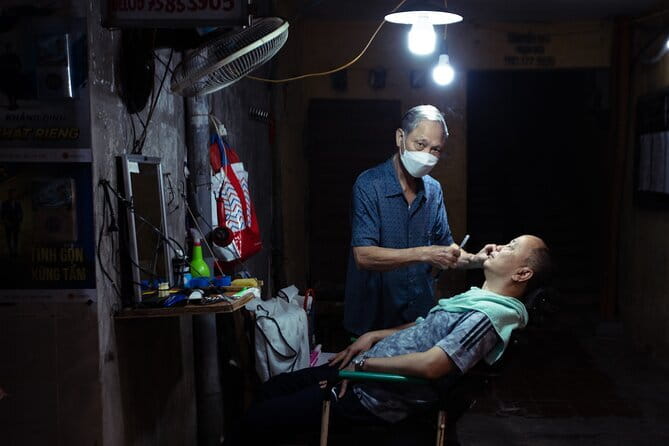
Another part of the workshop targets small businesses you’d normally walk past without noticing. Expect chances to photograph scooter repair areas and barber shops, plus the people connected to them.
These scenes are perfect for street portraits because the action is continuous. A barber might be mid-service. A scooter mechanic might lean in and adjust something. Even if you don’t capture a perfect head-and-shoulders portrait, you can still tell a story with hands, tools, and expressions.
This is where I think the guide’s coaching makes a bigger difference than the camera brand. A good instructor helps you approach framing in a way that respects the moment. It’s not about snapping wildly. It’s about waiting long enough to catch something real, then composing quickly when the person’s expression lines up with the scene.
One more practical point: these areas are often close to foot traffic. You’ll likely need to step aside and reposition without blocking the workflow. If you’re mindful and keep your movements calm, you’ll get better shots and a smoother experience.
This is also where your final photo set can move beyond buildings. You’ll come home with images that show how people spend their time in this neighborhood—work, care, routine, and small conversations.




Market scenes and playground life: the neighborhood’s main characters
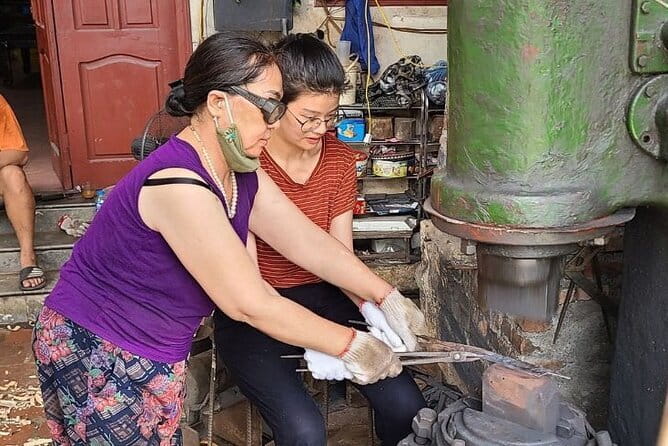
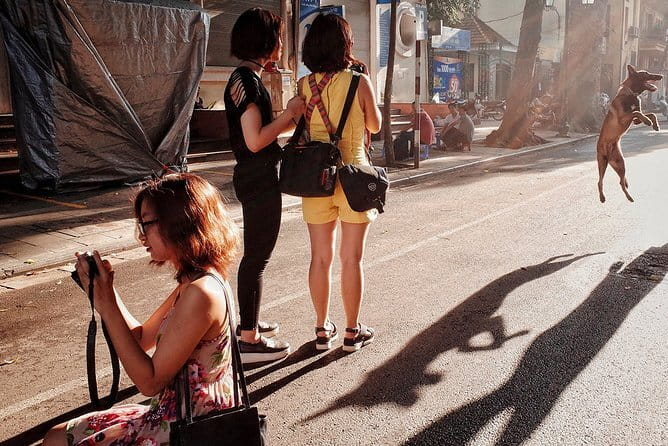
Colorful and noisy market life is part of what you’ll be photographing. Markets don’t just add variety; they give you motion, faces, and layers of activity. You can build a sequence: wide scene for context, closer shots for details, and portraits for emotion.
Then there’s the slower, more human side of the neighborhood: kids and elderly people playing or relaxing in a playground. This contrast is a big reason the tour works as a photo story, not just a photo walk. Markets give intensity. Playgrounds give softness and candid interaction.
If you’re aiming for photos that feel like a day in someone else’s life, these scenes help you do that. You’ll likely capture the full range—from quick street exchanges to longer pauses where people are simply existing in their own rhythm.
One consideration: market energy and street motion can make it hard to get technically perfect images. That’s not the goal here. The goal is authenticity—photos that look like they belong to this place. You’ll get better results by choosing a few strong compositions instead of trying to photograph everything at once.
Photo coaching you can use immediately, not later
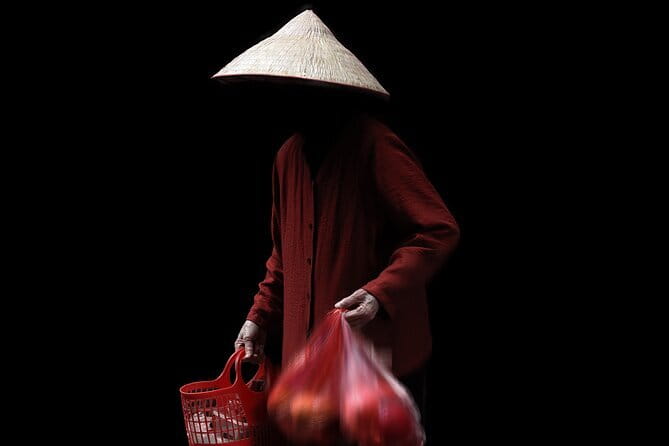
This workshop is built around you leaving with more than a folder of images. The instructor helps with camera settings and how to think while you’re shooting, which matters because Hanoi streets change fast. A lane scene might turn into a face portrait in seconds when someone looks your way or when a scooter cuts through the frame.
Here are a few practical ways to work with what you’re given, especially in a 4-hour window:
- Set up your camera so you can react fast, then let the guide’s advice help you adjust on the go.
- Treat the walk as a sequence: structure (architecture), then interaction (tea stalls and shops), then energy (market) and calm (playground).
- Watch backgrounds. In wire-heavy lanes, the background can either ruin a shot or make it truthful. Frame accordingly.
- Don’t ignore light direction. Street scenes can flip from shaded lanes to brighter open pockets quickly.
Also, because the tour is capped at up to 4 people, it’s easier for the instructor to help you with the specific problems you run into—like camera settings that aren’t behaving in mixed light or framing that feels too wide or too tight.
If you’re a beginner, that coaching can prevent the usual frustration of photographing for hours and ending up with blurry or inconsistent results. If you’re more experienced, you can still use the guidance to push your compositions into areas you might overlook on your own.
Price and value: is $98 worth it?
At $98 per person for about 4 hours, the big question is what you’re buying beyond the streets. In my view, the value comes from three things you’d otherwise have to solve yourself:
First, you’re paying for an instructor who helps with camera settings and composition while you’re in motion. That’s not just “a guide who points places.” It’s support that can change what you can actually capture.
Second, you get air-conditioned transport plus coffee and/or tea. Those small comfort items matter in Hanoi, where you’ll feel the heat and movement. It helps you stay focused on shooting instead of just surviving the day.
Third, the group is tiny—maximum of 4 people. For photography, that matters. You’re not competing for attention at the front of a line, and you’re less likely to get separated in a crowd.
What’s not included is lunch or dinner, so plan your meals separately. If you show up hungry, your energy and attention drop, and street photography is all attention.
If you want a more casual walk with zero coaching, you might pay less on your own. But if you want better photos—and you want help getting there in a short time—this price feels reasonable for what’s included.
Who should book this Hanoi street photography session
This tour fits you best if you want photos with context. You enjoy capturing real life: aging buildings, roadside routines, and the way people use public space. You’re also the kind of person who likes small, specific scenes rather than just panoramic skyline shots.
It’s also a great choice if you’ve been frustrated that your photos from travel look technically fine but emotionally flat. Coaching on settings and framing can fix that quickly, especially in a place with constant visual material.
You should think twice if you hate walking through neighborhoods with mixed crowds and street-level clutter. It’s not a curated scenic loop. You’ll move through active residential lanes where everyday life is the main event.
Should you book this tour or skip it?
I’d book it if your goal is strong street storytelling from Hanoi, with help getting your camera work under control while you photograph real neighborhood life. The small group, the instructor coaching, and the focus on Soviet-era housing lanes and daily scenes make it a smart way to get more meaningful photos without spending days figuring out where to go.
Skip it only if you’re chasing famous landmarks, or if you really need lunch included to stay comfortable. Otherwise, this is the kind of experience that gives you images you can’t replicate from a tourist route.
FAQ
How long is the Hanoi street photography experience?
It lasts about 4 hours.
What does it cost?
The price is $98.00 per person.
What’s included in the tour?
You’ll get a photography instructor, an air-conditioned vehicle, and coffee and/or tea.
Is lunch included?
No. Lunch and dinner are not included.
Is pickup offered, and how large is the group?
Pickup is offered. The group is limited to a maximum of 4 people.
How do ticketing and confirmation work?
You’ll receive confirmation at the time of booking, and the tour uses a mobile ticket.
What’s the cancellation policy?
You can cancel for a full refund up to 24 hours in advance. If you cancel less than 24 hours before the start time, the amount paid is not refunded.