
REVIEW · CRAFT VILLAGE TOURS
Hanoi: Rattan & Shoe Village or Incense Village, Hat Village
Book on GetYourGuide →Operated by GREEN VIETNAM TRAVEL · Bookable on GetYourGuide
Handicraft stops beat museum time. This tour takes you into the working world of Vietnamese village crafts, with hands-on moments like painting a conical hat and making incense, and it includes an extra village weaving stop for a strong full-craft picture. The main thing to consider is that you’re moving between several sites in about six hours, so it’s less for slow wandering and more for seeing how production actually works.
I like how the day is structured around real makers, not just photo ops. I also like the practical value: hotel pickup in Hanoi’s Old Quarter, entrance fees, bottled water, and the materials for the conical hat painting and incense making are built in. The one drawback is that if you’re hoping for a quiet, private pace, the standard group version may feel a bit scheduled.
In This Review
- Craft-village highlights that make this half day matter
- How Hanoi’s craft villages turn a day into a story
- The hat and incense route: a practical 6-hour plan
- Chuong conical hat crafting: painting a souvenir with context
- Quang Phu Cau incense village: from family scale to larger output
- Phu Tuc weaving and the Guot plant: durability you can see
- If you choose leather shoes and rattan instead: a different craft logic
- Price and value: what you’re actually paying for
- What to expect from the guide and the group setup
- Photos, souvenirs, and how to get more from the day
- Who should book this craft-village tour
- Quick decision: should you book?
- FAQ
- What’s the duration of this experience?
- How much does it cost?
- What does the half-day group option include?
- What does the private option focus on?
- Do I get to make or decorate anything?
- Are entrance fees and guide services included?
- Is pick-up and drop-off included?
- Are there extra costs to plan for?
Craft-village highlights that make this half day matter

- Chuong conical hats (300+ years of craft) with a souvenir hat you paint yourself
- Quang Phu Cau incense village where you see family-scale production and then a higher-output factory step
- Phu Tuc weaving using the Guot plant, with products ranging from baskets to photo frames and figurines
- A look at Phu Yen leather and sandal making, including how manual steps can shift with modern machines
- A clear sense of how village craft supports local jobs and incomes, not just aesthetics
How Hanoi’s craft villages turn a day into a story

Hanoi craft villages are one of the best ways to understand Northern Vietnam beyond food and Old Quarter streets. Instead of watching finished souvenirs and calling it a day, this experience is built to explain the process: where materials come from, how production is organized, and why certain skills get passed down.
You also get the payoff of taking something home that actually connects to the steps you watched. A painted hat isn’t just a prop. Incense you make yourself changes how you smell the place afterward.
You can also read our reviews of more tours and experiences in Hanoi.



The hat and incense route: a practical 6-hour plan
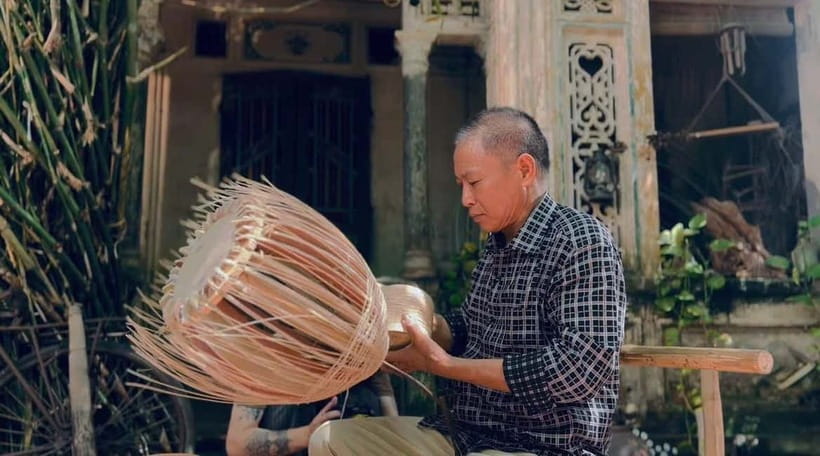
This option is designed as a half-day group tour that runs about six hours. It starts with convenient pickup from Hanoi’s Old Quarter area and then focuses on two iconic crafts: conical hats and incense. In many versions of the route, there’s also an optional stop near Train Street, but your exact timing depends on the day and the group plan.
You’ll spend real time with guided explanations, not only walking past stalls. You’ll also have enough structure to avoid the common DIY problem in village trips: you arrive, you’re not sure where to go, and you end up skipping the parts that make the trip educational.
What makes the pacing work: each village has a clear purpose. You’re not bouncing around randomly. You see the craft, then you see the materials or the next production step. That’s why the experience feels like a coherent story instead of a checklist.
Chuong conical hat crafting: painting a souvenir with context
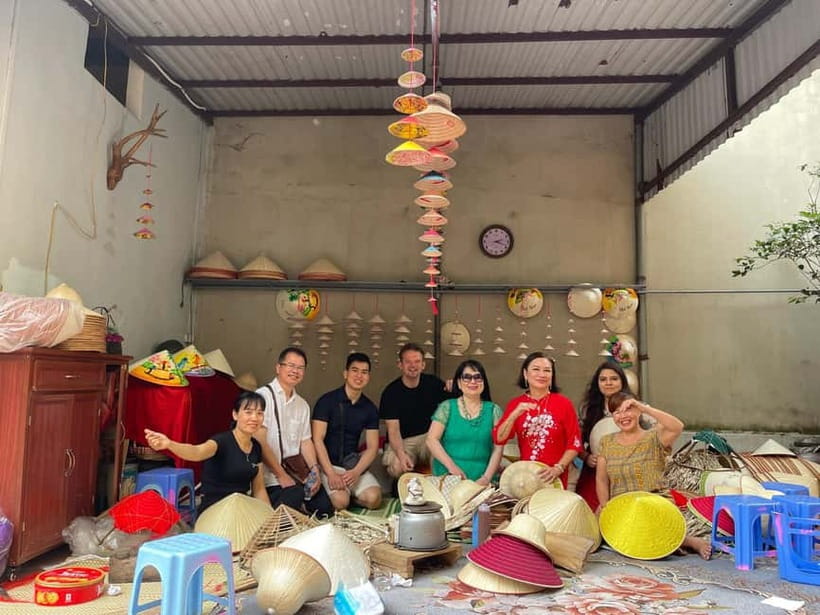
Chuong is the conical hat-making village known for more than 300 years of production. You don’t just admire hats here; you watch how they’re made and how decoration turns a plain form into something personal.
The highlight for me is the souvenir part: you get a free conical hat to paint in the hat village, then you take it home as a personalized piece. That small activity does a lot for your understanding. When you paint, you notice shape and design choices in a way that’s hard to get from photos.
Practical note: conical hats are iconic, but the village experience is also a lesson in labor and coordination. Even without heavy technical detail, you’ll quickly see that the craft depends on process, timing, and people doing specialized steps.
Quang Phu Cau incense village: from family scale to larger output
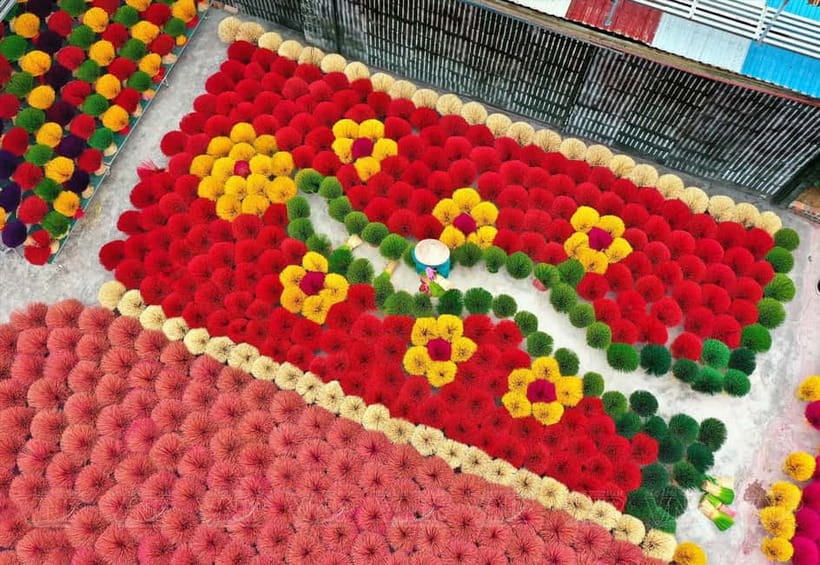
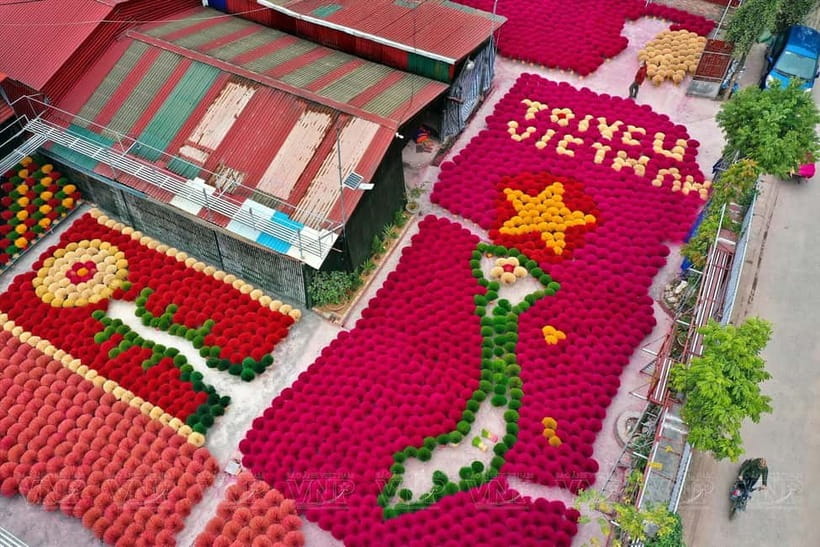
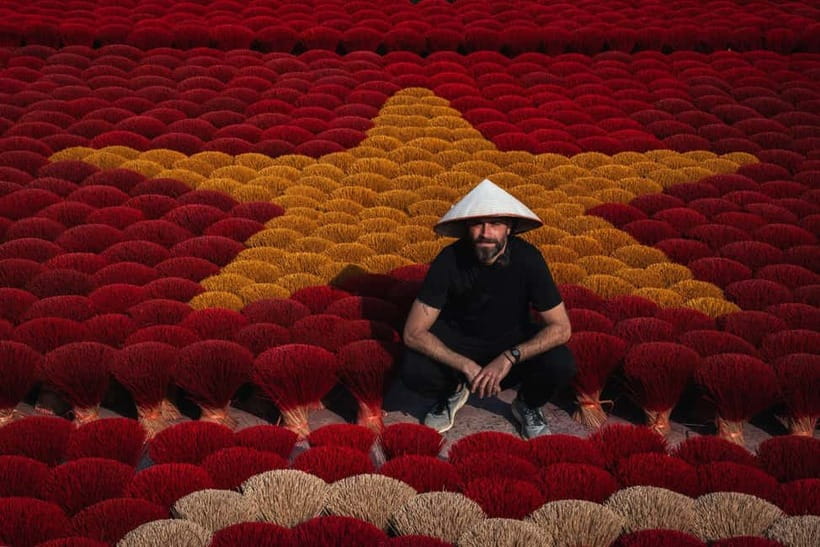
After Chuong, you head to Quang Phu Cau incense village, one of the places strongly tied to Vietnam’s incense tradition. The tour includes a guided walkthrough and time in the center of the village, where locals produce incense on a family, artisanal scale.
Then you get the next level: a tour of a nearby factory that shows how incense is made from scratch with much higher output. Seeing both scales is valuable because you understand why pricing and texture can differ between handmade and industrial production.
Another hands-on payoff: you’ll be able to make incense sticks yourself. The tour includes some free incense sticks after you make them, so you’re not leaving with only an explanation. You leave with a small, practical memory that fits Vietnamese daily life.
Phu Tuc weaving and the Guot plant: durability you can see

Phu Tuc is where the tour expands from “things you buy” into “materials with a purpose.” Here you’ll learn traditional weaving connected to the Guot plant, which is known for its natural dark red or brown color, plus its pliability and durability.
This part matters because it teaches you what makes a craft last. Many souvenirs look fine in a shop, but only learning about the plant and how it’s processed helps you understand why certain items hold up better.
In the village visit, you’ll see how the process works end to end: plants are dried under the sun, then they’re classified by size and color, and only then are they woven into items. The range you may spot includes baskets, robes, tables and chairs, photo frames, flower vases, and animal figurines.
You also get guided time and a visit connected to bamboo and rattan weaving observation, so the day doesn’t feel like it’s stuck on one plant or one type of product.


If you choose leather shoes and rattan instead: a different craft logic
This experience also comes in a private-tour style option focused on leather footwear and rattan. Instead of hats and incense, you visit a workshop specializing in sandal production in Phu Yen Village, connected to the family of Nguyen Thi Nhan.
What I like about this version is that it shows change, not just tradition. At the workshop, you see how production methods can shift: many manual phases have been replaced with modern machines. The workshop has 25 official employees and produces about 1,700 to 1,800 pairs of sandals per day. That kind of numbers-driven detail makes it easier to understand the craft’s real economic weight.
The tour also gives you a village-level view: the craft spreads across the commune, with around 300 households involved in leather and footwear making, and 35 households supplying materials. The craft provides jobs for more than 2,000 employees. In other words, this is not a hobby lane; it’s a workplace system.
Then the tour connects past and present through a footwear story tied to Nguyen Luong Mac, who previously made boat-like shoes in Hai Phong and later guided the next generations to keep the craft going. It’s a strong way to understand how skills relocate and survive after generations.
Finally, you visit Phu Tuc Village again in this alternate framing, so you still get the Guot weaving thread. That means no matter which option you pick, you’re likely to walk away with a clearer picture of how village crafts keep evolving.
Price and value: what you’re actually paying for
At $14 per person for a roughly six-hour experience, this is one of those prices that works if you want learning plus inclusions. You’re not paying extra for the main activities because the tour includes:
- workshop visits (sandal production and weaving village time)
- the conical hat painting souvenir
- incense making (with some sticks provided afterward)
- entrance fees
- bottled water
- a professional local tour guide
- hotel pickup and drop-off in Hanoi Old Quarter
That’s the value. If you tried to replicate it alone, you’d quickly spend time and money just coordinating transport, entry points, and finding the right workshops. Here, the structure is done for you.
One extra cost to watch: there’s a Lunar New Year surcharge (250,000 VND per person from 16/02/2026 to 19/02/2026). If you’re traveling around that period, factor it into your budget.
What to expect from the guide and the group setup

This tour is built around a professional local guide and offers multiple language options, including English and several European languages. The guide style matters here because craft villages can be confusing if you don’t know what you’re looking at. When the guide explains the steps, you can connect the finished souvenir to the production choices.
In practice, I’d expect the guide to keep you moving through the process efficiently. The experience works best when you’re okay with a plan and timekeeping. It’s not designed for long pauses in every corner. You’ll get guided stops, a few photo moments, and then the next craft step.
If you choose the private option, you’ll likely appreciate that it’s more flexible in pacing and feels less crowded. Still, private or small groups don’t magically turn workshops into slow galleries; you’re still visiting active production spaces.
Photos, souvenirs, and how to get more from the day
Here’s how to maximize the experience without making it feel like homework.
For the conical hat, think beyond a quick decoration. When you paint, you’ll start noticing how designs fit the shape. Bring the mindset of making a personal item, not just copying patterns.
For incense, pay attention during the explanation about how it’s made, because it ties the scent to the materials and process. When you take the sticks home, you’ll remember the steps, not only the smell.
For weaving, don’t focus only on the final products on sale. Watch how materials are dried and sorted before they become items. That’s the part that changes how you judge quality as a buyer.
And for the overall day, wear comfortable shoes. Craft villages involve walking, standing, and looking closely. It helps to keep your body comfortable so your attention stays on what the guide shows you.
Who should book this craft-village tour
This tour is a good match if you:
- want a real look at how Vietnam’s village crafts are made
- like hands-on souvenirs more than standard shopping
- want guided explanations without needing to research individual workshops
- enjoy production stories, from small family methods to larger output
It’s also a good choice if you’re already spending a lot of time in Hanoi’s Old Quarter and you want one organized trip that feels different from street sightseeing.
Quick decision: should you book?
Yes, if you want process + hands-on making in one half-day package. The conical hat and incense activities alone give the day a memory you can carry home. Add the weaving stop and you get variety without the chaos of planning multiple village visits.
Skip it or reconsider if you prefer a slow, flexible pace. This experience is structured, with several stops in one day, and it works best when you’re ready to follow a guided route and keep moving.
If you tell me your travel dates and which option you’re considering (hat/incense vs leather/rattan), I can suggest the best time of day to go and what to prioritize based on your interests.
FAQ
What’s the duration of this experience?
The tour is about 6 hours for the main group option.
How much does it cost?
The price is $14 per person.
What does the half-day group option include?
It includes visiting the conical hat craft village and the incense craft village, plus a stop at Phu Tuc Village. The schedule also notes that Train Street may be optional depending on the route.
What does the private option focus on?
The private option focuses on a sandal production workshop in Phu Yen Village and then visits Phu Tuc Village for Guot weaving.
Do I get to make or decorate anything?
Yes. You can paint a free conical hat in the hat village and make incense sticks in the incense village. You also receive some incense sticks after you make them.
Are entrance fees and guide services included?
Yes. Entrance fees are included, and you get a professional local tour guide.
Is pick-up and drop-off included?
Yes, hotel pickup and drop-off are included for hotels in Hanoi’s Old Quarter area.
Are there extra costs to plan for?
Personal expenses and optional tipping are not included. There is also a Lunar New Year surcharge (250,000 VND per person from 16/02/2026 to 19/02/2026).