REVIEW · HANOI
Hanoi: Quintessence of Tonkin Show – A Cultural Spectacle
Book on GetYourGuide →Operated by Up Travel · Bookable on GetYourGuide
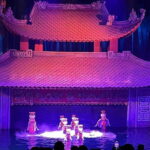
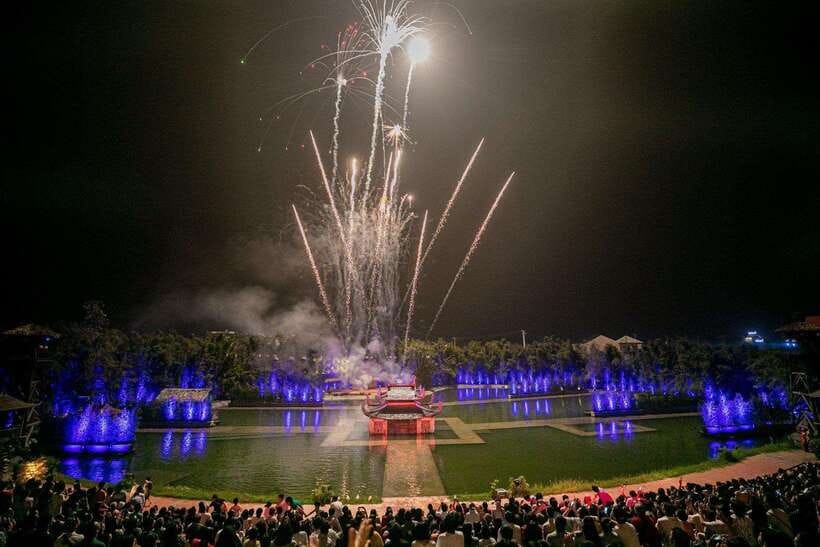
A lake show in Hanoi hits different. The Quintessence of Tonkin stages the Thay Pagoda story in an open-air setting, with water puppetry and a lakeside backdrop that make the night feel cinematic. I like that it is built around clear historical and spiritual themes, not just random spectacle.
Two things I really like: the show’s six acts tell a full arc, and the setting is calm and scenic enough that the performance feels like part of the landscape rather than something bolted on. The one drawback to plan for is language: if you do not follow Vietnamese narration, you may miss some story beats, even though the music and visuals still do most of the heavy lifting.
In This Review
- Key Things to Know Before You Go
- Thay Pagoda vibes at Baara Land: what the venue feels like
- Price and value: is $42 a fair deal?
- How the 4-hour night unfolds (and what each act is really doing)
- Pre-show: arrive early and let the atmosphere work on you
- Act 1: rural poetry and the opening mood
- Act 2: Tu Đạo Hạnh and the birth of water puppetry
- Act 3: candidates heading to the mandarin examination
- Act 4: a lakeside music scene inspired by Ho Xuân Hương
- Act 5: worship at the heart of village life
- Act 6: Quan Ho call-and-response and a joyful finale
- Water puppetry, lights, and music: why the show feels bigger than one trick
- If you don’t speak Vietnamese: how to enjoy it anyway
- Timing and logistics that actually matter in Hanoi
- Who should book this Hanoi night show?
- Should you book the Quintessence of Tonkin show?
- FAQ
- FAQ
- What time does the Quintessence of Tonkin show start?
- How long is the experience?
- Where is the meeting point if I want to go on my own?
- Is there food available before the show?
- How many acts are included in the performance?
- What does the ticket include?
- Is transportation included in the ticket price?
- Can I cancel for a refund?
- Are tickets refundable after purchase?
- Is the venue wheelchair accessible?
Key Things to Know Before You Go
- Six-act story that moves from rural life to court exams to folk singing
- Thay Pagoda foundation tale tied to monk Tu Dao Hanh and the origins of water puppetry
- Changing stage scenes with water, music, and light effects that keep the mood shifting
- Pre-show vendors on site where you can buy snacks, but that spending is extra
- A good start time: the show begins at 7:30 PM, so arrive about 60 minutes early
Thay Pagoda vibes at Baara Land: what the venue feels like
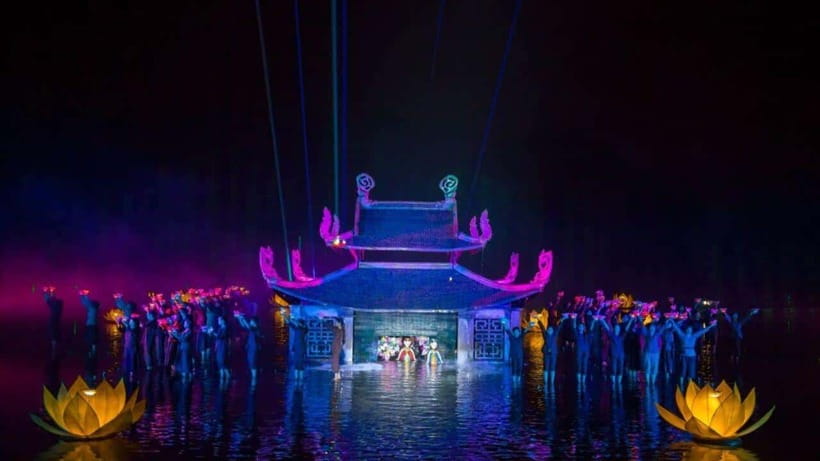
The Quintessence of Tonkin runs at a venue inspired by the Thay Pagoda, with an outdoor setup and a lakeside feel. The location you’ll use if you’re going on your own is Khu vui chơi và văn hoá Baara Land, Thôn Đa Phúc, Xã Sài Sơn, Quốc Oai, Thành phố Hà Nội. Even if you’ve never been to the Thay Pagoda area, the show’s environment is designed to give you that quiet spiritual mood first, then layer on the spectacle.
The practical upside of an open-air, lakeside-style venue is that you get atmosphere while you wait. Before the show, you can look around the grounds and watch the pre-performance energy build without having to sit under lights immediately. One review detail that really matters here: the staff are known for being kind, and that human touch helps when you’re figuring out where to stand, where to queue, or how early to arrive.
You also get a venue that’s meant for an evening experience. Since the show starts at 7:30 PM, plan for the night to be the main event, not a casual daytime stop. That makes it easier to schedule: you’re basically committing to one solid block in your Hanoi evening plan.
You can also read our reviews of more tours and experiences in Hanoi
Price and value: is $42 a fair deal?
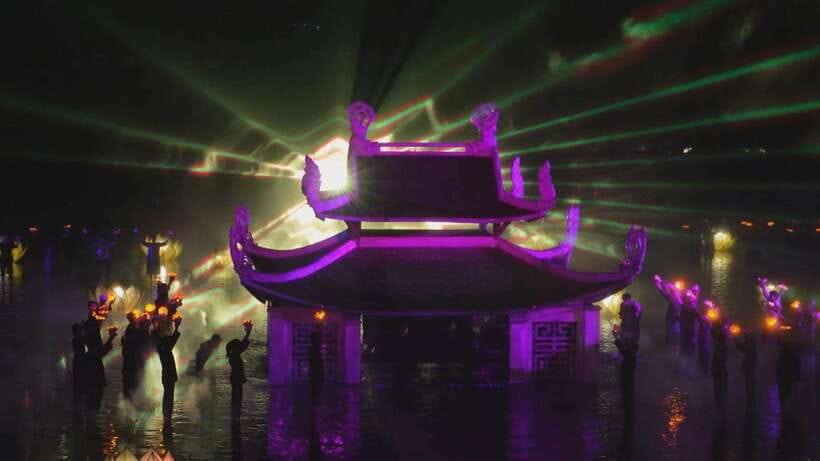
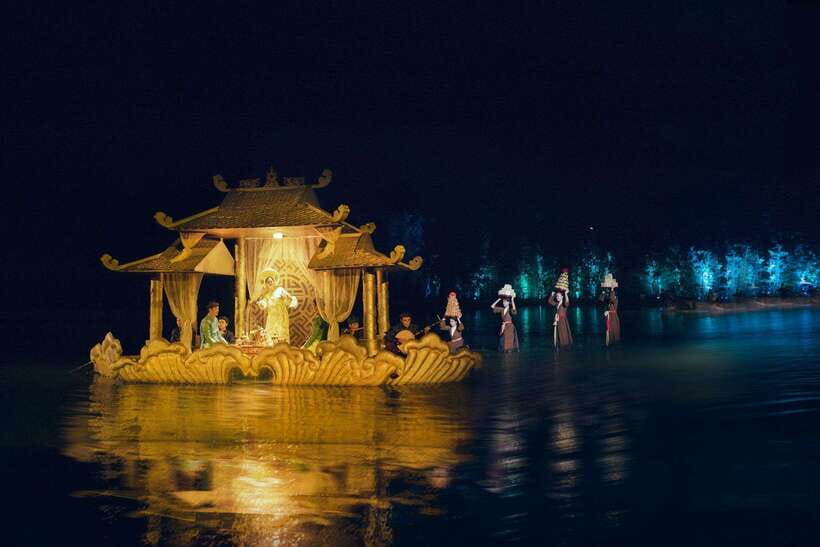
At $42 per person, you’re paying for more than a generic performance ticket. You’re buying entry into an award-winning cultural production that lasts about 4 hours total and includes access to six acts. The show itself blends water puppetry, traditional music, lights, and nature, and it’s staged with a serious production approach that changes scenes as the story moves forward.
Here’s where value matters for you: this is a single night that aims to cover Northern Vietnam’s cultural threads—spiritual life, folk traditions, historical education (the mandarin exam), and community music (Quan Ho). You do not have to hunt down separate performances or piece together multiple short shows. If you like your Hanoi evenings organized and meaningfully themed, this tends to fit.
One cost consideration: the pre-show food part is not included as a fixed “free meal.” Outdoor food vendors are available, but personal spending is extra, and the pre-show experience food is listed as at your own expenses. So if you want snacks or drinks before the lights go down, keep a little budget aside.
Another logistics point: the show timing is coordinated with transfers in the overall experience description, but transportation is also listed as something you may need to arrange separately depending on your booking. If you’re not staying nearby, double-check what your ticket includes for getting there and back.
How the 4-hour night unfolds (and what each act is really doing)
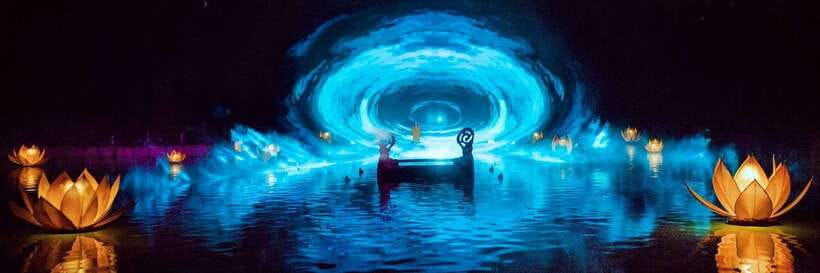
Think of the experience as one long story with scene changes. You’ll show up early, settle in, snack if you want, then watch a sequence of performances that connect religion, court culture, and community music. The schedule is built around that flow.
Pre-show: arrive early and let the atmosphere work on you
The show starts at 7:30 PM, and you’re advised to arrive at least 60 minutes early. That is not just about “being early.” It’s the difference between rushing in and actually enjoying the venue. When you arrive early, you can:
- Check out the outdoor area and the lakeside setting
- Browse the venue’s food vendors (buying snacks is optional, but you’ll have the chance)
- Get into position before the crowd energy rises
If you’re the type who likes photos, this is also when the lighting is more forgiving and you can get your bearings without filming in full darkness.
Act 1: rural poetry and the opening mood
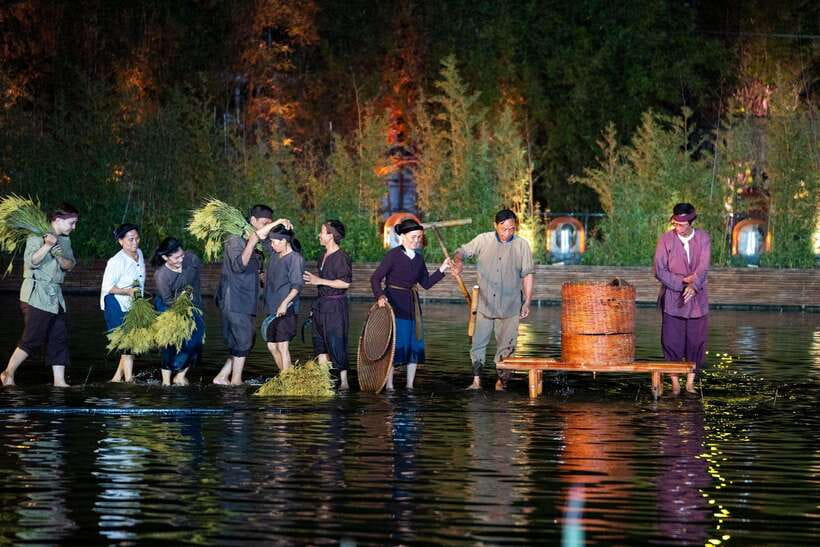
The opening scene is inspired by the poetry of Nguyễn Khuyến and highlights traditional rural life. The night’s tone matters because it primes you for everything else. If you do not understand every line of Vietnamese storytelling, the show still gives you landmarks: rural calm, folk music cues, and a visual style that signals we’re moving through time.
This early section also includes music such as the folk song Tắt nước đậu đình and the Tonkin lullaby vibe that sets a gentle, familiar emotional rhythm. The goal isn’t to teach you facts like a lecture. It’s to make you feel the everyday culture that sits underneath the big spiritual and historical scenes.



Act 2: Tu Đạo Hạnh and the birth of water puppetry
Next, the story focuses on Tu Đạo Hạnh, the monk credited with founding the Thay Pagoda. This scene frames him as a healer and teacher and connects him to water puppetry as a beloved part of Vietnamese culture.
What this means for you: you’re not just watching puppets on water as entertainment. You’re being told where the tradition comes from and why it mattered to the community around the pagoda. If you enjoy cultural context, this act is a strong reason to pick this show over simpler water-puppet standalones.
Act 3: candidates heading to the mandarin examination
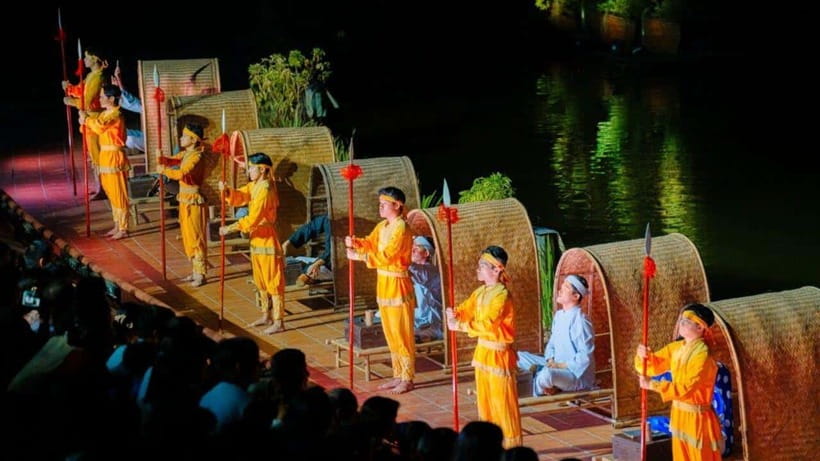
Then the show shifts into the historical education thread. You’ll see candidates traveling to the Thăng Long Citadel with cloth bags and bamboo tents, tied to the mandarin examination tradition.
This section is useful even if you’re not a history buff. It gives you a sense of how scholarship and ritual life were connected, and it visually maps something that can otherwise sound abstract. The bamboo tents and procession feel are the kind of details that anchor the “time travel” feeling for your eyes.
Act 4: a lakeside music scene inspired by Ho Xuân Hương
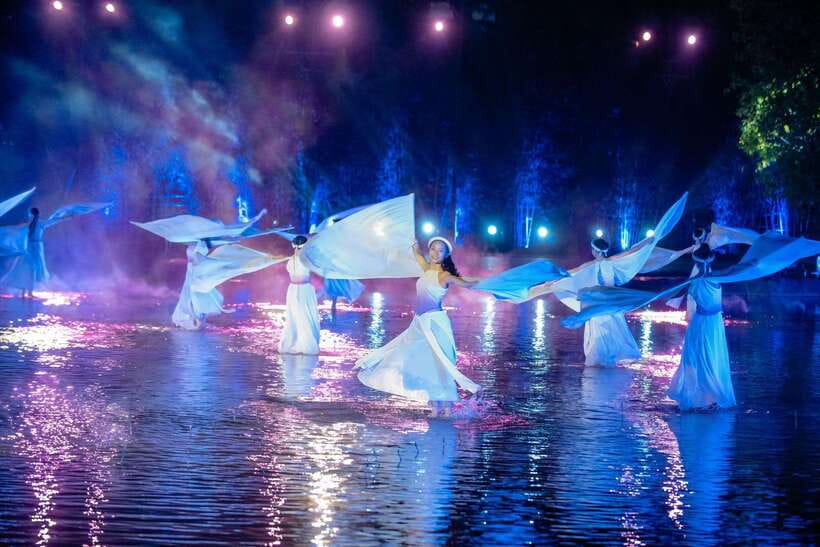
After the exam journey, the stage transforms into a lakeside atmosphere. Young women play traditional Vietnamese instruments, inspired by the poetry of Hồ Xuân Hương, and fairies dance gracefully over the water.
This is one of those moments that works even when language is hard. The performance leans on beauty and motion—music, lights, water effects—so you can enjoy it on a non-verbal level. If you’ve ever felt that some shows only work if you understand the plot, this is the act that proves the show’s visual storytelling strength.
Act 5: worship at the heart of village life
Now the show turns explicitly spiritual. It highlights worship connected to the Third Holy Mother and the Mother Goddess, practices tied to successful farming and a prosperous life. This portion is recognized by UNESCO as Intangible Cultural Heritage.
For practical reasons, I like that this act grounds the earlier stories. The pagoda origin (Tu Đạo Hạnh) leads into community ritual and agriculture hopes. Even if you only catch parts of the narration, the reason behind the ceremony comes through through performance: community well-being, tradition, and reverence.
Act 6: Quan Ho call-and-response and a joyful finale
The final scene closes with a challenge-and-response singing competition of Quan Họ folk songs. It also portrays traditional games and customs, including the Song Loan and Song Dinh processions. The finale ends with performers bidding farewell with Người ơi người ở đừng về.
This last act is your payoff. It feels communal and lively compared to the more solemn spiritual segments. And it’s the part that tends to make the show feel like it belongs to Vietnamese culture, not just tourist programming. One real-life reviewer line that matches the design here: even when you don’t understand everything, you can still sense what’s happening because the music language is strong.
Water puppetry, lights, and music: why the show feels bigger than one trick
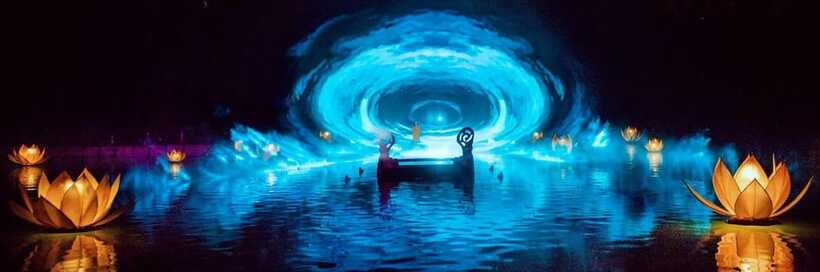
Water puppetry can be magical, but some shows stop there. Here, the production layers in traditional music, lighting, and nature-based staging so the puppets become one element in a bigger scene. The stage setup also includes transformations—from rural themes to a serene lakeside—so you feel movement across settings rather than staying stuck in one visual box.
What I’d point out for your decision-making: this show is not only about watching puppets. It’s about watching how multiple cultural forms interact—poetry inspiration, folk songs, court-era rituals, religious practice, and community singing—all tied into a single night.
That’s why it can work for different travel styles:
- If you want pure entertainment, the water and stage effects carry you.
- If you want meaning, the story names—Tu Đạo Hạnh, Quan Họ, the UNESCO-recognized Mother Goddess worship—give you anchors.
If you don’t speak Vietnamese: how to enjoy it anyway
You do not need fluent Vietnamese to have a good time here. The structure is built so visuals and music do a lot of the telling. You’ll see characters traveling, instruments being played, puppets interacting with the water stage, and processions that visually explain progression.
A useful way to watch: focus on transitions. When the setting shifts—rural scenes to lakeside to ceremonial worship—you’ll feel the time change even if you miss narration. Also listen for the different folk music styles the show uses, since they mark what kind of story beat you’re in.
That’s the key takeaway from the “I didn’t understand it, but it was great” feeling people get with this kind of cultural performance. The show is designed to communicate through sound, rhythm, and staging, not only through spoken explanation.
Timing and logistics that actually matter in Hanoi
This is a night event, and the details are pretty simple, which is good.
- Start time: 7:30 PM
- Recommended arrival: 60 minutes early
- Total duration: about 4 hours
If you’re juggling Hanoi traffic, this is exactly the kind of plan that benefits from arriving early and staying calm. Once you’re at the venue, you’ll have the pre-show vendor area to pass time, and after the finale you can linger for tranquil surroundings and photos before you head out.
On the transportation side, remember: transportation costs are listed as not included in the base ticket price. If you’re relying on a car or taxi, plan your return timing so you’re not rushing at the end. The good news is the show ends with a clear finale song, so the atmosphere doesn’t fade into uncertainty—you know the performance is wrapping.
Who should book this Hanoi night show?
I think this is a strong match if you:
- Want one big, well-themed cultural show in your Hanoi schedule
- Like water puppetry but want more than just the puppet act
- Enjoy story-driven performances that connect religion, folk life, and history
- Prefer an evening plan where you can snack and relax before the main event
It may be less ideal if you:
- Only want performances that you fully understand through dialogue
- Hate outdoor settings or late nights (since it’s open-air and starts at night)
- Prefer strict schedules with no extra waiting time at the venue (because arriving early is part of getting the full experience)
Should you book the Quintessence of Tonkin show?
If your goal is a culturally meaningful Hanoi night that still feels visually fun, I’d book it. The value comes from the structure: six acts, a clear thematic arc, and a production that uses water, light, and music to tell Vietnam’s story scenes-by-scene.
If you’re nervous about language, don’t be. The show’s strongest elements are visual and musical, and the pacing is built to keep you engaged even without perfect understanding. Just arrive early, budget a little extra for pre-show snacks if you want them, and make sure you’ve confirmed how you’ll get there and back.
FAQ
FAQ
What time does the Quintessence of Tonkin show start?
The show starts at 7:30 PM.
How long is the experience?
Plan on about 4 hours total.
Where is the meeting point if I want to go on my own?
The meeting point is Khu vui chơi và văn hoá Baara Land, Thôn Đa Phúc, Xã Sài Sơn, Quốc Oai, Thành phố Hà Nội.
Is there food available before the show?
Yes. There are outdoor food vendors available at the venue before the show, and buying food/drinks is at your own expense.
How many acts are included in the performance?
The ticket includes six acts.
What does the ticket include?
Your ticket includes access to the award-winning cultural performance, with six acts inspired by Vietnam’s history, spirituality, and traditions, plus performance elements combining water puppetry, traditional music, lights, and nature. There’s also time for post-show exploration.
Is transportation included in the ticket price?
Transportation costs are listed as not included in the base ticket price, and you need to arrange shared or private transfer separately.
Can I cancel for a refund?
Free cancellation is available up to 24 hours in advance for a full refund.
Are tickets refundable after purchase?
Tickets are listed as non-refundable, and all sales are final.
Is the venue wheelchair accessible?
Yes, the venue is wheelchair accessible.