Hanoi looks different on foot. This 3-hour walk through the Old Quarter is built around street-level stories and practical stops, from Đồng Xuân Market to the Opera House. I like that it stays small, so your guide can actually steer you through the alleys at a human pace.
I also love the mix of everyday life and photo moments. You’ll pause for the Korean-government friendship murals on Phùng Hưng Mural Street, then catch the train passing close by at Đường Tầu for video you’ll want to replay later.
One thing to keep in mind: this is best with good weather, and you’ll be walking through crowded sidewalks, so comfy shoes and patience help.
In This Review
- Key things to know before you go
- Setting Off in Hanoi: why the 9:30 start works
- Đồng Xuân Market: the history briefing that starts the day
- Phùng Hưng Mural Street: a friendship gift you can photograph
- Đường Tầu: seeing the train pass by local homes
- Huong Phung: French Indochina architecture in the Old Quarter
- St. Joseph’s Cathedral: Roman Catholic history during wartime
- Hoàn Kiếm Lake walking street: the sword story you’ll remember
- Ly Thai To Park: the statue tied to the capital’s move
- Hanoia Metropole: Joan Baez and a Christmas visit in 1972
- Hanoi Opera House: ending where the August Uprising happened
- Price and value: $15 for guidance and free stop entry
- Guides, pace, and what a great one adds
- Practical tips: how to get the most from the walk
- Should you book this Hanoi Old Quarter walk?
- FAQ
- How long is the walking tour?
- What is the price per person?
- Where do you meet, and where does the tour end?
- What time does the tour start?
- How large is the group?
- Is a mobile ticket used?
- Are there admission fees for the stops?
- What happens if the weather is poor?
- Is the tour refundable if I cancel?
- Are service animals allowed, and is it suitable for most travelers?
Key things to know before you go
- Small group size (max 15) keeps the pace manageable and questions welcome.
- Free entry at every stop means your $15 mainly goes to the guide and route.
- Đường Tầu photo break is the standout if you like street visuals and simple thrills.
- French Indochina stop at Huong Phung adds a different architectural chapter.
- Hoàn Kiếm Lake sword legend turns a familiar landmark into a story you can tell later.
- End at the Opera House gives the August 1945 context where it actually happened.
Setting Off in Hanoi: why the 9:30 start works
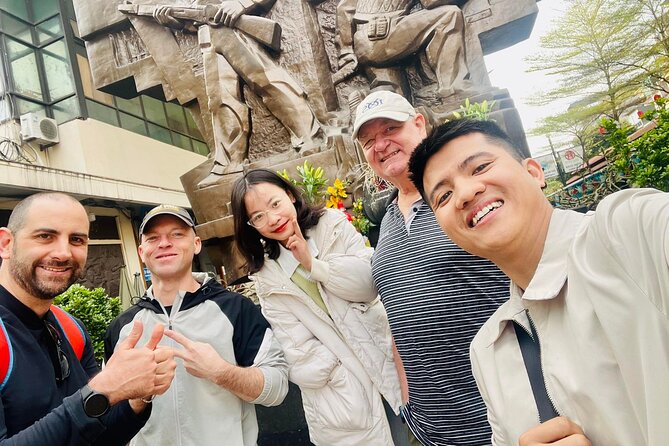
This tour starts at 9:30 am in the Đồng Xuân Market area, and it finishes at Hanoi Opera House. That timing is smart because early morning in this part of Hanoi is usually cooler and less jammed than later in the day, so your photos come out cleaner and you can hear the guide without shouting over traffic.
The route is designed for a 3-hour stroll, not a museum marathon. You’ll move at a walking pace through the Old Quarter, taking short stops rather than long sits. If you’re the kind of traveler who likes to get your bearings fast, this is the style of outing that helps you connect street names to real moments in the city’s timeline.
You’ll also be issued a mobile ticket, and the group stays under 15 people. That small size matters in Hanoi—narrow lanes and crowded corners are simply easier when you’re not herded with a giant crowd.
You can also read our reviews of more walking tours in Hanoi



Đồng Xuân Market: the history briefing that starts the day
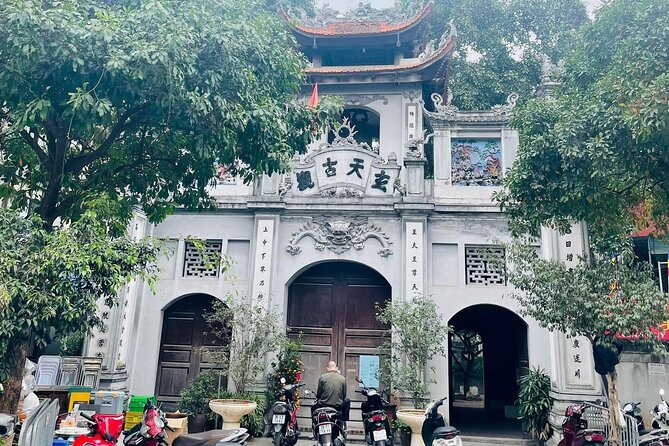
Your first stop is Đồng Xuân Market, one of the best places to launch a downtown story because it’s already a living hub, not a staged backdrop. You’ll get an intro to Hanoi’s history here, including where the Battle of Hanoi took place.
Even if you already know a bit about Vietnam’s wars, this kind of framing helps. You’re not just seeing buildings; you’re learning why this area mattered. Market-adjacent history is also useful because it teaches you how people actually lived day to day while politics and conflict shaped the city.
Practical note: markets mean movement. Expect people walking, bikes and motorbikes shifting, and shoppers cutting across your path. Your guide helps you cross safely and keeps the group together.
Phùng Hưng Mural Street: a friendship gift you can photograph
Next you head to Phùng Hưng Mural Street, an art wall created as a gift for friendship from the Korean Government. The murals are a straightforward reason to stop, but the bigger value is how your guide ties art to local identity and international links.
This is one of those stops where you’ll probably spend longer than planned just taking photos. The walls are visually bold, and the best shots often come from angles inside the lane rather than from the main street. If you want a few clean photos, turn your phone camera on before you reach the densest part of the alley.
It’s also a breather stop—short enough to stay fresh, long enough to catch the story and reset your walking rhythm.
Đường Tầu: seeing the train pass by local homes
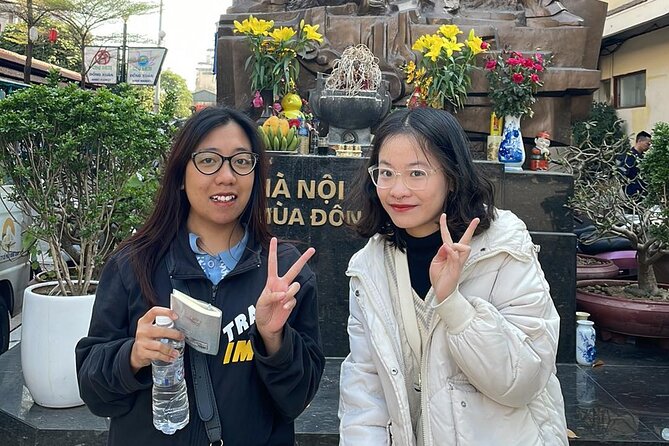
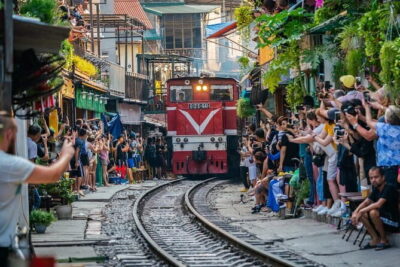
Then comes Đường Tầu, the famous spot where you can watch the train pass close to local houses. This is where the tour becomes less about architecture lessons and more about watching Hanoi in motion.
You’ll take a break here for pictures and video from the old track area. The appeal is simple: it feels real and immediate. It’s not a recreated scene, and that’s why it’s memorable.
The only caution: trains and tracks mean you should follow your guide’s position and timing. Don’t wander to get a better angle. Wait where you’re told, watch for the train, and then move on when the group does.
Huong Phung: French Indochina architecture in the Old Quarter
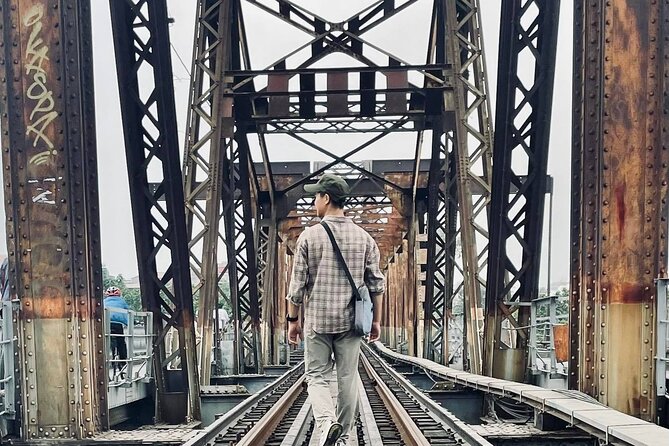
After the street spectacle, you switch gears to Huong Phung, where you’ll see a well-preserved French Indochina building inside the Old Quarter. This is the kind of stop that makes you look up.
Hanoi’s Old Quarter can feel like it’s all about narrow lanes and daily commerce, but buildings like this remind you the city was shaped by multiple eras of design and power. When your guide points out the architectural details, it helps the building stop being just a pretty façade and start being a historical clue.
This stop is shorter, so the best move is to stay alert, take a photo quickly, and listen to the guide’s explanation before moving on.






St. Joseph’s Cathedral: Roman Catholic history during wartime
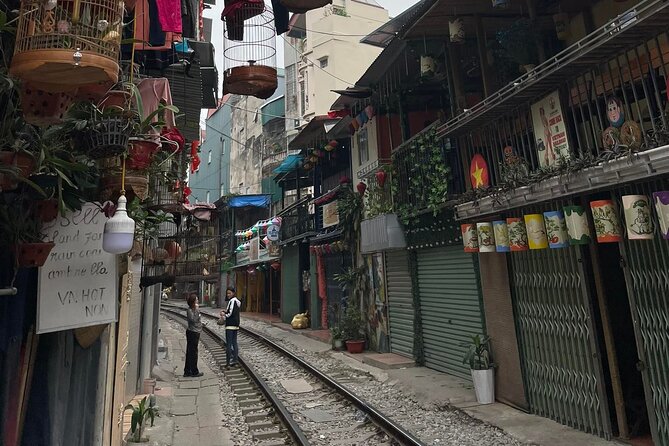
From there you visit St. Joseph’s Cathedral, described as the largest Roman Catholic church in Hanoi. The guide’s storytelling here matters because the church isn’t only about worship—it’s also tied to the Vietnam War.
You’ll hear how this church was shut down for more than 20 years during the conflict. That timeline changes your view. You’ll likely notice details more sharply once you understand the building had to sit with interruption and loss before it returned to public life.
If you’re sensitive to solemn history, this is a meaningful stop. Dress respectfully and keep your voice low while listening inside or near sensitive areas.
Hoàn Kiếm Lake walking street: the sword story you’ll remember
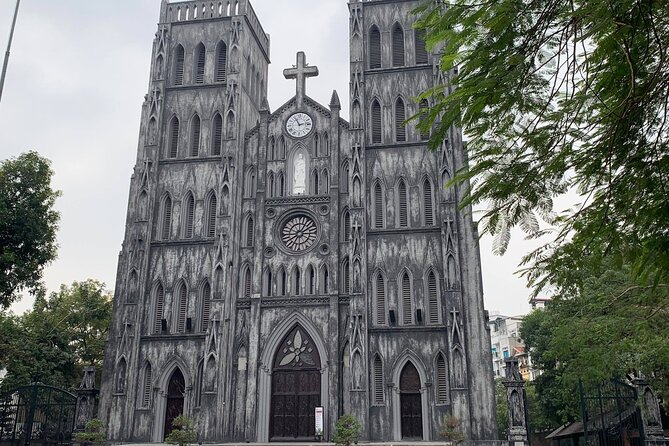
Next, the group heads to Hoàn Kiếm Lake Walking Street. This is a classic Hanoi landmark, but the tour’s edge is the story you hear about the sword-lake legend.
Legends in Hanoi are not just bedtime tales. They’re part of how locals remember identity and moral lessons through place. When you connect the legend to the lake area, the landmark feels less like a tourist checkmark and more like a shared cultural reference point.
You’ll get a short stop here—enough time to understand the background and still keep momentum for the rest of the walk.
Ly Thai To Park: the statue tied to the capital’s move
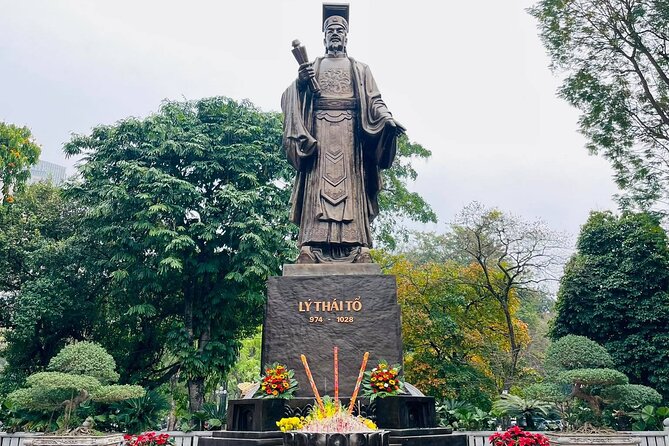
At Ly Thái Tổ Park, you’ll get up close to the statue of the 3rd King of Vietnam, known for moving the capital to what’s now called Hanoi. This stop works well because it anchors a political shift to a physical place.
A lot of history tours cover dates. This one tries to connect the why behind the move—so you understand why Hanoi grew into the center it became. Even if you only know a little Vietnamese history, the guide’s context makes the statue feel like more than a photo prop.
Short pause, good photos, then back to walking.
Hanoia Metropole: Joan Baez and a Christmas visit in 1972
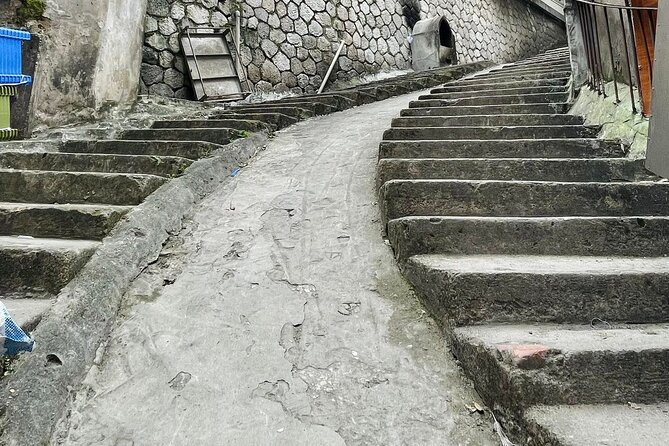
One of the more surprising stops is Hanoia Metropole, tied to the Sofitel Metropole Hotel area and a notable guest: Joan Baez, the American folk singer and activist.
You’ll hear she was a guest over Christmas in 1972, during a period when American involvement in Vietnam was escalating. Even with only the basics of that context, it’s a fascinating contrast: a globally known cultural figure linked to a hotel in a city shaped by war and politics.
This stop is a reminder that history isn’t only fought in fields. It’s also lived through artists, foreign press, and international attention—especially in hotel corridors and public spaces.
Hanoi Opera House: ending where the August Uprising happened
The tour finishes at Hanoi Opera House, and the ending point is not random. You’ll hear about the August Uprising and how it was held back in the summer of 1945.
Ending with this kind of context helps your earlier stops click together. You’ve walked through markets, religious buildings, colonial architecture, and legends around Hoàn Kiếm Lake. Then you arrive at the Opera House with a clear sense of how the city’s modern political story formed.
It’s a good close for a walking tour because it gives you a final “why this place matters” moment.
Price and value: $15 for guidance and free stop entry
At $15 per person for about 3 hours, this is priced for what you’re really paying for: local storytelling and a route that connects multiple parts of the center without you needing to build your own plan.
A big value point is that admission tickets are free at every stop listed. So your money doesn’t go to entry fees—it goes to the guide’s explanations, pacing, and choosing which corners and viewpoints are worth your time.
Is it a bargain compared with tours that include activities and tickets? Yes. Is it a “cheap pass” with no substance? Also no. The quality comes from how the guide uses the places to tell a connected story rather than reading a script while you hurry from one landmark to another.
If you’re here for a first introduction to the center of Hanoi, this kind of guided walk can save you hours of guesswork.
Guides, pace, and what a great one adds
The best part of this tour is the way a good guide turns short stops into meaningful context. One guide named Son has been praised for taking people to places they might not choose on their own, and for being both flexible and accommodating with the group.
That flexibility matters in Hanoi because plans shift fast. Side streets get crowded. You might want a longer moment at Đường Tầu for the train clip. Or you might need a calmer route through a busy lane. When the guide can adjust, the tour feels smoother instead of rushed.
You’ll also likely notice that the guide keeps the tone practical and human—history with enough clarity that you can remember it later, not history as homework.
Practical tips: how to get the most from the walk
A few things will make your experience better right away:
- Wear comfortable shoes. This is a walking tour through tight lanes and sidewalk surfaces that can be uneven.
- Bring a phone with storage for video if you care about capturing the train moment at Đường Tầu.
- Be ready for early-day crowds around market areas and major streets near Hoàn Kiếm.
- Stay with your group at every track and doorway. The fun is in the timing, not in breaking formation for one extra photo.
If you’re planning other activities the same day, I’d treat this as your anchor. A guided walk like this helps you understand where you are and why the center is laid out the way it is.
Should you book this Hanoi Old Quarter walk?
Book it if you want:
- A 3-hour orientation walk that links landmarks to real stories
- A small group with a guide who can handle alleyway pace
- Photo-friendly stops like Phùng Hưng Mural Street and Đường Tầu
- A route that ends with modern context at Hanoi Opera House
Skip it or consider alternatives if you:
- Hate walking in busy sidewalks or you’re dealing with mobility limits
- Are planning to start the day extremely late (this one begins at 9:30 am)
- Are traveling during uncertain weather, since the experience requires good weather
If you’re new to Hanoi, this is the kind of tour that helps you get your bearings fast while still leaving room to explore on your own afterward.
FAQ
How long is the walking tour?
It lasts about 3 hours.
What is the price per person?
The price is $15.00 per person.
Where do you meet, and where does the tour end?
You start at Đồng Xuân Market (Chợ Đồng Xuân) and end at Hanoi Opera House.
What time does the tour start?
The start time is 9:30 am.
How large is the group?
The tour has a maximum of 15 travelers.
Is a mobile ticket used?
Yes, it’s listed as a mobile ticket.
Are there admission fees for the stops?
The stops listed all show admission ticket free, so you don’t pay entry fees as part of the tour stops.
What happens if the weather is poor?
The experience requires good weather. If it’s canceled due to poor weather, you’ll be offered a different date or a full refund.
Is the tour refundable if I cancel?
No. It is non-refundable and cannot be changed for any reason.
Are service animals allowed, and is it suitable for most travelers?
Service animals are allowed, it’s near public transportation, and the tour says most travelers can participate. Confirmation is also subject to availability.
You Might Also Enjoy


More Walking Tours in Hanoi


More Tours in Hanoi
- Ninh Binh Full-Day Tour from Hanoi to Hoa Lu, Tam Coc & Mua Cave Via Boat & Bike
★ 5.0 · 4,384 reviews