
REVIEW · CRAFT VILLAGE TOURS
Hanoi: Drum Village or Incense Village & Hat (“SMALL GROUP”)
Book on GetYourGuide →Operated by GREEN VIETNAM TRAVEL · Bookable on GetYourGuide
If you like hands-on culture, this day is for you. You’ll watch crafts that are still alive in Hanoi’s orbit, from drums and incense to Chuong hats. I especially love how the workshops explain purpose, not just process, and how the small-group format leaves room for real questions. One drawback: it’s a craft-day schedule, so expect hands-on sites and stop-and-go driving rather than long wandering.
This experience works two ways depending on the option you choose. Go for the Doi Tam drum-making village and you’ll spend the day with jackfruit wood, buffalo leather, and the moment they test the sound. Or pick the half-day group route that pairs Chuong Conical Hat Village with Quang Phu Cau Incense Village, plus a quick stop at Hanoi Train Street (optional drop-off).
Either way, you’re paying for access: entrance fees, a guide, and included souvenirs, not just transportation. The price is low, so be ready to accept a focused, efficient itinerary over a slow travel pace.
In This Review
- Key points before you go
- Drum-making in Doi Tam: jackfruit wood, buffalo leather, and sound you can hear
- Chuong Conical Hat Village: 100 minutes of paint-your-own craft time
- Quang Phu Cau Incense Village: how incense becomes a job, and a smell
- Hanoi Train Street: optional drop-off, quick reality check
- Price and time: why $14 can be good value here
- Who this small group craft tour suits best
- Practical tips that make the day smoother
- Should you book this Hanoi craft-village day?
- FAQ
- How long is the tour?
- What does the half-day group option include?
- Is there a private option focused on drums?
- What’s included in the price?
- Where do you stop for Train Street?
- What languages are guides available in?
- Is there any seasonal price change?
Key points before you go

- Doi Tam drums are built from jackfruit wood and buffalo leather, then finished by testing the sound
- Chuong conical hat time includes a free hat to paint, so you leave with something personal
- Quang Phu Cau incense covers both family-scale making and a nearby factory
- Small group pace usually means your questions don’t get lost in a crowd
- Train Street is a quick pass-by, with optional drop-off if you want a closer look
- You get practical inclusions: guide, bottled water, entrance fees, and basic craft souvenirs
Drum-making in Doi Tam: jackfruit wood, buffalo leather, and sound you can hear
If you choose the drum option, your day centers on Doi Tam Village, known for producing high-quality drums in Vietnam. You’re not just watching decoration. You’re watching an artisan chain that turns raw materials into a specific sound.
The story starts long ago. The craft is described as dating back to 925 AD, with a founder legend tied to Nguyen Duc Nang and a giant drum reportedly made for King Le Dai Hanh’s visit in 987. Whether you take the legend literally or as cultural memory, the point is clear: these drums weren’t made for wall art. They were tied to ceremony, festival life, and communal signals.
What’s impressive is the step-by-step craft sequence. Craftsmen work with jackfruit timber, cut it into planks, and curve it into the barrel-shaped drum body. Then comes the leather work: buffalo leather is tanned and stretched to form the drumhead, before it’s attached to the wooden barrel. That’s the part where you can almost see why drum-makers are respected. The drum isn’t “assembled”—it’s adjusted into shape.
And then you get the final steps: craftsmen test the sound, and they add decorative patterns once the drum hits the right tone. This is a great moment to pay attention. It turns the whole process from craft demo into real acoustic engineering, just done with traditional hands.
Two practical notes for your visit:
- Expect smells and materials talk. Leather tanning history and incense-adjacent village odors may be in the air, depending on season and workshop timing.
- Bring a camera, but listen too. The guide’s explanations give meaning to what you’re seeing, especially when they connect the drum to ceremonies and signals.
You can also read our reviews of more tours and experiences in Hanoi.



Chuong Conical Hat Village: 100 minutes of paint-your-own craft time

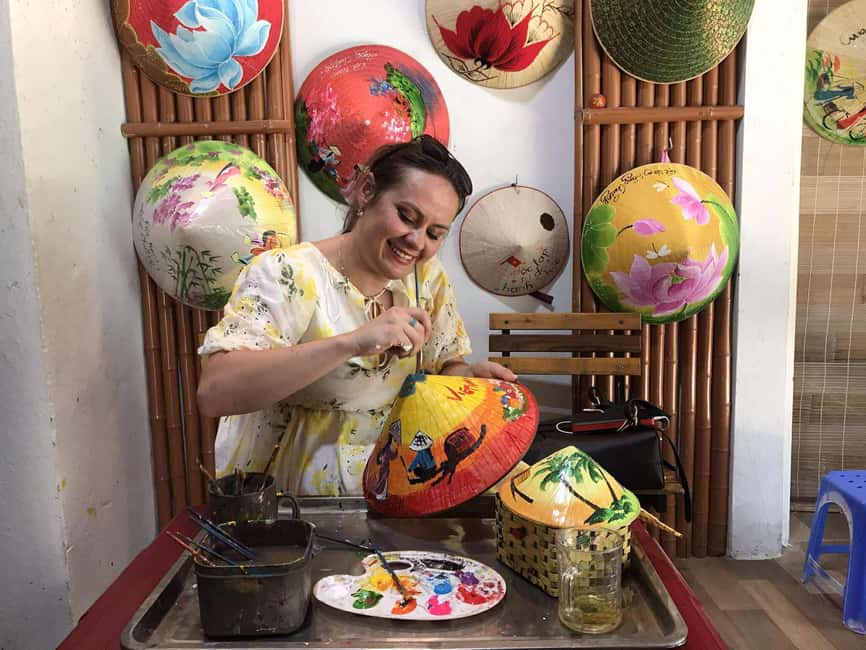
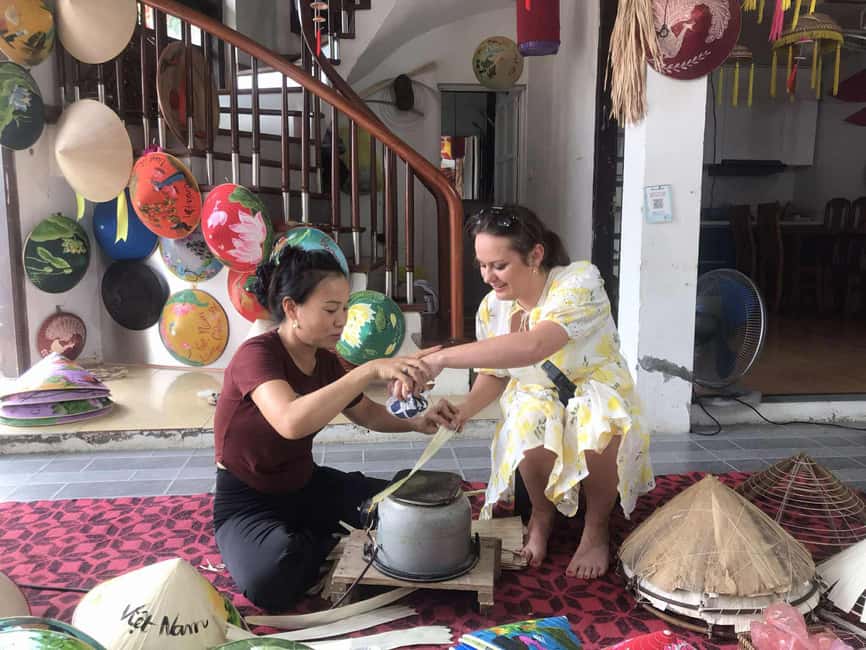
Chuong Conical Hat Village is the conical hat capital in this itinerary, and it’s known for hat-making for over 300 years. The schedule gives you a photo stop and then a guided visit (about 100 minutes). You’ll see how hats are made, then you get to paint one.
This part is fun because it’s not only observational. You’ll decorate a hat, take it home, and it becomes a souvenir that feels like you participated rather than just bought. That matters in a craft village day, because you’ll often be tempted by sales—this included project keeps it personal.
Also, your guide should help you understand what you’re looking at. In a craft like this, details matter: the pattern, color choice, and the way the materials are handled. Even if you’re not an artist, painting helps you notice how the hat is built.
If you’re traveling with kids, this is often the most straightforward win: it’s tactile, it has a clear goal, and it ends with something you physically made.
Quang Phu Cau Incense Village: how incense becomes a job, and a smell

Next up is Quang Phu Cau Incense Village, a place that has produced incense for more than 100 years. You’ll do a photo stop and a guided visit of about 118 minutes, which is a solid amount of time for watching the process and asking questions.
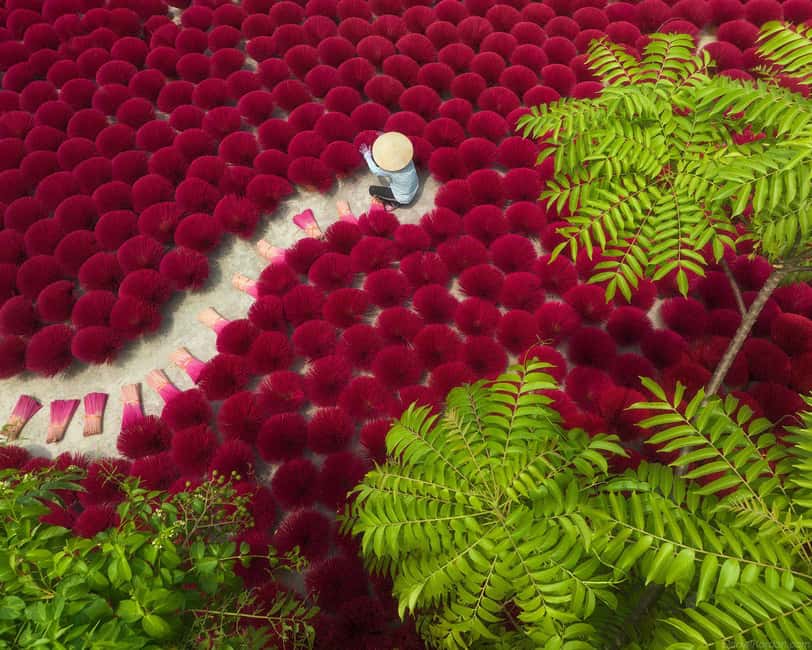
The itinerary takes you through the village center where locals make incense on a family scale. This is where you can really see craft work as daily labor, not just spectacle. You’ll also meet a family that specializes in dyeing incense sticks. The colorful bundles are visually striking, and they’re also a practical reminder that incense is a supply chain: making, dyeing, drying, bundling, and selling.
What I like here is the realism. After the village walk, you go to a nearby factory to see the next level—how incense is made from scratch and how manual workers’ work fits into higher-volume production. That factory stop can be a bit more industrial than the village scene, so if you’re hoping for a purely homey atmosphere, you may want to keep expectations grounded. But it’s also the reason this tour feels complete: you see the contrast between small-scale and scaled production.
By the end, you’ll have incense souvenirs from where they’re produced. The experience also includes some free incense sticks after you make incense sticks yourself. That hands-on moment is usually the part people remember, because you can smell your own work and connect it to what you saw earlier.
Quick heads-up: incense is, well, incense. If you’re sensitive to strong smells, plan to keep water handy and give yourself short breaks while you’re waiting for photos.
Hanoi Train Street: optional drop-off, quick reality check
The tour includes Hanoi Train Street as a pass-by (about 2 minutes) and offers the option of a first drop-off there. The important thing: it’s not the focus of the program. It’s a quick stop—enough to orient you and let you decide if you want to spend more time there on your own.
This can be a nice punctuation mark after workshops. After learning about materials—wood, leather, dye, fragrance—Train Street gives you a contrast: urban life, traffic, and the fast rhythm of modern Hanoi.
If you don’t want to get dropped off there, you simply wait in the car.
Price and time: why $14 can be good value here
At about $14 per person for around 6 hours, this is the kind of craft tour that feels like a bargain only if you pay attention to what’s included. You’re not just paying for a driver. You’re covering:
- Entrance fees
- A professional local guide
- Bottled water
- A free conical hat to paint (in the hat option)
- Some free incense sticks after making incense
- Hotel pickup and drop-off in the Hanoi Old Quarter area
So you’re effectively buying access plus hands-on craft output. That’s why the price feels fair: souvenirs are built into the day, not tacked on later.
The time length matters too. Six hours is long enough to see two crafts in the half-day option (hat + incense) without turning it into a rushed blur, and it’s manageable enough for most schedules in Hanoi. If you go with the private drum-making version that includes lunch, you’ll also get more time at one craft focus—useful if you want to go deeper into the drum process.



Who this small group craft tour suits best
This is a smart fit if you want authentic, practical culture. You’ll learn through observation and hands-on time, not only by looking at finished products.
It’s especially good for:
- People who like making things more than shopping
- Families who want a structured day with a clear activity (painting the hat)
- Travelers who enjoy learning local craft stories (drum legends and the role of ceremonial sound)
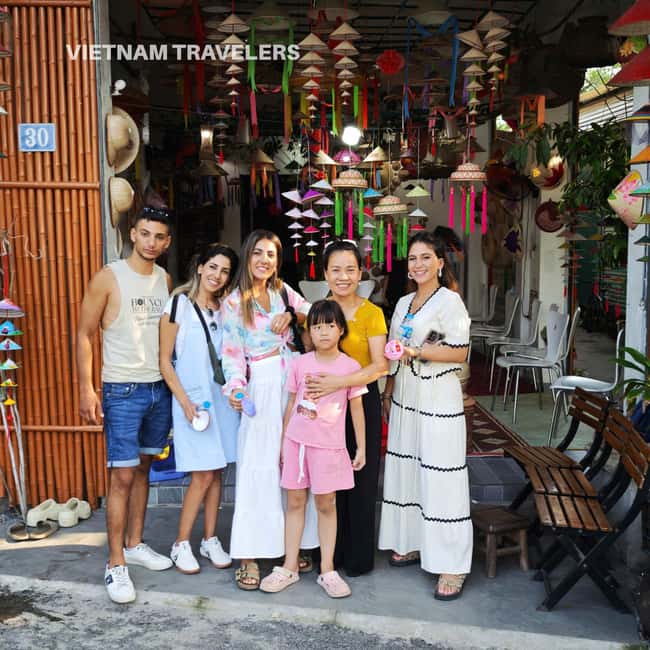
- Visitors who prefer a small group pace, where your guide can answer questions without rushing you out
A note on guides: the experience can rise or fall on interpretation. I’ve seen names like O Han praised for being charismatic, smart, and patient, and Henry credited for friendliness and a strong, helpful focus during the incense and hat stops. Either way, plan to use the guide. Ask what each step is for, and you’ll get more than photos.
Practical tips that make the day smoother
A few choices will make this run better:
- Wear comfortable shoes. You’ll move between village workshops and factory areas, and you’ll want stable footing.
- Expect workshop time to be a little flexible. Crafts slow down to explain. That’s the point.
- Take notes on materials. Jackfruit wood, buffalo leather, dyeing incense sticks—these are the keywords that turn a craft stop into learning.
- Don’t overpack with fragile souvenirs. You’ll be bringing home a painted hat and incense-related items.
- If you’re doing the incense option, keep a small cloth or tissues handy. The day is sensory; small comfort items help.
Should you book this Hanoi craft-village day?
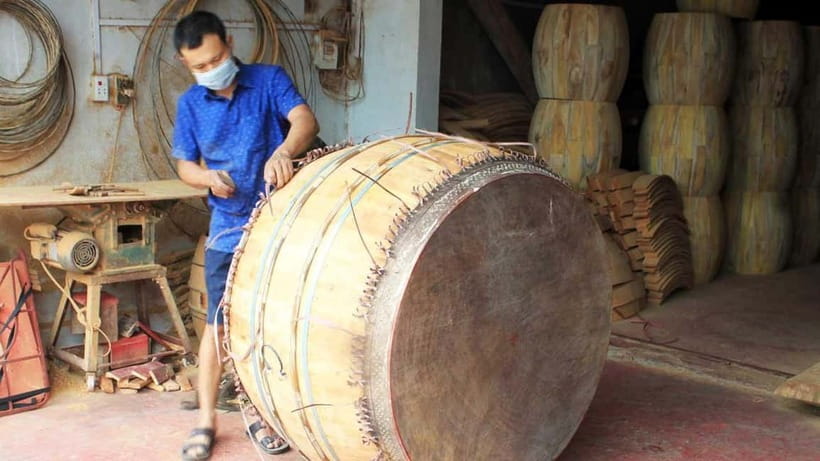
If you want a low-cost, hands-on way to understand Vietnamese crafts, I’d book it. The included hat-painting and incense-making pieces make it feel like participation, not just sightseeing. If the drum option is available on your dates, it’s the one to choose if you care about deeper technique—especially the jackfruit wood shaping, buffalo leather drumhead work, and the moment they test for sound.
Skip it only if you’re looking for a high-scenery day, because this route is about craft process and cultural context, not dramatic landscapes. Also, if strong smells bother you easily, take incense seriously and plan for breaks.
FAQ

How long is the tour?
It runs for about 6 hours.
What does the half-day group option include?
The group route includes Chuong Conical Hat Village, Quang Phu Cau Incense Village, and a pass-by of Hanoi Train Street.
Is there a private option focused on drums?
Yes. There’s an option for a private drum-making village visit with lunch.
What’s included in the price?
Included are hotel pickup and drop-off in Hanoi Old Quarter area, bottled water, entrance fees, a professional local guide, and visits and observations at the craft villages. The hat village includes a free conical hat to paint and take home, and the incense experience includes some free incense sticks after you make incense sticks.
Where do you stop for Train Street?
You’ll pass by Hanoi Train Street for about 2 minutes. There’s also an option for the first drop-off there; if you don’t want that, you stay in the car.
What languages are guides available in?
Guides are offered in English, Vietnamese, Chinese, French, German, Italian, Spanish, and Japanese.
Is there any seasonal price change?
There’s a Lunar New Year surcharge of 250,000 VND per person for dates from 16/02/2026 to 19/02/2026.