REVIEW · HANOI
18-day Itinerary Vietnam – Cambodia -Thailand | Best 2026-27
Book on Viator →Operated by Authentic Adventures · Bookable on Viator
From Hanoi’s Old Quarter to Phuket beaches, the pacing feels sensible. You’ll love having hotel pickups and a tight plan that links standout sights across three countries. My favorite part is the hands-off travel day-to-day: entrance fees and key logistics are handled so you can spend your energy walking, looking, and eating.
The one thing to consider is how often you’ll switch places and get up early. You’ll enjoy multiple mornings with pre-planned activities (not late starts every day), and the trip moves fast for an 18-day window.
In This Review
- Key Things I’d Pay Attention To
- Hanoi to Ha Long: An Efficient Northern Vietnam Start
- Ha Long Bay by Sunrise: Tai Chi, Then Views
- Hanoi’s Culture Day and the Da Nang–Hoi An Bridge
- Hoi An at Your Pace: Old Town Time and Flight to Saigon
- Ho Chi Minh City Must-Do Stops: War Remnants and Cu Chi Tunnels
- Mekong Delta Days: My Tho, Ben Tre, and a Floating Market Morning
- Crossing to Cambodia: Siem Reap Start and Angkor Highlights
- Koh Ker and Beng Mealea: More Jungle Ruins, Less Crowding Energy
- Phuket: Beach Recovery Time With Island Excursions
- Price and Logistics: Is $2,859 Good Value?
- The Tour’s Pace: Who Will Enjoy It Most
- Tips From the Human Side: What Coordination Feels Like
- Should You Book This Vietnam–Cambodia–Thailand Tour?
- FAQ
- How long is the tour?
- Where does the tour start?
- What is the price per person?
- How large is the group?
- Are pickup and drop-offs included?
- What meals are included?
- Are entrance fees included?
- Does the tour include domestic flights?
- What if weather is bad?
- Can I cancel for a full refund?
Key Things I’d Pay Attention To

- Private room stays with daily breakfasts, plus lunches and a couple of dinners built into the schedule
- Small max group size (10 travelers), which usually means less waiting around than big-tour chaos
- Easy intercity moves with domestic flights and air-conditioned vehicle transfers
- Two different kinds of “big sights”: iconic temples in Angkor and water-based scenery in Ha Long and the Mekong Delta
- Real free time in Hanoi, Hoi An, Ho Chi Minh City, Siem Reap, and Phuket—so you’re not just herded from stop to stop
Hanoi to Ha Long: An Efficient Northern Vietnam Start
Your trip opens in Hanoi, with a welcome transfer to your hotel and the rest of the day free to get your bearings. You’re not trapped in a rigid schedule right away, which matters in a city where streets can feel like a maze. If you enjoy wandering with coffee in hand, this is a solid first day because you can choose your own tempo.
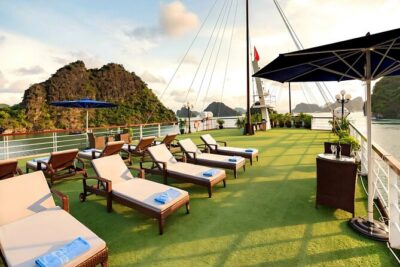
On day 2, you’ll get picked up from the Old Quarter area around 8:00–8:30 and head toward Ha Long. Then you arrive at Tuan Chau port and transfer to the cruise. From there, the day shifts into scenic mode: you settle in, get a welcome drink, and start cruising through highlights around the bay area (including places like Gia Luan and Thoi Quyt, plus stops described as island viewpoints).
What I like here for your planning: the “getting there” part is handled. You’re not booking separate rides, bargaining with drivers, or trying to coordinate guides on your own. It’s one of those trips where the structure actually helps you see more with less stress.
Possible drawback: sunrise and early starts show up later in the cruise portion. If you’re the type who hates waking up early on vacation, this may feel like a trade-off you’ll need to accept.
You can also read our reviews of more tours and experiences in Hanoi.
Ha Long Bay by Sunrise: Tai Chi, Then Views
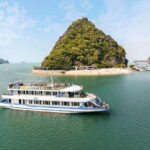
The Ha Long segment isn’t just a one-and-done cruise. On the morning of day 3, you’ll wake up early for a Tai Chi session on the sundeck and watch the sunrise over Lan Ha Bay. Then you’ll have breakfast while the water and islands are still calm and quiet.
This is one of the better-designed parts of the trip because it gives you a different Ha Long experience than the daytime “photo tour.” Sunrise makes the scenery feel less crowded and more peaceful. Even if you’re not into Tai Chi, the point is the timing: you’re up for the best light and the least frantic energy.
After breakfast and the morning cruise time, you return to Hanoi by late afternoon (around 17:00), then you’re back for free time in the city at night. That rhythm works well: morning on the water, evening with your own choices in Hanoi.
Hanoi’s Culture Day and the Da Nang–Hoi An Bridge
After your Ha Long return, day 4 gives you a cultural anchor back in Hanoi with a visit to the Temple of Literature. It’s a UNESCO World Heritage site and a worthwhile stop if you want more than just street scenes. Even if temples aren’t your main interest, this kind of site gives you context for how Vietnam thinks about learning and scholarship.
Then comes the first major logistics leap: you’re transferred to the airport and fly to Da Nang, followed by a transfer to Hoi An. This is where the “big trip, smaller pain” approach matters. Instead of trying to cross Vietnam by bus for hours, you gain time for actual sightseeing.
Day 5 in the Hoi An area is a strong mix:
- My Son Sanctuary (UNESCO) in the morning
- A walking tour through Hoi An’s local market in the afternoon
- The Japanese Covered Bridge as a classic stop to close the day
Hoi An is one of those places where you can feel the “slow down” impulse. A guided day like this is useful because it helps you find the corners worth lingering in later.
Hoi An at Your Pace: Old Town Time and Flight to Saigon
Day 6 is more relaxed, with breakfast and free time to explore Hoi An Old Town on your own. This is the kind of day that helps you absorb what you learned in the guided parts. You can return to spots you liked, skip the ones that don’t grab you, and eat when hunger hits.
Then on day 7, you fly to Ho Chi Minh City. Once you land at Tan Son Nhat airport, you’re taken to your hotel and the rest of the day is free. It’s a smart setup: after travel, you get to choose your first Saigon meal and your first wandering route.
Ho Chi Minh City Must-Do Stops: War Remnants and Cu Chi Tunnels
Day 8 is the “Saigon big three” style day:
- Notre Dame Cathedral (Saigon Central)
- Saigon Central Post Office
- War Remnants Museum
Then you head to lunch and continue with the afternoon trip to the Cu Chi Tunnels.
The War Remnants Museum is the emotional center of this day. If you’re looking for a history stop that isn’t abstract, this is the one. The Cu Chi Tunnels add a hands-on layer: you’ll learn about the underground network and how it functioned during the war. It can be heavy, so I recommend treating it as a full mental block, not a quick “check mark.”
For balance, you also get free time at night on other parts of the trip. Day 9 continues with a boat-and-water day in the Mekong Delta area, which feels like a change of gear after museums and tunnels.


Mekong Delta Days: My Tho, Ben Tre, and a Floating Market Morning
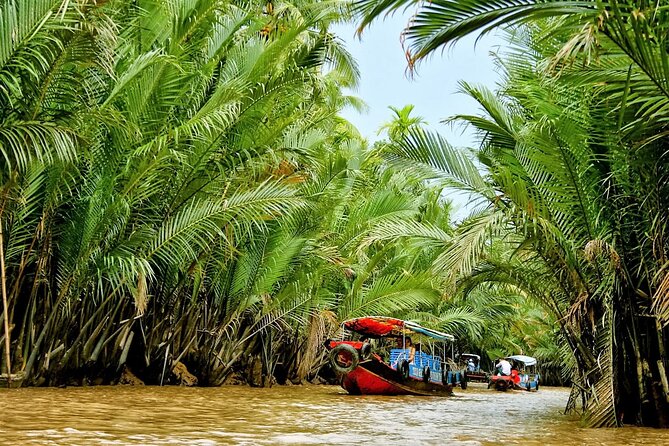
The Mekong Delta segment starts with My Tho. You’ll go exploring by boat and spend time in the waterways setting the region is known for. Then day 9 continues with Ben Tre, including time with coconut-growing surroundings and canal-style navigation with local workshops described in the program.
On day 10, you get the early-morning highlight: a trip to Cai Rang Floating Market around 6:30am. This is when the market is busiest, and it’s also when you can see the river life at its most active. The program includes cruise time through smaller canals, which is where you’ll likely feel like the market isn’t just a spectacle—it’s part of how people move produce.
After the market, you return to Ho Chi Minh City for lunch and then head out again later in the trip by flight to Cambodia.
Crossing to Cambodia: Siem Reap Start and Angkor Highlights
Day 11 shifts gears. You’ll have leisure time in Ho Chi Minh City and then transfer to the airport for the flight to Siem Reap. Once you arrive, you get the rest of the day to yourself, which is a good reset before the temple days start.
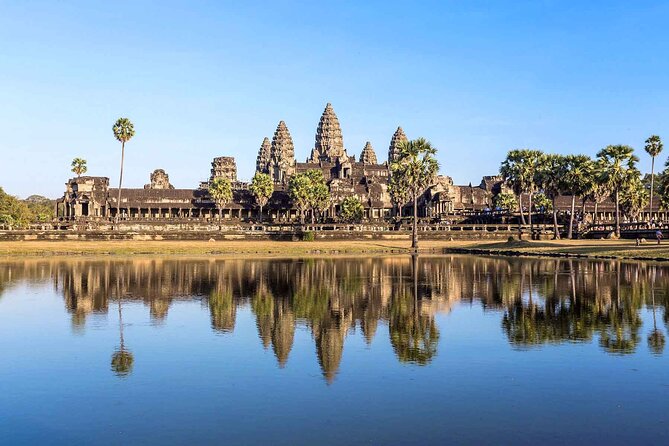
Day 12 and day 13 are the Angkor core. Day 12 hits the big names:
- Angkor Thom
- Ta Prohm (the temple complex with trees and vegetation growing around structures)
- Angkor Wat in the afternoon
This order works well. Starting with Angkor Thom gives you the “city scale” feel. Ta Prohm then brings that iconic film-like visual where vegetation is part of the architecture. And Angkor Wat at the end gives you the grand finale sensation.
A small but important planning note: these are long days with walking. Even when the program includes set stops, you’ll want comfortable shoes and water on hand. This is one of the few parts of the trip where personal comfort can make a big difference in enjoyment.
Koh Ker and Beng Mealea: More Jungle Ruins, Less Crowding Energy
Not every day is classic Angkor. On day 13, you’ll head out early to Koh Ker, about an hour and a half away. Koh Ker is described as remote and heavily forested, which is exactly why it feels different from the busiest temple clusters. You’ll explore the temple complex and then return to Siem Reap with additional stops on the way (including Prasat Neang Khmau and Prasat Pram) and lunch near Beng Mealea.
Then comes Beng Mealea, known in the program as an overgrown temple with dense jungle surroundings and a shorter walk through the ruins. For many people, this is the more “adventure” feeling day—less postcard symmetry and more nature-meets-stone texture.
Phuket: Beach Recovery Time With Island Excursions
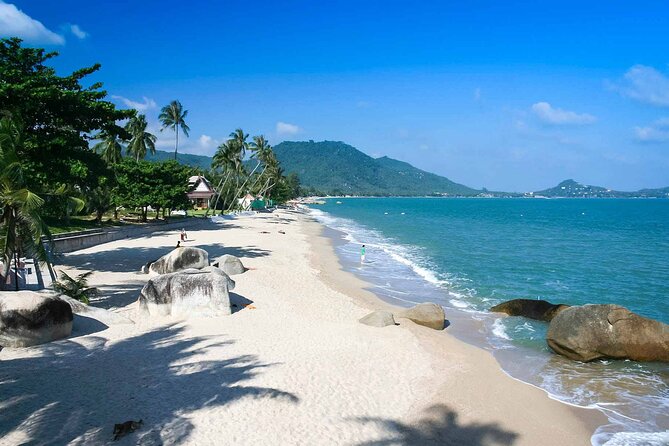
After Cambodia, day 14 transfers you by flight to Phuket. You arrive, check in, and the rest of the day is free. This is smart timing. After temple walking, you want recovery time and choices you control.
Day 15 is pure relaxation: beach time in Phuket with flexibility to enjoy Thai food and seafood on your own. Day 16 becomes the fun water day:
- Morning transfer to Royal Phuket Marina
- Excursion to Phi Phi Island area, with stops described including Bamboo Island for beach time and snorkeling/swimming
- Then Phi Phi Don for lunch buffet
- Then a guided set of sights on Phi Phi Le (including Viking Cave, Monkey Beach, and Pileh Lagoon) before returning to Phuket
Day 17 returns to beach downtime, and day 18 ends with one last free morning in Phuket before your transfer to the airport for departure.
If you like a trip that alternates between “see big things” and “breathe,” Phuket is your payoff. The island portion is also where you’ll likely spend the most time in a setting that feels removed from city life.
Price and Logistics: Is $2,859 Good Value?
At $2,859 per person for about 18 days, this trip isn’t bargain-basement. But it also isn’t just a bundle of sightseeing tickets. You’re paying for a lot of the hard work that burns time and energy when you plan yourself:
- Domestic flights across Vietnam → Vietnam region → Cambodia → Thailand
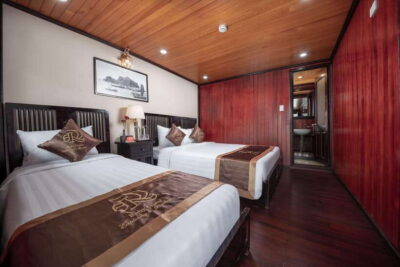
- Hotel accommodation in private rooms (not dorm-style)
- Tour guide plus air-conditioned vehicle support
- Entrance fees for all included sights
- Meals counted in the schedule: breakfast is included (18), lunches are included (10), and dinners are included (2)
- Pickup and drop-offs, including help at airports and key city zones
When you price this against the cost of separate flights, private drivers, paid entrances, and guided days across three countries, the value equation starts to make sense. In particular, the included entrances and guided time reduce the annoying “small expenses” that add up faster than you’d expect on a DIY plan.
There is one cost you should budget for even with this package: tips and personal expenses, plus alcoholic drinks and soft drinks are not included.
The Tour’s Pace: Who Will Enjoy It Most
This works best if you want big hits across Vietnam, Cambodia, and Thailand without turning your trip into a logistics project. The small group size (max 10) and the mix of guided days plus real free-time days keep it from feeling like a nonstop train of buses.
You’ll likely enjoy it if you:
- Like structured sightseeing but still want mornings and evenings to wander on your own
- Are okay with early starts on select days (especially Ha Long and the floating market)
- Prefer private-room comfort over splitting your time between cheap-but-crowded stays
You might find it less ideal if you:
- Want a slow, single-country travel vibe
- Hate changing cities frequently (you move from Hanoi → Ha Long → Da Nang/Hoi An → Ho Chi Minh City → Mekong area/Can Tho → Siem Reap → Phuket)
Tips From the Human Side: What Coordination Feels Like
One standout detail from the experience you’re buying is how responsive the coordination is. The people behind the trip point you to a real contact person (not just a generic inbox), and you’re supported with daily planning and on-the-ground guides and drivers. In plain terms: if something changes, you’re not left guessing.
That matters because multi-country travel is where DIY plans often wobble. Here, you’re mostly protected from the “where do I meet the driver” stress, and that protection is part of what you’re paying for.
Also, guides are described as both knowledgeable and good at keeping the day moving with clear communication. That helps you spend less time figuring out what matters.
Should You Book This Vietnam–Cambodia–Thailand Tour?
Book it if you want a smooth multi-country trip with private rooms, guided highlights, included entrances, and airport-to-hotel help. The structure is especially good for Ha Long, Angkor, and the island day in Phuket, because those are the kinds of experiences where good timing and logistics make a visible difference.
Hold off if you’re the type who needs a very relaxed pace, or if early mornings are a dealbreaker. This route does give you free time, but it also includes several early-start days and major sightseeing blocks.
If you’re aiming for a first big Southeast Asia circuit, this one is a strong match: you’ll see the big icons, you’ll get water-based scenery in two countries, and you’ll finish with beach time that actually feels like a reward.
FAQ
How long is the tour?
It runs for about 18 days.
Where does the tour start?
It starts in Hanoi, Vietnam.
What is the price per person?
The price listed is $2,859.00 per person.
How large is the group?
The tour has a maximum of 10 travelers.
Are pickup and drop-offs included?
Yes. Hotel pickups and drop-offs are offered, and airport transfers are included where flights are part of the route.
What meals are included?
Breakfast is included for 18 days. Lunch is included 10 times, and dinner is included 2 times.
Are entrance fees included?
Yes. Entrance fees for the included sightseeing destinations are included.
Does the tour include domestic flights?
Yes. Domestic flight is included, covering the intercity legs between the countries and main regions.
What if weather is bad?
The experience requires good weather. If it’s canceled due to poor weather, you’ll be offered a different date or a full refund.
Can I cancel for a full refund?
Yes. You can cancel up to 24 hours in advance for a full refund. If you cancel less than 24 hours before the start, the amount you paid will not be refunded.