REVIEW · HANOI
12 Days Vietnam Tour Package
Book on Viator →Operated by Viet Prestige Travel · Bookable on Viator
Vietnam’s a big country, and this route stitches it together fast. You’ll start in Hanoi, then cruise Halong Bay, base yourself through Hue and Hoi An, and finish in lively Ho Chi Minh City with war history and Mekong Delta river life.
I really like two things here. First, the mix is practical: old-city walks, royal-era sites, and nature days are balanced instead of all cram-today-and-crash-tomorrow. Second, the structure is clear, with hotel transfers, guided stops, and included entrance fees so you’re not constantly budgeting on the fly. One possible drawback: the itinerary is packed and includes internal flights, so you’ll want good stamina and simple packing.
In This Review
- The pace works, but it’s not slow travel
- Key takeaways before you book
- 12 Days Cover a Lot: How This Route Feels on the Ground
- Landing in Hanoi: Noi Bai Transfers and Your First Easy Night (Day 1)
- Hanoi on Foot: Opera House, Hoan Kiem, Temple of Literature, Ethnology, and Mausoleum (Day 2)
- Hoa Lu and Trang An: Ninh Binh’s Temples and UNESCO Boat Ride (Day 3)
- Halong Bay, Without the Chaos: Cruise Day with Tai Chi at Dawn (Days 4–5)
- Hue’s Citadel Days: Imperial City and Tombs with River Views (Day 6)
- Over the Hai Van Pass to Hoi An: Marble Mountains and a Soft Landing (Day 7)
- Hoi An Two-Part Plan: Cam Thanh Bamboo Boats and the Old Town Stops (Day 8)
- Ba Na Hills and the Golden Bridge: Cable Car Time, Then Linh Ung Pagoda (Day 9)
- Saigon War History and French Colonial Landmarks: Cu Chi, Reunification Palace, Cathedral, Post Office (Day 10)
- Mekong Delta Day from Ben Tre: Coconut Workshop and Candy Making by Boat (Day 11)
- Leaving Ho Chi Minh City: A Final Transfer Day (Day 12)
- Price and Value: What $2,653 Buys You (and What It Doesn’t)
- Who This Trip Fits Best
- Support That Makes the Trip Easier
- Should you book this 12-day Vietnam package?
- FAQ
- What cities does this 12-day Vietnam tour cover?
- Does the price include entrance fees?
- Are meals included?
- Are flights included in the package price?
- Do I need a Vietnam visa?
- What about water and transportation?
- Where does the tour start and end?
- What if weather is bad for the Halong Bay part?
- Is this tour private?
- What is not included besides flights and visa?
The pace works, but it’s not slow travel
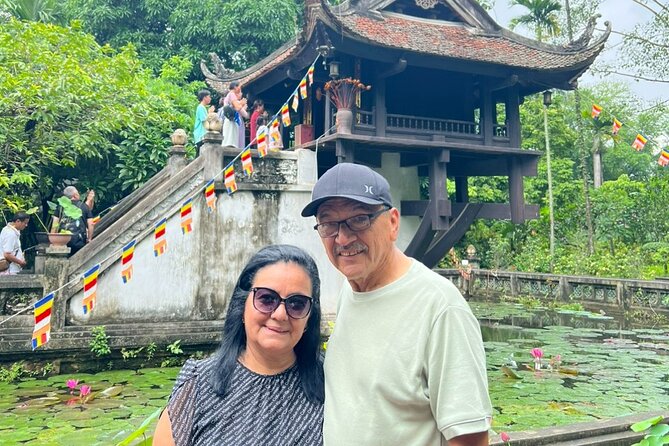
Expect a rhythm of early starts, guided sights, and longer travel days broken up by scenic stops. If you want a relaxed, unplanned trip with tons of free time, this may feel busy. If you want a guided sampler that still hits the meaningful places, it makes a lot of sense.
Key takeaways before you book

- North-to-South route that avoids backtracking and gives you Hanoi, Halong Bay, Hue, Hoi An, and Saigon in one flow
- Halong Bay cruise time that includes a morning Tai Chi session and time for onboard activities
- Value built into the plan: air-conditioned transport, entrance tickets, and several meals are included
- Cultural plus nature balance across Hanoi, Hoa Lu/Trang An, Hue’s citadel sites, and the Mekong Delta day
- Support-focused organization with a dedicated travel agent and a track record for responsiveness
You can also read our reviews of more tours and experiences in Hanoi.


12 Days Cover a Lot: How This Route Feels on the Ground
This is a classic Vietnam “greatest hits” outline, but it’s done with enough variety that it doesn’t feel like a single-note tour. You move through four distinct environments: the north’s city-and-temple streets, limestone scenery around Ninh Binh and Halong Bay, Hue’s imperial period, Hoi An’s lantern-era old town and rivers, then the south’s war sites and Mekong Delta water-world.
What I like is the logic of where you sleep. You’re not constantly changing hotels within the same city without breathing room. You do, however, travel between regions—Hanoi to Hue (via flight) and Da Nang/central Vietnam to Ho Chi Minh City (via flight). That’s good for time, but it’s also why stamina matters.
One more practical detail: you’ll have mineral water provided (2 bottles per day). That sounds small until you’re walking under real heat and humidity. It helps you keep moving without hunting for drinks every time.
Landing in Hanoi: Noi Bai Transfers and Your First Easy Night (Day 1)
Day 1 is a breather by design. After you land at Noi Bai Airport, you’re met by the guide and transferred to your Hanoi hotel for check-in. Then it’s basically a free evening. This is smart travel management because jet lag doesn’t care about your museum schedule.
Practical advice: use that free time to do two things. Get cash sorted and do a light food check nearby your hotel. Hanoi’s Old Quarter area is busy on foot, and having your bearings early makes the next day smoother.
Meeting point matters too. The tour starts at Rex Hanoi Hotel (42–44 P. Gia Ngư, Hàng Bạc, Hoàn Kiếm). The driver waits in the arrival hall with a sign showing the main trip name—helpful if you’re coming in a little disoriented.
Hanoi on Foot: Opera House, Hoan Kiem, Temple of Literature, Ethnology, and Mausoleum (Day 2)
Day 2 is your guided Hanoi deepening day. You start with an external look at the Hanoi Opera House—about a half hour—then move into the center around Hoan Kiem Lake and Ngọc Sơn Temple on a walking route.
Then the tour turns more thoughtful. You’ll head to the Temple of Literature & National University, which was founded in 1070. It’s not just a pretty old place; it’s a real snapshot of Vietnam’s long educational tradition. You’re given time in the gardens and grounds (about 2 hours), and it’s one of those stops where the quiet spaces help you reset between busier streets.
Next comes the Vietnam Museum of Ethnology. This is a strong choice if you’re the type who wants context. The museum focuses on Vietnam’s 54 ethnic groups, with traditional costumes and tools. You’ll spend about 2 hours here, and the variety makes it feel more like a living education than a single-theme museum.
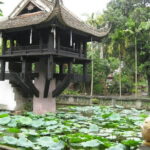
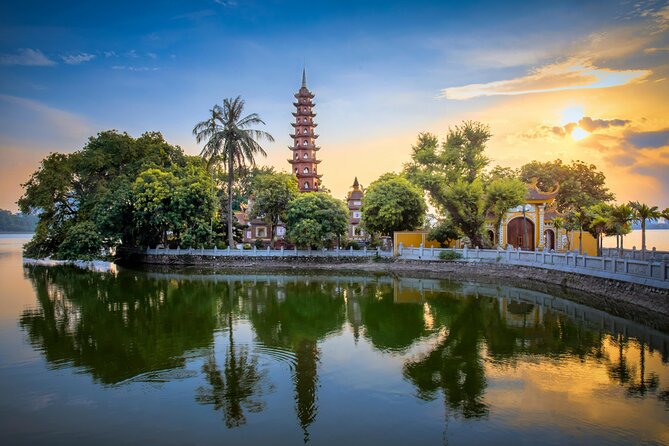
In the afternoon the itinerary moves into political and symbolic Vietnam with stops at the Ho Chi Minh Mausoleum complex and One Pillar Pagoda, followed by Tran Quoc Pagoda by the water. The Mausoleum and One Pillar are grouped within the same complex time window (about 2 hours), and Tran Quoc gives you an older Buddhist structure with 1,440 years of history (about 1 hour).
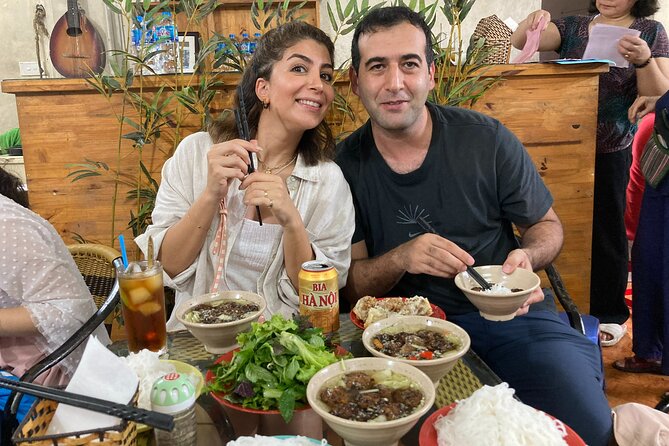
To end the day, you get two very Hanoi experiences: a water puppet show and a xích lô ride through the Old Quarter area around Hoan Kiem. If you’re tired, the bike ride is a nice way to cover more ground without extra walking. If you like photos, this is also where your camera gets a workout.
Hoa Lu and Trang An: Ninh Binh’s Temples and UNESCO Boat Ride (Day 3)
Day 3 shifts you out of Hanoi into the limestone region of Ninh Binh. You leave around 8:00 AM for Hoa Lu, the former capital area of Dai Co Viet. You’ll spend about 3 hours here, visiting two temples built on the old royal palace site—an easy way to understand why this region matters beyond just scenery.
Then you go to Trang An Landscape Complex, a UNESCO site, for a 2-hour boat ride. This is the kind of day-trip stop that changes your perspective: the scenery is dramatic, but you experience it at a slow pace by water. The boat time is the main event, and it’s long enough to feel like a real break from city walking.
The final stop is Bich Dong Pagoda (about 1 hour), where you see three older pagodas associated with the 17th century. The tour also includes a local market stop so you can see daily northern life in motion, not just in museum captions.
Practical note: this day has multiple activity styles—temples on foot, then time by boat, then another short pagoda visit. It’s a good mix, but it also means you’ll likely stand and walk more than you expect. Wear shoes you trust.


Halong Bay, Without the Chaos: Cruise Day with Tai Chi at Dawn (Days 4–5)

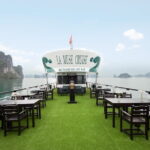
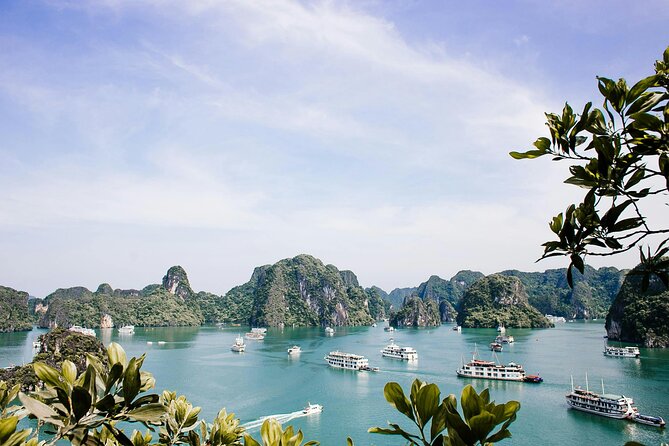
Halong Bay is where many Vietnam trips either become magic or become mass-tour confusion. Here you get two cruise days, with structured onboard experiences.
Day 4 includes the shared shuttle transfer to Halong Bay, then boarding the cruise with a welcome drink and time led by the captain’s introduction. The itinerary doesn’t list each landing point in detail, but you’re set up for a full day afloat.
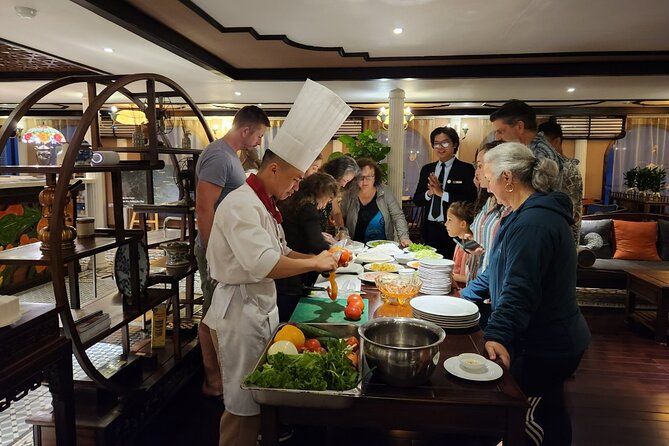
Day 5 begins with a Tai Chi class on the cruise sundeck at dawn. This is one of those small inclusions that can completely change how the bay feels. You’ll have complimentary tea and coffee, so it’s not just exercise—it’s a calm start to a visually intense place.
You’ll then enjoy a light breakfast onboard, and later you’ll have time for final onboard activities before continuing your travel south. On this same day, you’re transferred to the airport for your flight to Hue (after the cruise wrap). That’s a smooth way to save travel time—just remember you’re moving on, not getting a full free day.
One consideration: Halong Bay depends on weather. The experience description says it requires good weather, and in bad conditions you’ll be offered another date or a full refund. So if you’re booking near a rainy window, build in flexibility.
Hue’s Citadel Days: Imperial City and Tombs with River Views (Day 6)
Hue is where the trip slows down in a good way. You arrive after a flight, then spend Day 6 with the most meaningful imperial-era stops.
You start at Hue Imperial City (the Citadel). It’s described as a walled fortress designed as a replica of China’s Forbidden City. Whether you know that comparison or not, the layout works: you get a sense of scale, power, and ceremony.
After that, the afternoon includes Thien Mu Pagoda near the rivers, followed by a visit to the tomb of Khai Dinh. Thien Mu gives you a classic river backdrop (the itinerary notes views over the Perfume River and surroundings), and Khai Dinh is a strong “royal tomb” stop for people who want something more specific than generic sightseeing.
This is also a day where guided explanations matter. Imperial sites are full of symbolism, and having a guide helps you read what you’re seeing instead of just walking through.
Over the Hai Van Pass to Hoi An: Marble Mountains and a Soft Landing (Day 7)
Day 7 is travel-with-views. You drive from Hue toward Hoi An, with a major scenic break at Hai Van Pass, known for being one of the most magnificent passes. The itinerary builds in about 2 hours for this part—enough to stop, stretch, and actually enjoy the road.
Next comes Marble Mountains, a cluster of five limestone hills associated with metal, wood, water, fire, and earth. You’re given about 2 hours here, and you’ll have a chance to explore the caves and viewpoints (the itinerary describes admiring landscapes from the area).
Finally, you reach Hoi An for a first taste of the Ancient Town atmosphere. This is a good approach: you don’t throw everything at yourself on day one in Hoi An. You get an easy landing and time to walk the streets before the deeper guided history on the next day.
Hoi An Two-Part Plan: Cam Thanh Bamboo Boats and the Old Town Stops (Day 8)
Day 8 is the most “Hoi An” feel of the itinerary. You start at Cam Thanh, a fishing village where you’ll meet local fishermen and watch daily life. Then you board a traditional Vietnamese bamboo boat for a chance to experience the water-world up close.
After that, you shift into the Ancient Town itself. The itinerary includes the Japanese Covered Bridge (iconic and about 1 hour), plus time for Phung Hung Ancient House and the Phuc Kien Assembly Hall. The focus here is architecture and community spaces—these halls tell you how trade and diaspora shaped Hoi An’s identity.
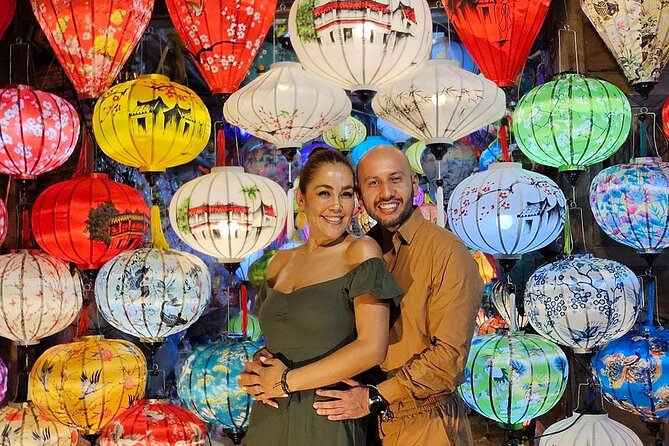
If you’re wondering when to shop for lanterns or souvenirs, this is the kind of day where you’ll be walking anyway. Just keep your wallet habits simple: pick one or two things you truly want, not ten impulse buys.
Ba Na Hills and the Golden Bridge: Cable Car Time, Then Linh Ung Pagoda (Day 9)
Day 9 takes you to central Vietnam’s modern spectacle side. You go to Sun World Ba Na Hills, with a modern cable car ride that gives panoramic views. The itinerary frames it as a big “flying” feeling (about 3 hours total here, with admission included).
Then you move to Golden Bridge, and your route includes stops at old French villas, a suspension bridge, and Nui Chua, along with a mountain peak at 1,487 meters. The time for this section is about 2 hours.
Next is Linh Ung Pagoda, including time around Vong Nguyet Hill and a stop at the Buddha statue area (about 1 hour).
After all that, the day still has one last logistical step: a brief city tour in Da Nang, then you fly to Ho Chi Minh City. You meet your driver on arrival and check in. So day 9 ends like a relay race—fun and scenic, but with constant motion.
Practical tip: if you want the best photos at Ba Na Hills, you’ll want to plan for crowds and light. The itinerary doesn’t give exact timing for the Golden Bridge shot window, so try to keep your schedule flexible once you’re on site.
Saigon War History and French Colonial Landmarks: Cu Chi, Reunification Palace, Cathedral, Post Office (Day 10)
Day 10 is intense in the best way: you go from underground warfare history to the turning-point symbolism of the war’s end.
First is the Cu Chi Tunnels, described as a network of narrow underground passages built by guerrilla fighters for shelter and defense during the Vietnam War. You have about 3 hours here.
Then you visit the Independence Palace (also called Reunification Palace), the last stronghold of South Vietnam. The itinerary notes the April 30, 1975 moment when tanks crashed through its gates, marking the war’s official end. You’ll spend about 2 hours.
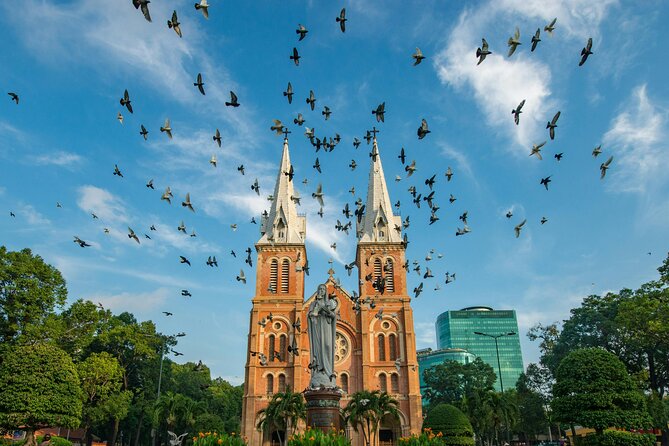
Finally you walk through French colonial-era landmarks: Saigon Notre Dame Cathedral (built between 1877 and 1880) and the Central Post Office, designed by Gustave Eiffel’s style team. Both get about 2 hours total.
If you like context, this is one of the strongest days on the itinerary. It connects why people remember Vietnam the way they do, and it does so without leaving you lost in theory.
Mekong Delta Day from Ben Tre: Coconut Workshop and Candy Making by Boat (Day 11)
Day 11 is your water-day in the Mekong Delta. You drive about 115 km to Ben Tre (roughly 2 hours), then board a boat for around 5 hours.
On the boat and on land you’ll see:
- a handcrafted coconut workshop
- a local candy production site
That combination is practical and culturally useful. Coconut processing isn’t just an activity—it’s what locals use to turn raw ingredients into daily-life products. Candy-making adds the human scale, because it’s a business people rely on, not just a tourist craft.
The tour lists this as admission-free for that segment, and the experience stays focused on real-world production and daily movement.
Leaving Ho Chi Minh City: A Final Transfer Day (Day 12)
Day 12 is your departure day. You’re picked up from your hotel (ending point is EDEN STAR SAIGON HOTEL, 38 Bùi Thị Xuân, Phường Phạm Ngũ Lão, Quận 1) and transferred to the airport for your flight.
If you’re tempted to cram in one last meal or quick walk, do it near the hotel and keep it simple. The itinerary keeps this day low-activity for a reason.
Price and Value: What $2,653 Buys You (and What It Doesn’t)
At $2,653 per person, you’re paying for a lot more than entrance tickets. The plan includes:
- Air-conditioned vehicle throughout transfer-heavy days
- Entrance fees and permits for sightseeing stops
- Mineral water (2 bottles per day)
- Breakfasts for 11 days, plus lunch (2 times) and dinner
- A personalized service from a dedicated travel agent
- Mobile ticket
What’s not included is equally important:
- International and domestic flight tickets
- Vietnam visa
- Meals not specified in the itinerary
- Travel insurance
- Tips and personal expenses
So the value equation is basically this: if you’d otherwise pay separately for guides, entrances, and transportation, this package reduces your “annoyance cost.” You also avoid a lot of planning work, especially with internal flights timed between regions.
One last value note: the itinerary is designed around guided time at major sights. If you like structure, this price can feel fair. If you prefer self-guided wandering with your own transit decisions, you might feel boxed in.
Who This Trip Fits Best
This works best if you:
- want a guided sampler across north, central, and south Vietnam
- like a balance of history sites and scenery days
- prefer having transport and entrances handled
- don’t mind a schedule that’s full every day
It’s less ideal if you want long unstructured afternoons, or if you hate internal flights. The route moves, and that’s the point.
Support That Makes the Trip Easier
A big part of why this sort of package works is the people behind it. The tour’s service includes a dedicated travel agent, and feedback tied to the company specifically calls out responsive help from named coordinators like Loan Do. There’s also mention of operator Giang Dam and help that includes practical planning and even visa-related checking. In plain terms: you’re not left guessing.
One more detail I’d take seriously: the experience description says a confirmation comes at booking time, and you’ll receive updates through the process. That reduces the “what did I buy?” stress.
Should you book this 12-day Vietnam package?
I’d book if you want a smooth route that hits Hanoi, Halong Bay, Hue, Hoi An, Ba Na Hills, Cu Chi, and the Mekong Delta with fewer planning headaches than doing it all yourself.
I wouldn’t book if you want slow travel, lots of downtime, or you’re sensitive to a pace that includes early starts and internal flights. This trip is built for momentum, not for sitting still.
FAQ
What cities does this 12-day Vietnam tour cover?
It starts in Hanoi, then includes Halong Bay, Ninh Binh, Hue, Hoi An, Ba Na Hills (near Da Nang), and ends in Ho Chi Minh City, with a Mekong Delta day trip.
Does the price include entrance fees?
Yes. Entrance fees and permits for sightseeing visits are included.
Are meals included?
Yes for meals specified in the itinerary: dinner is included, lunch is included twice, and breakfast is included for 11 days. Other meals are not specified and are not included.
Are flights included in the package price?
No. International and domestic flight tickets are not included. The itinerary includes transfers to airports for flights between regions.
Do I need a Vietnam visa?
Yes. Vietnam visa is not included.
What about water and transportation?
You get mineral water (2 bottles per day) and airport/hotel transfers and sightseeing transportation by air-conditioned vehicle are included.
Where does the tour start and end?
It starts at Rex Hanoi Hotel in Hanoi and ends at Eden Star Saigon Hotel in Ho Chi Minh City.
What if weather is bad for the Halong Bay part?
The experience requires good weather. If it’s canceled due to poor weather, you’ll be offered a different date or a full refund.
Is this tour private?
Yes. It’s described as a private tour/activity where only your group participates.
What is not included besides flights and visa?
Travel insurance, tips and personal expenses (like drinks, phone calls, laundry), and meals not specified in the itinerary are not included.
If you tell me your travel month and how many people are going, I can help you sanity-check whether this pace fits your style.
You Might Also Enjoy



More Tours in Hanoi
- Ninh Binh Full-Day Tour from Hanoi to Hoa Lu, Tam Coc & Mua Cave Via Boat & Bike
★ 5.0 · 4,384 reviews